Dr. Gymbro
←

#volleyball

3 articles
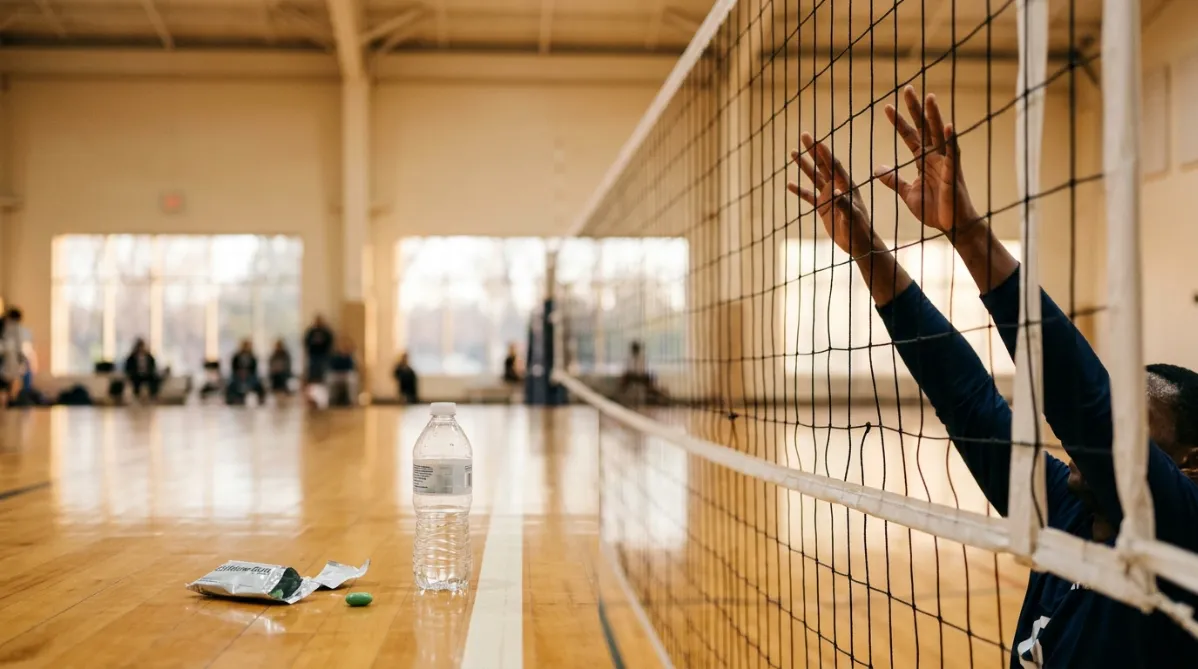
A landscape editorial photograph of a volleyball net in a softly lit indoor gym, shot from a low angle on the court. In the foreground, a pair of athletic hands in mid-block reach above the net, fingers spread, caught in crisp focus. The athlete's face is out of frame, so the attention stays on the hands and the net. In the lower left foreground, a small open foil pack of caffeine chewing gum sits on the polished maple floor, with two mint-green gum pieces beside it and a clear water bottle. The pack is unbranded and minimal.

The background is a warm blur of honey-toned hardwood, pale gym walls, and tall windows with diffused late-afternoon light streaming in. Dust motes glow in the light shafts. The palette is muted and modern: warm wood amber, soft cream, sage green, and a touch of deep navy from the athlete's jersey. Shallow depth of field and gentle film grain give the image a refined, magazine-like feel. The composition follows the rule of thirds, with the hands and net on the right and open negative space on the left, where headline text could sit.

The mood is calm, focused, and slightly cinematic, like a feature in a contemporary sports science journal. The lighting is soft and natural, with long gentle shadows across the court lines. No futuristic or digital elements, no charts, no text. The overall look is clean, tactile, and editorial.
nutrition

La fatiga ralentizó las reacciones en un 18 %; la goma con cafeína lo redujo al 3 %

BY DR. GYMBRO ·

Tras un intenso protocolo de fatiga mediante bloqueos repetidos, las jugadoras de voleibol de élite que recibieron placebo tardaron un 18,4 % más en su secuencia reactiva de bloqueo. Con goma de cafeína a 6 mg/kg la desaceleración se redujo a solo un 3,0 %, y a 3 mg/kg quedó en 6,4 %. La potencia del salto‑bloque y la rigidez del salto‑caída también se mantuvieron mejor con cafeína. Sin embargo, el estudio contó con solo 15 atletas, el cegamiento fue incompleto y los efectos secundarios fueron más frecuentes con la dosis alta, sin que se estableciera una dosis claramente superior.
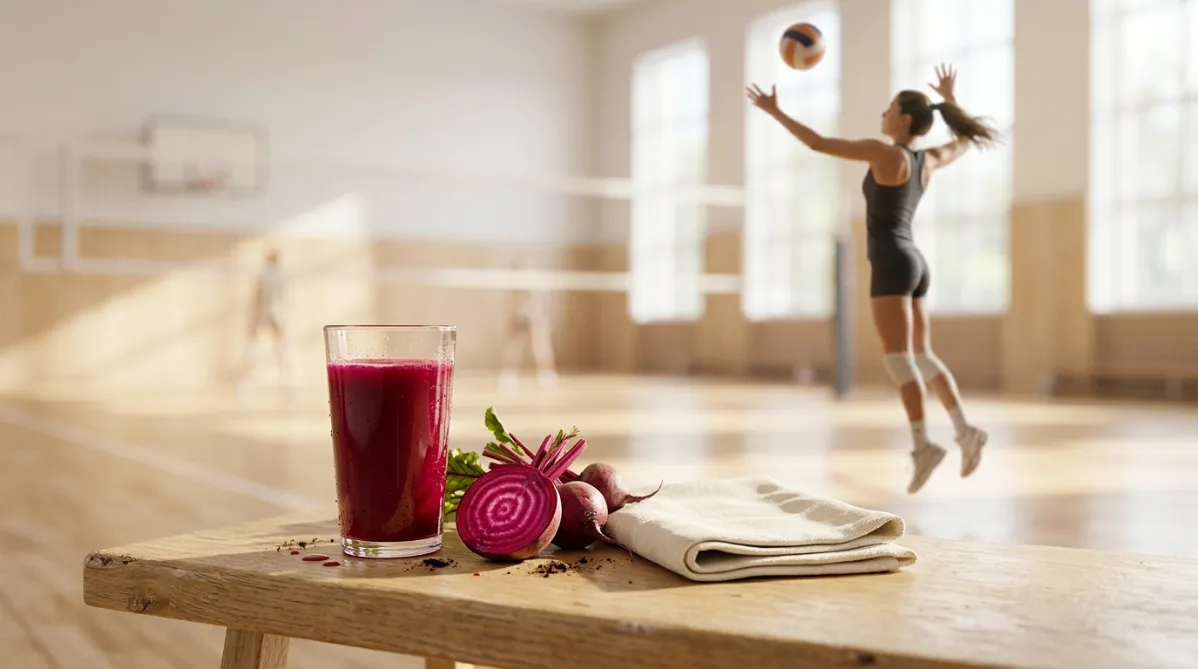
A wide, editorial-style photograph of a deep magenta glass of beetroot juice standing on a pale oak gym bench in soft morning light. Beside it sit a halved raw beetroot with vivid fuchsia and white concentric rings, a few whole beets with leafy stems, and a folded cream towel. Behind them, slightly out of focus, a female volleyball player in a fitted charcoal athletic set is caught mid-jump on an indoor court. Her arms are raised, her ponytail lifts, and a volleyball hangs near her fingertips. The polished wooden court floor reflects warm light from tall windows. The background fades into a creamy blur of pale wood tones, soft white walls, and hints of a net.

The composition follows a rule-of-thirds layout. The juice and beets fill the lower left third in crisp focus, and the jumping athlete is the softly blurred focal point on the right. Fine condensation beads on the glass, and a few juice droplets rest on the bench like small jewels. The palette is limited and modern: rich beet magenta, warm honey wood, soft off-white, and charcoal accents. The light is natural and diffused with gentle long shadows. The shallow depth of field suggests a high-end lifestyle and health magazine. The look is clean and minimal with plenty of negative space in the upper left for a title overlay. The mood is energetic yet calm, hinting at recovery and bounce. It has fine film-like texture and true-to-life color, with no text, logos, or futuristic elements.
nutrition

Jugo de remolacha y altura de salto: ¿el tercer día recupera el rebote?

BY DR. GYMBRO ·

Doscientos saltos con carga dejan las piernas destrozadas, pero ¿el jugo de remolacha puede devolver el rebote al tercer día? Un ensayo cruzado en jugadoras de voleibol mostró una mayor altura de salto a las 72 h y una mejor tolerancia al dolor en la pantorrilla tras consumir el jugo. El dolor muscular, la agilidad, la hinchazón y la mayoría de las medidas de fuerza no cambiaron, y la interacción global del salto fue solo una tendencia. Este artículo desglosa los hallazgos, cómo los atletas podrían usar el jugo tras trabajos pliométricos intensos y por qué la pequeña muestra exclusivamente femenina exige cautela.
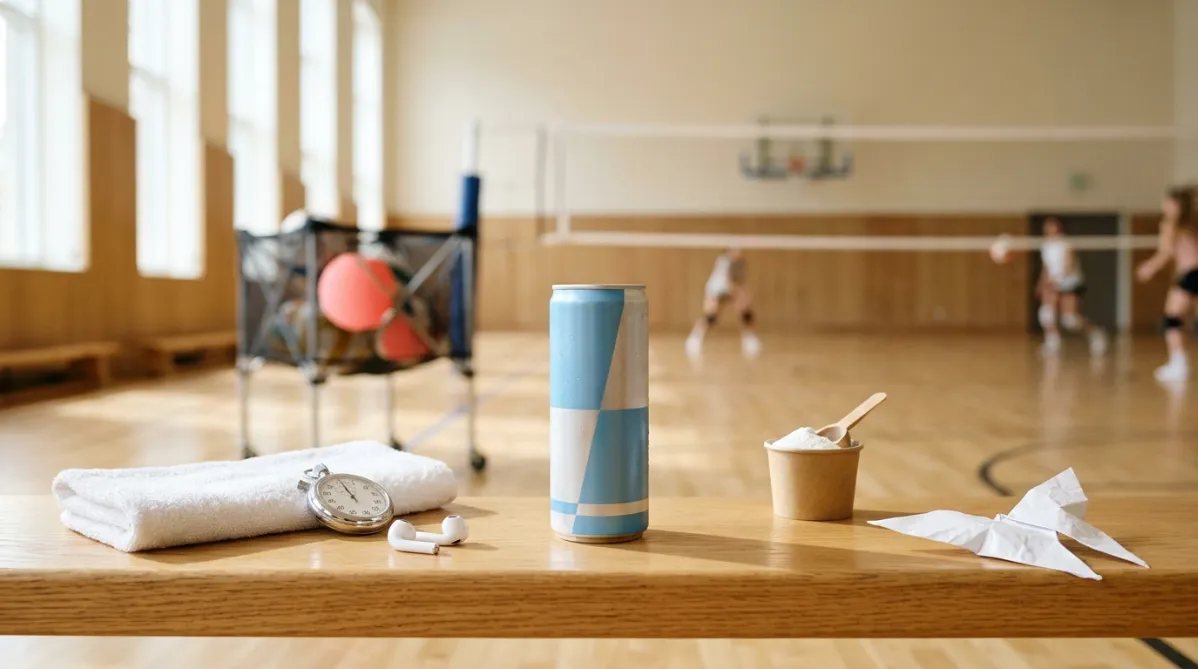
A wide, editorial-style photograph of a single slim silver and blue energy drink can standing upright at center on a polished light-oak gym bench, shot in soft natural window light. The can is unbranded, with a clean, minimal design and a few beads of condensation. Behind it, the softly blurred interior of a bright modern indoor volleyball court stretches into the background, with a pale hardwood floor, a net, and a few volleyballs resting in a mesh cart. Warm morning sunlight enters through tall windows on the left and casts long, gentle shadows across the bench. Beside the can sit a small white towel folded neatly, a simple stopwatch, and a pair of white wireless earbuds. On the right, a small paper cup of white powder and a wooden scoop hint at measured dosing. They are placed deliberately, like a styled still life.

At the very edge of the frame, a pair of delicate white paper wings, origami-like and slightly crumpled, lie flat and unused on the bench, a subtle visual joke about the "wings" slogan. The wings are understated and tactile, not magical or glowing.

The color palette is muted and fresh: warm honey wood, soft cream, pale sky blue, and touches of silver, with a single accent of coral red from a volleyball panel in the background. The depth of field is shallow, with crisp focus on the can and the paper wings and a creamy bokeh background. The composition follows the rule of thirds, with the can slightly left of center and generous negative space on the right for a headline overlay. The mood is calm, clean, and contemporary, like a lifestyle and science magazine cover, with fine film grain and natural contrast. The camera angle is slightly low, at bench level, with a 50mm lens look.
nutrition

¿Da alas Red Bull? 13 pruebas en el gimnasio no hallaron nada

BY DR. GYMBRO ·

El eslogan de Red Bull promete alas, pero un nuevo estudio cruzado en jugadoras de voleibol femenino no encontró ninguna. Una lata estándar no mejoró ninguna de las 13 variables evaluadas en pruebas de Wingate, salto y fuerza de agarre frente a un placebo. Ocho de las 15 atletas también reportaron náuseas leves. La causa probable es que la lata aportó apenas 1,1 mg/kg de cafeína, muy por debajo de los 3‑6 mg/kg que suelen citarse como eficaces. A continuación, lo que muestra el estudio, sus limitaciones y cómo dosificar la cafeína adecuadamente.

This page is available in