Dr. Gymbro
←

#dose-response

2 articles
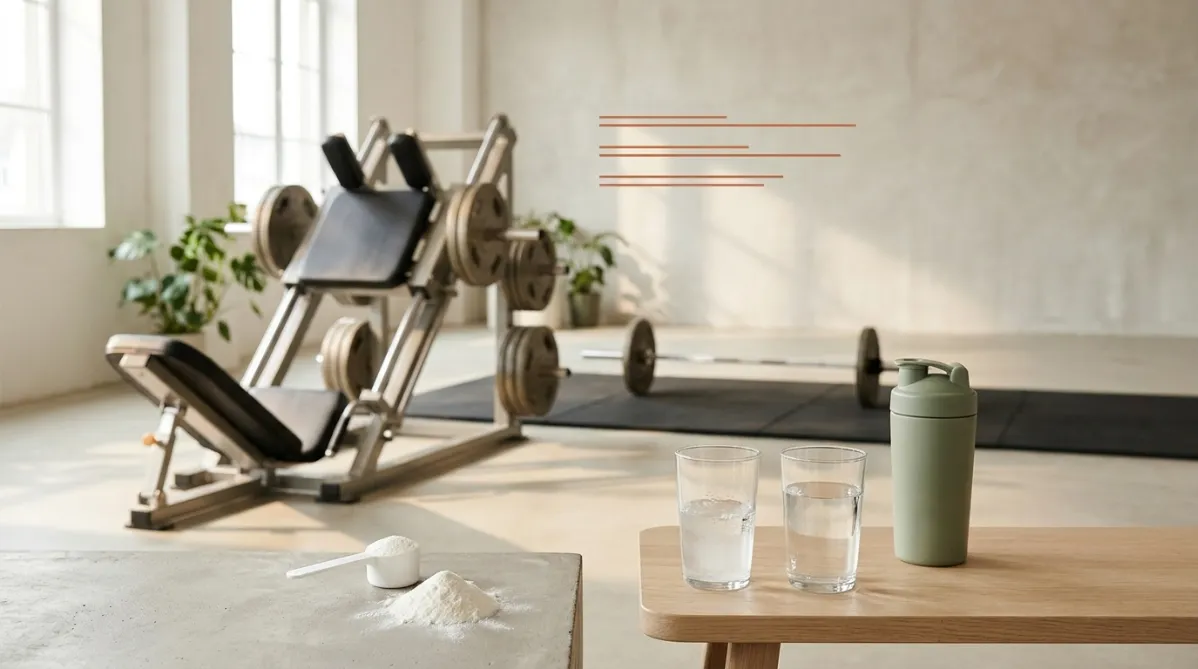
A bright, modern gym scene shot in soft natural daylight from large windows, with a wide landscape composition. In the foreground, slightly off-center to the left, sits a clean white ceramic scoop resting on a matte surface beside a small pile of fine white powder. Next to it are two clear glass tumblers on a pale oak bench. One is filled a third of the way with cloudy water and the other two-thirds of the way, a quiet visual nod to different doses. A minimalist matte shaker bottle in sage green stands behind them, slightly out of focus.

The middle ground shows a polished leg press machine with a black padded seat and brushed steel frame. Several weight plates are loaded on its pegs, and the machine catches warm highlights. Beyond it, a bent-over barbell rests on a rubber floor, deliberately softer in focus to suggest contrast between the two exercises.

The background is an airy, uncluttered studio-style gym with pale concrete walls, a few green potted plants, and long soft shadows across the floor. The color palette is muted and editorial: warm off-white, sand, sage green, charcoal, and a subtle accent of terracotta orange. A shallow depth of field gives it a magazine-like, premium wellness-journal look.

Add a subtle graphic touch: three thin horizontal lines of different lengths in terracotta, painted or projected on the wall, hinting at a bar chart comparing three results without any text or numbers. The overall mood is calm, focused, and scientific yet approachable, like a contemporary health and fitness publication cover. Clean lines, generous negative space on the right side for title overlay, and crisp, high-resolution photographic quality.
nutrition

8 g de citrulline malate, trop peu ? Seuls 12 g ont augmenté les répétitions au leg press

BY DR. GYMBRO ·

La plupart des pré‑workouts contenant de la citrulline malate misent sur une dose modérée, mais un nouveau test pilote en double‑aveugle suggère que cela ne serait peut‑être pas suffisant pour faire la différence. Chez 12 adultes entraînés, seule la dose de 12 g a augmenté de façon significative le nombre total de répétitions, tandis que 8 g n’a pas atteint la signification. Le gain s’est manifesté au leg press, avec environ 17 répétitions en placebo, 19 avec 8 g et 20 avec 12 g, mais pas au tirage penché. Pris une heure avant l’entraînement, le dosage plus élevé semble prometteur, même si la petite taille de l’échantillon ne permet de formuler qu’une hypothèse, pas de verdict.
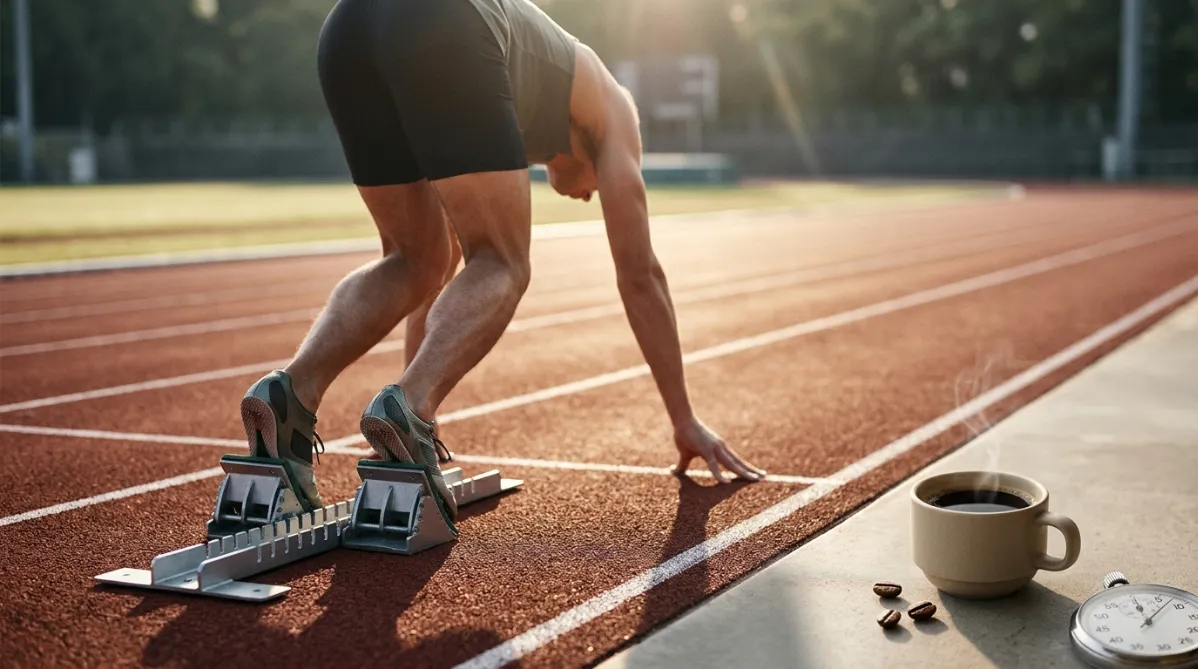
A wide, editorial-style photograph of a sprinter crouched in starting blocks on a deep terracotta-red running track, shot from a low angle at the side as the first morning light rakes across the lanes. The athlete is mid-set, hips lifted, hands poised behind crisp white lane lines, with a soft focus on their muscular calves and spiked shoes in the foreground. Warm golden sunlight creates long, elegant shadows and subtle lens flare, while the distant lanes fade into a creamy bokeh.

In the lower right foreground, slightly out of focus, sits a minimalist still life on a matte concrete ledge beside the track: a small ceramic cup of black coffee with a thin wisp of steam, two loose roasted coffee beans, and a simple stopwatch with a clean white face. The ceramic is a muted sand color, adding a refined, modern lifestyle touch.

The color palette is restrained and trendy: terracotta, warm cream, soft charcoal, and a hint of sage green from trees blurred in the far background. The composition uses generous negative space across the upper left, ideal for headline text overlay. The look is similar to a contemporary health and sports science magazine: natural film-like grain, gentle contrast, shallow depth of field, and a calm, focused mood. No text, no logos, no graphics, and no futuristic elements, just a realistic, tactile, sunlit scene that suggests precision, preparation, and explosive speed.
science research

Double de caféine, sprints plus rapides ? Ce que 6 mg/kg apporte réellement

BY DR. GYMBRO ·

Un essai randomisé, en double‑aveugle et en croisé, a comparé 3 mg/kg à 6 mg/kg de caféine chez 21 sprinteurs masculins entraînés. Les deux doses ont dépassé le placebo, mais la dose élevée n’a apporté de gain de vitesse supplémentaire que sur les 30 m et 60 m, pas sur les 10 m. Elle a également amélioré la hauteur de saut et le développement de la force au bloc, sans effet additionnel sur le temps de réaction ni sur la puissance maximale au test de Wingate. Voici ce que ces doses représentent en milligrammes pour un athlète de 70 à 80 kg, quand les prendre, à qui les résultats s’appliquent et ce que l’étude n’a pas indiqué concernant les effets indésirables.

This page is available in