Dr. Gymbro
←

#dose-response

2 articles
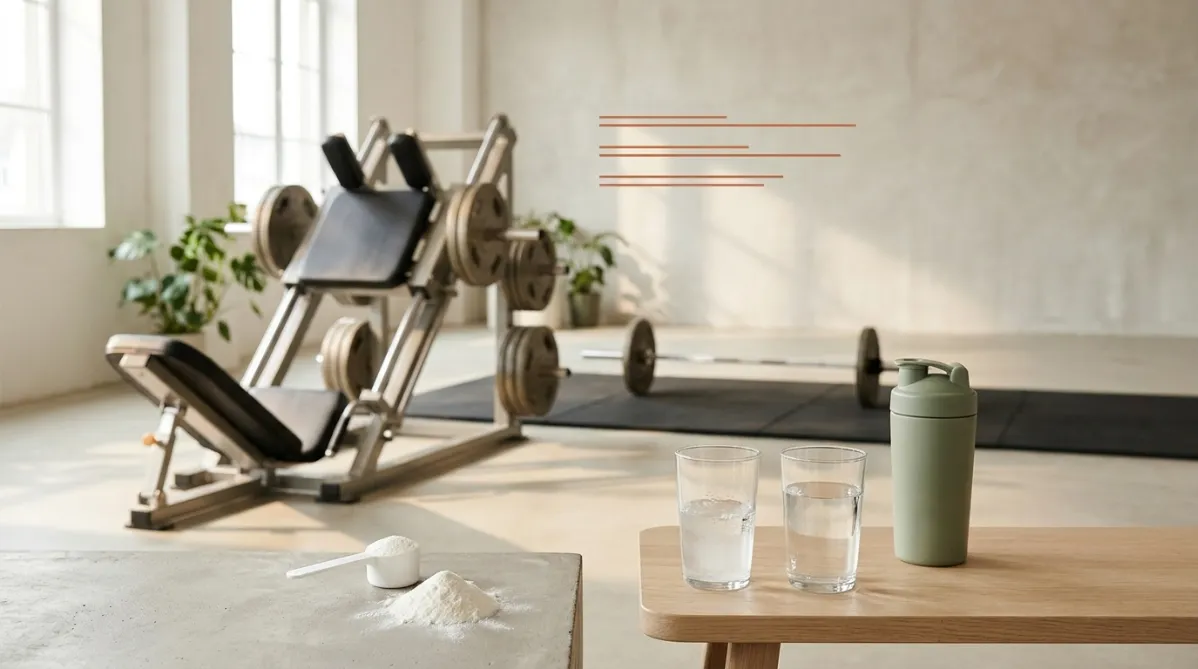
A bright, modern gym scene shot in soft natural daylight from large windows, with a wide landscape composition. In the foreground, slightly off-center to the left, sits a clean white ceramic scoop resting on a matte surface beside a small pile of fine white powder. Next to it are two clear glass tumblers on a pale oak bench. One is filled a third of the way with cloudy water and the other two-thirds of the way, a quiet visual nod to different doses. A minimalist matte shaker bottle in sage green stands behind them, slightly out of focus.

The middle ground shows a polished leg press machine with a black padded seat and brushed steel frame. Several weight plates are loaded on its pegs, and the machine catches warm highlights. Beyond it, a bent-over barbell rests on a rubber floor, deliberately softer in focus to suggest contrast between the two exercises.

The background is an airy, uncluttered studio-style gym with pale concrete walls, a few green potted plants, and long soft shadows across the floor. The color palette is muted and editorial: warm off-white, sand, sage green, charcoal, and a subtle accent of terracotta orange. A shallow depth of field gives it a magazine-like, premium wellness-journal look.

Add a subtle graphic touch: three thin horizontal lines of different lengths in terracotta, painted or projected on the wall, hinting at a bar chart comparing three results without any text or numbers. The overall mood is calm, focused, and scientific yet approachable, like a contemporary health and fitness publication cover. Clean lines, generous negative space on the right side for title overlay, and crisp, high-resolution photographic quality.
nutrition

Is 8 g Citrulline Malate Too Low? Only 12 g Boosted Leg Press Reps

BY DR. GYMBRO ·

Most citrulline malate pre-workouts lean on a moderate dose, but a new double-blind pilot trial suggests that may not be enough to move the needle. In 12 resistance-trained adults, only a 12 g dose significantly increased total reps, while 8 g did not reach significance. The boost showed up on leg press, with estimated reps of 17 on placebo, 19 on 8 g and 20 on 12 g, but not on bent-over rows. Taken one hour before training, the higher dose looks promising, yet the tiny sample means this is a hypothesis, not a verdict.
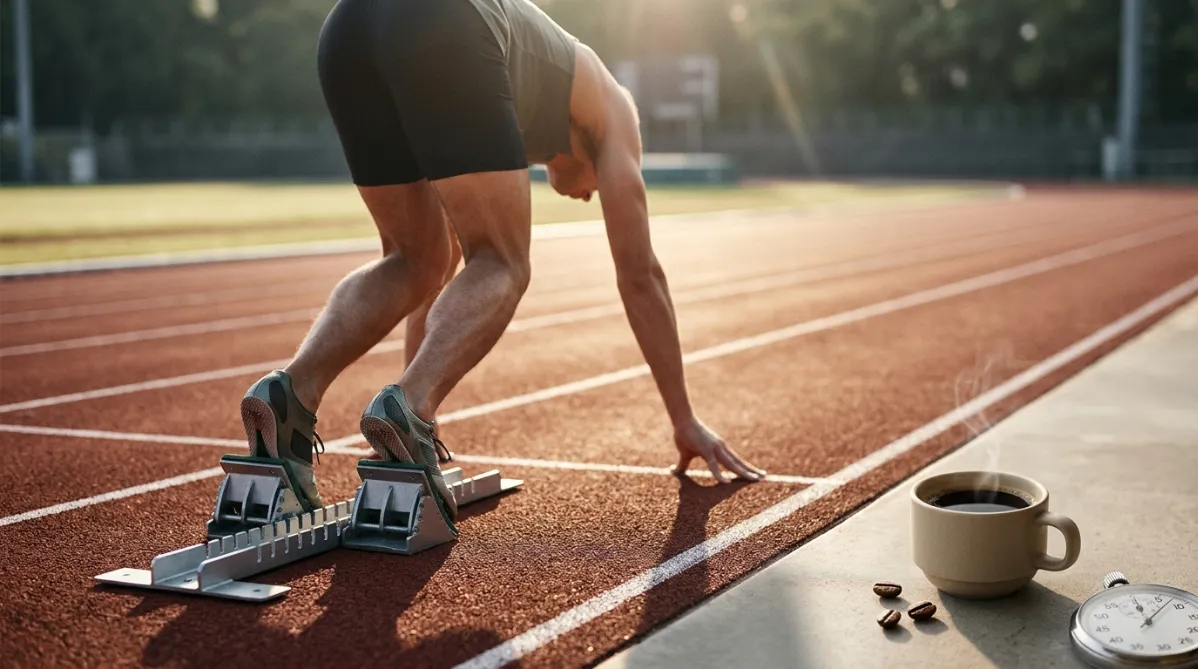
A wide, editorial-style photograph of a sprinter crouched in starting blocks on a deep terracotta-red running track, shot from a low angle at the side as the first morning light rakes across the lanes. The athlete is mid-set, hips lifted, hands poised behind crisp white lane lines, with a soft focus on their muscular calves and spiked shoes in the foreground. Warm golden sunlight creates long, elegant shadows and subtle lens flare, while the distant lanes fade into a creamy bokeh.

In the lower right foreground, slightly out of focus, sits a minimalist still life on a matte concrete ledge beside the track: a small ceramic cup of black coffee with a thin wisp of steam, two loose roasted coffee beans, and a simple stopwatch with a clean white face. The ceramic is a muted sand color, adding a refined, modern lifestyle touch.

The color palette is restrained and trendy: terracotta, warm cream, soft charcoal, and a hint of sage green from trees blurred in the far background. The composition uses generous negative space across the upper left, ideal for headline text overlay. The look is similar to a contemporary health and sports science magazine: natural film-like grain, gentle contrast, shallow depth of field, and a calm, focused mood. No text, no logos, no graphics, and no futuristic elements, just a realistic, tactile, sunlit scene that suggests precision, preparation, and explosive speed.
science research

Double the Caffeine, Faster Sprints? What 6 mg/kg Really Added

BY DR. GYMBRO ·

A new randomized, double-blind crossover trial pitted 3 mg/kg against 6 mg/kg of caffeine in 21 trained male sprinters. Both doses beat placebo, but the higher dose added extra speed only over the first 30 and 60 m, not at 10 m. It also gave extra benefit for jump height and block force development, yet nothing more for reaction time or Wingate peak power. Here is what the doses mean in milligrams for a 70 to 80 kg athlete, when to take them, who the evidence applies to, and what the study does not tell us about side effects.

This page is available in