Dr. Gymbro
←

#dose-response

2 articles
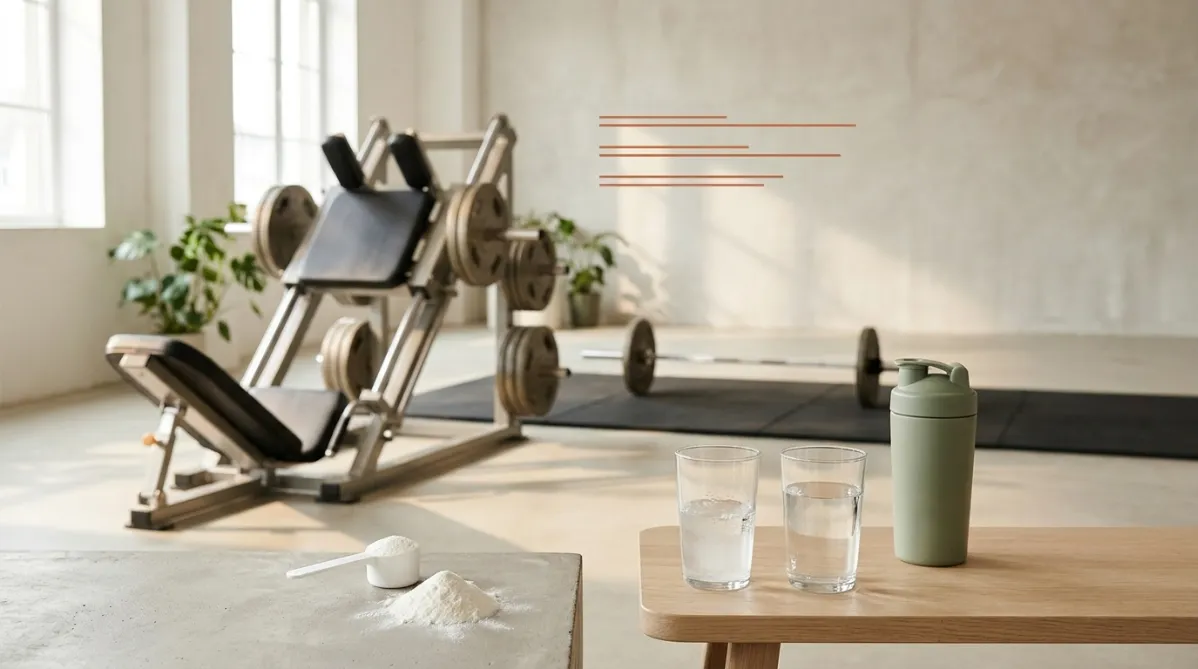
A bright, modern gym scene shot in soft natural daylight from large windows, with a wide landscape composition. In the foreground, slightly off-center to the left, sits a clean white ceramic scoop resting on a matte surface beside a small pile of fine white powder. Next to it are two clear glass tumblers on a pale oak bench. One is filled a third of the way with cloudy water and the other two-thirds of the way, a quiet visual nod to different doses. A minimalist matte shaker bottle in sage green stands behind them, slightly out of focus.

The middle ground shows a polished leg press machine with a black padded seat and brushed steel frame. Several weight plates are loaded on its pegs, and the machine catches warm highlights. Beyond it, a bent-over barbell rests on a rubber floor, deliberately softer in focus to suggest contrast between the two exercises.

The background is an airy, uncluttered studio-style gym with pale concrete walls, a few green potted plants, and long soft shadows across the floor. The color palette is muted and editorial: warm off-white, sand, sage green, charcoal, and a subtle accent of terracotta orange. A shallow depth of field gives it a magazine-like, premium wellness-journal look.

Add a subtle graphic touch: three thin horizontal lines of different lengths in terracotta, painted or projected on the wall, hinting at a bar chart comparing three results without any text or numbers. The overall mood is calm, focused, and scientific yet approachable, like a contemporary health and fitness publication cover. Clean lines, generous negative space on the right side for title overlay, and crisp, high-resolution photographic quality.
nutrition

Czy 8 g cytruliny malate to za mało? Jedynie 12 g zwiększyło liczbę powtórzeń w leg press

BY DR. GYMBRO ·

Większość suplementów pre‑workout z cytruliną malate proponuje umiarkowaną dawkę, ale nowy, podwójnie zaślepiony, pilotażowy test sugeruje, że może ona być niewystarczająca. W badaniu z udziałem 12 osób trenujących siłowo jedynie dawka 12 g znacząco zwiększyła liczbę powtórzeń, podczas gdy 8 g nie wykazało istotności. Wzrost odnotowano przy wyciskaniu na suwnicy – szacowane wyniki to 17 powtórzeń przy placebo, 19 przy 8 g i 20 przy 12 g – ale nie przy wiosłowaniu. Suplement podano godzinę przed treningiem, co wygląda obiecująco, choć mała próba czyni to jedynie hipotezą, a nie ostatecznym wnioskiem.
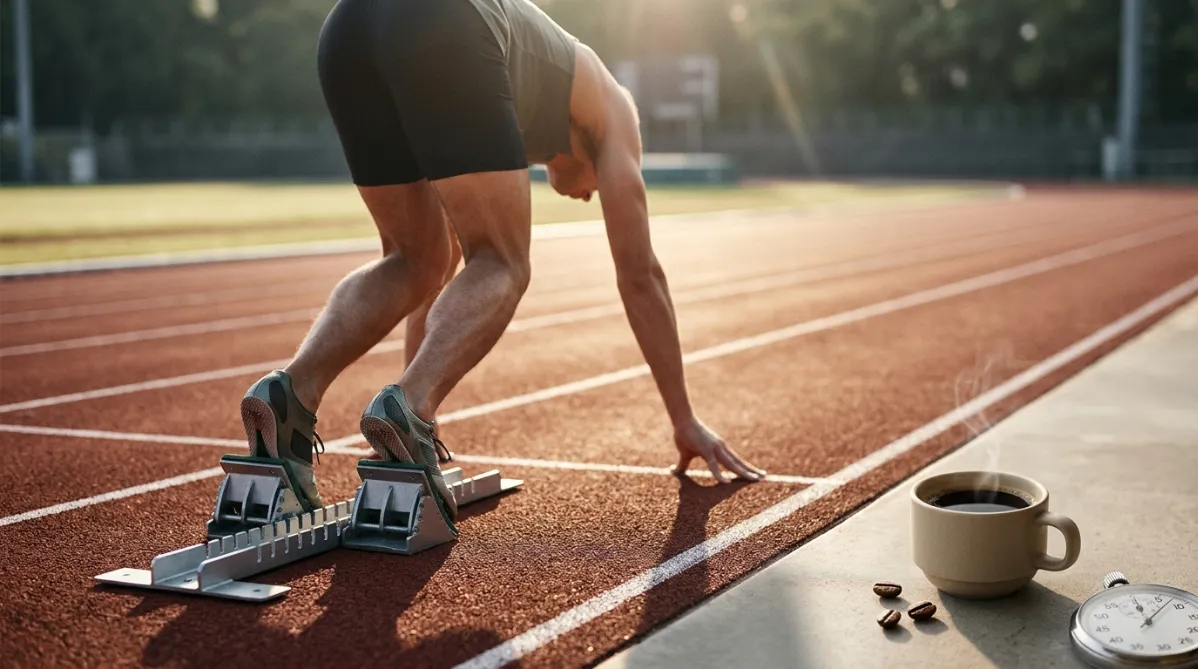
A wide, editorial-style photograph of a sprinter crouched in starting blocks on a deep terracotta-red running track, shot from a low angle at the side as the first morning light rakes across the lanes. The athlete is mid-set, hips lifted, hands poised behind crisp white lane lines, with a soft focus on their muscular calves and spiked shoes in the foreground. Warm golden sunlight creates long, elegant shadows and subtle lens flare, while the distant lanes fade into a creamy bokeh.

In the lower right foreground, slightly out of focus, sits a minimalist still life on a matte concrete ledge beside the track: a small ceramic cup of black coffee with a thin wisp of steam, two loose roasted coffee beans, and a simple stopwatch with a clean white face. The ceramic is a muted sand color, adding a refined, modern lifestyle touch.

The color palette is restrained and trendy: terracotta, warm cream, soft charcoal, and a hint of sage green from trees blurred in the far background. The composition uses generous negative space across the upper left, ideal for headline text overlay. The look is similar to a contemporary health and sports science magazine: natural film-like grain, gentle contrast, shallow depth of field, and a calm, focused mood. No text, no logos, no graphics, and no futuristic elements, just a realistic, tactile, sunlit scene that suggests precision, preparation, and explosive speed.
science research

Podwójna dawka kofeiny, szybsze sprinty? Co naprawdę przyniosło 6 mg/kg

BY DR. GYMBRO ·

Nowe randomizowane, podwójnie zaślepione badanie porównało 3 mg/kg i 6 mg/kg kofeiny u 21 wytrenowanych sprinterów. Obie dawki przewyższyły placebo, a wyższa dawka dała dodatkowy przyrost prędkości jedynie na pierwszych 30 i 60 m, nie przy 10 m. Poprawiła także wysokość skoku i siłę rozwoju w bloku startowym, ale nie wpłynęła na czas reakcji ani szczytową moc w teście Wingate. Artykuł podaje, ile to miligramów dla sportowca ważącego 70‑80 kg, kiedy przyjmować, do kogo wyniki się odnoszą i czego nie wiadomo o skutkach ubocznych.

This page is available in