Dr. Gymbro
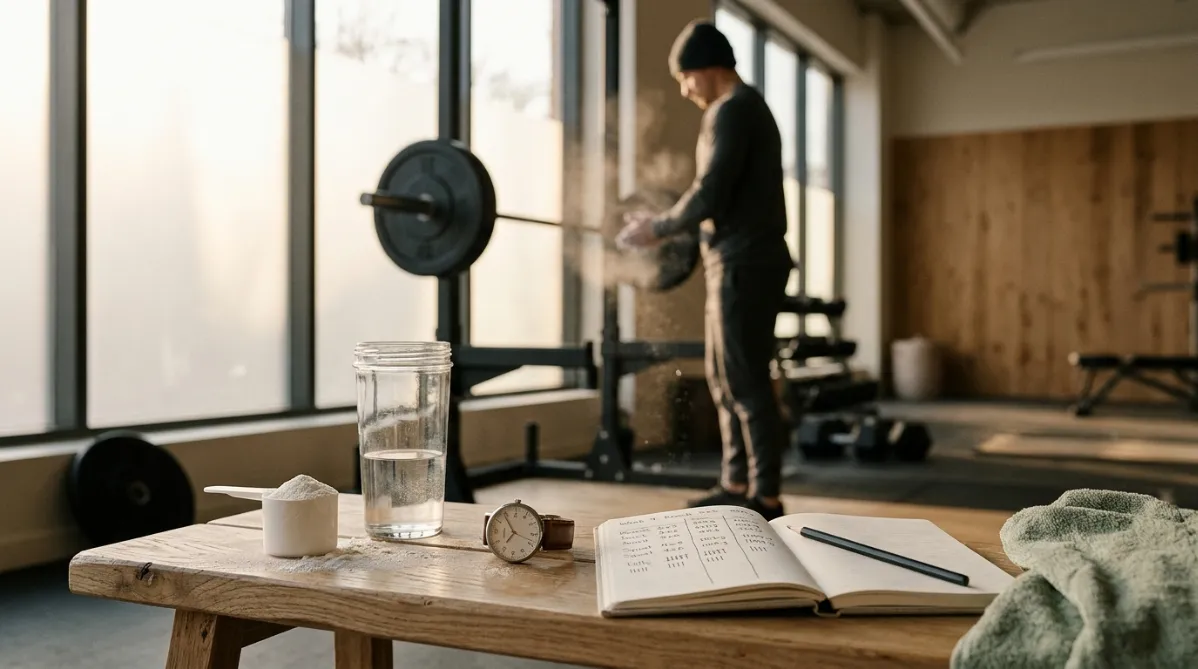
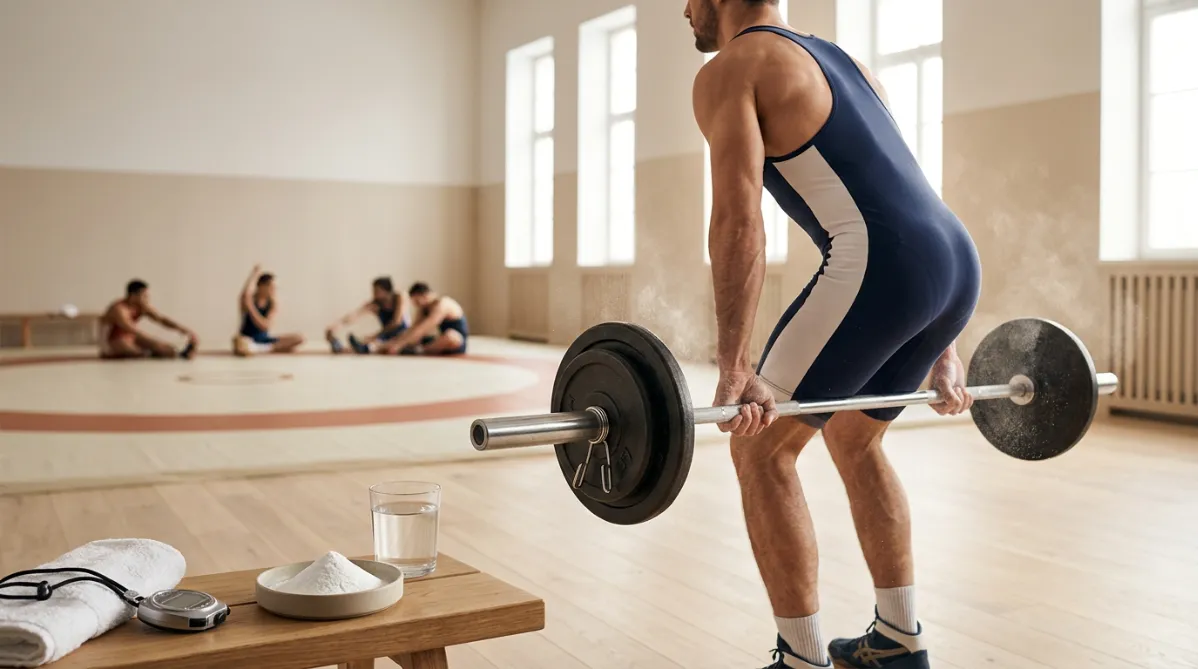
A wide, editorial-style photograph of a wrestler in mid-preparation inside a bright, minimalist training hall with pale wooden floors and soft natural light from tall windows. The athlete, seen from the side and slightly from behind, grips a loaded barbell at hip height in a deadlift-style setup. Chalk dust hangs in the air, and the muscles of the back and forearms are tensed. A navy and white wrestling singlet contrasts with the warm, neutral tones of the room. In the foreground, slightly out of focus, sits a small matte ceramic dish holding a pile of fine white taurine powder beside a clear glass of water. Next to it are a sleek stopwatch and a folded white towel on a low wooden bench. The stopwatch hints at the 60-minute timing without showing legible numbers. In the soft background, a wrestling mat in muted terracotta and cream is visible, along with a few blurred teammates stretching. The palette is calm and modern: warm beige, off-white, deep navy, and a single accent of coral orange in the mat edge and a small detail on the stopwatch. The lighting is golden-hour side light with gentle shadows, giving the chalk particles a subtle glow. The composition follows the rule of thirds, with the wrestler on the right and the powder and glass on the lower left, leaving clean negative space in the upper left for a headline overlay. The depth of field is shallow, with crisp focus on the athlete's hands and the bar and a creamy bokeh background. The overall look is a contemporary health-and-science magazine cover: refined, realistic, grounded, and athletic, with no futuristic elements and no text or logos.
Nutrition

Taurina + PAPE Warm‑Up ha aumentato la potenza di picco dei lottatori del 16,8 %

Dr. Gymbro · · 4 min read

Taurina: l'ingrediente delle bevande energetiche, ora testato con un riscaldamento PAPE

Il lavoro, pubblicato nel Journal of the International Society of Sports Nutrition, ha valutato l’effetto della taurina associata a un protocollo di post‑activation performance enhancement (PAPE) su atleti d’élite. Di seguito, i risultati più rilevanti e le limitazioni da considerare.

I risultati principali

Ventiquattro (in realtà 20) lottatori maschi d’élite hanno partecipato a tre sessioni sperimentali. Confrontando la condizione PAPE + taurina con PAPE + placebo e con una sessione di controllo (nessun integratore, nessun PAPE), sono emersi i seguenti effetti:

  • Potenza di picco aumentata del 16,76 % (p = 0,048)
  • Potenza relativa (per kg di massa corporea) aumentata del 22,24 % (p = 0,028)
  • Lattato ematico post‑test più basso (p < 0,05)
  • Miglior performance nel countermovement jump (CMJ) dopo lo sforzo (p < 0,05), interpretata dagli autori come minore affaticamento neuromuscolare.

Si tratta di incrementi notevoli per un intervento acuto, ma è importante ricordare che il p‑value della potenza di picco è appena sotto il tradizionale 0,05: un segnale promettente, non una conferma assoluta.

Cos’è il PAPE e perché combinarlo con la taurina?

Il PAPE è un potenziamento temporaneo di forza e velocità che segue contrazioni ad alta intensità. In pratica: si esegue un carico pesante, si riposa brevemente e si riesce a produrre più potenza in un movimento esplosivo rispetto a quando si è "a freddo".

Gli autori hanno ipotizzato che la taurina, già diffusa nei supplementi sportivi, possa potenziare questo meccanismo, forse migliorando la gestione del calcio intracellulare o riducendo lo stress ossidativo. Il risultato suggerisce un possibile effetto sinergico, sebbene il disegno sperimentale non lo dimostri in modo definitivo.

Come è stato condotto lo studio

Ogni atleta ha svolto tre sessioni, in ordine casuale (disposizione crossover):

  1. CON: nessun integratore, nessun PAPE.
  2. PAPE + placebo: protocollo PAPE + placebo di saccarosio.
  3. PAPE + taurina: protocollo PAPE + taurina pura.

Il protocollo PAPE consisteva in 3 serie da 8 ripetizioni di squat e hip‑thrust all’85 % del 1RM. La taurina (o il placebo) è stata assunta 60 minuti prima del PAPE. Dopo il PAPE, a distanza di circa 5 minuti, gli atleti hanno eseguito il test anaerobico Wingate (30 s al massimo) e il CMJ è stato misurato prima del Wingate, subito dopo e a 5 minuti di recupero.

Dose e tempistica

  • Tempistica: integrazione → attesa ≈ 1 h → PAPE → riposo breve → sforzo esplosivo.
  • Dose: l’abstract consultato (PMCID PMC13162555) non specifica la quantità di taurina. Negli studi sportivi la dose tipica varia tra 1 e 3 g, ma è indispensabile verificare il valore esatto nel documento completo prima di replicare il protocollo.

Chi potrebbe trarne beneficio?

Gli atleti testati erano lottatori maschi altamente allenati. Potenziali benefici potrebbero estendersi a:

  • Sport da combattimento (arti marziali, judo, lotta).
  • Sprint e salto.
  • Discipline di squadra che richiedono rapidi sforzi di alta potenza (calcio, basket, rugby).

Lo studio non ha incluso donne, atleti amatoriali o soggetti più anziani; generalizzare i risultati a queste popolazioni rimane puramente speculativo.

Chi dovrebbe usare cautela o evitarlo

  • Chi si aspetta la stessa risposta delle bevande energetiche. Lo studio ha testato taurina pura, senza caffeina né altri ingredienti tipici delle bevande.
  • Chi non esegue un riscaldamento pesante. Il beneficio è stato osservato solo quando la taurina è stata combinata con il PAPE; non è stata testata una condizione “taurina‑solo”.
  • Principianti. Tre serie da 8 ripetizioni all’85 % di 1RM rappresentano un carico elevato; per un neofita può causare affaticamento anziché potenziamento.
  • Persone con patologie o farmaci. È consigliabile consultare un medico prima di introdurre un nuovo integratore.

Limiti dello studio

  • Campione ridotto. Venti atleti è tipico per ricerche su élite, ma limita la capacità di generalizzare.
  • Manca una condizione “taurina‑solo”. Senza questo confronto la sinergia rimane un’interpretazione degli autori.
  • Effetti solo acuti. Non si hanno dati su adattamenti a lungo termine o su integrazione cronica.
  • Meccanismo non indagato. Le ipotesi sul ruolo della taurina (calcio, stress ossidativo) provengono da studi preclinici; qui sono state misurate solo prestazioni, lattato e salto.
  • Lattato come indicatore indiretto. Un valore più basso suggerisce un recupero metabolico più rapido, ma non costituisce una prova definitiva.

Indicazioni pratiche per chi vuole sperimentare

  1. Tempistica: assumere la taurina circa un’ora prima del lavoro di potenziamento.
  2. Riscaldamento PAPE: 3 × 8 squat e hip‑thrust all’85 % di 1RM, seguito da ~5 minuti di riposo.
  3. Dose: verificare la quantità esatta nel documento originale prima di replicare.
  4. Aspettative: i risultati sono promettenti ma limitati a una singola sessione su lottatori d’élite; non garantiscono un aumento del 17 % nella propria potenza.

Se decidete di provare, cambiate una variabile alla volta, registrate i dati e, se possibile, confrontate i risultati con un gruppo di controllo. Una replica indipendente, idealmente includendo una condizione “taurina‑solo” e un campione più eterogeneo, confermerebbe l’effettiva utilità di questa combinazione.
Original study

Read the original research on pubmed.ncbi.nlm.nih.gov →

This article summarizes published research for general information. It is not medical advice.

DG

Written by

Dr. Gymbro

Dr. Gymbro writes for Dr. Gymbro: science-backed fitness, nutrition & performance.

Related Articles

A sleek aluminum energy drink can and a matte scoop of white pre-workout powder sit side by side on a pale concrete gym bench, lit by soft morning window light. The can is slim and minimalist, with a muted sage green label and no legible text. Beside it is a clear glass shaker half full of cloudy, lightly frothy liquid with condensation beading on its surface. A few fine grains of powder are scattered across the bench, catching the light. Behind them, slightly out of focus, a stainless steel barbell rests on a rack, and a folded charcoal gym towel sits at the edge of the frame.

The color palette is warm neutral: oatmeal, soft gray, and sage, with a single accent of pale citrus yellow from a halved lemon wedge placed near the glass. A thin, elegant shadow from the window blinds falls diagonally across the scene, giving it an editorial, magazine-style rhythm. The composition leaves generous negative space on the right third of the frame, a smooth blurred wall in warm off-white, suitable for headline text overlay.

The shot is a low-angle, shallow depth-of-field product-style photograph, as if taken with an 85mm lens at f/2. The foreground objects are tack sharp and the background melts into creamy blur. The mood is calm, clean, and modern, like a wellness or science journal feature. Subtle film grain and gentle contrast add a tactile, contemporary lifestyle feel. There are no people, no logos, and no futuristic or sci-fi elements, just a quiet, considered still life that suggests the choice between a canned drink and a scooped supplement.
nutrition

La tua bevanda energetica potrebbe fungere da pre‑allenamento—con un unico inconveniente

BY DR. GYMBRO ·

Caffeina e taurina sono spesso associate nelle bevande energetiche e nei supplementi pre‑allenamento, ma la loro combinazione migliora davvero le performance? Una meta‑analisi di 11 studi randomizzati (234 partecipanti) indica un moderato incremento della potenza massima e del tempo di esaurimento, oltre a una percezione dell’esercizio più leggera. La frequenza cardiaca non cambia e il risultato sul tempo di reazione risulta troppo eterogeneo per essere affidabile. Il limite principale è la dimensione ridotta degli studi, che non permette di stabilire se la taurina aggiunga un vero beneficio rispetto alla sola caffeina.

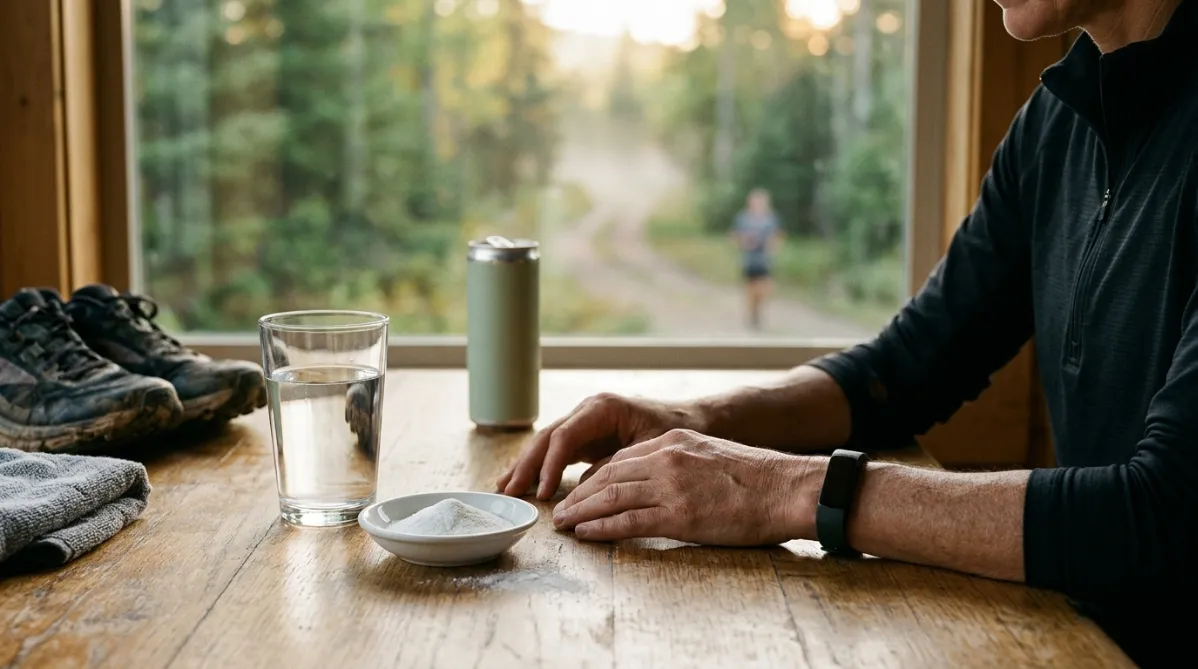
A landscape editorial photograph of a lone runner's hands resting on a weathered wooden table beside a small white ceramic dish of fine white powder and a clear glass of water, shot in soft morning light. A slim matte aluminum energy drink can, unbranded with a minimalist pale sage-green label, stands slightly out of focus in the background, with a single scoop of powder dusted lightly on the tabletop. A pair of worn running shoes and a folded gray towel sit at the edge of the frame. Through a large window behind them, a blurred misty trail winds through green trees at sunrise, with warm golden light spilling across the scene.

The color palette is calm and modern: creamy off-white, sage green, warm honey gold, and soft charcoal. The composition follows the rule of thirds, with the dish and glass in the lower left third and generous negative space on the right for a title overlay. The depth of field is shallow, with a crisp focus on the powder's delicate texture and tiny glints of light on the glass rim. The mood is clean, thoughtful, and quietly energetic, like a contemporary health and science magazine feature. Natural grain, subtle film-like softness, and gentle shadows give it an authentic lifestyle-editorial look. There are no text, logos, or futuristic elements, only tactile, real-world materials like wood, ceramic, glass, cotton, and metal.
nutrition

L'ingrediente delle bevande energetiche che da solo aumenta la resistenza

BY DR. GYMBRO ·

Mentre tutti citano la caffeina, c’è un altro componente della lattina energetica che potrebbe operare in silenzio: la taurina. Una meta‑analisi del 2018 su 10 studi ha evidenziato che la taurina pura migliora le prestazioni di resistenza (Hedges' g = 0,40) e che basta una singola dose. Né la quantità (1‑6 g) né la durata dell’assunzione hanno modificato l’effetto in maniera significativa. L’evidenza è però limitata e gli intervalli di confidenza ampi, perciò si tratta di un indizio promettente, non di una certezza. Scopri cosa ha rivelato lo studio e come sperimentare la taurina in modo ragionevole.

A wide, softly lit editorial photograph of a modern minimalist gym corner, shot at golden hour with warm light streaming through large frosted windows. In the foreground, a matte white scoop of fine creatine powder rests on a pale oak bench beside a clear glass shaker bottle half-filled with water. A small pile of loose white powder dusts the wood surface. Just behind them, a matte black barbell loaded with charcoal bumper plates rests on a squat rack, slightly out of focus, with chalk dust floating in the sunbeams.

On the bench, a simple analog wall-style clock or a sleek minimalist wristwatch lies face up, hinting at timing without being the main focus. Next to it sits a slim open notebook with a pencil and a few hand-drawn tally marks and neat columns, suggesting tracked training data. A folded sage-green towel sits at the edge of the frame.

The color palette is calm and sophisticated: cream, warm oak, soft sage green, charcoal, and a touch of terracotta. The shallow depth of field gives creamy bokeh in the background, where the soft silhouette of a lifter in neutral athletic wear chalks their hands near the rack, rendered anonymously and without a visible face.

The composition follows a rule-of-thirds layout, with the powder and shaker in the lower left third and open negative space on the right, suitable for headline overlay. The mood is clean, focused, and quietly motivated, like a premium health and science journal feature. The lighting is natural and diffused, with gentle shadows, subtle film grain, and true-to-life textures. Shot on a 50mm lens at f/2, with crisp detail on the powder and a high-end lifestyle magazine finish.
nutrition

La creatina assunta prima dell'allenamento ha prevalso in questo test di tempistica – ma c’è una pecca

BY DR. GYMBRO ·

La questione è: importa quando si assume la creatina? Uno studio pilota randomizzato pubblicato su *Nutrients* suggerisce che una dose pre‑allenamento (0,1 g/kg) possa aumentare il carico totale sollevato nella panca e nello squat rispetto a placebo o a nessun integratore. Tuttavia, la stessa dose assunta durante o dopo l'allenamento non ha mostrato vantaggi, né sono emerse differenze in salto, umore, cognizione o indolenzimento muscolare. Lo studio è piccolo (11 uomini) e ha testato una sola dose, perciò i risultati sono da considerarsi esplorativi. Ecco i dettagli sul dosaggio, i dati e a chi conviene prestare attenzione.

A wide, editorial-style still life photographed in soft natural window light on a pale oatmeal-colored linen surface. In the center-left, a small matte ceramic dish holds a modest pile of vivid red dried chili peppers and a few sliced fresh chilies, their glossy seeds catching the light. Beside it sits a minimalist amber glass capsule bottle without a label, with two translucent capsules spilled onto the linen, along with a tiny brass measuring spoon holding a pinch of fine orange-red powder.

On the right side of the frame, slightly out of focus, a worn black barbell rests across a wooden gym box, with a chalk-dusted steel plate leaning nearby. A small cloud of white chalk dust hangs delicately in the air, backlit by the light. A folded gray cotton gym towel and a simple stainless steel water bottle sit in the soft background.

In the foreground, a minimalist white notebook lies open with a clean hand-drawn line graph in thin black ink, with a small red dot marking one point. A mechanical pencil rests across the page.

The palette is warm and restrained: terracotta red, burnt orange, cream, charcoal, and muted sage green accents from a single leafy chili plant stem. Shallow depth of field, subtle film grain, gentle shadows, generous negative space at the top of the frame for a title overlay. Modern health and science journal aesthetic, calm, clean, tactile, and slightly moody, like a magazine feature on sports nutrition. No people, no text, no logos.
nutrition

Phenylcapsaicin pre‑workout: migliora gli squat in CrossFit e riduce i dolori muscolari

BY DR. GYMBRO ·

Un composto estratto dal peperoncino, la phenylcapsaicin, è stato testato in uno studio triplo cieco su 50 atleti di CrossFit. Una singola dose di 2,5 mg assunta 45 minuti prima dell’allenamento ha aumentato il carico e le ripetizioni negli squat post‑sessione, ha ridotto la perdita di altezza nei salti e ha attenuato il dolore muscolare a 24 e 48 ore. Tuttavia non ha influito sul WOD né su lattato, RPE o frequenza cardiaca. Due autori hanno dichiarato un conflitto di interesse con un marchio di integratori, e lo studio riguarda solo una dose acuta. Ecco cosa dimostrano i dati, cosa non dimostrano e chi potrebbe trarne realmente vantaggio.

This page is available in