Dr. Gymbro
←

#kre-alkalyn

1 article
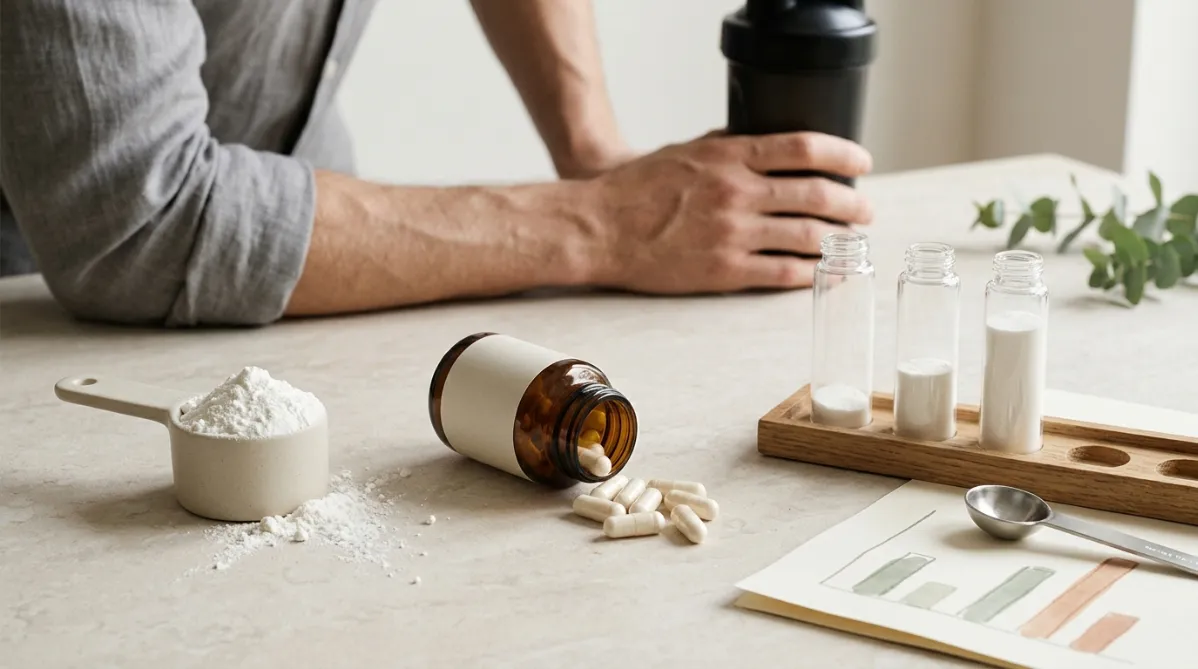
A modern editorial still life photographed from a slightly elevated angle on a pale, matte stone surface in soft natural window light. On the left, a heaping mound of fine white creatine monohydrate powder spills from a matte ceramic scoop, with a few crisp grains scattered across the surface. In the center, a small, minimalist amber glass capsule bottle sits tipped on its side, with a handful of off-white capsules spilling out. The label is blank and clean. On the right, a neat row of three clear glass lab-style vials rests on a slim oak tray. The vials hold different amounts of white powder: the first nearly empty, the second slightly fuller, the third filled almost to the brim. This quietly suggests the difference in dose and result. Beside the tray lies a simple stainless steel measuring spoon and a folded sheet of cream paper with soft, abstract bar-chart lines in muted sage green and terracotta. The lines are hand-drawn and unlabeled.

Behind the objects, slightly out of focus, a lean athletic forearm in a gray linen sleeve rests on the edge of the surface, one hand loosely holding a matte shaker bottle. This hints at a training context without showing a face. A single sprig of eucalyptus in the corner adds a soft organic touch.

The palette is warm neutral: bone white, oatmeal, soft sage, muted terracotta, and touches of amber. Shadows are gentle and long, with a shallow depth of field that gives creamy bokeh in the background. The mood is calm, clean, and trustworthy, like a premium health and science journal's feature spread, with generous negative space at the top and right for headline overlay. The composition is wide, balanced, and uncluttered, with subtle film-like grain and a natural, true-to-life color grade. No text, no logos, no futuristic elements.
nutrition

La dose consigliata di Kre‑Alkalyn non aumenta la creatina muscolare: le biopsie lo dimostrano

BY DR. GYMBRO ·

La creatina tamponata, come la Kre‑Alkalyn, promette un’assorbimento migliore, dosi più basse e meno gonfiore. Uno studio in doppio cieco della Texas A&M, condotto su 36 sollevatori esperti per 28 giorni, ha messo alla prova queste affermazioni con biopsie muscolari. Con la dose indicata di 1,5 g al giorno, la creatina muscolare è rimasta praticamente invariata, mentre il monoidrato l’ha aumentata in modo evidente. Forza, composizione corporea ed effetti collaterali non hanno mostrato alcun vantaggio per il prodotto tamponato. Ecco i dati e le indicazioni per dosare correttamente la creatina.

This page is available in