Dr. Gymbro
←

#protein synthesis

1 article
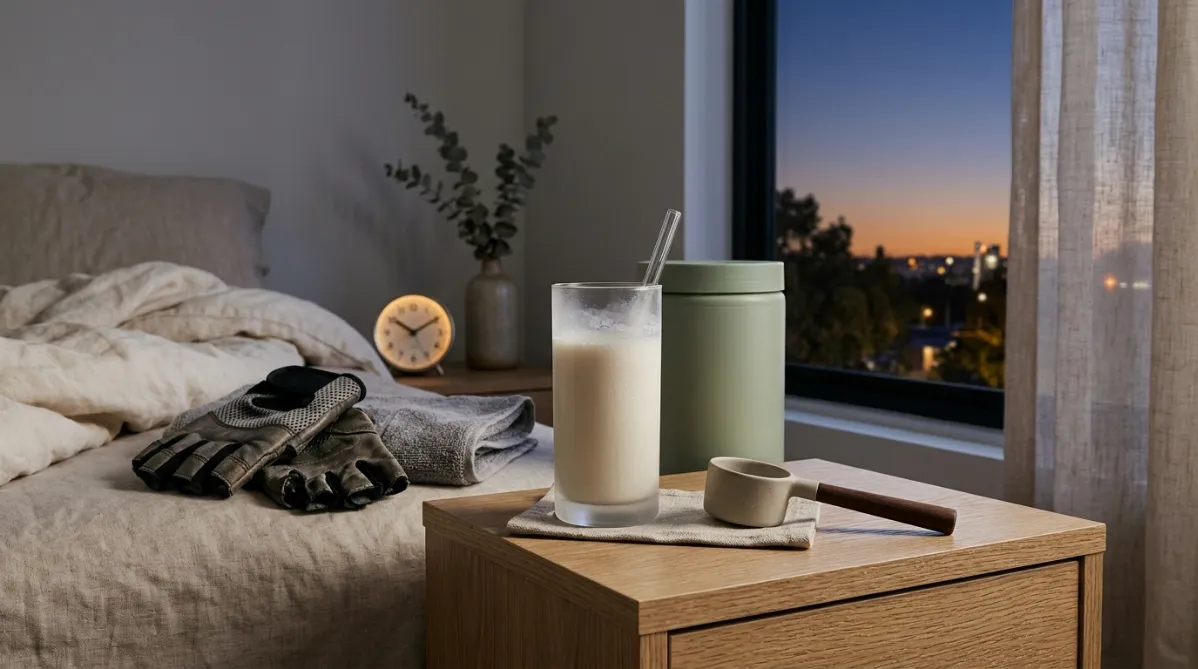
A quiet bedside scene at dusk, shot in soft natural light with a shallow depth of field. A tall frosted glass of creamy, pale-white shake sits on a light oak nightstand, with a thin film of condensation on the glass and a faint milky residue near the rim. Beside it, a matte ceramic scoop rests on a small linen coaster. A minimalist tub of unbranded protein powder in muted sage green sits slightly out of focus in the background.

To the left, a neatly made bed with oatmeal-colored linen sheets and a rumpled cream duvet. A pair of worn lifting gloves and a folded gray gym towel sit on the edge of the bed, suggesting an evening workout just finished. A small analog alarm clock reads about 10:30 PM, its soft face glowing faintly. A sprig of dried eucalyptus in a small stoneware bud vase adds an organic touch.

Through a large window on the right, deep indigo twilight fades into a warm amber horizon, and the last light spills across the wall in long, gentle gradients. A sheer curtain moves slightly. The palette is warm neutrals (cream, oak, sand, soft terracotta) with a few muted blue-violet accents from the evening sky.

The composition uses the rule of thirds, with the glass at the left-center foreground and generous negative space on the right, where headline text could sit. The mood is calm, restorative, and editorial, like a modern wellness and nutrition journal. The lighting is gentle and diffused, with subtle film grain and slightly lifted shadows. The textures of linen, wood, glass, and ceramic are crisp. The image is clean and uncluttered, with no text, logos, or people, and no futuristic or sci-fi elements.
nutrition

Lo shake da 40 g prima di dormire: cosa fa la caseina pre‑sonno durante la notte

BY DR. GYMBRO ·

Allenarsi di sera e poi passare otto ore senza mangiare: questo ostacola il recupero? Uno studio del 2012 ha somministrato a 16 giovani uomini 40 g di caseina 30 minuti prima di andare a dormire, monitorando cosa accadeva durante la notte. La proteina è stata digerita e assorbita, la sintesi proteica dell’intero corpo è aumentata (311 vs 246 µmol/kg) e il bilancio proteico netto è passato da negativo a positivo. La sintesi proteica muscolare è risultata circa il 22 % più alta, sebbene con una significatività marginale. Scopri cosa indicano questi risultati, cosa non dimostrano e come usarli.

This page is available in