Dr. Gymbro
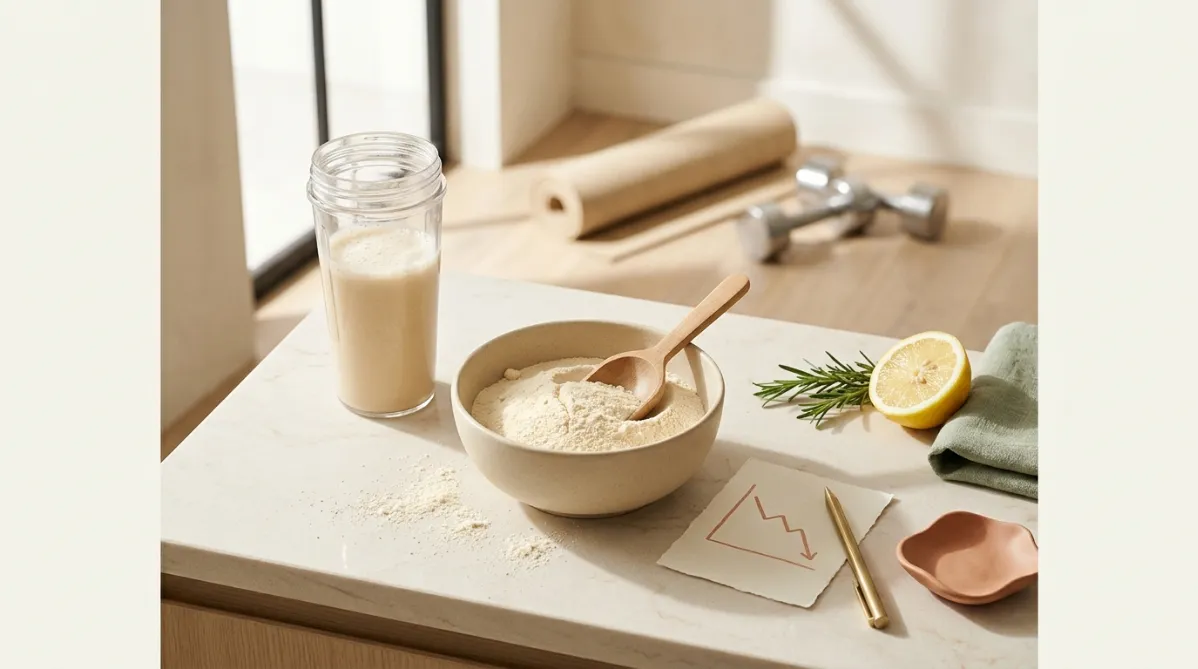
A wide, softly lit editorial still life on a warm off-white stone countertop. In the center sits a matte ceramic bowl of fine pale cream whey protein powder with a wooden scoop resting in it, a few fine grains dusted across the surface. To the left, a clear glass shaker bottle filled with a creamy, lightly frothy shake catches a gentle highlight. To the right, a minimalist arrangement of fresh produce and wellness cues: a halved lemon, a sprig of green rosemary, and a small folded sage-green linen towel. In the soft-focus background, a neatly rolled yoga mat and a pair of brushed-steel dumbbells rest on a pale oak floor beside a tall window. Morning sunlight streams in diagonally, creating long, gentle shadows and a luminous, airy atmosphere.

Subtle nods to the "liver" and "lab results" themes come through in tasteful, abstract ways: a small sheet of cream paper with a simple, hand-drawn downward-trending line graph in muted terracotta ink sits beside the bowl, with a slim brass pen laid across it. A delicate terracotta-colored ceramic dish nearby evokes organic form without being anatomical.

The color palette is calm and modern: warm creams, soft sand, sage green, muted terracotta, and touches of brushed brass. Shallow depth of field, crisp focus on the powder and scoop, with a creamy blurred background. Shot in a clean, contemporary magazine style with natural film-like grain, gentle contrast, and generous negative space on the left and right edges for headline overlay. Feels trustworthy, fresh, and approachable, like a trendy health and science journal cover.
supplements

Czy serwatka niszczy twoją wątrobę? 59 sportowców twierdzi inaczej

Dr. Gymbro · · 3 min read

Słyszałeś w siłowni: „Ta cała serwatka pali twoją wątrobę”. Nowa randomizowana, podwójnie zaślepiona, kontrolowana placebo próba na 59 wytrenowanych sportowcach sprawdziła tę obawę wprost. Po 8 tygodniach suplementacji 30 g dziennie białkiem serwatkowym enzymy wątrobowe nie tylko nie wzrosły – wręcz spadły. Co to właściwie oznacza i co nie zostało wykazane?

Źródła: PubMed record | DOI: 10.1002/ejsc.70279

Mit vs. badanie

Idea, że „serwatka niszczy twoją wątrobę”, opiera się na prostej logice: więcej białka → większe zapotrzebowanie metaboliczne → większy stres wątroby. Enzymy krwi, takie jak ALT i AST, są najczęściej przytaczane jako wskaźniki potencjalnego uszkodzenia. Gdyby serwatka rzeczywiście szkodziła, oczekiwalibyśmy ich wzrostu.

Badanie, opublikowane w European Journal of Sport Science (2026) przez Bena Mhamed i współpracowników, w tym Beat Knechtle, właśnie to sprawdziło. Mierzono ALT, AST, białko C‑reaktywne (CRP) oraz kinazę kreatynową (CK) przed i po interwencji.

Jak przeprowadzono badanie

  • Uczestnicy: 59 mężczyzn‑sportowców, podzielonych na grupy trenujące siłę (n = 30) oraz wytrzymałość (n = 29).
  • Projekt: randomizowany, podwójnie zaślepiony, kontrolowany placebo.
  • Interwencja: 30 g dziennie białka serwatkowego (grupa whey) vs. placebo (grupa kontrolna).
  • Czas trwania: 8 tygodni.
  • Wyniki: ALT, AST, CRP i CK mierzono przed i po interwencji.

Stratyfikacja według typu treningu ma znaczenie – pozwala ocenić, czy serwatka działa inaczej u sportowców siłowo‑szybkościowych niż u wytrzymałościowych.

Co odkryli

Główny wynik: po suplementacji ALT, AST i CK uległy istotnemu obniżeniu zarówno u sportowców wytrzymałościowych, jak i siłowych (p = 0,001; 0,015; 0,001; 0,003). Autorzy interpretują to jako zmniejszenie stresu wątrobowego i mięśniowego.

W grupie placebo enzymy i CRP były stabilne lub rosły, szczególnie u sportowców wytrzymałościowych. Sugeruje to, że intensywny trening sam w sobie może podnosić te markery, a serwatka jedynie hamowała ten wzrost.

Jedyny marker wykazujący statystycznie istotną trójskładnikową interakcję (czas × suplementacja × modalność treningu) był ALT (p = 0,003). Efekt ten był widoczny głównie u sportowców siłowych.

Notatka o CRP, której nie powinieneś pominąć

CRP znacząco spadło w grupie suplementowanej sportowców siłowych (p = 0,039), natomiast u wytrzymałościowców zmiany były niewielkie i nieistotne. Trójskładnikowa interakcja dla CRP nie była istotna, więc wynik ten należy traktować jako trend wewnątrz grupy, a nie dowód na różny wpływ serwatki na stan zapalny.

Szczere ograniczenia: czego nie mogą pokazać te markery

  • Markery nie są diagnozą. ALT, AST i CK to wskaźniki krwi. CK i AST pochodzą w dużej mierze z mięśni, więc ich zmiany mogą odzwierciedlać stres mięśniowy, a nie wyłącznie stan wątroby.
  • Tylko zdrowi, wytrenowani mężczyźni. Wyniki nie dotyczą kobiet, osób z chorobami wątroby ani ogólnej populacji.
  • Krótki okres i stała dawka. 8 tygodni przy 30 g/dzień. Potrzebne są badania długoterminowe i ocena efektu dawka‑odpowiedź.
  • Mechanizm spekulatywny. Autorzy sugerują działanie antyoksydacyjne i przeciwzapalne, ale badanie nie zostało zaprojektowane, by to udowodnić.
  • Niewielka próbka. Około 15 osób w każdej podgrupie – wyniki podgrup należy traktować jako wstępne.

Praktyczne wnioski

Dawka i timing: Badanie zastosowało 30 g/dzień przez 8 tygodni. Nie podano, kiedy przyjmowano suplement względem treningu, więc nie ma podstaw do wnioskowania o optymalnej porze przyjmowania.

Kto może skorzystać: Zdrowi dorośli trenujący siłowo lub wytrzymałościowo, szukający wygodnego źródła białka. Badanie sugeruje, że przy tej dawce serwatka nie była powiązana ze pogorszeniem markerów wątrobowych ani mięśniowych.

Kto powinien zachować ostrożność: Osoby z zdiagnozowaną chorobą wątroby lub nerek, podwyższonymi enzymami wątrobowymi, alergią na mleko, nietolerancją laktozy oraz te, którym lekarz zalecił ograniczenie białka. Przed rozpoczęciem suplementacji warto skonsultować się z lekarzem.

Mądre nawyki: Jeśli monitorujesz wyniki badań, pamiętaj, że intensywny trening, alkohol i niektóre leki mogą podnosić ALT, AST i CK. Unikaj pobierania krwi zaraz po intensywnej sesji i omawiaj nieoczekiwane wyniki z profesjonalistą.

Najważniejsze

Badanie nie dowodzi, że serwatka jest tonikiem wątroby, ale obala ogólne twierdzenie, że umiarkowane suplementowanie serwatki szkodzi wątrobie u zdrowych sportowców: w ciągu 8 tygodni przy 30 g/dzień ALT, AST i CK spadły, a nie wzrosły, w porównaniu z trendami w grupie placebo. Wnioskiem jest ostrożny optymizm oraz potrzeba dłuższych, większych i bardziej zróżnicowanych badań.

Full record: PubMed 42929456 | DOI
Original study

Read the original research on pubmed.ncbi.nlm.nih.gov →

This article summarizes published research for general information. It is not medical advice.

DG

Written by

Dr. Gymbro

Dr. Gymbro writes for Dr. Gymbro: science-backed fitness, nutrition & performance.

Related Articles

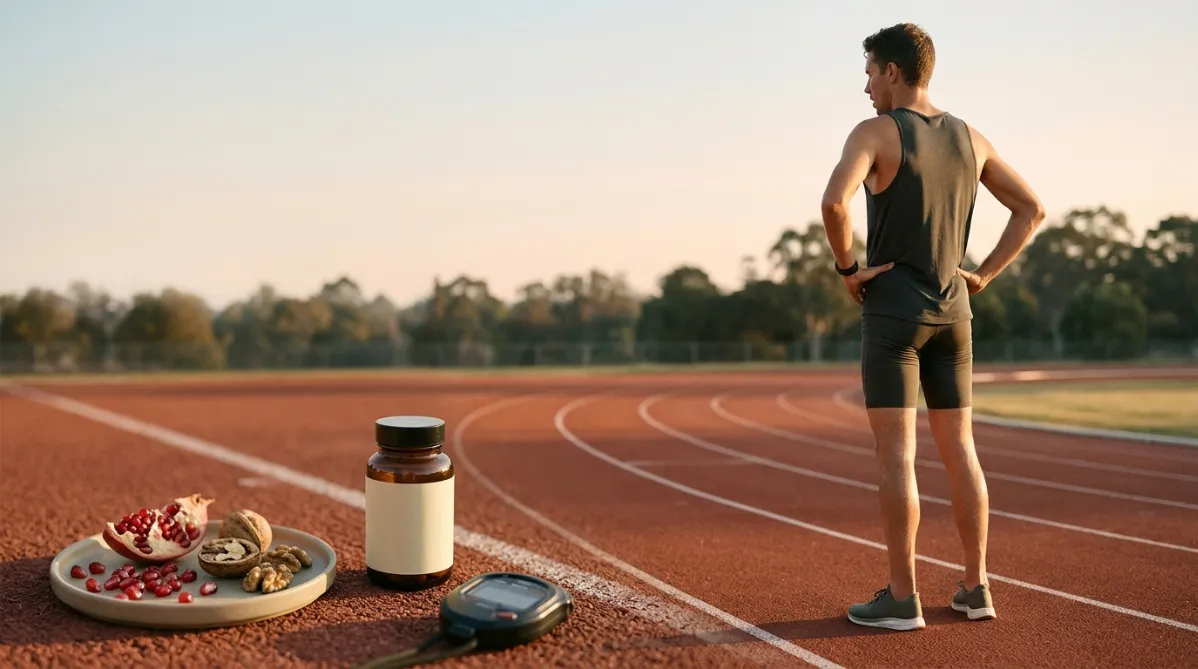
A wide landscape editorial photograph of a lone male distance runner, seen from behind in soft three-quarter profile, pausing on a red-clay outdoor running track at golden hour. He wears a minimalist charcoal singlet and fitted shorts, with a faint sheen of sweat on his calves and shoulders. His hands rest loosely on his hips as he catches his breath, and the white lane lines curve gracefully into the distance. Low amber sunlight rakes across the track and casts long, soft shadows. A hazy line of trees and a pale peach sky blur into creamy bokeh behind him.

In the lower foreground, slightly out of focus, a small matte ceramic dish holds a few pomegranate seeds and halved walnuts, a nod to the natural food sources of urolithin A. Beside it sits a minimalist amber glass supplement bottle with a plain cream label, and a stopwatch lies face-up on the track's edge. The stopwatch is blurred just enough to read as an object, not a number.

The palette is warm and earthy, with terracotta, burnt orange, soft cream, and muted sage green. The look is refined and contemporary, like a high-end wellness or sports-science magazine, with natural film-like grain, shallow depth of field, and gentle contrast. The composition follows the rule of thirds. The runner sits in the right third, the still life anchors the lower left, and open negative space in the upper left leaves room for a headline overlay. The mood is calm and thoughtful, suggesting recovery, measured results, and quiet scientific skepticism rather than hype. No text, no logos, no futuristic elements.
nutrition

Urolithin A nie przyspieszył elitarnych biegaczy, ale ograniczył uszkodzenia mięśni

BY DR. GYMBRO ·

Urolithin A jest reklamowany jako „suplement mitochondriowy”, więc naukowcy przetestowali go na elitarnych biegaczach‑mężczyznach o VO2max około 66 ml·kg⁻¹·min⁻¹. Nie przyspieszył ich na dystansie 3000 m, ale obniżył poziom CK – wskaźnika uszkodzeń mięśni – oraz subiektywne odczucie wysiłku po biegu. VO2max wzrosło o 5,4 % w grupie UA i o 3,6 % w grupie placebo, przy czym różnica nie była statystycznie istotna. Artykuł opisuje, co 1000 mg dziennie przez cztery tygodnie naprawdę zrobiło i czego nie zrobiło, oraz na co zwrócić uwagę przy tak małych próbach i powiązaniach z przemysłem.

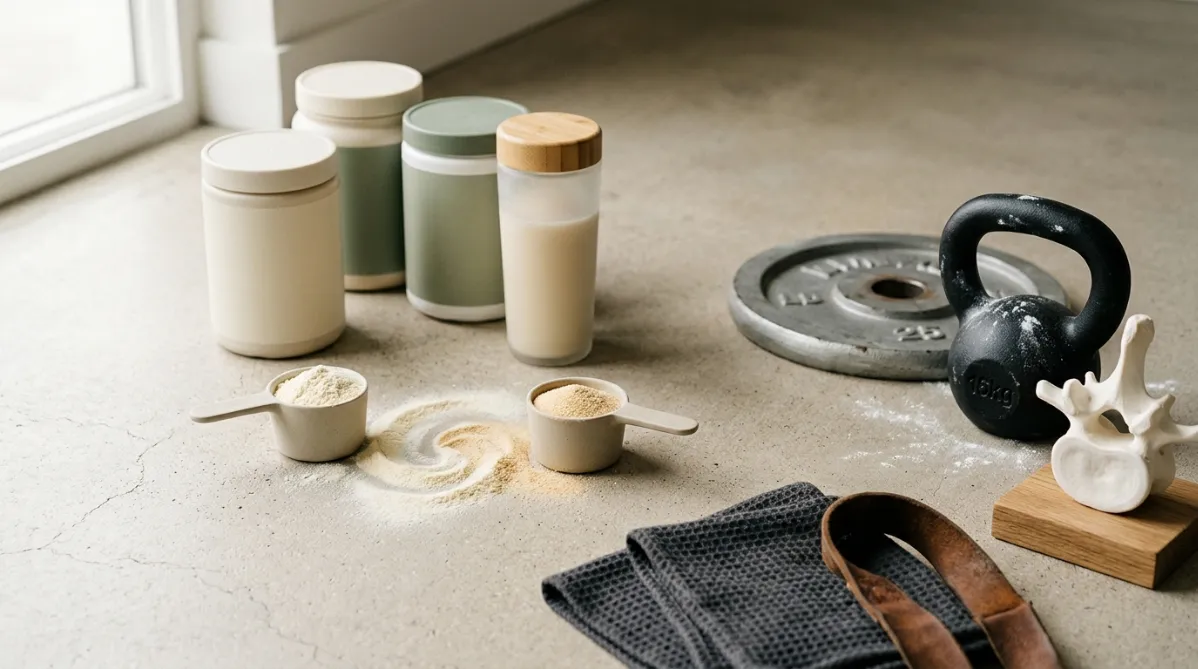
A wide, softly lit editorial still life on a pale warm-gray concrete surface, shot from a slightly elevated three-quarter angle. In the center-left, two matte ceramic scoops sit side by side. One holds fine ivory whey powder, the other holds slightly coarser, pale golden collagen peptide powder. A small, elegant dusting of both powders spills between them and blends into a soft swirl. Behind them, three minimalist cream and sage-green supplement tubs with no legible text stand in a staggered row, with a frosted glass shaker bottle of creamy liquid beside them.

On the right, a brushed-steel barbell plate and a compact chalk-dusted kettlebell rest slightly out of focus, suggesting resistance training. Pale wisps of chalk hang in the air. A folded charcoal gym towel and a pair of worn leather lifting straps lie in the foreground. A single cross-section of a clean white bone model, a stylized vertebra, rests on a small oak block at the far right. It subtly signals the bone-density theme without looking clinical.

Natural window light enters from the left, casting long, gentle shadows and a warm highlight on the powders. The palette is muted and modern: oatmeal, bone white, sage green, soft charcoal, and touches of warm amber. Shallow depth of field keeps the scoops tack-sharp and melts the background into creamy blur. Leave generous negative space in the upper right for headline overlay. The overall feel is a premium health and science journal cover: clean, tactile, minimalist, with fine film-like grain and a calm, editorial mood.
nutrition

Serwatka i kolagen przyćmiły każdy z osobna wśród podnoszących ciężary — ale jest haczyk

BY DR. GYMBRO ·

Mieszanka 30 g serwatki i 10 g kolagenu przewyższyła samą serwatkę, sam kolagen oraz placebo we wszystkich wynikach w nowym 8‑tygodniowym badaniu mężczyzn trenujących siłowo. Kombinacja dodała 2,66 kg mięśni (pomiar BIA), zwiększyła gęstość mineralną kości kręgosłupa lędźwiowego oraz poprawiła wyniki przysiadów, wyciskania i markerów przemiany kostnej. Sam kolagen wpłynął na kości, a sama serwatka na mięśnie. Jednak przy zaledwie 40 uczestnikach, nierównych dawkach białka i zaskakująco dużym przyroście gęstości kości, kryje się pewien haczyk. Oto, co udało się uzyskać, kto może z tego skorzystać i kto powinien tego unikać.

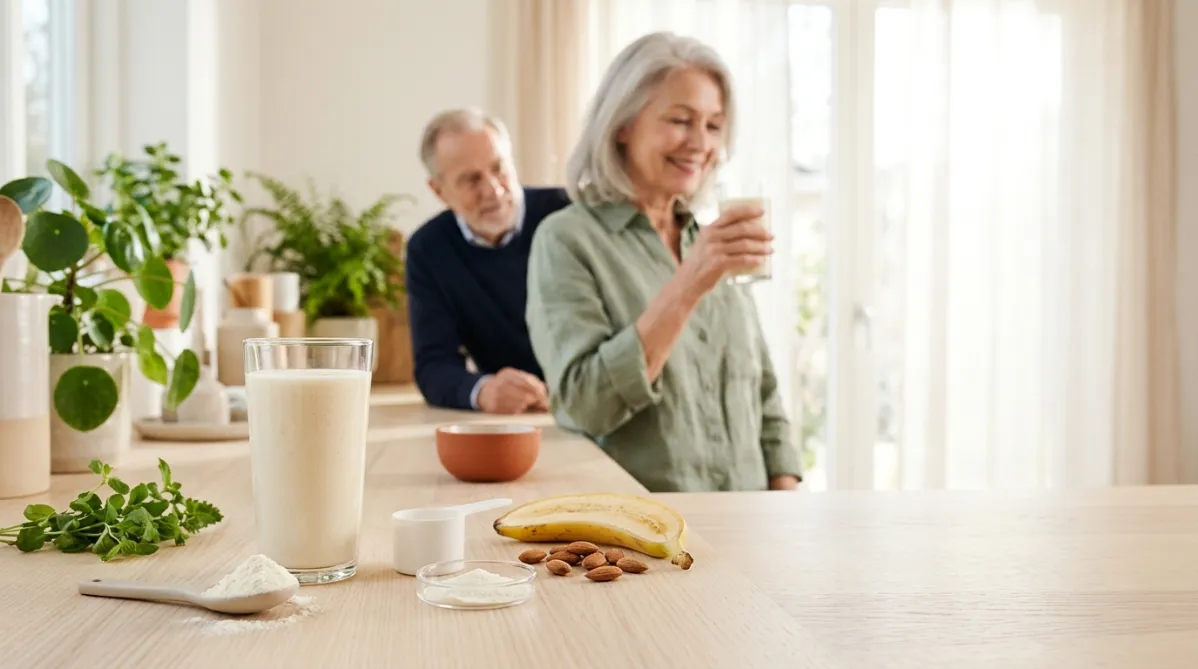
A bright, modern editorial still life on a clean, softly lit kitchen countertop of pale ash wood. In the foreground, a tall glass of creamy off-white protein shake sits beside a small ceramic spoon holding a mound of fine white powder. Next to it is a minimalist matte-white scoop and a small glass dish with a few pinches of powder. Scattered nearby are a few natural elements: a halved banana, a handful of raw almonds, and a sprig of fresh green herbs for a splash of color.

In the soft-focus midground, an older woman in her late 60s with silver-gray hair, wearing a sage-green linen shirt, smiles gently as she lifts a glass. Her face is slightly blurred and warm, bathed in natural window light. Beside her, slightly further back and out of focus, an older man in a navy sweater leans on the counter, a neutral presence that subtly contrasts with her. A wide window behind them floods the scene with soft morning light, with sheer curtains and a few leafy houseplants.

The color palette is muted and fresh: warm cream, soft sage, pale peach, and light oak, with a touch of terracotta from a small ceramic bowl. Shallow depth of field, creamy bokeh, subtle film-like grain, and gentle shadows give it a contemporary lifestyle-magazine feel. Composition follows the rule of thirds, with the shake and powder on the left third and open negative space on the right for headline overlay. The mood is calm, optimistic, and health-focused, polished like a trendy wellness journal cover, with no text, no logos, and no futuristic or sci-fi elements.
nutrition

3 g HMB + 40 g Whey – niespodziewany zastrzyk mocy u kobiet, nie u mężczyzn

BY DR. GYMBRO ·

Wszyscy zakładali, że suplement budujący mięśnie przede wszystkim pomoże starszym mężczyznom. Nowe badanie z użyciem znacznika wykazało jednak coś innego – dodanie 3 g calcium‑HMB do koktajlu z 40 g whey zwiększyło syntezę białek mięśniowych u starszych kobiet, ale nie u mężczyzn. HMB dodatkowo ograniczyło późniejsze rozpady mięśni w całej grupie. Trzeba jednak pamiętać, że jest to jedynie trzy‑godzinne, krótkotrwałe badanie na 24 osobach, więc nie stanowi dowodu na długoterminowy przyrost masy mięśniowej.

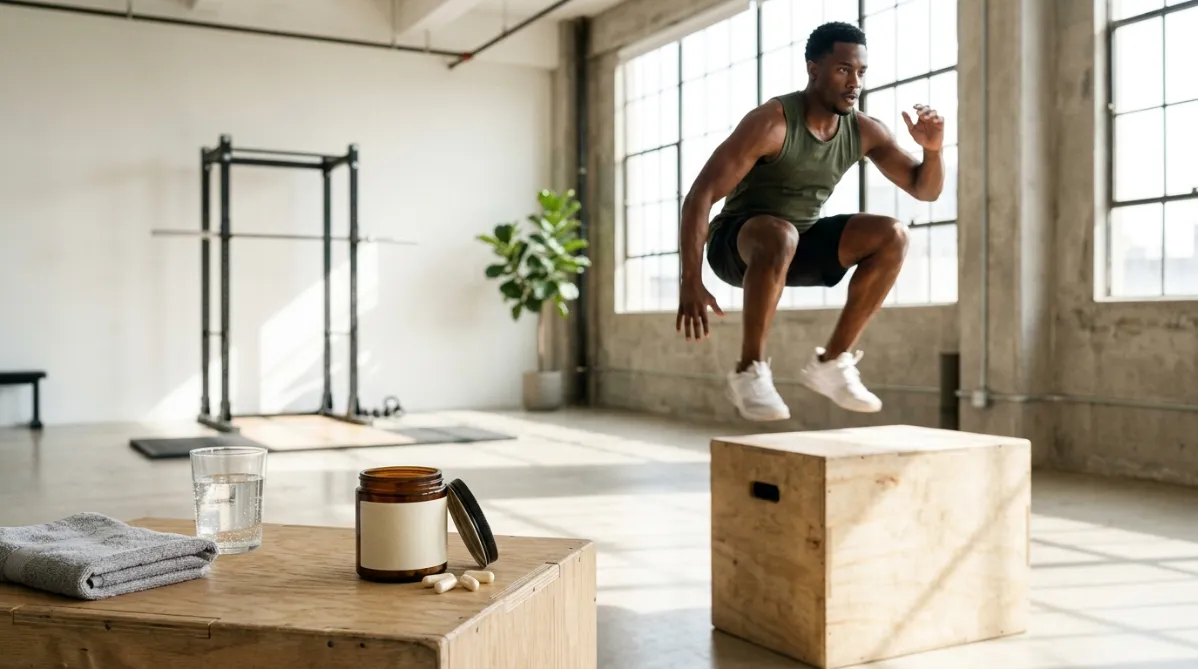
A wide, bright editorial photograph of a male athlete captured mid-jump in a minimalist, sunlit indoor training studio with pale concrete floors and tall windows. He is suspended at the peak of a plyometric box jump, knees tucked, with soft natural light and gentle motion blur at his feet. In the foreground, slightly out of focus, sits a small matte amber glass jar with a plain cream label, its lid resting beside it. Next to it are a few creamy white capsules spilled on a light oak wooden plyo box. A clear glass of water and a folded gray towel sit nearby.

The color palette is fresh and modern: warm off-white, sage green, soft sand, and touches of muted terracotta. A few green leaves of a potted fiddle-leaf plant in the corner add an organic feel. Shadows are long and soft, and the atmosphere is calm, clean, and health-focused, like a high-end wellness magazine spread.

The composition follows the rule of thirds. The jumping figure sits on the right third, and the supplement jar and capsules anchor the lower left. Negative space in the upper left leaves room for a headline overlay. The depth of field is shallow with a creamy bokeh background, shot on a 50mm lens with a subtle film-like grain. The overall look is crisp, airy, and contemporary, a lifestyle science journal cover aesthetic with no text, no logos, and no futuristic elements.
recovery

Ten szczep probiotyczny zmniejszył uszkodzenia mięśni po 100 maksymalnych skokach

BY DR. GYMBRO ·

Nowe randomizowane badanie sugeruje, że konkretny probiotyk L. plantarum GKK1 może ograniczyć skutki brutalnej sesji plyometrycznej. Po czterech tygodniach suplementacji (1,0 × 10¹¹ CFU dziennie) 48 niewytrenowanych mężczyzn wykonało 100 maksymalnych skoków, a grupa przyjmująca probiotyk straciła mniej w wynikach skoku, sile i teście Wingate niż grupa placebo. Markery uszkodzenia mięśni – CK i mioglobina – oraz hs‑CRP, TBARS i moczowy 3‑metylhistydyn były również korzystniej oceniane. Badanie jest małe, obejmuje wyłącznie niewytrenowanych mężczyzn, a autorzy są powiązani z producentem szczepu. Poniżej omawiamy, co pokazują dane i kto może faktycznie z nich skorzystać.

This page is available in