Dr. Gymbro
←

#astaxanthin

2 articles
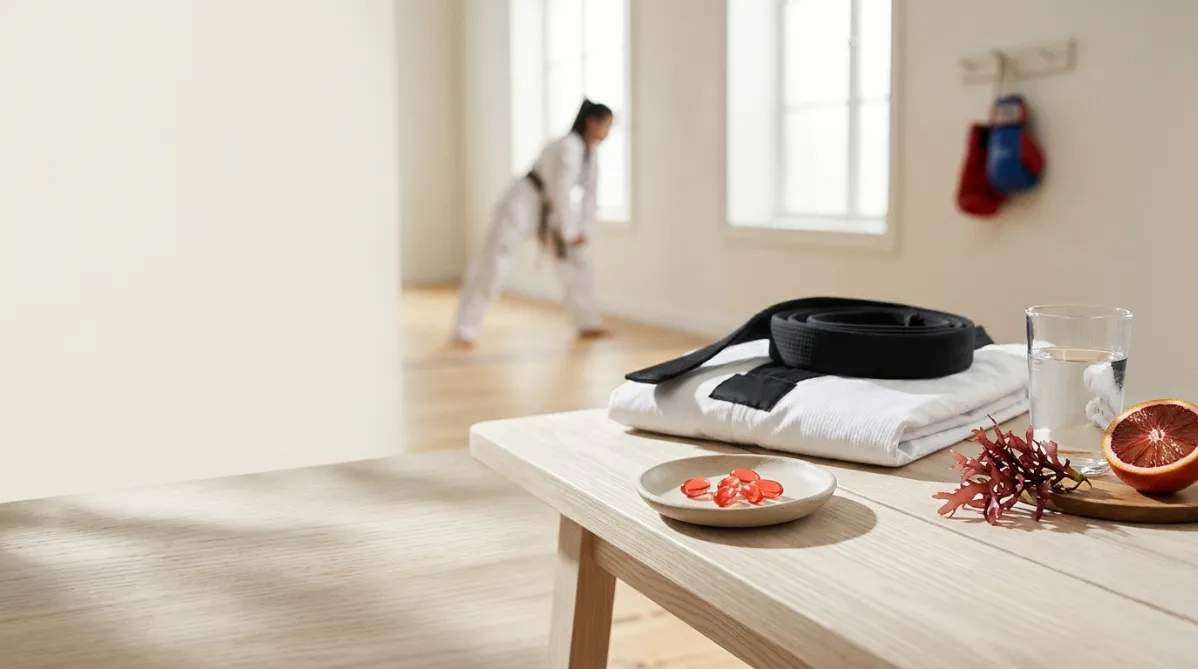
A wide editorial still life shot from a slightly elevated angle on a pale ash-wood bench in a bright, airy training hall. In the center sits a small matte ceramic dish holding a few translucent coral-red softgel capsules, their glossy surfaces catching soft window light. Beside the dish rests a folded white taekwondo dobok with a black belt loosely coiled on top. A sprig of fresh red microalgae-toned seaweed and a halved blood orange add natural color accents. A clean glass of water with subtle condensation stands to one side.

In the softly blurred background, the silhouette of a martial artist in a white uniform stretches near tall windows, with diffused morning light streaming across a sprung wooden floor. A pair of red and blue sparring gloves hangs on a minimal wall hook. Thin, elegant shadows stretch across the bench.

The palette is restrained and modern: warm off-white, soft sand, muted charcoal, with a vivid coral-red accent pulled from the capsules. Shallow depth of field, crisp focus on the capsules and dish, creamy bokeh behind. Natural, gentle lighting with a subtle film-like grain, reminiscent of a contemporary wellness and science magazine cover. Generous negative space on the left third of the frame for headline text. Calm, precise, and quietly athletic in mood, with no text, logos, or futuristic elements.
science research

12 mg astaksantyny przez 28 dni: uszkodzenia mięśni i wypalenie u sportowców

BY DR. GYMBRO ·

Nowe, randomizowane badanie sprawdziło, czy codzienna dawka 12 mg astaksantyny wpływa na młodych mężczyzn‑sportowców uprawiających taekwondo. Po 28 dniach grupa przyjmująca suplement wykazała odmienną trajektorię kinazy kreatynowej, wyższą aktywność SOD oraz wstępne obniżenie stężenia MDA i mniejsze odczuwanie zmęczenia emocjonalnego i fizycznego. Wyniki dotyczące wypalenia były jedynie eksploracyjne i nie wykazały interakcji grupa × czas. Badanie było małe, obejmowało jedynie biomarkery i nie oceniało wyników sportowych. Poniżej przedstawiamy, co pokazują dane, czego nie widać i kto może być nimi zainteresowany.
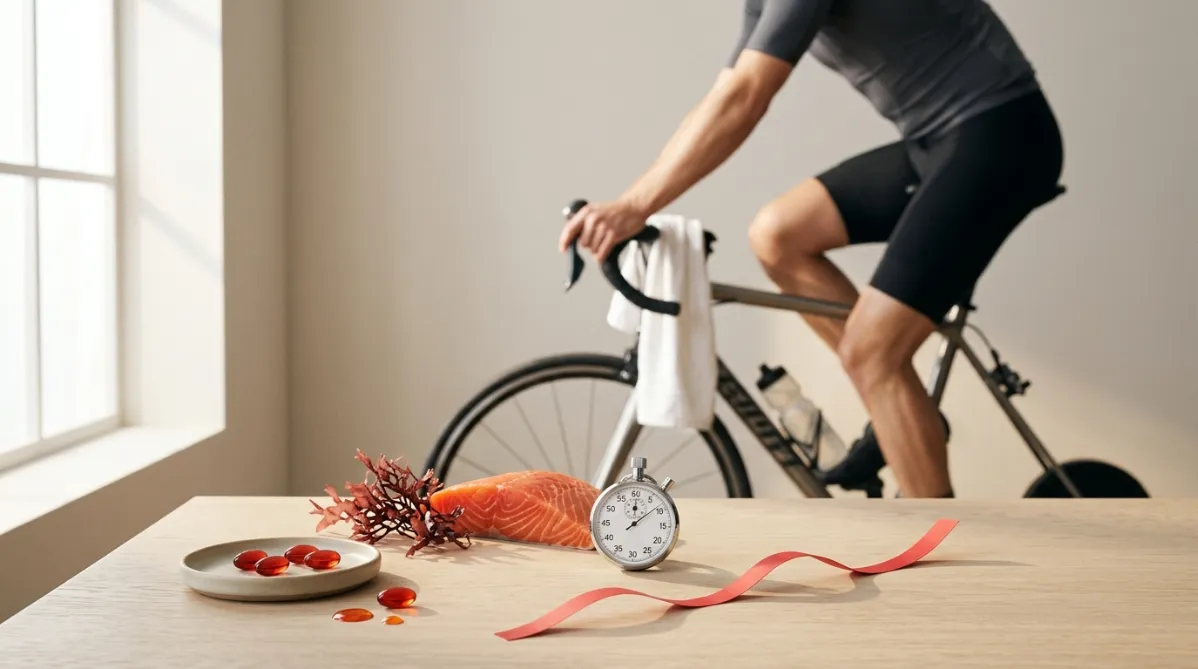
A cyclist's legs mid-pedal on a stationary road bike, shot in a bright, airy, minimalist studio with a soft warm-grey backdrop. In the foreground on a pale oak table sits a small ceramic dish holding four deep coral-red softgel capsules, with a few translucent droplets of red-orange oil glistening beside them. Beside the dish is a sprig of dried red microalgae-toned seaweed and a halved wild salmon fillet, its coral flesh echoing the capsule color. Behind the table, slightly out of focus, a cyclist in a fitted charcoal jersey and matte black shorts rides a bike on an indoor trainer. Only the torso and legs are visible, with no face. A white towel hangs over the handlebars and a clear water bottle catches the light.

Soft diffused morning light streams from a large window on the left, creating long gentle shadows and a subtle golden-hour glow on the skin and the glossy capsules. The palette is restrained and editorial: warm cream, sand, soft grey and charcoal, with vivid coral-red as the single accent color. A minimalist analog stopwatch with a clean white face sits on the table, its hands near the 85-minute mark. A thin, elegant line-graph shape is subtly suggested by a curved strip of red ribbon lying on the table, rising from left to right to hint at the performance gain without any text.

The composition follows the rule of thirds, with the capsules and stopwatch in the lower left and the cyclist's motion-blurred legs sweeping across the right. Shallow depth of field, crisp macro detail on the capsules, and a fine film-like grain. The overall feel is a modern health and science magazine cover: clean, calm, sophisticated, and natural, with negative space in the upper area for a headline. There are no futuristic elements, no glowing effects, no laboratory equipment, and no text or logos. Landscape 16:9 format.
nutrition

Astaksantyna przyjmowana przez 4 dni wydłużyła czas wyczerpania podczas jazdy na rowerze z 72 do 85 minut w małym badaniu

BY DR. GYMBRO ·

Cztery dni suplementacji astaksantyną (28 mg / dzień) przedłużyły czas do wyczerpania przy intensywnej jeździe rowerem z ok. 72 do 85 minut w małym, randomizowanym badaniu – wzrost o około 18 %. Ten sam protokół zmniejszył wzrost markerów uszkodzenia mięśni (CK, LDH) oraz peroksydacji lipidów (MDA) po wysiłku równym 75 % VO₂max. Poziomy markerów zapalnych i zużycie paliw nie uległy zmianie, więc mechanizm pozostaje niejasny. Dawkowanie jest wyższe niż w większości dostępnych suplementów, a badanie obejmowało jedynie dziesięciu młodych mężczyzn. Oto, co mówią liczby i gdzie kończy się dowód.

This page is available in