Dr. Gymbro
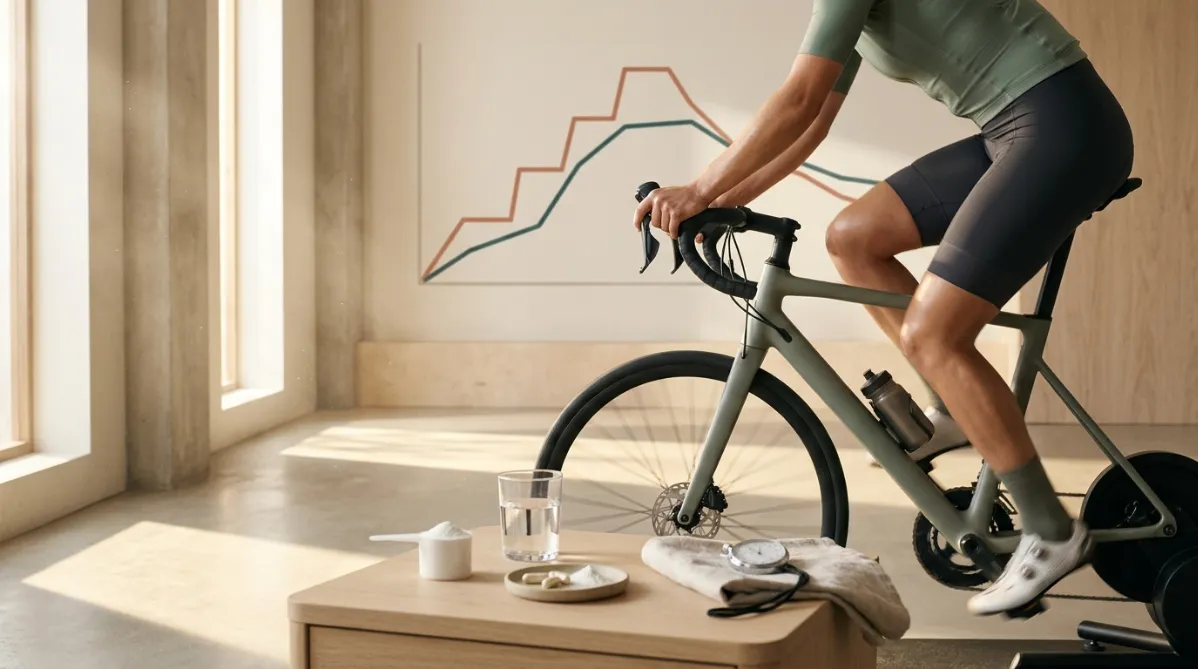
A wide, editorial-style photograph of a lone cyclist's legs and torso mid-sprint on a stationary indoor bike in a bright, minimalist performance studio. The scene is shot from a low three-quarter angle with shallow depth of field. The cyclist wears matte charcoal shorts and a fitted sage-green top, with a subtle sheen of sweat catching soft window light. Their hands grip the handlebars and the pedals are caught in a slight motion blur, which conveys explosive effort.

In the foreground, slightly out of focus on a pale oak side table, sit a small matte white scoop and a clear glass of water. Next to them is a little ceramic dish holding a few off-white capsules and a pinch of fine white powder. A folded linen towel and a slim stopwatch rest nearby. The stopwatch face is softly legible, hinting at timed sprint intervals.

The background is warm cream concrete and pale wood, with tall windows casting long diagonal shafts of golden morning light across the floor. Faint dust motes drift in the light. On the wall behind, a clean, abstract line graph is painted in muted terracotta and deep teal. It shows one line rising in steps like five sprint bouts and another line gently falling, a subtle visual nod to power up and lactate down. The graph is minimal and stylized, with no readable numbers or text.

The color palette is earthy and modern: sage green, terracotta, warm cream, soft charcoal, and touches of natural wood. The lighting is soft and directional with gentle highlights and natural shadows. The overall look is calm, refined, and contemporary, like a premium wellness and sports science magazine cover. The composition follows the rule of thirds, with the cyclist on the right and open negative space on the left for a headline. The image is crisp, grainy in a subtle film-like way, and free of any futuristic or sci-fi elements.
Science & Research

Esta Forma de Carnitina Elevou a Potência de Sprint em Até 15 % e Reduziu o Lactato

Dr. Gymbro · · 5 min read

A maioria dos suplementos de carnitina promete queimar gordura e entrega muito pouco. Um estudo de 2009, publicado no Journal of the International Society of Sports Nutrition, testou uma forma diferente: a glicina propionil‑L‑carnitina (GPLC). O teste foi feito em algo mais relevante para levantadores e atletas de campo – sprints repetidos ao máximo. O resultado foi maior produção de potência e menor lactato sanguíneo. O número de destaque é real, mas precisa de contexto.

O Estudo: O Que Foi Realmente Feito

Pesquisadores da Florida Atlantic University, liderados por Jacobs, conduziram um ensaio cruzado, duplo‑cego e controlado por placebo com 24 homens treinados em resistência (idade média 25,2 ± 3,6 anos). Cada participante completou duas sessões de teste, com intervalo de uma semana. Noventa minutos antes de cada sessão, ingeriu 4,5 g de GPLC ou 4,5 g de celulose como placebo, em ordem aleatória.

O protocolo foi intenso: cada sessão consistiu em cinco sprints de 10 segundos no teste Wingate, com intervalos de 1 minuto de recuperação ativa entre eles. Foram medidos potência de pico, potência média, percentual de queda de potência, frequência cardíaca e lactato sanguíneo antes, durante e após os sprints. A potência foi ajustada à massa corporal.

Os Números: De Onde Vem o "15 %"

Com GPLC, a potência de pico e média foi de 2,6 % a 15 % maior ao longo das cinco séries (efeito principal significativo da condição, p < 0,05). Essa variação importa: o valor de 15 % representa o ponto máximo da faixa, não o aumento médio em todos os sprints. Os autores também encontraram interações significativas entre a ordem das séries e a condição, tanto para pico quanto para média (p < 0,05). Ou seja, o tamanho do benefício mudou de sprint para sprint.

O resumo não indica quais séries apresentaram os maiores ou menores ganhos. Verifique o artigo completo antes de concluir que o GPLC ajuda mais nos sprints fatigados ou nos iniciais.

O lactato contou uma história semelhante, com um detalhe:

  • 4 minutos pós‑exercício: o lactato foi 15,7 % menor com GPLC, mas o resumo indica p = 0,09, não sendo significativo ao nível habitual de p < 0,05.
  • 14 minutos pós‑exercício: o lactato foi 16,2 % menor com GPLC (p < 0,05).

O artigo relata um efeito principal significativo da condição para o lactato como um todo, mas o resultado mais consistente é o observado aos 14 minutos.

GPLC vs. L‑carnitina Regular vs. ALCAR

Todos os três suplementos giram em torno da carnitina, a molécula que auxilia o transporte de ácidos graxos para as mitocôndrias. Eles diferem no grupo químico que está ligado:

  • L‑carnitina – forma pura, geralmente vendida para metabolismo de gordura e suporte geral.
  • Acetil‑L‑carnitina (ALCAR) – possui um grupo acetil e é mais comercializada para apoio cognitivo e do sistema nervoso.
  • GPLC – propionil‑L‑carnitina ligada à glicina. A propionil‑L‑carnitina já foi estudada em contextos vasculares, o que nos leva ao óxido nítrico.

O histórico do estudo menciona que pesquisas anteriores observaram que o GPLC, em curto prazo, aumentava metabólitos do óxido nítrico em repouso e em resposta à hiperemia reativa (a explosão de fluxo sanguíneo após uma restrição temporária). O óxido nítrico dilata os vasos, portanto a ideia é que um fluxo melhor poderia facilitar a entrega e a remoção de metabólitos durante esforços repetidos. Essa hipótese é plausível, mas o presente estudo não mediu óxido nítrico nem fluxo sanguíneo. Ele mostra mudanças de desempenho e de lactato, mas não o porquê. Considere o mecanismo como teoria.

Limitações que Você Precisa Saber

Isso é promissor, não definitivo.

  • Amostra pequena: 24 homens jovens treinados em resistência. Os resultados podem não se aplicar a mulheres, idosos, atletas de endurance ou iniciantes.
  • Dose única aguda: testou apenas uma dose única de 4,5 g, não semanas de suplementação diária.
  • Um único modo de exercício: sprints estacionários no teste Wingate. Ainda não se sabe se há benefício em trabalho com barra, corridas curtas ou esportes coletivos.
  • Laboratório único, pouca replicação: os dados vêm de um único grupo de pesquisa; a replicação independente ainda é escassa. Confira o financiamento e os potenciais conflitos de interesse no artigo, como se faz com qualquer estudo de suplemento.
  • Sinal misto de lactato: uma das duas comparações de lactato não atingiu significância.
  • Menor lactato não significa automaticamente melhor desempenho. Pode refletir menor estresse glicolítico ou remoção mais rápida. O estudo não esclarece qual é o caso.

O Que Isso Significa Para Você

Dose e timing (como testado): 4,5 g ingeridos cerca de 90 minutos antes do treino. Esse é o único protocolo com dados disponíveis. Não presuma que doses menores ou horários diferentes produzam o mesmo efeito.

Quem pode se interessar:

  • Atletas que praticam HIIT, intervalos de sprint ou sessões de esforço repetido com curtos descansos;
  • Pessoas treinadas em resistência que queiram experimentar um auxílio pré‑treino em dias de condicionamento;
  • Quem aceita que a evidência ainda está em estágio inicial e quer testar com cautela.

Quem provavelmente deve evitar:

  • Quem busca emagrecimento ou benefícios de saúde geral. O estudo não aborda isso.
  • Pessoas com doença renal, distúrbios de tireoide, epilepsia ou que usem medicação prescrita, que devem consultar um profissional antes de consumir qualquer produto de carnitina;
  • Gestantes ou lactantes;
  • Levantadores com orçamento limitado. Uma dose de 4,5 g é grande comparada às porções típicas de muitos suplementos de carnitina, logo o custo pode ser alto. Compare o preço por grama e verifique se o rótulo realmente indica a presença de GPLC.

Uma forma sensata de testar: experimente em um dia de intervalos intensos e registre a produção de sprint repetido e a percepção de recuperação frente a uma sessão comparável sem o suplemento. Mantenha tudo o mais constante – alimentação, cafeína, sono. O teste pessoal é anedótico, mas supera a adivinhação.

Conclusão

Neste ensaio cruzado, uma única dose de 4,5 g de GPLC elevou a potência de sprint entre 2,6 % e 15 % ao longo de cinco séries e diminuiu o lactato 14 minutos após o exercício em 16,2 %. Isso é interessante para atletas de sprint e intervalos. Contudo, trata‑se de um estudo pequeno, agudo, de um único laboratório e de ciclismo, e a explicação via óxido nítrico não foi testada aqui. O GPLC merece mais pesquisas, não fé cega.
Original study

Read the original research on pubmed.ncbi.nlm.nih.gov →

This article summarizes published research for general information. It is not medical advice.

DG

Written by

Dr. Gymbro

Dr. Gymbro writes for Dr. Gymbro: science-backed fitness, nutrition & performance.

Related Articles

A landscape editorial still life on a soft, warm oat-colored linen surface, lit by diffused natural window light from the left. In the center sits a shallow matte ceramic bowl in muted sage green holding a small mound of fine white arginine powder. Beside it rests a wooden scoop dusted with powder. To the left, a loose arrangement of dried Astragalus root slices, pale golden and delicate, fans out in a graceful curve. To the right, a few whole Panax notoginseng roots, knobbly and earthy brown, sit next to a small pile of finely ground tan powder on a folded cream paper. A single sprig of fresh green leaf adds a gentle accent in the background.

In the foreground, a minimalist glass beaker with clear water and a thin linen-wrapped glass dropper sit slightly out of focus. Behind the objects, a softly blurred backdrop in pale blush and sand tones carries a faint, abstract pattern of soft circular shapes, like ripples or molecular dots drawn in subtle terracotta ink. A thin hand-drawn line graph in dusty coral rises gently across the upper right of the background, as if sketched on textured paper, with no readable text.

The composition uses generous negative space on the upper left, which leaves room for a headline overlay. The palette is earthy and calm: sage, cream, terracotta, honey gold, and soft blush. The shallow depth of field gives creamy bokeh. Gentle shadows fall to the right. The overall feel is clean and contemporary, like a wellness and science journal cover, with subtle film grain, high-end editorial photography, and tactile natural textures.
nutrition

O suplemento que elevou a absorção de arginina em 17 % em um pequeno estudo

BY DR. GYMBRO ·

Um estudo crossover de 2023 revelou que a combinação de 5 g de arginina com saponinas de Astrágalo e Panax notoginseng aumentou a absorção de arginina em 17,3 % e elevou a relação arginina/ADMA em 167,1 %. Os marcadores urinários de óxido nítrico – nitrato e cGMP – também subiram. Contudo, apenas 24 participantes foram analisados depois da exclusão de seis indivíduos por diferenças individuais marcantes, e nenhum teste de performance foi realizado. Descubra o que os dados realmente mostram, o que fica de fora e para quem pode valer a pena reconsiderar a inclusão desse aditivo.

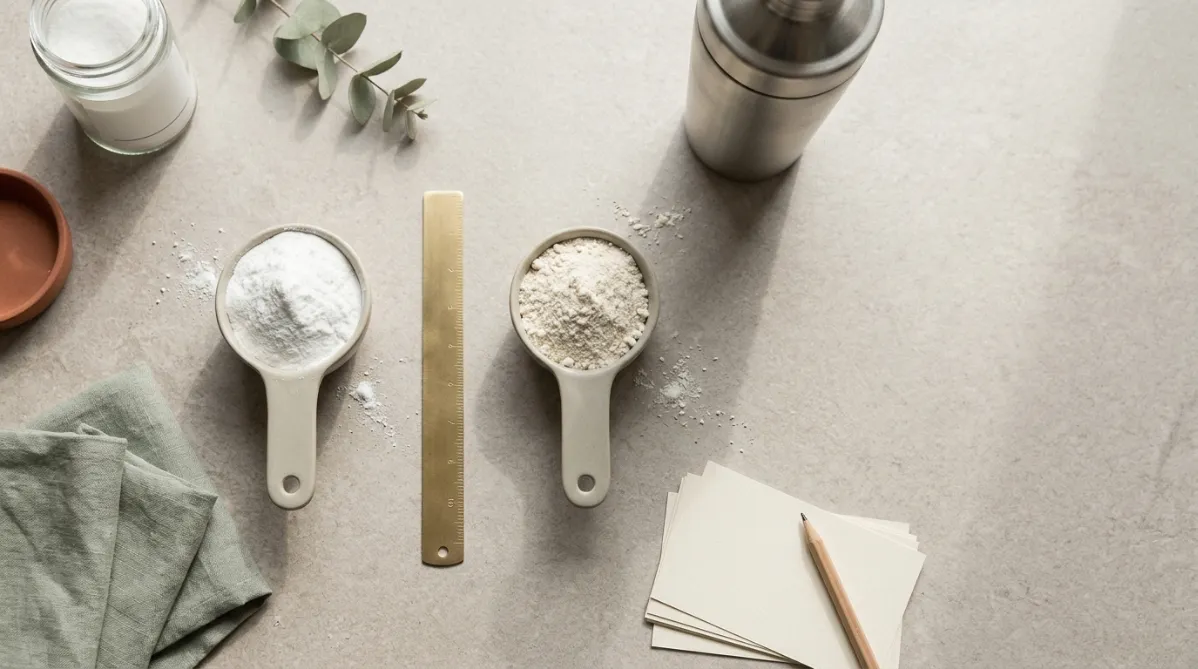
A bright, minimalist flat-lay photograph of two supplement scoops on a pale warm-gray stone surface, shot from directly above in soft natural window light. On the left, a matte ceramic scoop holds fine white creatine monohydrate powder, heaped in a clean mound. On the right, a second scoop of the same shape holds slightly coarser off-white beta-alanine powder, with a small, deliberate gap between the two. Each scoop sits in its own soft shadow, which suggests separation rather than combination. Between them, a thin brushed-brass ruler or a single slim line of fine powder runs across the surface and subtly divides the composition.

Around the scoops, a few restrained props in a muted editorial palette of sage green, cream, terracotta, and soft charcoal: a small glass jar with a minimalist label that has no readable text, a folded linen napkin, a single sprig of eucalyptus, and a stainless-steel shaker bottle softly out of focus in the upper corner. A few loose powder grains are scattered naturally across the stone. A small stack of blank cream index cards with a pencil rests in the lower right, hinting at research and note-taking without any legible writing.

The composition follows a clean rule-of-thirds layout, with generous negative space on the right third for headline overlay. The lighting is gentle and diffused, with long, soft shadows falling to the lower left. The color grading is calm and slightly desaturated, with creamy highlights and a subtle film-like grain. The overall look is a modern wellness and science journal cover, with an airy, trustworthy, contemporary editorial feel, shallow depth of field, and crisp detail on the powders.
nutrition

Creatina + Beta‑Alanina: O Bônus de Combinação que os Pesquisadores Não Encontraram

BY DR. GYMBRO ·

A combinação de creatina e beta‑alanina é divulgada como o casal‑potência para a performance, mas uma nova meta‑análise de rede com 52 ensaios randomizados não encontrou sinergia entre elas. A creatina, isolada, melhorou significativamente sprint, salto, sprints repetidos e resistência muscular da parte superior em comparação ao placebo. Os efeitos da beta‑alanina foram não significativos ou dependentes do contexto, e a combinação não acrescentou nada além da criatina. Veja o que o estudo fez, suas limitações e o que isso significa para o seu orçamento de suplementos.

A wide, cinematic landscape photograph of a freediver suspended mid-water in a calm, sunlit turquoise sea, shot from slightly below so the surface glimmers above like rippling silver glass. The diver wears a sleek matte black wetsuit and a long, elegant pair of carbon fins. Their body is streamlined, arms relaxed at their sides, head tilted slightly down in a state of serene focus. Shafts of soft golden sunlight pierce the water diagonally and illuminate fine floating particles and a trail of tiny bubbles rising from the diver's fins. A single thin dive line descends vertically into deeper blue at the right of the frame, adding a graphic compositional element.

In the lower left foreground, slightly out of focus, a minimalist still-life element rests on a pale sandy seabed: a small, clean white scoop with a mound of fine white powder, casually echoing creatine without any text or labels. The scoop is softly lit and has a shallow depth of field blur, creating a gentle visual link between supplement and sport.

The color palette is refined and modern: deep teal, aquamarine, soft cerulean, warm cream highlights, and touches of sunlit gold. The water gradients smoothly from bright, luminous turquoise near the top to a rich inky navy at the bottom, giving depth and a sense of quiet intensity. Leave generous negative space on the left third of the image for headline placement, with the diver positioned on the right third following the rule of thirds.

The mood is calm, athletic, and contemplative, like an editorial image from a premium health and science magazine. Style: high-end editorial photography, natural light, subtle film grain, soft contrast, crisp detail on the diver and gentle bokeh in the background. No text, no logos, no futuristic or sci-fi elements, no graphics overlays.
nutrition

Creatina funciona mesmo quando você não respira: estudo com freedivers demonstra

BY DR. GYMBRO ·

A creatina é famosa por ajudar a levantar mais peso e acelerar nas sprints, mas será que ela funciona quando você não respira? Um ensaio duplo‑cego com freedivers treinados descobriu que uma fase de carregamento de 7 dias, com 20 g/dia, aumentou o trabalho total e o tempo até a exaustão em um teste de ciclismo com apneia. Curiosamente, o lactato sanguíneo ficou mais baixo no grupo que recebeu creatina do que no placebo, apesar do melhor desempenho. Saiba o que o estudo fez, quem pode se beneficiar e por que a amostra de apenas 20 mergulhadores exige cautela nas expectativas.

A wide, editorial-style flat lay photographed from above on a pale warm-gray stone countertop in soft morning window light. On the left, a small matte white ceramic bowl holds fine white arginine powder, with a wooden scoop resting beside it. At the center, two halved oranges and one whole lemon in saturated citrus tones, with a few glossy droplets of water on the cut surfaces, to suggest vitamin C. On the right, three slim amber glass capsule bottles with minimal cream labels and no legible text stand in a loose row, with a few white capsules spilling out. A single chrome dumbbell handle enters the frame from the upper right corner, partly cropped, its cool metallic sheen contrasting with the warm fruit. A sprig of green rosemary and a folded linen napkin in oatmeal beige add texture. Long soft shadows fall to the left. The palette is warm cream, sunny orange, soft yellow, and muted sage, with a few crisp accents of steel gray. The composition is airy and uncluttered, with generous negative space in the upper left for a title overlay. It has a shallow depth of field, a crisp foreground, and a faintly blurred background. The look is clean, contemporary, and wellness-magazine, like a premium health and fitness journal cover, with natural grain, high-end product photography quality, and a calm, fresh, trustworthy mood.
science research

3 g de arginina + 500 mg de vitamina C: testosterona sobe 26 % em praticantes

BY DR. GYMBRO ·

A arginina costuma ser descartada como um exagerado impulsionador de óxido nítrico, mas um novo ensaio randomizado trouxe uma novidade: combiná‑la com vitamina C. Em 50 fisiculturistas masculinos, 3 g de arginina (divididos em três doses) + 500 mg de vitamina C por 45 dias aumentaram significativamente a testosterona e o VO₂máx em relação ao placebo, além de reduzir a gordura corporal. Hormônio do crescimento, cortisol e balanço de nitrogênio não apresentaram diferenças. É um combo barato que merece atenção, embora provenha de um único estudo pequeno, e mais testosterona não garante mais massa muscular.

This page is available in