Dr. Gymbro
←

#ketones

2 articles
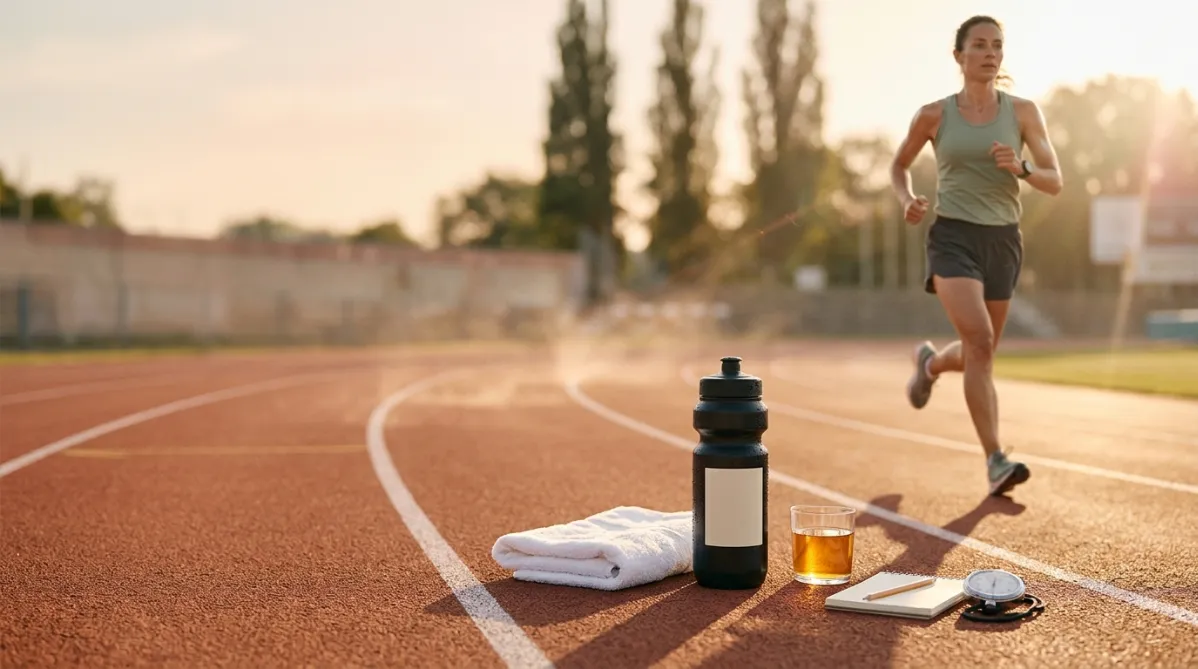
A sunlit outdoor running track in late afternoon, shot from a low angle with shallow depth of field. In the foreground, a matte black bottle with a minimal off-white label sits on the edge of a warm terracotta-colored track lane, beside a folded white towel and a small glass of amber liquid catching golden light. Condensation beads on the bottle. A faint heat shimmer rises from the track surface and softens the background.

In the midground, slightly out of focus, a lean athlete in a sage-green tank top and charcoal shorts runs on a treadmill-like stretch of track, a thin sheen of sweat on their shoulders, their expression focused and calm. Their motion is gently blurred, suggesting endurance and rhythm. Long soft shadows stretch across the lane lines.

The background fades into hazy peach, apricot, and pale yellow tones, with the suggestion of tall trees and a distant stadium wall. Warm sun flare enters from the upper right, creating a subtle glow and a few soft light streaks across the frame.

Subtle editorial touches: a small notebook with a pencil and a stopwatch rest beside the bottle, hinting at data and timing without any text legible. The color palette is warm and muted, with terracotta, cream, sage, and charcoal accents, and a fine film-like grain. The composition leaves open negative space on the left third for a headline overlay. The overall mood is clean, modern, and health-journal inspired, natural and aspirational, with a calm scientific curiosity rather than hype.
nutrition

Bebidas de Cetona no Calor: Mais Resistência e Memória Mais Aguçada?

BY DR. GYMBRO ·

Bebidas de cetona costumam ser associadas a biohackers que queimam gordura, mas um novo estudo sob estresse térmico indica que elas podem ajudar a terminar sessões mais intensas. Em 17 homens treinados, a combinação de cetona monoéster e cafeína aumentou o tempo até a exaustão para 8,9 minutos contra 7,0 minutos com carboidrato e cafeína, após 90 minutos de corrida em esteira a 34 °C. A precisão da memória de trabalho no teste de 1‑back também melhorou, enquanto frequência cardíaca e temperatura central não apresentaram diferenças relevantes. Contudo, não houve benefício no teste de 2‑back, no tempo de reação ou na tarefa de acertar e evitar. O estudo foi pequeno, apenas com homens e de sessão única. Veja o que os dados realmente revelam e o que ainda não foi comprovado.
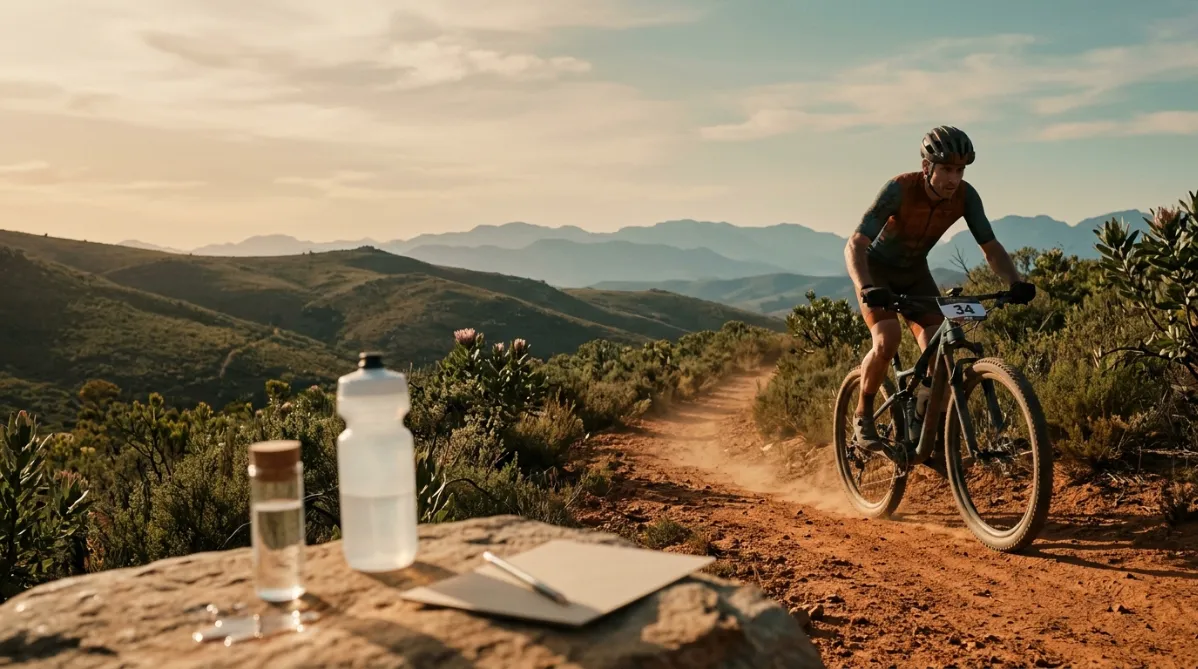
Wide landscape editorial photograph of a mountain biker mid-ride on a dusty red-orange singletrack trail in the South African Western Cape, golden hour light raking across the scene. The rider is in sharp focus on the right third of the frame, wearing a weathered cycling kit with a race number plate on the handlebars, dust kicking up from the rear tire. Behind them, rolling hills covered in fynbos shrubland and silhouetted protea plants fade into soft, hazy blue mountains. Warm amber sunlight creates long shadows and a soft rim light around the rider and bike.

In the lower left foreground, slightly out of focus, a small minimalist glass vial and a clear water bottle sit on a flat sun-bleached rock, with a few drops of liquid catching the light. Next to them, a simple matte paper notecard and a pencil suggest data collection, with no legible text. The vial and bottle are clean, understated, and modern, with no branding.

The color palette is earthy and refined: terracotta, ochre, sage green, dusty teal sky, and cream highlights. The composition uses shallow depth of field, a generous negative space in the upper left sky for headline overlay, and subtle film grain. The mood is contemplative, skeptical, and quietly sophisticated, like a feature photograph from a high-end outdoor sports and science magazine. Natural, candid, cinematic, shot on a 50mm lens with soft contrast and muted saturation. No futuristic elements, no glowing effects, no molecular graphics, no text.
science research

Ketone IQ aumentou as cetonas no Cape Epic, mas não fez mais nada

BY DR. GYMBRO ·

Ciclistas na prova de 8 dias Cape Epic tomaram Ketone IQ duas vezes ao dia e atingiram cerca de 1 mM de cetonas sanguíneas, mas seu cansaço, frequência cardíaca, tempo de reação e recuperação foram indistinguíveis dos que receberam placebo. O estudo duplo‑cego avaliou o R‑1,3‑butanodiol em condições reais de corrida, ao invés de laboratório. Os autores concluíram que a cetose moderada não trouxe benefícios e que o butanodiol não deve ser confundido com ésteres de cetona. Com apenas 18 participantes, o estudo tem limitações, mas oferece um ponto de dados importante para quem pensa em investir em bebidas de cetona caras para recuperação.

This page is available in