Dr. Gymbro
←

#ketones

2 articles
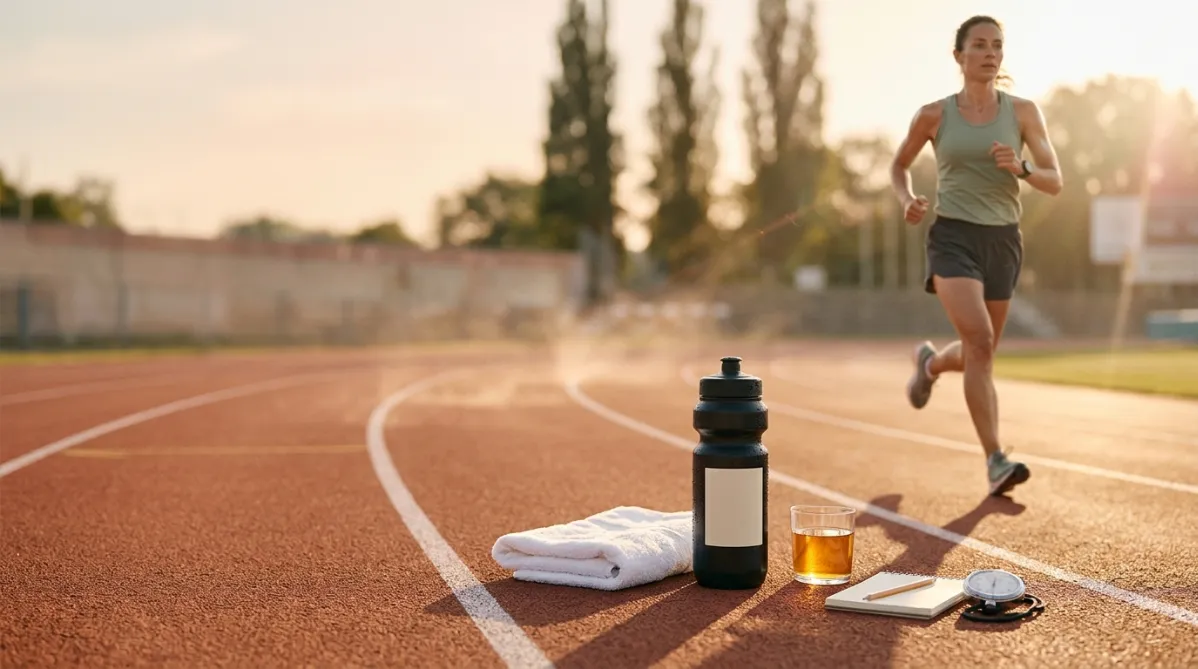
A sunlit outdoor running track in late afternoon, shot from a low angle with shallow depth of field. In the foreground, a matte black bottle with a minimal off-white label sits on the edge of a warm terracotta-colored track lane, beside a folded white towel and a small glass of amber liquid catching golden light. Condensation beads on the bottle. A faint heat shimmer rises from the track surface and softens the background.

In the midground, slightly out of focus, a lean athlete in a sage-green tank top and charcoal shorts runs on a treadmill-like stretch of track, a thin sheen of sweat on their shoulders, their expression focused and calm. Their motion is gently blurred, suggesting endurance and rhythm. Long soft shadows stretch across the lane lines.

The background fades into hazy peach, apricot, and pale yellow tones, with the suggestion of tall trees and a distant stadium wall. Warm sun flare enters from the upper right, creating a subtle glow and a few soft light streaks across the frame.

Subtle editorial touches: a small notebook with a pencil and a stopwatch rest beside the bottle, hinting at data and timing without any text legible. The color palette is warm and muted, with terracotta, cream, sage, and charcoal accents, and a fine film-like grain. The composition leaves open negative space on the left third for a headline overlay. The overall mood is clean, modern, and health-journal inspired, natural and aspirational, with a calm scientific curiosity rather than hype.
nutrition

Bevande chetone al caldo: più resistenza e memoria più acuta?

BY DR. GYMBRO ·

Le bevande a base di chetoni sono spesso associate a biohacker che vogliono bruciare grassi, ma uno studio sullo stress termico suggerisce che potrebbero anche migliorare la capacità di sostenere uno sforzo intenso. In 17 uomini allenati, il mono‑ester di chetone combinato con caffeina ha prolungato il tempo fino all’esaurimento di 8,9 minuti contro 7,0 con carboidrati più caffeina, dopo 90 minuti di corsa su tapis‑roulant a 34 °C. Inoltre, l’accuratezza al test 1‑back è aumentata, mentre frequenza cardiaca e temperatura corporea non hanno mostrato differenze significative. I risultati, però, sono limitati da un campione piccolo, maschile e da una singola sessione. Ecco cosa dicono i dati e cosa resta incerto.
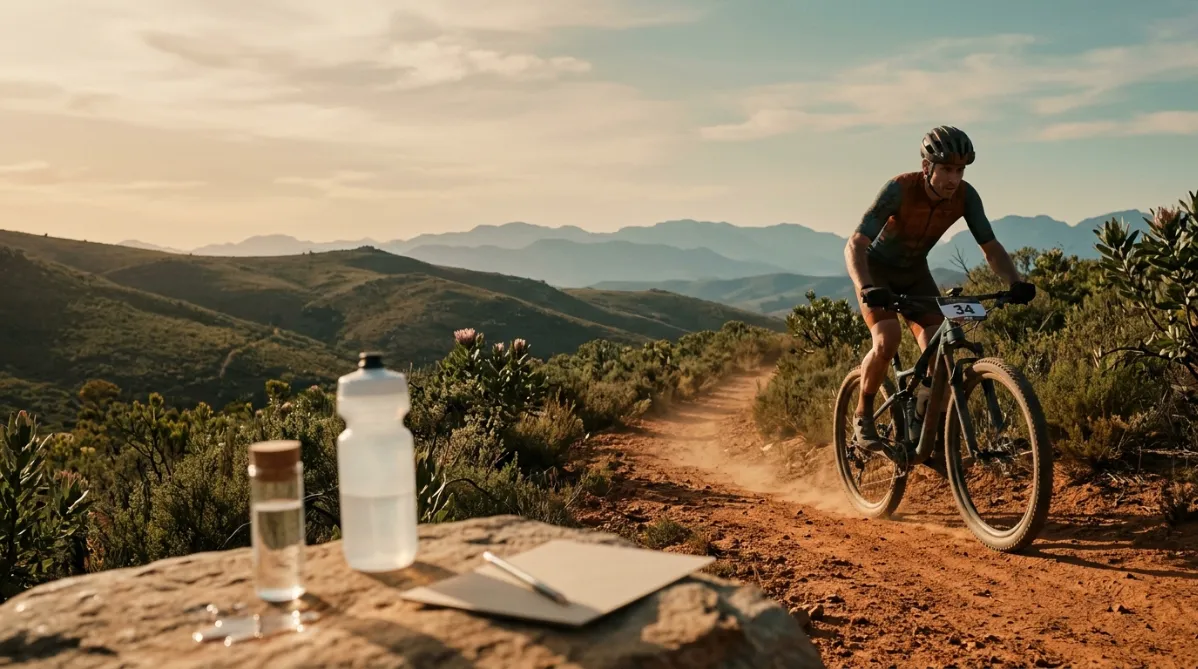
Wide landscape editorial photograph of a mountain biker mid-ride on a dusty red-orange singletrack trail in the South African Western Cape, golden hour light raking across the scene. The rider is in sharp focus on the right third of the frame, wearing a weathered cycling kit with a race number plate on the handlebars, dust kicking up from the rear tire. Behind them, rolling hills covered in fynbos shrubland and silhouetted protea plants fade into soft, hazy blue mountains. Warm amber sunlight creates long shadows and a soft rim light around the rider and bike.

In the lower left foreground, slightly out of focus, a small minimalist glass vial and a clear water bottle sit on a flat sun-bleached rock, with a few drops of liquid catching the light. Next to them, a simple matte paper notecard and a pencil suggest data collection, with no legible text. The vial and bottle are clean, understated, and modern, with no branding.

The color palette is earthy and refined: terracotta, ochre, sage green, dusty teal sky, and cream highlights. The composition uses shallow depth of field, a generous negative space in the upper left sky for headline overlay, and subtle film grain. The mood is contemplative, skeptical, and quietly sophisticated, like a feature photograph from a high-end outdoor sports and science magazine. Natural, candid, cinematic, shot on a 50mm lens with soft contrast and muted saturation. No futuristic elements, no glowing effects, no molecular graphics, no text.
science research

Ketone IQ ha aumentato i chetoni al Cape Epic, ma non ha prodotto altri benefici

BY DR. GYMBRO ·

Durante gli otto giorni di Cape Epic i partecipanti hanno assunto Ketone IQ due volte al giorno, raggiungendo circa 1 mM di chetoni nel sangue, ma stanchezza, frequenza cardiaca, tempo di reazione e recupero si sono dimostrati identici a quelli del gruppo placebo. Lo studio in doppio cieco ha testato il R‑1,3‑butanediolo in condizioni di gara reale, non in laboratorio. Gli autori concludono che una chetosi moderata non è stata efficace e avvertono di non confondere il butanediolo con gli esteri di chetoni. Con solo 18 corridori, la ricerca ha limitazioni, ma fornisce un dato importante per chi sta valutando un costoso integratore di chetoni per il recupero.

This page is available in