Dr. Gymbro
←

#combat sports

2 articles
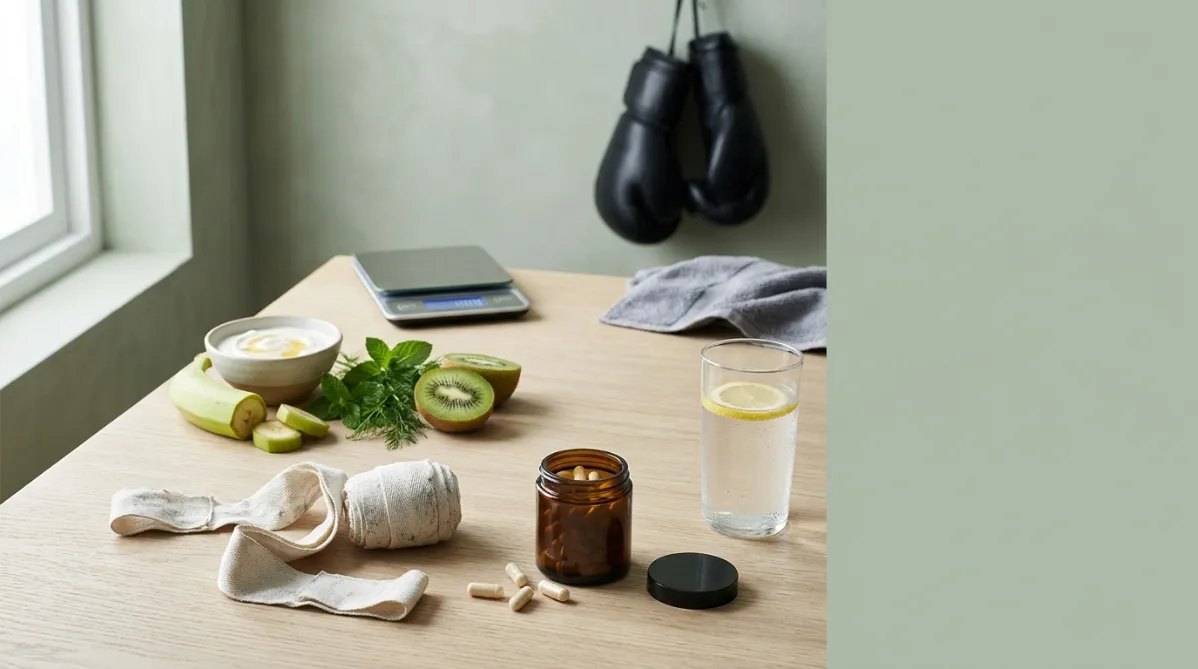
A wide, editorial-style still life photographed in soft natural window light on a pale oak table, styled like a modern wellness journal cover. In the foreground, a pair of worn white boxing hand wraps lies loosely coiled beside a small amber glass jar of probiotic capsules, its lid set to the side and a few cream-colored capsules spilled onto the wood. Next to them sits a tall glass of water with a thin slice of lemon, condensation beading on the surface. A neat bundle of fresh gut-friendly foods is arranged in the midground: a small bowl of plain yogurt with a drizzle of honey, sliced green banana, a few sprigs of fresh herbs, and a halved kiwi with glistening seeds. Behind them, slightly out of focus, a compact digital kitchen scale shows a lowered weight on its display, and a folded gray athletic towel rests beside a pair of black boxing gloves hanging from a hook against a muted sage-green plaster wall. The color palette is calm and sophisticated: sage green, warm oatmeal, soft cream, faint amber highlights, and touches of charcoal. Light streams in from the left, casting long, gentle shadows and a subtle golden glow across the textures of linen, wood, and glass. Shallow depth of field with a creamy bokeh background, crisp detail on the capsules and the hand wraps. Clean negative space on the right third of the frame leaves room for a headline overlay. The mood is fresh, restorative, and athletic, with a minimalist and refined composition, shot as if on a full-frame camera with an 50mm lens, high-end lifestyle magazine photography.
nutrition

Cutting Weight Wrecks Your Gut. A Probiotic Cut Leaky-Gut Markers

BY DR. GYMBRO ·

Rapid pre-fight weight cuts are notorious for wrecking digestion, and a new randomized trial suggests a probiotic may help. In 24 elite male combat athletes, four weeks of a complex sports probiotic taken twice daily reduced GI symptoms and lowered zonulin, I-FABP, and D-lactate compared with placebo. The probiotic group also had higher SIgA, lower inflammation, and more butyrate-producing bacteria. The study is small, uses a multi-strain product, and reports no performance data, so the findings are promising rather than definitive. Here is what the trial showed and how fighters might apply it.
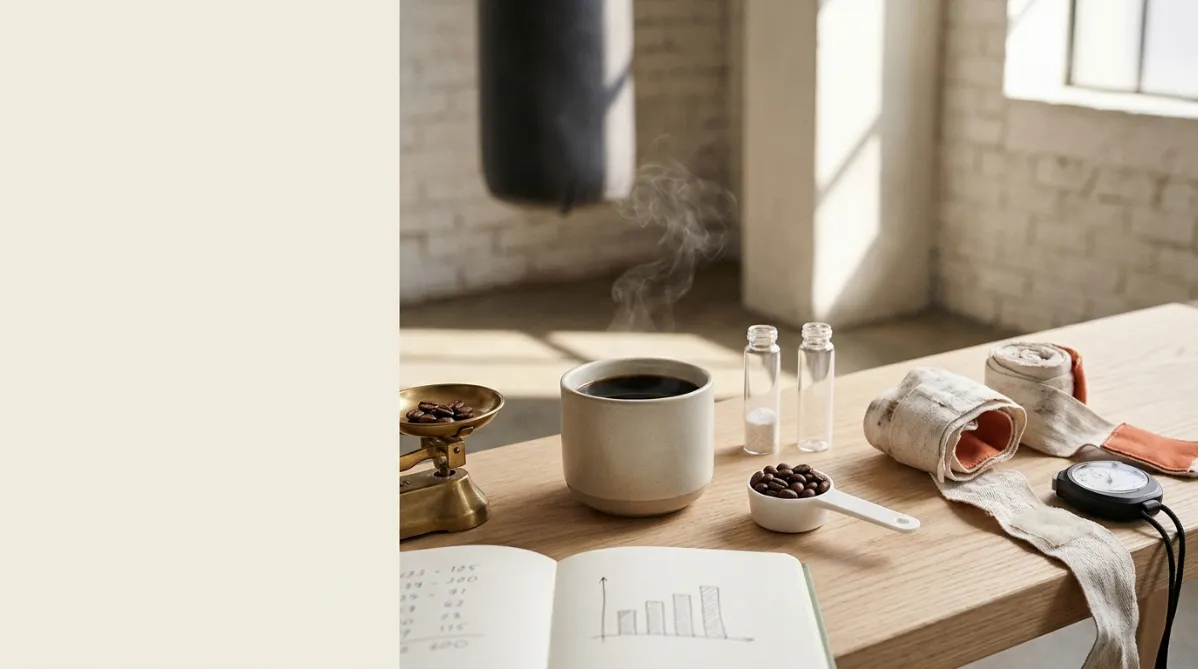
A wide, editorial-style still life shot from a slightly elevated angle on a pale oak gym bench, bathed in soft morning window light. In the center sits a matte ceramic cup of black coffee with delicate steam curling upward, flanked by a small white scoop of coffee beans and two identical glass vials, one filled with a few grains of fine powder and one empty, hinting at dose comparison. Next to the cup rests a pair of worn white boxing hand wraps, loosely coiled, and a slim black stopwatch with its face softly visible. In the foreground, a minimalist notebook lies open with blurred handwritten numbers and a simple pen sketch of a bar graph with bars of equal height, subtle and unreadable, suggesting a null result without any legible text. A small brass kitchen scale sits to the side with a few coffee beans on its tray.

In the soft-focus background, a boxing gym interior is visible: a hanging heavy bag in muted charcoal, exposed brick wall painted off-white, and tall windows casting long diagonal light across the floor. The color palette is warm and restrained: cream, sand, espresso brown, soft charcoal, with a single accent of muted terracotta orange in the hand wraps and a faint sage green in the notebook cover. Shallow depth of field with creamy bokeh, fine film grain, and gentle shadows give it a contemporary lifestyle-magazine and wellness-journal feel. The composition leaves generous negative space on the left third for headline overlay. Clean, calm, trendy, and tactile, with natural textures like wood grain, ceramic glaze, and cotton fabric. No people, no text, no futuristic elements.
science research

Low-Dose Caffeine Coffee Gave Elite Fighters Zero Sprint Boost

BY DR. GYMBRO ·

Think your pre-workout coffee is supercharging your sprints? A new randomized, double-blind crossover trial in 15 national-level combat athletes found no performance benefit from caffeine doses of 1.5 and 3 mg/kg, about 100 and 200 mg for a 68 kg athlete. Peak power, mean power, fatigue index and even estimated energy system contributions did not differ from decaf. But this is a small null result, not proof that caffeine fails, and most positive studies use capsules at 3–6 mg/kg. Here is the dose math, the caveats and what to actually do before your next hard session.

This page is available in