Dr. Gymbro
←

#combat sports

2 articles
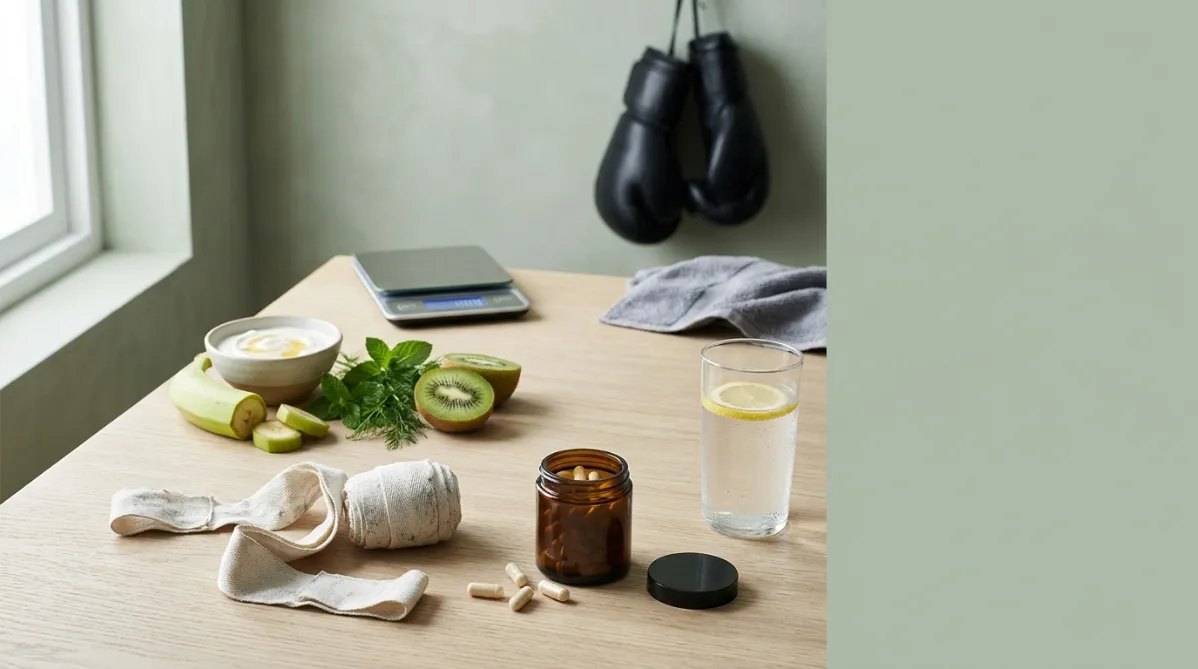
A wide, editorial-style still life photographed in soft natural window light on a pale oak table, styled like a modern wellness journal cover. In the foreground, a pair of worn white boxing hand wraps lies loosely coiled beside a small amber glass jar of probiotic capsules, its lid set to the side and a few cream-colored capsules spilled onto the wood. Next to them sits a tall glass of water with a thin slice of lemon, condensation beading on the surface. A neat bundle of fresh gut-friendly foods is arranged in the midground: a small bowl of plain yogurt with a drizzle of honey, sliced green banana, a few sprigs of fresh herbs, and a halved kiwi with glistening seeds. Behind them, slightly out of focus, a compact digital kitchen scale shows a lowered weight on its display, and a folded gray athletic towel rests beside a pair of black boxing gloves hanging from a hook against a muted sage-green plaster wall. The color palette is calm and sophisticated: sage green, warm oatmeal, soft cream, faint amber highlights, and touches of charcoal. Light streams in from the left, casting long, gentle shadows and a subtle golden glow across the textures of linen, wood, and glass. Shallow depth of field with a creamy bokeh background, crisp detail on the capsules and the hand wraps. Clean negative space on the right third of the frame leaves room for a headline overlay. The mood is fresh, restorative, and athletic, with a minimalist and refined composition, shot as if on a full-frame camera with an 50mm lens, high-end lifestyle magazine photography.
nutrition

Perder peso antes de la pelea arruina el intestino: un probiótico reduce los marcadores de permeabilidad intestinal

BY DR. GYMBRO ·

Los rápidos recortes de peso antes de una pelea son conocidos por dañar la digestión, y un nuevo ensayo aleatorizado sugiere que un probiótico podría ser de ayuda. En 24 atletas de combate de élite, cuatro semanas de un probiótico deportivo complejo tomado dos veces al día disminuyeron los síntomas gastrointestinales y redujeron la zonulina, I‑FABP y D‑lactato en comparación con el placebo. Además, el grupo probiótico presentó niveles más altos de SIgA, menos inflamación y una mayor abundancia de bacterias productoras de butirato. El estudio es pequeño, emplea un producto multiestrés y no incluye datos de rendimiento, por lo que los resultados son prometedores pero no definitivos. A continuación se resume lo que mostró el ensayo y cómo los luchadores podrían aplicarlo.
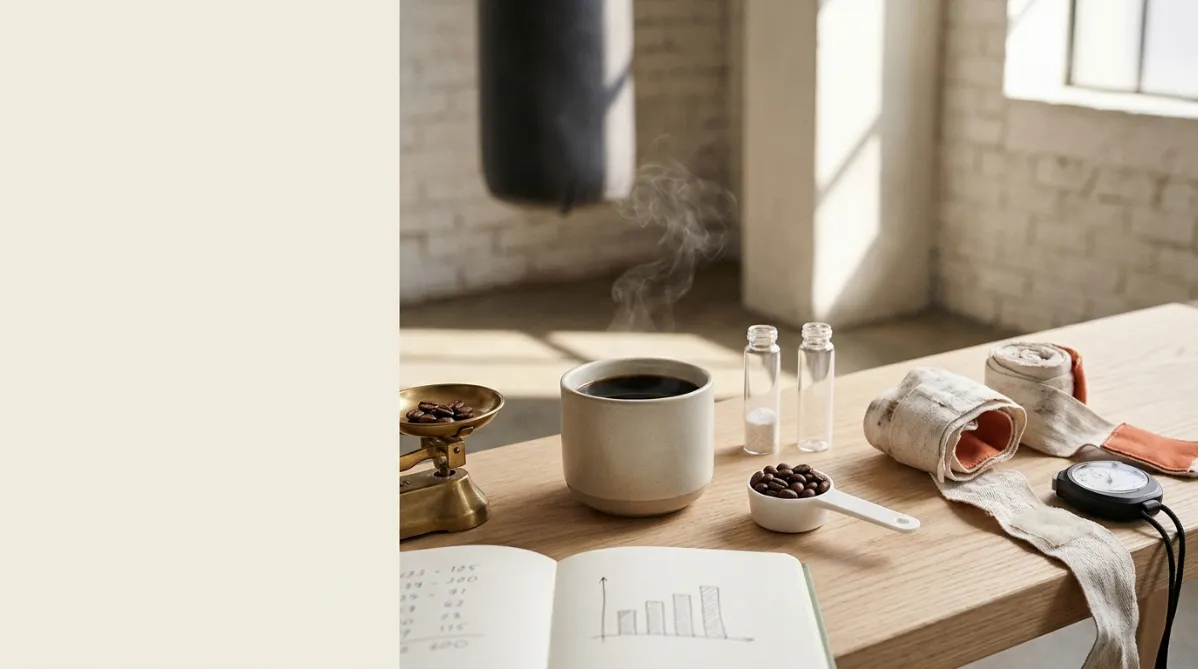
A wide, editorial-style still life shot from a slightly elevated angle on a pale oak gym bench, bathed in soft morning window light. In the center sits a matte ceramic cup of black coffee with delicate steam curling upward, flanked by a small white scoop of coffee beans and two identical glass vials, one filled with a few grains of fine powder and one empty, hinting at dose comparison. Next to the cup rests a pair of worn white boxing hand wraps, loosely coiled, and a slim black stopwatch with its face softly visible. In the foreground, a minimalist notebook lies open with blurred handwritten numbers and a simple pen sketch of a bar graph with bars of equal height, subtle and unreadable, suggesting a null result without any legible text. A small brass kitchen scale sits to the side with a few coffee beans on its tray.

In the soft-focus background, a boxing gym interior is visible: a hanging heavy bag in muted charcoal, exposed brick wall painted off-white, and tall windows casting long diagonal light across the floor. The color palette is warm and restrained: cream, sand, espresso brown, soft charcoal, with a single accent of muted terracotta orange in the hand wraps and a faint sage green in the notebook cover. Shallow depth of field with creamy bokeh, fine film grain, and gentle shadows give it a contemporary lifestyle-magazine and wellness-journal feel. The composition leaves generous negative space on the left third for headline overlay. Clean, calm, trendy, and tactile, with natural textures like wood grain, ceramic glaze, and cotton fabric. No people, no text, no futuristic elements.
science research

Café con baja dosis de cafeína no mejora el sprint en luchadores de élite

BY DR. GYMBRO ·

¿Crees que tu café pre‑entrenamiento está potenciando tus sprints? Un ensayo aleatorizado, doble ciego y cruzado con 15 atletas de combate de nivel nacional no encontró mejora alguna con dosis de cafeína de 1,5 y 3 mg/kg, equivalentes a unos 100 y 200 mg para un deportista de 68 kg. La potencia máxima, la potencia media, el índice de fatiga e incluso las estimaciones de la contribución de los sistemas energéticos no fueron diferentes al café descafeinado. Sin embargo, se trata de un resultado nulo de un estudio pequeño, no de una prueba definitiva de que la cafeína no funcione, y la mayoría de los estudios positivos usan cápsulas de 3–6 mg/kg.

This page is available in