Dr. Gymbro
←

#immobilisation

1 article
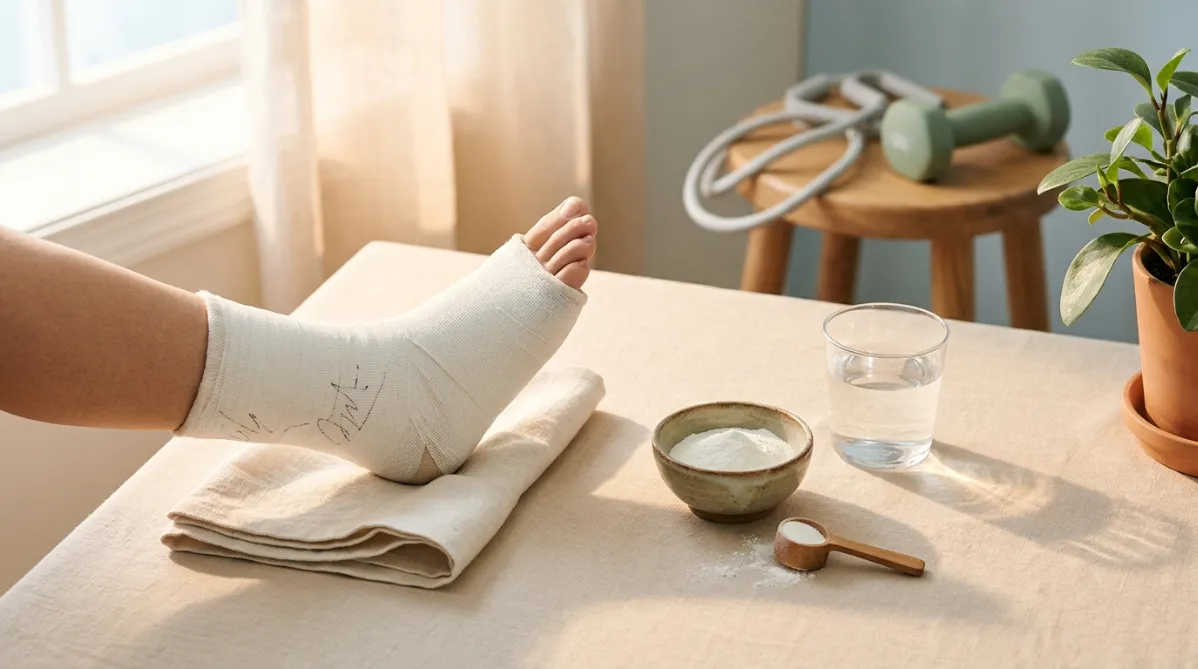
A wide, softly lit editorial still life on a warm, pale oat-colored surface. At the left, a lower leg and foot rest on a folded cream linen towel, wrapped in a matte white fiberglass cast with a subtle texture and a few faint pen scribbles near the ankle. The skin tone is natural and the lighting is gentle. At the center-right, a small ceramic bowl holds fine white creatine powder, with a matte wooden scoop resting beside it and a dusting of powder on the surface. Next to the bowl is a clear glass of water with light refracting through it, casting soft caustic ripples on the table. This hints at the water-retention idea without being literal.

In the background on the right, slightly out of focus, a pair of light grey resistance bands and a small sage-green dumbbell sit on a wooden stool, suggesting rehab. A tall, leafy plant in a terracotta pot adds organic greenery at the edge of the frame. Morning sunlight streams from a window on the left and creates long, soft shadows and a warm golden-peach glow. The palette is cream, sage green, terracotta, soft sky-blue shadows, and touches of natural wood. The composition has generous negative space in the upper left for a title overlay. Shallow depth of field, shot as if with an 85mm lens, with fine film grain. The look is clean, calm, modern wellness-magazine photography with a minimalist, tactile, trendy feel.
recovery

Creatine in a Cast Won't Clearly Save Muscle, But Rehab Is Different

BY DR. GYMBRO ·

Everyone wants to know if creatine can save your muscle when an injury puts you in a cast. A new systematic review of six randomised trials (118 young people, 1-2 weeks of immobilisation) says the evidence during disuse is mixed, and some apparent lean-mass benefits may just be water. The more intriguing signal came during rehab, where two studies found larger gains in quad size, power and strength with creatine. Here are the real numbers, the limitations, and who might want to try it.

This page is available in