Dr. Gymbro
←

#plant-based nutrition

1 article
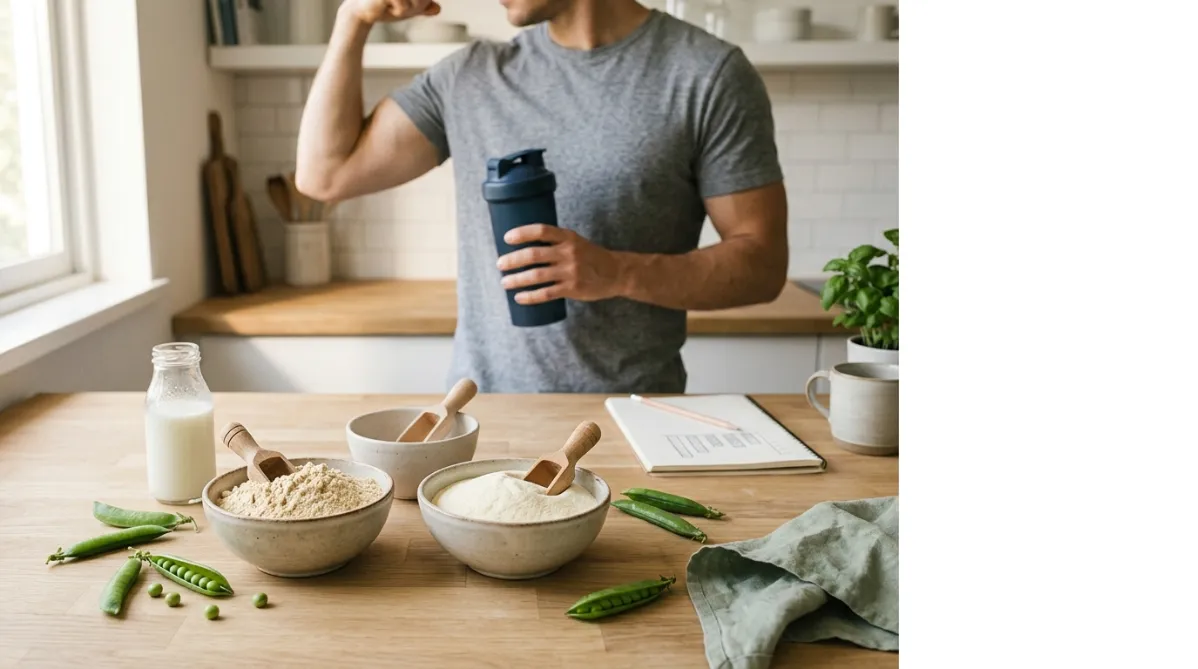
A bright, airy, minimalist kitchen counter in soft morning light, shot from a slightly elevated three-quarter angle in a wide landscape composition. Two matching ceramic bowls sit side by side on a pale oak butcher-block surface. The left bowl holds fine, creamy-beige pea protein powder with a small wooden scoop resting in it. The right bowl holds smooth, ivory-white whey powder with an identical scoop. Between and slightly behind them sits a third, smaller empty bowl with a plain scoop, hinting at the placebo. Scattered around the bowls are fresh green pea pods, some split open to reveal bright, round peas, and a small glass bottle of milk with delicate condensation. A sage-green linen napkin is folded loosely at the edge of the frame.

In the soft-focus background, a young man in a fitted heather-gray t-shirt is seen from the shoulders down, casually flexing one arm while holding a matte shaker bottle, the biceps subtly defined and the pose relaxed and natural. A minimalist notebook with a pencil and a simple hand-drawn bar chart lies open on the counter, suggesting analysis without legible text. A small potted herb plant and a ceramic mug add warmth.

The color palette is muted and editorial: warm cream, sage green, soft terracotta, pale wood, and touches of charcoal. Light streams in from a window on the left, casting gentle long shadows and a subtle golden glow across the powders so their textures look fine and tactile. Shallow depth of field keeps the bowls crisp while the background melts into a creamy blur. The look is modern lifestyle-magazine photography, clean and uncluttered, with generous negative space on the right third of the frame for headline overlay. It is natural, appetizing, and trustworthy, in the style of a contemporary wellness and nutrition journal.
nutrition

Pea Protein vs Whey: The Beginner Result Nobody Expected

BY DR. GYMBRO ·

Can plant protein really build muscle like whey? A 12-week trial of 161 men put pea protein, whey, and placebo head-to-head, and the beginner results turned heads: +20.2% biceps thickness for pea versus +8.6% for placebo. But the full-group difference was only a trend, and the standout finding came from a subgroup analysis. Here's what the study found, what it didn't prove, and how vegan or lactose-intolerant lifters can use it.

This page is available in