Dr. Gymbro
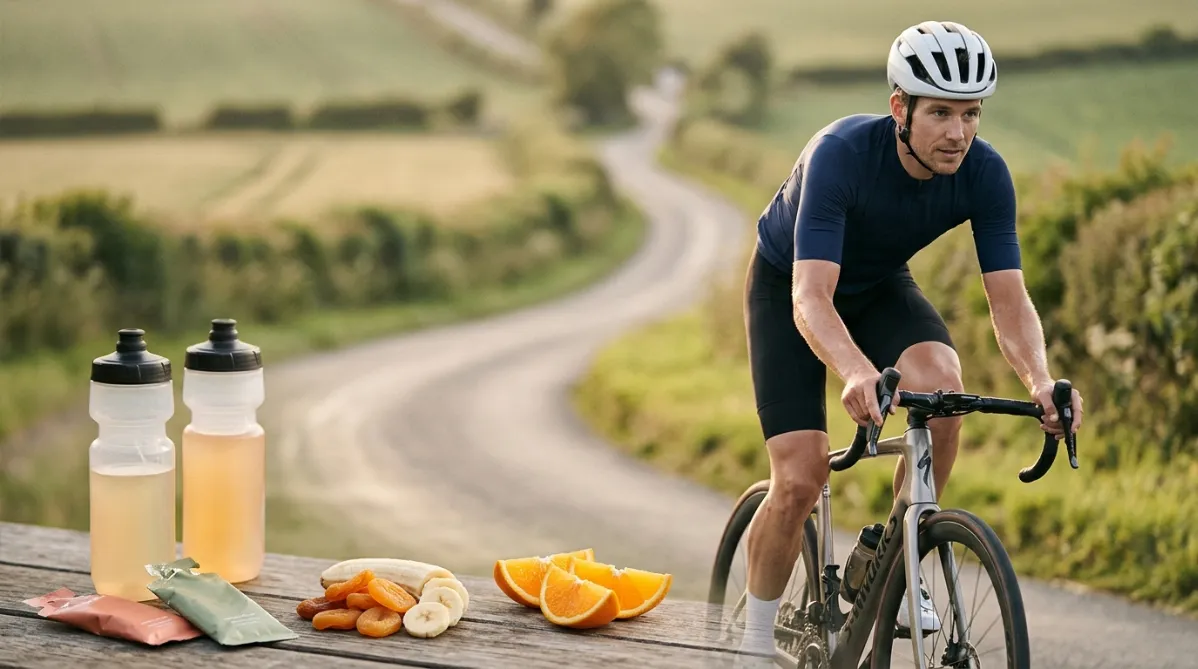
A cyclist in mid-ride, photographed from a low three-quarter side angle on a quiet country road at golden hour, wearing a matte navy jersey and a white helmet, with soft warm light catching the sweat on his forearms. His expression is calm and focused. The road bends gently through rolling green fields, and the background is softly blurred with creamy bokeh.

In the foreground on the left, a styled flat-lay-inspired still life sits on a weathered wooden surface and blends into the scene. It includes two clear water bottles with pale citrus-tinted liquid, a few torn energy gel packets in muted coral and sage, and a small pile of dried apricots and sliced banana. A handful of glossy orange slices adds a bright accent. The shallow depth of field keeps the cyclist sharp in the middle distance while the foreground items are gently softened.

The color palette is warm and editorial: soft peach, muted terracotta, sage green, cream, and deep navy. The light is natural and golden, with long, gentle shadows and a slight film-grain texture, like a high-end lifestyle or sports-science magazine spread. The composition follows the rule of thirds, with the cyclist on the right third and open negative space in the upper left, suitable for headline overlay.

The mood is energetic yet thoughtful, clean and modern, and the photograph feels authentic rather than staged. There are no logos, no readable text, and no futuristic or sci-fi elements. The overall look is crisp, airy, and refined, in the style of a contemporary health and performance journal cover.
Nutrition

每小时100克碳水让骑手更快——糖原并非关键因素

Coach Ryan · · 1 min read

每小时100克碳水让骑手更快——糖原并非关键因素

摘要:在一次持续四小时的硬核骑行实验中,每小时摄入100克碳水的骑手比摄入60克的骑手功率下降更少。令人意外的是,两组的肌肉糖原水平几乎相同。这项针对 15 位受训男性的随机、双盲、交叉试验指出,提升耐久性能的因素并非单纯的糖原节约。本文将分拆数据、1:0.8 葡萄糖‑果糖配比及其落地使用,还会说明哪些人群应慎用,以及仅有男性小样本为何值得关注。

研究概况:他们到底干了什么?

  • 设计:随机、双盲、交叉。
  • 受试者:15 名受训男性自行车手及铁人三项选手。
  • 准备:每次实验前 24 小时采用高碳水化合物饮食。
  • 骑行:240 分钟的间歇性长时间骑行,强度为每位骑手 15 分钟全力计时赛平均功率的 60%,期间穿插高强度间隔。
  • 测试:骑行结束后进行一次 15 分钟计时赛(TT),并与新鲜状态下的 15 分钟 TT 进行比较。
  • 变量:每小时 60 克碳水(CHO60)与每小时 100 克碳水(CHO100),通过饮料和凝胶以 1:0.8 葡萄糖:果糖 的比例提供。
  • 测量:骑行前后对股外侧肌进行活检,另测全身碳水氧化率和血糖水平。

交叉设计意味着每位骑手都经历两种条件,比较更干净;运动员和研究者都不知道自己所属的组别。

关键结果:四小时后衰减更少

研究关注的是“耐久性”,即长时间作业后性能衰减的幅度。两组都出现了 15 分钟 TT 表现下降,但下降幅度不同:

  • CHO60:约 -9.3%(± 2.0)
  • CHO100:约 -6.4%(± 1.7)
  • 差异:统计显著(P = 0.025)

从绝对值看,最终计时赛的平均功率在 100 g/h 条件下比 60 g/h 高出 约 9 瓦(P = 0.028)。九瓦在纸面上不算大,却可能在长赛后段决定谁还能维持在车轮旁,谁被甩开。

意外反转:糖原并不能解释差异

最直观的猜测是:更高的碳水摄入会让肌肉糖原消耗更少。但活检结果并未支持这一点。两组的糖原都大幅下降,赛后水平统计上相同:

  • CHO60:192 ± 99 mmol·kg⁻¹ 干重
  • CHO100:209 ± 111 mmol·kg⁻¹ 干重
  • P = 0.56

个体差异很大,这只能说明“未检测到显著差异”,并不等同于“完全没有影响”。作者因此得出结论:每小时 100 克碳水提升了耐久性,却没有改变肌肉糖原的利用方式。

真正变化的地方:全身碳水氧化率

更高的摄入量改变了身体在骑行后期持续燃烧碳水的能力:

  • CHO60:起始 2.6 ± 0.6 g·min⁻¹,下降至 1.9 ± 0.4 g·min⁻¹
  • CHO100:起始 2.6 ± 0.4 g·min⁻¹,下降幅度更小,仅降至 2.3 ± 0.5 g·min⁻¹
  • 条件×时间交互作用:P = 0.047

血糖在两组均保持稳定(CHO60 约 5.6‑5.7 mmol·L⁻¹,CHO100 约 6.0‑6.1 mmol·L⁻¹),说明 60 g/h 组并未出现低血糖。100 g/h 带来的优势并非来自“救血糖”。

论文的数据暗示,额外摄入的碳水在赛后期仍保持可用,从而维持了碳水氧化率。至于背后的具体机制——大脑、肠道或其他组织的作用——仍属推测,尚未得到证实。

对你的启示

适用人群

  • 长时间训练或比赛(约 3 小时以上)的自行车手和铁人三项选手。实验为 4 小时,收益出现在赛末。
  • 那些在比赛后段需要顶峰表现的选手,如爬坡、冲刺或抢占冲刺点。
  • 已经通过训练适应高碳水摄入、胃肠耐受性良好的运动员。

具体剂量

  • 目标摄入:每小时 100 克碳水(对照组为 60 克)。
  • 配比:葡萄糖与果糖约 1:0.8,与研究保持一致。查看饮料和凝胶的配方标签,许多运动产品就是基于这种混合。
  • 摄入方式:如实验所示,分散在饮料和凝胶中,而不是单一来源。

时间安排

  • 实验在整个四小时内持续供给碳水,建议采用 小剂量、规律 的补给方式,而非大剂量、间歇性补给。
  • 赛前 24 小时也要进行碳水富集饮食,别忘了赛前的“装载”。

训练你的胃肠

  • 突然从 60 g/h 提升到 100 g/h 极易导致胃肠不适。应在数周的长时间训练中逐步提升摄入量,并在训练中演练赛日产品。
  • 如果无法舒适地达到 100 g/h,选择一个自己能接受的较低剂量总比因腹泻失去表现要好得多。

暂不推荐人群

  • 训练或比赛时间明显低于 2‑3 小时 的选手——本研究并未涉及短时间努力。
  • 对高碳水摄入有持续性胃肠问题的运动员,需先寻求个性化建议。
  • 那些因疾病(如糖尿病或代谢障碍)导致碳水处理异常的人员,应先咨询医生或营养师。

注意事项与局限

这是一项设计严谨但样本量小的研究:仅 15 名受训男性自行车手/铁人三项选手。结果不能直接推广至女性、年长运动员、业余骑手或其他运动项目。对照组仅为 60 g/h vs 100 g/h,因此无法判断 80 g/h 是否已经捕获大部分收益。糖原数据的个体差异也很大,使得“无差异”结论的解释受限。

即便如此,这项研究提醒我们:将 60 g/h 当作上限的选手仍有提升空间。燃料的作用可以超出糖原测量所能捕捉的范围。如果你的比赛超过三小时且胃肠已适应,尝试每小时 100 g、1:0.8 葡萄糖‑果糖配比的补给方案,并在训练中充分测试,可能会在关键时刻带来意想不到的优势。
Original study

Read the original research on pubmed.ncbi.nlm.nih.gov →

This article summarizes published research for general information. It is not medical advice.

CR

Written by

Coach Ryan

Coach Ryan writes for Dr. Gymbro: science-backed fitness, nutrition & performance.

Related Articles

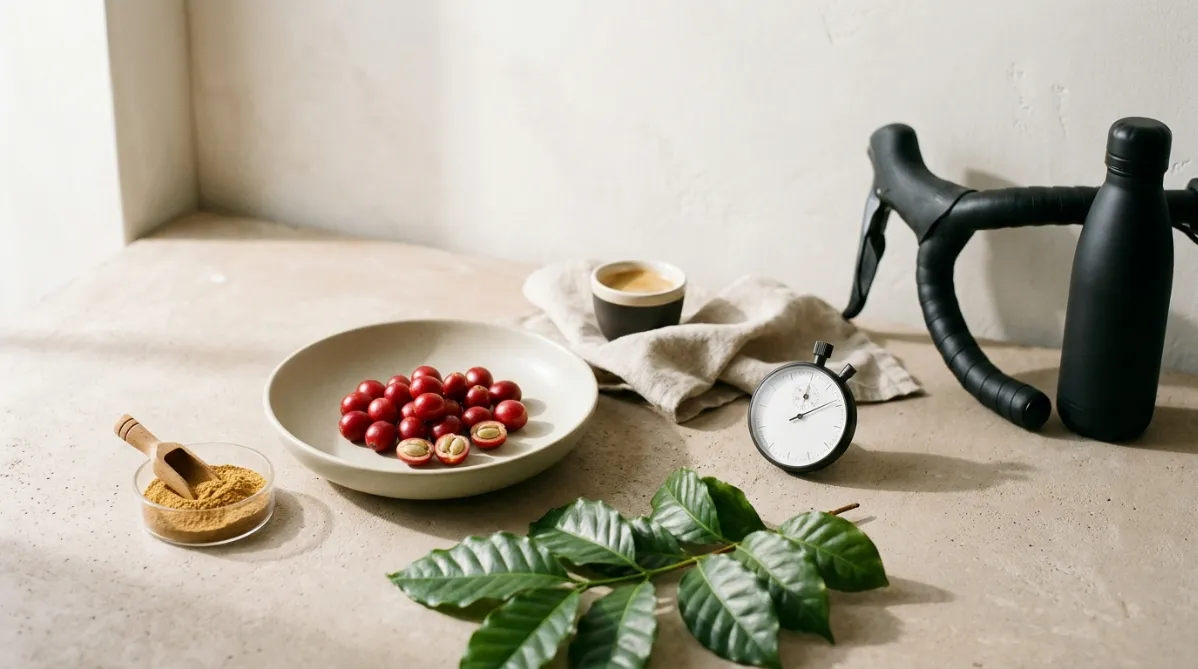
A wide editorial still life on a pale, warm-toned concrete surface in soft morning window light. In the center-left, a shallow matte ceramic bowl holds a small pile of bright red coffee cherries with glossy skins, a few sliced open to reveal pale mucilage and paired green-tan beans. Beside it, a small glass dish of fine, golden-brown powdered extract with a tiny wooden scoop resting on its edge. A sprig of coffee plant leaves, deep green and waxy, arcs across the foreground.

On the right side, slightly out of focus, a sleek road cyclist's handlebar and a matte black water bottle lean against a light plaster wall, suggesting athletic training without showing a person. A minimalist analog stopwatch with a clean white face and thin black hands sits in the mid-ground, angled toward the camera, its hands paused near the fifteen-minute mark. A folded linen cloth in oatmeal beige and a single small espresso cup with a thin crema ring add quiet texture.

The color palette is restrained and modern: cherry red, sage green, cream, soft terracotta, and charcoal accents. Light comes from the left, casting long, gentle shadows with a subtle warm glow and a hint of dust in the air. Shallow depth of field with crisp focus on the cherries and stopwatch, creamy bokeh in the background. Composition leaves open negative space in the upper right for a headline overlay. The overall feel is a clean, trendy health-and-science magazine cover: tactile, natural, minimal, and calm, shot in a 16:9 landscape frame with fine film-like grain and true-to-life tones.
nutrition

咖啡樱桃提取物:200 mg 咖啡因提升骑行功率 4.6%

BY DR. GYMBRO ·

摄入 200 mg 全咖啡果提取物(含同等量咖啡因)后,受过训练的骑手在 15 分钟计时赛中的功率输出提升约 4.6%。然而,关于该提取物能加速糖原再合成的说法并未得到实验验证。该随机、双盲、交叉设计的试验仅招募 12 名骑手,且由行业赞助,缺少单独咖啡因对照组。以下将阐明数据说明了什么、未说明什么,以及哪些人可能想尝试。

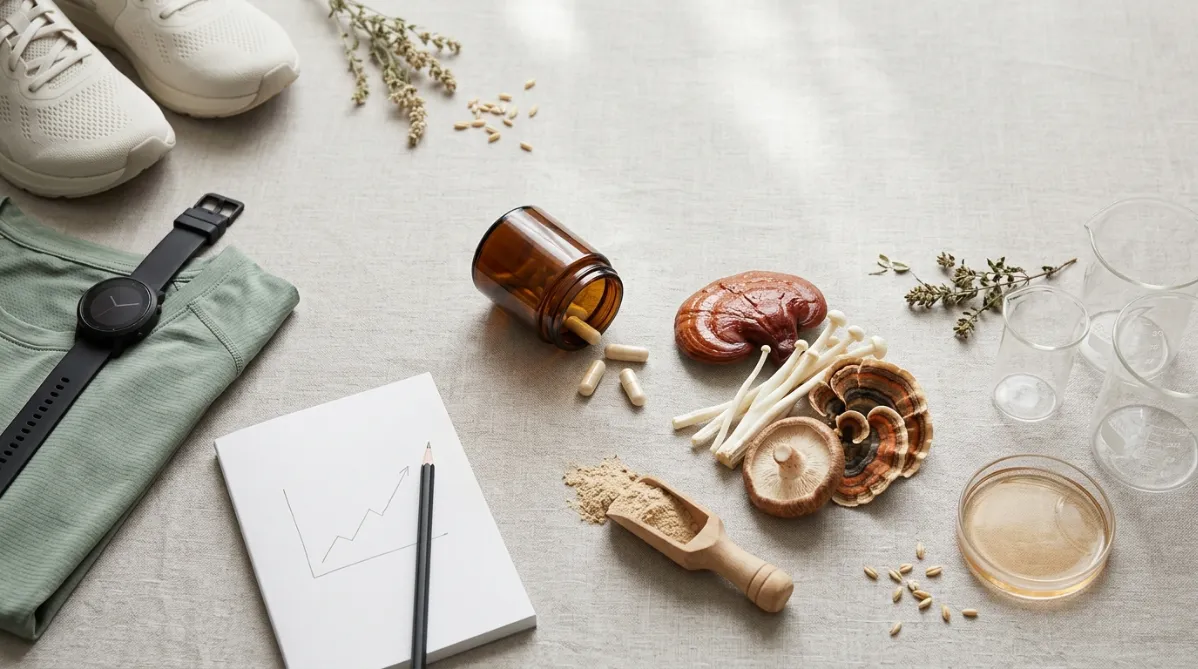
A wide, editorial-style flat lay photographed from above on a pale warm-gray linen surface in soft natural window light. At the center, a small open amber glass jar tips gently onto its side, spilling a few cream-colored capsules across the fabric. Next to the jar sits a loose arrangement of fresh mushrooms: a cluster of golden-tan reishi with glossy, lacquered caps, a few slender white enoki stems, a halved shiitake showing its pale gills, and a curl of turkey tail with concentric bands of rust, cream, and charcoal. A small wooden scoop holds a pile of fine beige mushroom powder.

On the left third of the frame, a matte black sports watch with a minimal face lies beside a folded sage-green running shirt and a pair of lightweight off-white running shoes, hinting at athletic training without showing a person. A slim white notebook with a single pencil rests nearby, open to a blank page with a faint hand-drawn line graph trending upward, in thin graphite strokes.

On the right side, a pair of clear glass beakers and a single small petri dish with a soft amber-tinted liquid add a subtle laboratory note, kept calm and organic. A single sprig of dried herbs and a few scattered oat-colored grains add texture.

The palette is earthy and refined: oatmeal, soft sage, terracotta, warm amber, and charcoal accents against the muted neutral background. Shadows are soft and diffused, with a gentle highlight on the glass and the glossy reishi cap. The composition leaves generous negative space in the upper right for a headline overlay. Shallow depth of field blurs the edges slightly, while the central mushrooms and capsules stay crisp. The overall feel is modern, clean, and trendy, like a wellness and science magazine cover, with tactile natural textures, minimal styling, and a quiet sense of curiosity and skepticism.
science research

蘑菇胶囊提升 VO2max 14.8%——但其中有个大问题

BY DR. GYMBRO ·

一颗蘑菇胶囊、40 天、VO2max 提升了 14.8%,听起来几乎像是天方夜谭。最新发表在《Antioxidants》上的研究称,50 名年轻男性运动员每天摄入 320 mg 含 β‑葡聚糖的多菌种提取物,最大摄氧量从 46.26 mL/kg/min 上升至 53.12 mL/kg/min。值得注意的是,这项研究没有安慰剂组、也未采用随机化和双盲设计,受试者在实验期间仍保持常规训练。细胞实验虽在大鼠心肌细胞上展示了低氧相关的作用机制,但仅是单一成分的试验,并未直接对应胶囊的整体效果。下面我们来看看这项研究到底说明了什么、不能说明什么,以及哪些人应当持谨慎态度。

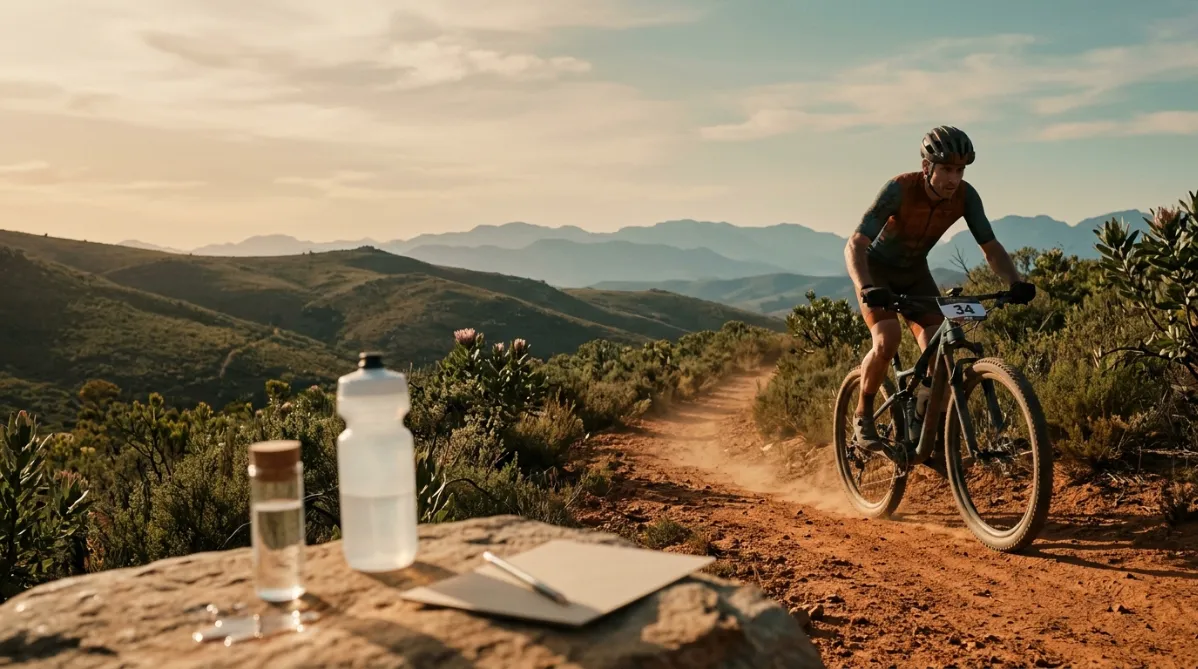
Wide landscape editorial photograph of a mountain biker mid-ride on a dusty red-orange singletrack trail in the South African Western Cape, golden hour light raking across the scene. The rider is in sharp focus on the right third of the frame, wearing a weathered cycling kit with a race number plate on the handlebars, dust kicking up from the rear tire. Behind them, rolling hills covered in fynbos shrubland and silhouetted protea plants fade into soft, hazy blue mountains. Warm amber sunlight creates long shadows and a soft rim light around the rider and bike.

In the lower left foreground, slightly out of focus, a small minimalist glass vial and a clear water bottle sit on a flat sun-bleached rock, with a few drops of liquid catching the light. Next to them, a simple matte paper notecard and a pencil suggest data collection, with no legible text. The vial and bottle are clean, understated, and modern, with no branding.

The color palette is earthy and refined: terracotta, ochre, sage green, dusty teal sky, and cream highlights. The composition uses shallow depth of field, a generous negative space in the upper left sky for headline overlay, and subtle film grain. The mood is contemplative, skeptical, and quietly sophisticated, like a feature photograph from a high-end outdoor sports and science magazine. Natural, candid, cinematic, shot on a 50mm lens with soft contrast and muted saturation. No futuristic elements, no glowing effects, no molecular graphics, no text.
science research

Ketone IQ 在 Cape Epic 提升血酮水平,却未带来任何恢复效益

BY DR. GYMBRO ·

在为期八天的 Cape Epic 中,骑手每天饮用两次 Ketone IQ,使血酮浓度约达 1 mM,但他们的疲劳感、心率、反应时间和恢复情况与安慰剂组毫无差别。该双盲试验在真实比赛环境下评估了 R‑1,3‑丁二醇,而非实验室条件。作者指出,轻微的酮症并未带来实际效益,并提醒不要把丁二醇与酮酯混为一谈。由于仅有 18 名骑手参与,研究规模有限,但对考虑高价酮饮料用于恢复的任何人都是一次警示。

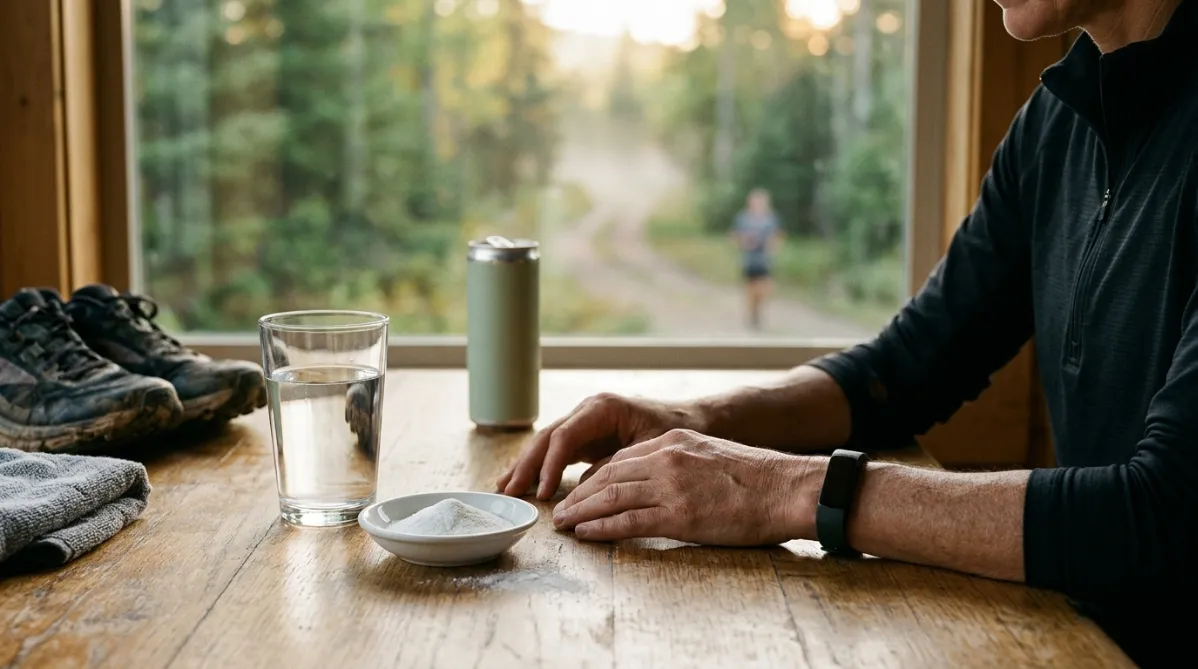
A landscape editorial photograph of a lone runner's hands resting on a weathered wooden table beside a small white ceramic dish of fine white powder and a clear glass of water, shot in soft morning light. A slim matte aluminum energy drink can, unbranded with a minimalist pale sage-green label, stands slightly out of focus in the background, with a single scoop of powder dusted lightly on the tabletop. A pair of worn running shoes and a folded gray towel sit at the edge of the frame. Through a large window behind them, a blurred misty trail winds through green trees at sunrise, with warm golden light spilling across the scene.

The color palette is calm and modern: creamy off-white, sage green, warm honey gold, and soft charcoal. The composition follows the rule of thirds, with the dish and glass in the lower left third and generous negative space on the right for a title overlay. The depth of field is shallow, with a crisp focus on the powder's delicate texture and tiny glints of light on the glass rim. The mood is clean, thoughtful, and quietly energetic, like a contemporary health and science magazine feature. Natural grain, subtle film-like softness, and gentle shadows give it an authentic lifestyle-editorial look. There are no text, logos, or futuristic elements, only tactile, real-world materials like wood, ceramic, glass, cotton, and metal.
nutrition

牛磺酸单独提升耐力的研究发现

BY DR. GYMBRO ·

咖啡因常被提及,但能量饮料罐中的另一种成分——牛磺酸,可能正悄然发挥作用。2018 年对 10 项研究的荟萃分析显示,单次摄入牛磺酸(1–6 克)即可提升耐力表现(Hedges' g = 0.40),且剂量和补充时长对效果无显著影响。由于证据量有限且置信区间较宽,这只能算是一个有前景的信号,而非铁律。下面介绍主要结论以及更安全的使用建议。

This page is available in