Dr. Gymbro
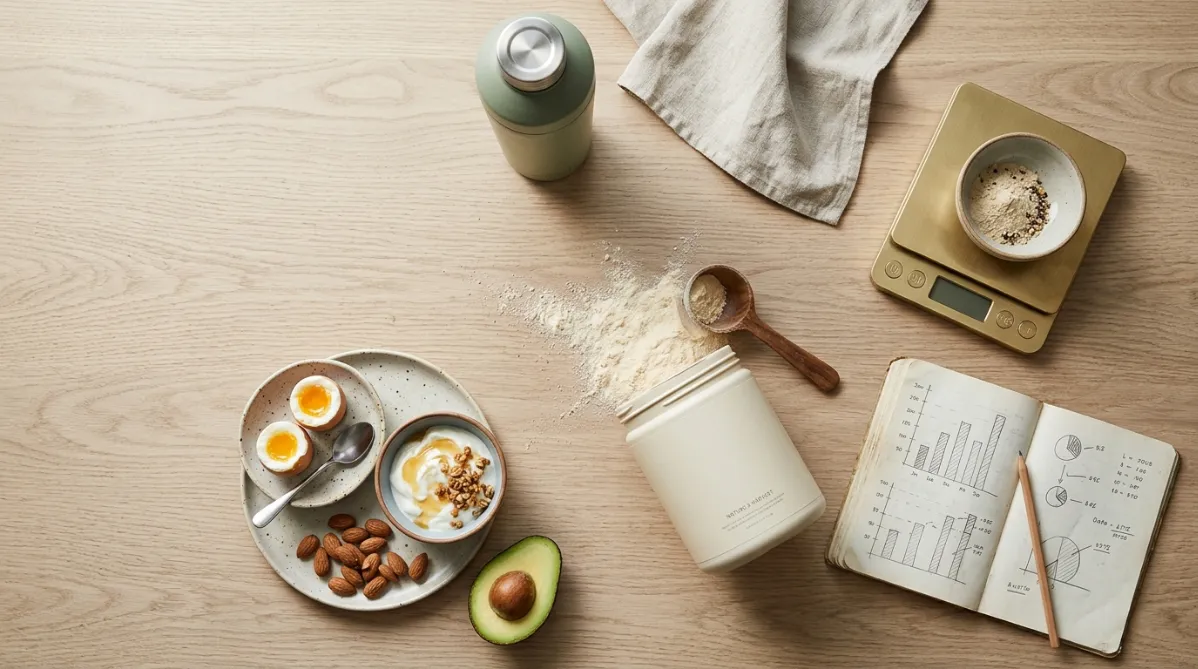
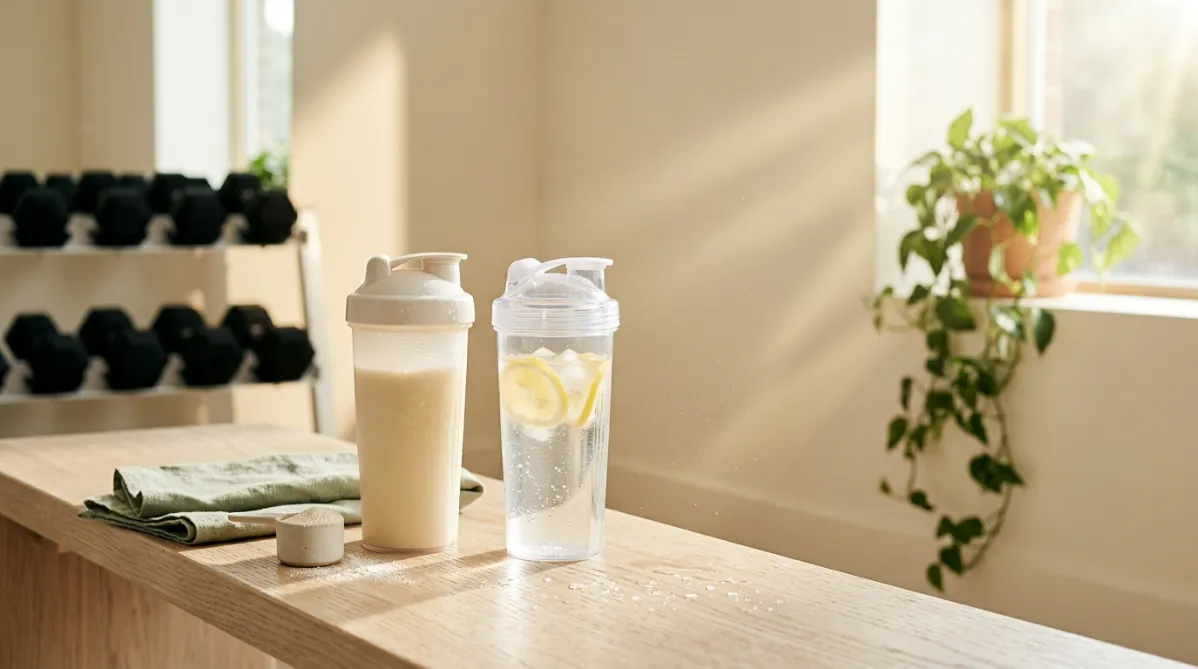
A landscape editorial photograph in a clean, modern wellness-magazine style. On a pale oak gym bench near a sunlit window, two shaker bottles sit side by side in the foreground. The left bottle is filled with creamy vanilla-colored whey shake and slightly fogged with condensation. The right bottle is clear and filled with water, with a few lemon slices and ice cubes visible inside. Beside them are a folded sage-green towel and a small matte ceramic scoop dusted with white protein powder. A few fine powder particles hang in the air, caught in the light.

Soft golden morning light streams diagonally across the scene and creates gentle highlights on the plastic and long, soft shadows on the wood. The background is softly blurred, with a minimalist studio gym in warm neutral tones: cream walls, a rack of matte black dumbbells, and a trailing green plant in a terracotta pot. Small water droplets bead on the bench surface and catch the light like tiny lenses.

The palette is airy and restrained: warm cream, soft sage, pale sky blue, natural wood, and a touch of lemon yellow. The composition follows the rule of thirds, with the bottles placed in the lower left third and open negative space on the right for headline text. Shallow depth of field, crisp focus on the bottles, and a subtle film-like grain. The mood is calm, healthy, and aspirational, like a premium nutrition and fitness journal feature. No people, no text, no logos, and no futuristic elements.
Nutrition

训练时若脱水,乳清蛋白奶昔的效果可能大打折扣

Dr. Gymbro · · 1 min read

训练时若脱水,乳清蛋白奶昔的效果可能大打折扣

你完成训练后,快速喝下 45 克乳清蛋白奶昔。然而,如果此时仍感到口渴,最新的随机对照试验显示,这杯奶昔未必能像你预期的那样高效提供氨基酸。

关键发现:脱水削弱了血氨基酸的峰值

研究由 Xin 等人完成,发表于 Nutrients(2026),题为《Exercise‑Induced Dehydration Limits the Effectiveness of Post‑Exercise Whey Protein Supplementation in Healthy Young Men》。(PubMed | DOI: 10.3390/nu18193267)

核心结果:当受试男性在运动中失去约 2.2% 体重且未补水时,摄入乳清蛋白后 60 分钟的血氨基酸响应明显减弱。与部分补水(50%)和全量补水两组相比,脱水组的以下指标均更低:

  • 总氨基酸
  • 支链氨基酸(BCAAs)
  • 亮氨酸
  • 异亮氨酸
  • 谷氨酰胺

乳清蛋白仍能提升血氨基酸水平,只是早期的峰值被削弱,而非完全失效。

研究设计

13 名健康的年轻男性完成了三次部分交叉试验,每次试验产生不同的补水水平:

试验 补液方式 实际体重下降
DEH 无补液 2.20 ± 0.19%
EUH_50% 替代失水的 50% 1.18 ± 0.30%
EUH 替代失水的 100% 0.27 ± 0.35%

在运动结束后 5 分钟内,受试者饮用 45 克乳清蛋白(溶于 450 mL 水),并在运动前、运动后以及摄入后 60、120 分钟抽血检测血清氨基酸。摘要仅报告了 60 分钟的差异,未给出其他时间点的结果,因此最稳妥的解读是:脱水主要削弱了早期的氨基酸响应。

为何这与恢复密切相关

运动后补充蛋白质是恢复的常规做法。该研究提醒我们:水分状态也会影响奶昔的效果。作者指出,运动期间摄入不足的液体可能削弱乳清蛋白的恢复效能。

需要注意的是,研究测量的是 血液氨基酸水平,而非肌肉蛋白合成、肌肉增长或力量提升。血浆亮氨酸在 60 分钟时下降是一个重要信号,但并不等同于“肌肉会少长”。论文并未给出此类结论,读者不应自行推断。

实用建议

剂量与时机(基于研究):45 克乳清蛋白溶于 450 mL 水,在运动后 5 分钟内喝完。该剂量相对较大,实际操作时不必完全照搬,关键是保持相同剂量下的良好水合状态。

值得采纳的补水习惯:

  1. 训练前保持良好水合。在训练前的几小时内主动补水,而不是等到结束后才匆忙补液。
  2. 运动中适量饮水。本研究的对照组分别为“无补水”和“部分/全量补水”,说明在运动过程中补水是最直接、最有效的干预手段。
  3. 通过体重变化评估脱水程度。一个简易经验法则是:每失去 1 kg 体重约等于失去 1 L 体液。目标是将体重下降控制在 2% 以下——本研究约 2% 的体重下降就是氨基酸响应下降的临界点。
  4. 别把奶昔当唯一的补水手段。即使奶昔本身含有约 450 mL 液体,也难以完全弥补大量出汗造成的液体赤字,仍需额外饮水。
  5. 观察尿色。尿色呈浅黄是判断日常水合状态的简便指标。

受众定位

本结论对以下人群最具参考价值:在高温环境下训练、进行长时间或高出汗量训练、以及习惯在训练中不喝水而把奶昔当唯一恢复手段的人。研究对象为健康的年轻男性,证据的适用范围主要限于该人群。

需要谨慎或不适用的情况

  • 女性、老年人和青少年:这些群体未在本研究中出现,结果未必适用。
  • 肾病或需限制液体摄入的患者:在改变液体或蛋白质摄入前应咨询医生。
  • 对牛奶或乳清过敏者:乳清并非合适的选择。
  • 轻度运动、出汗极少者:如果体重几乎不下降,你更接近全补水组的情况,脱水的影响可能微乎其微。

研究局限性

  • 样本量小:仅 13 名受试者。
  • 替代性结局:仅测量血清氨基酸,而非实际的肌肉合成或表现。
  • 观察窗口短:仅跟踪摄入后 120 分钟。
  • 单一剂量和蛋白来源:结果未必能推广到其他剂量或其他蛋白来源。
  • 机制未明:摘要未解释脱水为何削弱氨基酸响应,任何解释均属推测。

结论

在本试验中,未补液导致约 2.2% 的体重下降会使摄入 45 克乳清蛋白后的早期氨基酸响应减弱。解决办法既简单又廉价:在训练过程中补水,使结束时的体重接近起始体重。补水不会让奶昔变成魔法,但能帮助你更好地获取其价值。

来源:Xin Z, Gao M, Wu X, See M, Cheng P, Yan Y. Nutrients. 2026. PubMed 42884718 · DOI
Original study

Read the original research on pubmed.ncbi.nlm.nih.gov →

This article summarizes published research for general information. It is not medical advice.

DG

Written by

Dr. Gymbro

Dr. Gymbro writes for Dr. Gymbro: science-backed fitness, nutrition & performance.

Related Articles

nutrition

20克乳清蛋白未能在老年男性中激活肌肉合成

BY DR. GYMBRO ·

乳清、植物蛋白以及添加了亮氨酸的植物蛋白在马斯特里赫特大学针对约69岁男性的试验中表现相同,均未能启动肌肉合成。血液中的氨基酸水平如预期出现差异,乳清整体最高,亮氨酸强化配方的峰值最高。但各组的肌肉蛋白合成率无显著差异,甚至未超过空腹基线。研究提示,对于老年人而言,蛋白质摄入量可能比来源更关键。以下概述研究方法、未涉及的内容以及实用建议。

A wide, softly lit editorial still life on a pale oat-colored linen surface, shot from a slightly elevated three-quarter angle. On the left, a matte ceramic bowl in warm cream holds fine, pale golden-beige yeast protein powder, with a small wooden scoop resting beside it and a few loose dusty swirls on the linen. In the center, two tall frosted glass tumblers stand side by side. One holds a creamy, light tan shake with a delicate froth, and the other holds clear water with a faint ripple, creating a quiet visual contrast. On the right, a loosely folded charcoal gym towel, a brushed-steel shaker bottle, and a single small kettlebell in muted sage green sit slightly out of focus.

A few elements hint at the science without looking clinical. A minimalist matte-white notebook lies open with soft, blurred handwriting and a hand-drawn bar chart in thin pencil. Beside it rests a slim brass pen. A single sprig of dried wheat and a small dish of baker's yeast granules on a wooden board nod to the ingredient's fermentation origin.

Natural morning window light enters from the upper left, casting long, gentle shadows and a warm highlight along the glass rims. The palette is earthy and calm: oat, cream, soft terracotta, sage, and warm gray, with a subtle peachy glow in the background. The backdrop is a smooth plaster wall in muted putty tone, with a faint shadow of a window frame across it.

The composition leaves generous negative space in the upper third for a title overlay. Shallow depth of field keeps the glasses and bowl crisp while the gym props melt softly into the background. The overall mood is modern, wholesome, and trustworthy, with the feel of a contemporary health and nutrition magazine. The photograph has fine film-like grain and natural texture, and no text, logos, or labels appear anywhere.
recovery

酵母蛋白混合物与乳清相媲美,可减轻酸痛并降低肌酸激酶——但有小条件

BY DR. GYMBRO ·

酵母蛋白正逐渐进入蛋白粉市场,常被宣传为可持续、低奶制品的乳清替代品。最近《Nutrients》刊登的一项随机对照试验让受试者在一次高强度离心训练后摄入酵母‑乳清混合物,结果显示它比单纯饮水更能降低血清肌酸激酶(CK)水平,且在男性中还能减轻酸痛感。该混合物的整体表现与纯乳清相近,但对照组仅使用了水,且多数结果在多重比较校正后失去显著性。总体来看,酵母‑乳清混合物是值得尝试的可持续蛋白选项,但不应被视为奇迹般的恢复方案。

A wide, editorial-style flat lay shot from directly above on a pale oak table in soft morning window light. At the center, an open matte cream-colored protein powder tub sits tipped slightly, with a wooden scoop resting beside it and a small, elegant dusting of fine powder spilling across the wood grain. To the left, a neat balanced arrangement of whole foods: two soft-boiled eggs in a ceramic dish, a small bowl of Greek yogurt with a drizzle of honey, a handful of almonds, and a halved avocado. To the right, a minimalist brass kitchen scale holding a small ceramic bowl, with a handwritten notebook page beside it showing simple pencil-drawn bar charts and a few scribbled numbers, no legible text. A matte shaker bottle in muted sage green stands near the top edge, along with a folded linen napkin in warm oatmeal tone. The color palette is restrained and modern: warm creams, soft sage, terracotta accents, and natural wood, with gentle diffused shadows and subtle film-like grain. Composition leaves generous negative space on the left third of the frame for headline overlay. The mood is calm, thoughtful, and quietly skeptical, like a contemporary health and science magazine cover. Shallow depth of field, crisp textures on powder and ceramic, high-end lifestyle photography, clean and uncluttered.
nutrition

蛋白粉的隐藏真相:热量相同,效益消失

BY DR. GYMBRO ·

蛋白粉真的能提升你的表现和恢复吗,还是只是在摄入额外的热量?一项涵盖 75 项随机对照试验、1206 名运动员的贝叶斯荟萃分析表明,蛋白粉确实有益,但效果并不显著。更有意思的是,所有显著结果都来自能量摄入未匹配的研究。论文给出的最明确的建议是:每日额外摄入约 1 g/kg 蛋白质(即总摄入约 2 g/kg)。下面我们一起看看数据到底支持什么结论,时机与蛋白来源的说明如何,以及哪些人可以不必购买这瓶粉。

A serene, softly lit bedside scene in a modern minimalist bedroom, photographed in a warm editorial style. On a pale oak nightstand sit two matching frosted glass tumblers of creamy white protein shake, one slightly closer to the camera in sharp focus, the other gently blurred behind it. Beside them rests a small analog alarm clock with a matte cream face, its hands showing a late-evening hour, and a single ceramic scoop dusted with fine white powder on a linen coaster. A folded gray gym towel and a pair of worn sneakers are tucked at the edge of the frame, hinting at an earlier workout.

In the background, a neatly made bed with textured oatmeal linen bedding and a rumpled cream throw blanket glows under the amber light of a small paper-shade lamp. A sheer curtain filters deep indigo twilight from a window, with a faint crescent moon visible. The palette is muted and calming: warm cream, soft sand, dusty blue, and touches of terracotta from a small clay vase holding a dried pampas stem.

Shallow depth of field, gentle film-like grain, soft window light mixing with the warm lamp glow, long soft shadows across the wood grain. Composition follows the rule of thirds with the glasses on the left third and open negative space on the right, suitable for headline overlay. The mood is quiet, thoughtful, and contemporary, like a lifestyle and science feature in a trendy wellness journal. Clean, natural, tactile, with no text, no people, and no futuristic elements.
nutrition

睡前摄入乳清蛋白可将入睡时间缩短近一半,酪蛋白却未见效果

BY DR. GYMBRO ·

大家常把酪蛋白视为睡前的首选,但最新的随机、双盲交叉试验却得出了意外的结论。研究表明,阻力训练后在睡前 30 分钟摄入 40 克乳清蛋白,可使入睡潜伏期的中位数从对照组的 19 分钟降至 9 分钟,同时第二天的肌肉酸痛也有所减轻。而酪蛋白并未表现出显著优势。需留意的是,这项研究仅有 9 名受试者,且乳清与酪蛋白之间的直接比较未达到统计显著。

This page is available in