Dr. Gymbro
←

#female athletes

2 articles
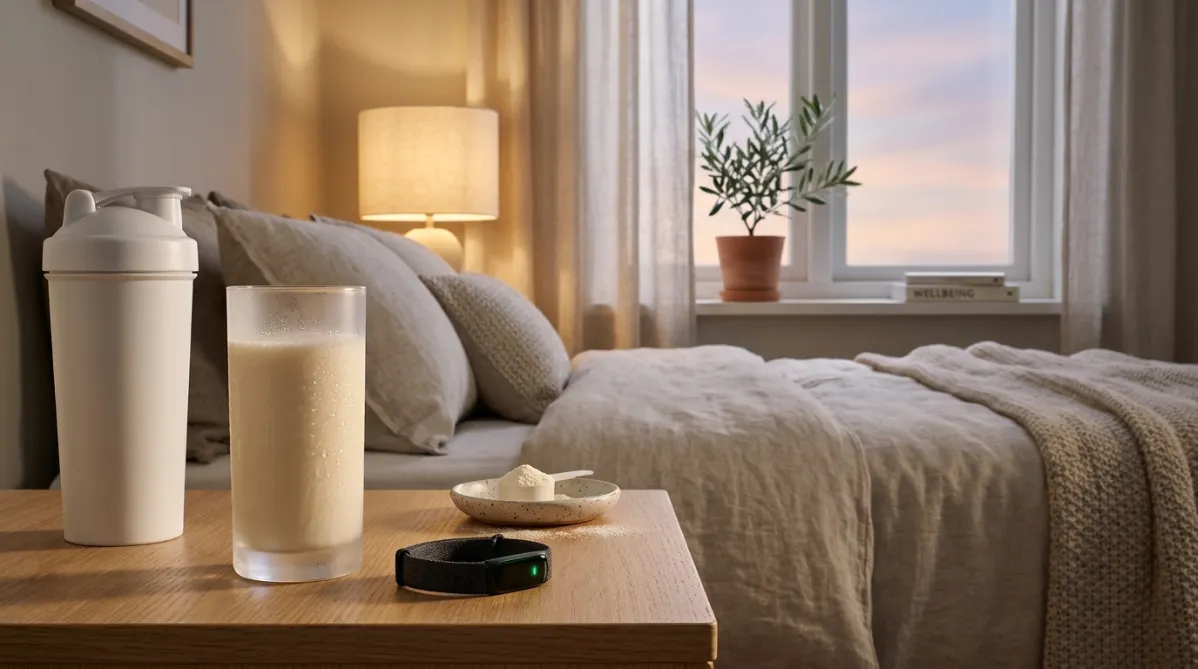
A softly lit bedside table in a calm, modern bedroom at dusk, photographed in wide landscape format with shallow depth of field. In the foreground, a matte white shaker bottle sits beside a tall frosted glass of creamy, pale vanilla-colored protein shake, with a few condensation droplets catching warm light. Next to the glass rests a slim fitness band on a dark charcoal fabric strap, its small LED glowing a gentle green, lying casually on a light oak wooden surface. A small scoop of fine white protein powder rests on a ceramic dish nearby, with a light dusting of powder on the wood.

In the soft-focus background, a neatly made bed with oatmeal-colored linen bedding and a textured knit throw blanket. A sheer curtain filters the last peach and lavender light of evening from a large window. A small potted olive branch in a terracotta vase and a closed paperback book add a quiet editorial touch. A bedside lamp with a warm, cream-colored shade casts a golden glow across the scene and creates gentle highlights on the glass.

The palette is muted and harmonious: warm cream, soft sand, oatmeal beige, faint sage green accents, and touches of dusty lavender in the window light. The mood is peaceful, reassuring, and clean, like a contemporary wellness magazine or a trendy health journal feature. Lighting is natural and cinematic, with soft shadows and a subtle film-like grain. The composition follows the rule of thirds, with the shake and band on the left third and open negative space on the right for headline overlay. Minimalist, Scandinavian-inspired styling, high-end lifestyle photography, crisp details, and a tranquil, premium editorial feel.
recovery

Casein vor dem Schlafengehen ruiniert den Schlaf nicht – WHOOP‑Daten zeigen

BY DR. GYMBRO ·

Kann ein 40‑g‑Casein‑Shake vor dem Zubettgehen heimlich den Schlaf sabotieren? In einer randomisierten, doppelblinden Crossover‑Studie mit 21 NCAA Division‑I‑Athletinnen, die ihre Schlafdaten mit WHOOP‑4.0‑Armbändern lieferten, zeigte sich kein Einfluss auf Schlafdauer, Schlafeffizienz, Ruhe‑Herzfrequenz oder HRV. Alpha‑Lactalbumin und Kohlenhydrate erzielten dieselben Werte. Der Clou: Keine der Testbedingungen verbesserte den Schlaf. Wir zeigen, welche Erkenntnisse die Daten liefern, wo die Studie an ihre Grenzen stößt und für wen ein nächtlicher Shake trotzdem sinnvoll sein kann.
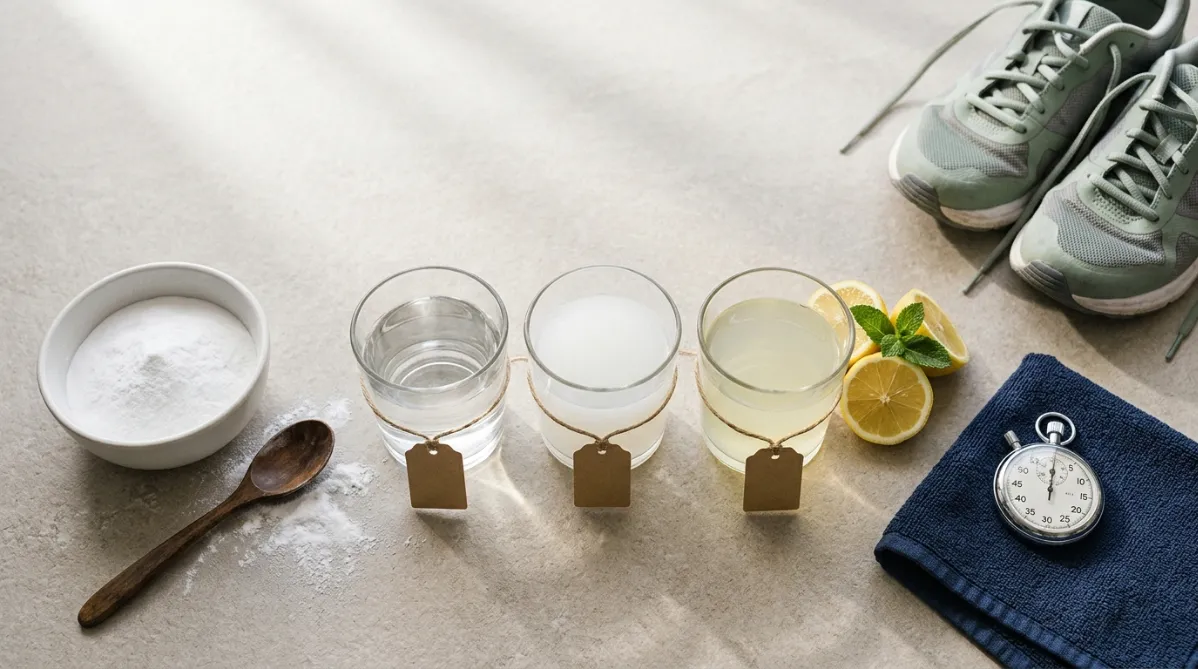
A wide, editorial-style flat lay photographed from above on a pale warm-gray stone countertop in soft morning window light. On the left, a simple white ceramic bowl holds fine white baking soda powder, with a vintage wooden spoon resting beside it and a light dusting of powder spilling across the surface. In the center, three identical clear glass tumblers sit in a neat row, each filled with a slightly different cloudy liquid: one almost clear, one milky white, one faintly yellow-tinged. Small kraft paper labels tied to the glasses with twine remain blank. To the right, a minimalist silver stopwatch lies on a folded navy athletic towel, its hands frozen mid-count. A few fresh lemon halves and a single sprig of mint add a bright, natural accent near the citrate glass. A pair of worn but clean women's running shoes sits partly in frame at the upper right corner, laces loose, hinting at an athlete without showing a person. Subtle long shadows fall diagonally across the scene, giving depth and a calm, modern feel. The color palette is muted and cohesive: chalky whites, soft sage green, warm sand, deep navy, and small pops of lemon yellow. Shallow depth of field gently blurs the edges, with crisp focus on the center glasses and stopwatch. Plenty of clean negative space across the top third leaves room for a headline overlay. The overall look is a trendy health and performance journal: clean, tactile, slightly grainy film-like texture, natural and understated, with no text, no logos, and no futuristic elements.
nutrition

Natron schlägt Natriumcitrat und die Kombination um 17 Sekunden

BY DR. GYMBRO ·

In einer Crossover‑Studie mit zehn hochtrainierten weiblichen CrossFit‑Athletinnen verkürzte Natriumbicarbonat die 6‑km‑Zeitfahrt um 21,5 Sekunden gegenüber Placebo, während Natriumcitrat und die Kombination keinen klaren Vorteil boten. Natriumbicarbonat war zudem 11,6 Sekunden schneller als Citrat und 17,2 Sekunden schneller als die Kombination – allerdings gingen damit vermehrte gastrointestinale Beschwerden einher. Hier erfährst du, was die Studie ergab, warum das Stapeln von Puffern nicht funktionierte und wie du das Vorgehen sicher testen kannst.

This page is available in