Dr. Gymbro
←

#muscle damage

5 articles
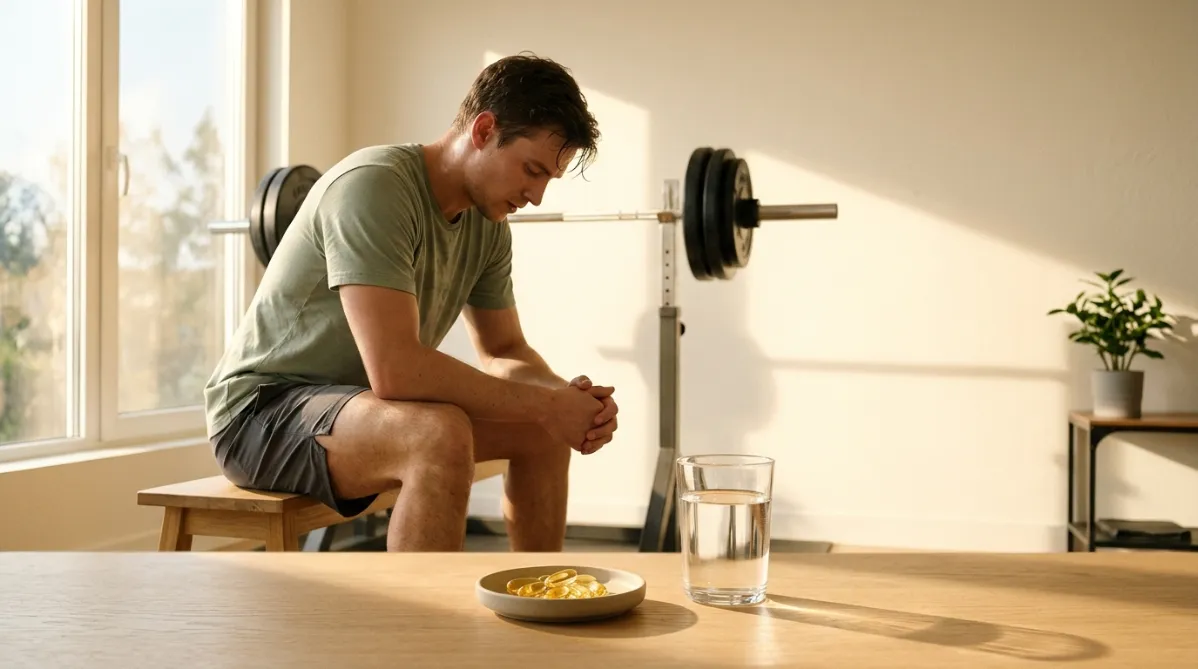
A sunlit, minimalist home gym corner photographed in soft golden morning light, with a young athletic man seated on a wooden bench, leaning forward with his elbows resting on his knees, catching his breath after a hard leg session. He wears a muted sage-green t-shirt and charcoal shorts, his face turned slightly away from the camera, calm and focused. A matte ceramic dish in the foreground holds a few small, translucent golden softgel capsules, with a glass of water beside it catching the light and casting a soft caustic shadow across a pale oak floor. Behind him, a loaded barbell rests on a squat rack, slightly out of focus, and a tall window pours warm sunlight diagonally across the scene, creating long gentle shadows and a hazy glow. A small potted green plant sits on a shelf at the edge of the frame. The color palette is warm and editorial: cream, soft gold, sage green, pale wood, and charcoal accents. Shallow depth of field, with crisp focus on the capsules and glass in the lower third and a creamy bokeh background. The composition leaves generous negative space on the right side for a headline overlay. The mood is clean, modern, and aspirational, like a high-end wellness magazine or a trendy health journal feature. Shot on a 50mm lens, natural light, fine film grain, subtle matte finish, landscape 16:9 framing.
recovery

Vitamin‑D beschleunigt Kraftregeneration bei Männern mit ausreichenden Vitamin‑D‑Werten

BY DR. GYMBRO ·

Männer mit normalen Vitamin‑D‑Spiegeln erholten sich nach einem intensiven Bein‑Workout schneller, wenn sie täglich 4 000 IU Vitamin‑D3 einnahmen. In einer randomisierten, placebokontrollierten Studie mit 28 aktiven Männern war die Wiederherstellung der maximalen isometrischen Kraft nach 24  Stunden um etwa 8 % besser. Die Muskel‑Schadensmarker ALT und AST stiegen ebenfalls weniger stark an, während das subjektive Muskelkater‑Empfinden unverändert blieb.
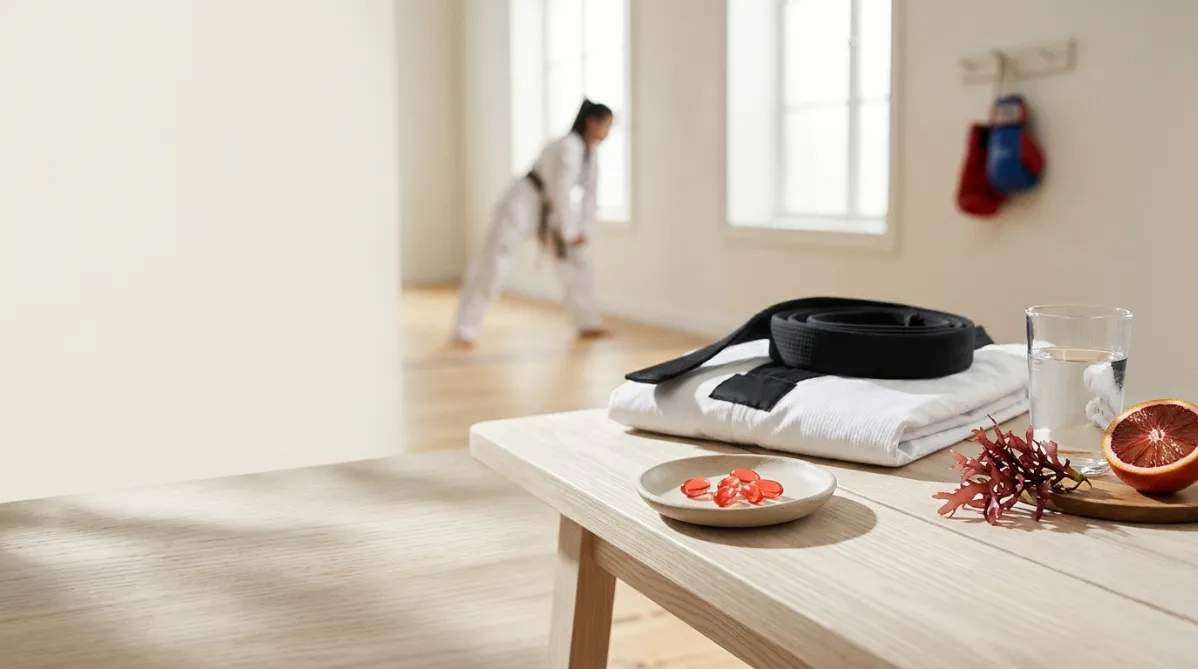
A wide editorial still life shot from a slightly elevated angle on a pale ash-wood bench in a bright, airy training hall. In the center sits a small matte ceramic dish holding a few translucent coral-red softgel capsules, their glossy surfaces catching soft window light. Beside the dish rests a folded white taekwondo dobok with a black belt loosely coiled on top. A sprig of fresh red microalgae-toned seaweed and a halved blood orange add natural color accents. A clean glass of water with subtle condensation stands to one side.

In the softly blurred background, the silhouette of a martial artist in a white uniform stretches near tall windows, with diffused morning light streaming across a sprung wooden floor. A pair of red and blue sparring gloves hangs on a minimal wall hook. Thin, elegant shadows stretch across the bench.

The palette is restrained and modern: warm off-white, soft sand, muted charcoal, with a vivid coral-red accent pulled from the capsules. Shallow depth of field, crisp focus on the capsules and dish, creamy bokeh behind. Natural, gentle lighting with a subtle film-like grain, reminiscent of a contemporary wellness and science magazine cover. Generous negative space on the left third of the frame for headline text. Calm, precise, and quietly athletic in mood, with no text, logos, or futuristic elements.
science research

12 mg Astaxanthin für 28 Tage: Muskelschäden und Burnout bei Kampfsportlern

BY DR. GYMBRO ·

Eine neue randomisierte Studie testete 12 mg Astaxanthin täglich an jungen männlichen Taekwondo‑Athleten. Nach 28 Tagen zeigte die Supplement‑Gruppe einen signifikant anderen Creatin‑Kinase‑Verlauf als das Placebo, höhere SOD‑Werte und explorative Anzeichen für niedrigere MDA‑Konzentrationen sowie weniger emotionale und physische Erschöpfung. Die Burnout‑Ergebnisse blieben jedoch rein explorativ, ohne signifikante Gruppen‑×‑Zeit‑Interaktion in irgendeiner Subskala. Die Studie war klein und maßt nur Biomarker, nicht die sportliche Leistung. Hier erfährst du, was die Daten beweisen, was sie nicht zeigen und wer aufmerksam werden sollte.
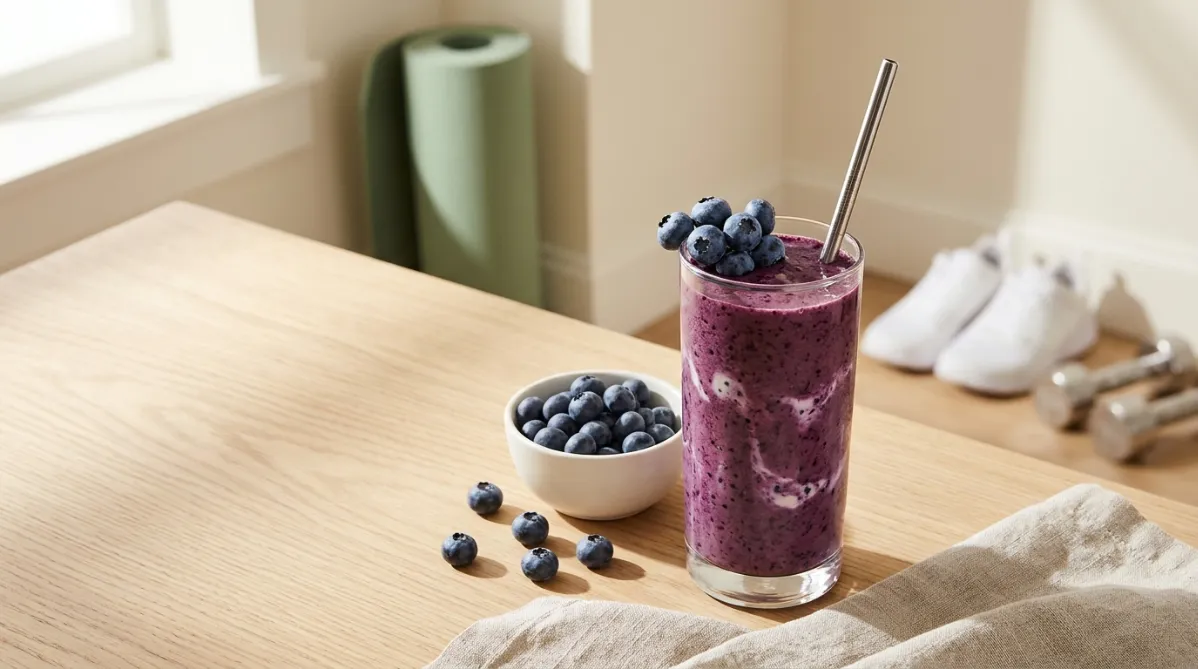
A bright, airy editorial photograph shot from above at a slight angle, showing a tall clear glass of deep violet blueberry smoothie on a pale oak wooden table. The smoothie has a creamy, velvety texture with a few lighter swirls, and a small cluster of fresh blueberries with dusty blue skins rests on the rim of the glass. A matte white ceramic bowl of whole blueberries sits to the left, with a few berries scattered naturally across the tabletop. A folded linen napkin in soft oatmeal tones and a stainless steel straw add subtle texture.

In the softly blurred background, a rolled-up sage green yoga mat leans against a light wall next to a pair of clean white running shoes and a small pair of brushed-metal dumbbells. A sliver of warm morning sunlight enters from the left window, casting gentle diagonal shadows and a golden glow across the table, with soft highlights on the glass and the berries' surface bloom.

The color palette is fresh and modern: deep indigo and violet from the smoothie, balanced by cream, warm beige, soft sage green, and touches of white. The composition follows the rule of thirds, with the glass placed on the right third and generous negative space on the left, suitable for headline overlay. Shallow depth of field, crisp focus on the glass and berries, creamy bokeh in the background. The mood is calm, healthy, and aspirational, like a contemporary wellness magazine or a trendy health journal website. Natural, realistic, high-end food and lifestyle photography style, 16:9 landscape format, clean and uncluttered.
nutrition

Heidelbeer‑Smoothie half, die Kraft in schmerzenden Beinen schneller zurückzugewinnen

BY DR. GYMBRO ·

Zehn Frauen, 300 intensive exzentrische Quadrizeps‑Kontraktionen und ein Heidelbeer‑Smoothie. In dieser randomisierten Crossover‑Studie beschleunigte das Getränk die Wiederherstellung der maximalen isometrischen Kraft über 60 Stunden (p = 0,047), während ein Placebo mit gleicher Antioxidantienkapazität das nicht tat. Das legt nahe, dass der Nutzen nicht allein auf Antioxidantien zurückzuführen ist. Nur ein Ergebnis erreichte Signifikanz und die Stichprobe war sehr klein, sodass die Evidenz eher vielversprechend als abschließend ist. Im Folgenden wird erklärt, wie die Studie ablief, was sie ergab und wie man die Erkenntnisse an den härtesten Beintagen umsetzt.
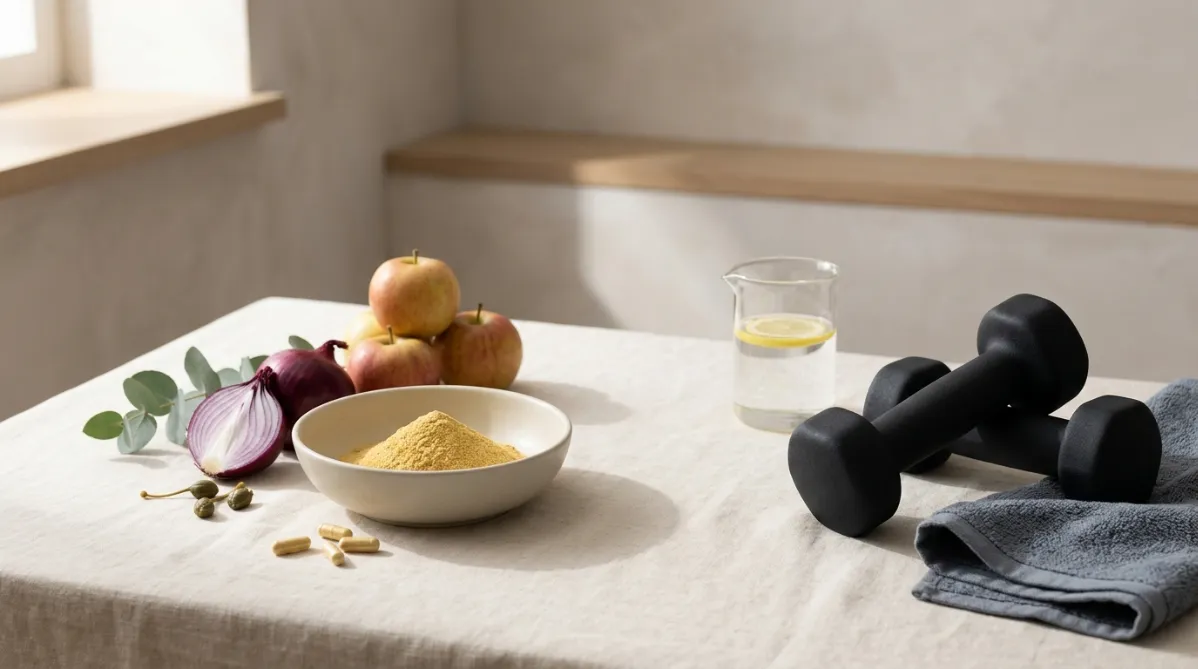
A wide, softly lit editorial still life on a warm off-white linen surface. At the center-left, a matte ceramic bowl holds a small mound of fine golden-yellow quercetin powder, with a few scattered capsules beside it. Next to the bowl sit fresh red onions (one halved to show its translucent purple layers), a few capers, and a small cluster of ripe apples with the skin on, all natural quercetin sources. On the right side of the frame, a sleek matte-black dumbbell rests at an angle beside a folded slate-gray gym towel. A minimalist glass beaker of water with a thin lemon slice sits just behind it.

Soft diffused morning window light enters from the upper left, casting gentle long shadows and subtle highlights on the powder and glossy onion skin. The color palette is muted and sophisticated: butter yellow, deep plum, warm cream, charcoal, with small touches of sage green from a single eucalyptus sprig. A subtle, out-of-focus background of pale plaster wall and a wooden shelf adds depth.

Shallow depth of field, shot from a slightly elevated three-quarter angle with a 50mm lens feel. Generous negative space in the upper right for a title overlay. The mood is clean, calm, and modern, like a premium wellness and science journal feature: tactile textures, natural materials, restrained composition, high-end editorial photography, and no text or logos.
science research

1 g/Tag Quercetin vor exzentrischen Curls – die IGF‑Wende

BY DR. GYMBRO ·

Was passiert, wenn man 14 Tage lang 1 g/Tag Quercetin einnimmt, bevor man das Bizeps‑Training mit exzentrischen Curls durchführt? In einer kleinen, placebokontrollierten Crossover‑Studie fielen die Schadensmarker CK, LDH, Myoglobin und IL‑6. Noch überraschender war, dass die IGF‑I‑Antwort stärker ausfiel und der IGF‑II‑Peak mehrere Tage früher als üblich auftrat. Bei nur zwölf Teilnehmenden und fehlenden Hypertrophiedaten ist das eher ein vielversprechendes Erholungszeichen als ein Garant für Muskelwachstum. Im Folgenden zeigen wir die Ergebnisse und geben Tipps für einen sinnvollen Einsatz.
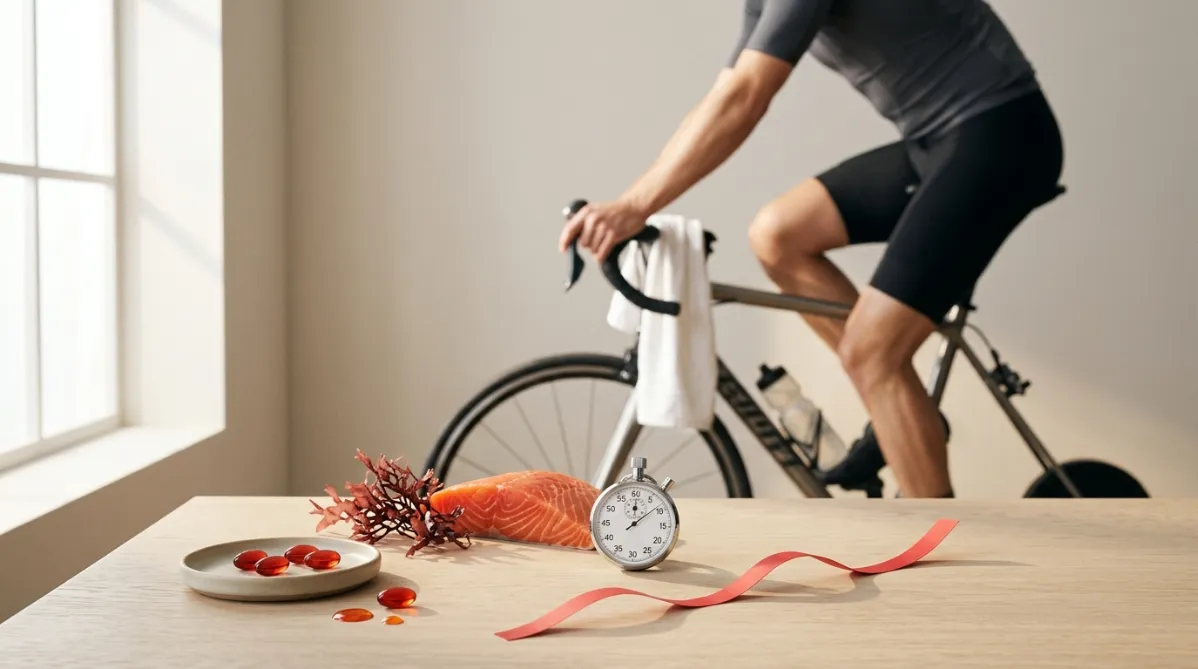
A cyclist's legs mid-pedal on a stationary road bike, shot in a bright, airy, minimalist studio with a soft warm-grey backdrop. In the foreground on a pale oak table sits a small ceramic dish holding four deep coral-red softgel capsules, with a few translucent droplets of red-orange oil glistening beside them. Beside the dish is a sprig of dried red microalgae-toned seaweed and a halved wild salmon fillet, its coral flesh echoing the capsule color. Behind the table, slightly out of focus, a cyclist in a fitted charcoal jersey and matte black shorts rides a bike on an indoor trainer. Only the torso and legs are visible, with no face. A white towel hangs over the handlebars and a clear water bottle catches the light.

Soft diffused morning light streams from a large window on the left, creating long gentle shadows and a subtle golden-hour glow on the skin and the glossy capsules. The palette is restrained and editorial: warm cream, sand, soft grey and charcoal, with vivid coral-red as the single accent color. A minimalist analog stopwatch with a clean white face sits on the table, its hands near the 85-minute mark. A thin, elegant line-graph shape is subtly suggested by a curved strip of red ribbon lying on the table, rising from left to right to hint at the performance gain without any text.

The composition follows the rule of thirds, with the capsules and stopwatch in the lower left and the cyclist's motion-blurred legs sweeping across the right. Shallow depth of field, crisp macro detail on the capsules, and a fine film-like grain. The overall feel is a modern health and science magazine cover: clean, calm, sophisticated, and natural, with negative space in the upper area for a headline. There are no futuristic elements, no glowing effects, no laboratory equipment, and no text or logos. Landscape 16:9 format.
nutrition

Astaxanthin erhöht nach 4‑tägiger Einnahme die Ausdauerzeit beim Radfahren von 72 auf 85 Minuten – Ergebnisse einer kleinen Studie

BY DR. GYMBRO ·

Vier Tage Astaxanthin (28 mg/Tag) verlängerten die Zeit bis zur Erschöpfung beim Radfahren von etwa 72 auf 85 Minuten – ein Zuwachs von rund 18 %. Gleichzeitig wurden die Anstiege von Muskel‑Schadensmarkern (CK, LDH) und von Lipidperoxidation (MDA) nach einer intensiven Belastung bei 75 % VO₂max gedämpft. Entzündungsmarker und der Energieverbrauch blieben unverändert, sodass der Wirkmechanismus noch unklar ist. Die Dosis liegt deutlich über dem, was viele handelsübliche Softgel‑Produkte liefern, und die Studie umfasste nur zehn junge Männer.

This page is available in