Dr. Gymbro
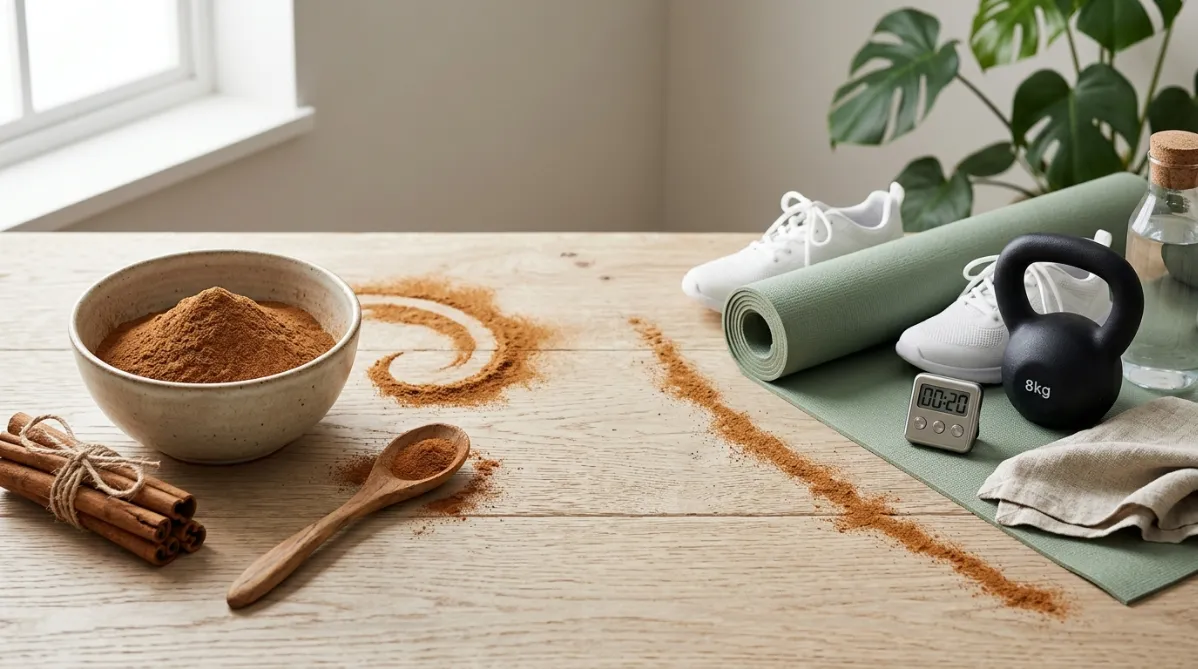
A wide, landscape editorial photograph shot from slightly above on a pale oak wooden surface, styled like a modern wellness magazine cover. On the left, a rustic ceramic bowl in matte oatmeal glaze holds ground cinnamon in a soft mound. Beside it sit several whole cinnamon sticks tied with natural twine, and a small wooden spoon dusted with warm reddish-brown powder. A loose cinnamon swirl spills across the surface in a graceful, organic arc. On the right, a minimalist fitness scene flows into the frame: a matte sage-green yoga mat partly unrolled, a stainless steel interval timer reading 00:20, a pair of clean white training sneakers, and a compact black kettlebell. A folded linen towel and a glass bottle of water add quiet, lifestyle-oriented detail. The two halves are linked by a thin line of scattered cinnamon powder that runs across the table like a brushstroke, joining the kitchen and the workout.

Soft morning window light enters from the upper left. It casts gentle, long diffused shadows and highlights the texture of the spice, the grain of the wood, and the curled bark of the sticks. The palette is warm and earthy: cinnamon brown, terracotta, cream, sage green, and soft charcoal, with one small accent of burnt orange. The background is a softly blurred neutral wall with a hint of a leafy plant in the top corner, giving shallow depth of field. The composition leaves generous negative space at the top and center-right for headline text. The mood is calm, fresh, health-forward, and trustworthy, with a subtle scientific-journal sophistication. Crisp focus on the cinnamon, creamy bokeh in the background, and a fine film-like grain. The image is realistic, tactile, and uncluttered, with no people, no text, no logos, and nothing futuristic.
Nutrition

Canela + Tabata superan al entrenamiento solo en la pérdida de grasa: estudio de 8 semanas

Dr. Gymbro · · 5 min read

¿Y si la ventaja para perder grasa ya está en tu alacena de especias?

Un pequeño ensayo de 2025 publicado en The Journal of the International Society of Sports Nutrition probó exactamente eso. Hombres que combinaron circuitos Tabata con 1,5 g de canela al día perdieron más grasa corporal que los que entrenaron solo. Antes de que compres una bolsa a granel de canela, los detalles importan, al igual que las advertencias.

El diseño del ensayo

Investigadores iraníes reclutaron a 40 soldados masculinos con sobrepeso u obesidad y los dividieron en cuatro grupos de aproximadamente diez participantes:

  • Solo Tabata (T)
  • Tabata + canela (T+S)
  • Solo canela (S)
  • Control (C)

La intervención duró ocho semanas, con tres sesiones semanales. Los grupos que tomaron canela recibieron cápsulas de 500 mg, tres veces al día, lo que suma 1,5 g diarios (más o menos la mitad de una cucharadita). Los investigadores midieron composición corporal, desempeño de fuerza‑resistencia (flexiones, sentadillas, plancha, salto vertical), glucosa en sangre, insulina, enzimas hepáticas y marcadores inflamatorios.

El circuito Tabata utilizado

El protocolo siguió la cronometría clásica de Tabata: 20 segundos de trabajo máximo, 10 segundos de descanso. El circuito giró entre ocho ejercicios:

  1. Sentadillas con salto
  2. Extensiones de espalda
  3. Crunches
  4. Flexiones de brazos
  5. Fondos de tríceps
  6. Crunches laterales
  7. Press militar con balón medicinal
  8. Dominadas

Un bloque típico de Tabata consta de ocho rondas de 20/10, lo que dura cuatro minutos. El resumen disponible no especifica cuántas rondas se realizaron por ejercicio, así que considera "estilo 4 minutos" como la esencia del protocolo y no como una duración verificable.

Resultados, en números

El peso corporal, el IMC y el porcentaje de grasa disminuyeron significativamente en todos los grupos de intervención (p < 0,001), mientras que el grupo control no cambió. La mayor pérdida de grasa se dio en el grupo combinado: ‑7,86 % de grasa corporal. Eso fue significativamente más que con Tabata solo (p = 0,013).

Otros hallazgos:

  • Rendimiento: Flexiones, sentadillas, plancha y salto mejoraron en ambos grupos de entrenamiento, sin diferencia notable entre Tabata y Tabata + canela. La canela no hizo a los hombres más aptos.
  • Marcadores metabólicos: Glucosa en ayunas, insulina, HOMA‑IR y enzimas hepáticas (SGOT, SGPT, GGT) descendieron en los grupos de intervención, con reducciones mayores en el grupo combinado.
  • Inflamación y señales de miokinas: CRP y TNF‑α disminuyeron, mientras que adiponectina e irisina aumentaron en todos los grupos de intervención. El grupo combinado mostró cambios superiores frente a los demás (p < 0,05).

Una segunda lectura de las tablas de datos, reportada por Ergo‑Log, sugiere que la balanza contó otra historia. El entrenamiento solo produjo alrededor de 7 kg de pérdida de peso y el combinado cerca de 6 kg. Sin embargo, el grupo combinado pudo haber perdido más grasa al mismo tiempo que mantenía o ganaba masa magra. No he verificado esas cifras con el artículo completo, así que tómalo como provisional. Si se confirman, recuerdan que la composición corporal importa más que el número en la balanza.

Por qué la canela podría ayudar

Los autores apuntan a la inflamación y a la señalización de miokinas más que a un efecto directo de quema de grasa. La inflamación crónica de bajo grado, incluido un TNF‑α elevado, se asocia con resistencia a la insulina y adiposidad obstinada. Se piensa que los polifenoles de la canela atenúan la señalización inflamatoria. La irisina, una molécula similar a una hormona liberada por el músculo, está vinculada al "browning" del tejido adiposo y al gasto energético. Ambas se movieron en la dirección correcta, y con mayor magnitud en el grupo combinado.

La insulina suele ser el mecanismo principal que se le atribuye a la canela, pero probablemente no sea el motor aquí. Glucosa, insulina y HOMA‑IR mejoraron en todos los grupos de intervención, incluido el entrenamiento solo. Eso indica que el ejercicio hizo la mayor parte del trabajo metabólico, y el beneficio añadido de la canela estuvo en otro lado. Es una especulación mecánica, pues el estudio no estaba diseñado para probar esa vía.

La canela sola no es un quemador mágico de grasa

La conclusión del resumen describe a la canela como algo que potenció los efectos del Tabata, no como un sustituto. El grupo control no cambió, los grupos de entrenamiento mejoraron su condición y el grupo solo de canela no igualó al combinado. Interpreta esto como "entrenamiento más canela puede superar al entrenamiento solo", no como "la canela derrite grasa".

Limitaciones honestas

  • Muestra diminuta: Aproximadamente diez hombres por grupo son insuficientes para conclusiones firmes.
  • Solo soldados: Una población controlada, joven y masculina no representa a todos.
  • Cegamiento incierto: Si los participantes sabían quién recibía canela, los efectos de expectativa podrían haber influido.
  • Tipo de canela no especificado: El producto y los detalles del extracto importan para la replicación.
  • Un solo país, un solo ensayo: Necesita replicación independiente.

Consejos prácticos

Dosis: El ensayo usó 500 mg con cada comida, tres veces al día (1,5 g en total). Esa es la única dosificación respaldada por el estudio, así que no hay razón para aumentar la cantidad.

Ceylán vs. cassia: La mayor parte de la canela que se vende en supermercados es cassia, que contiene cantidades apreciables de cumarina, un compuesto que puede tensionar el hígado si se consume en exceso. Los reguladores europeos establecen una ingesta diaria tolerable de aproximadamente 0,1 mg por kg de peso corporal, y el contenido de cumarina en la cassia varía mucho entre productos. Para un uso diario durante semanas, la canela de Ceilán ("verdadera") que contiene solo trazas de cumarina es la opción más segura. Esto es especialmente relevante si tienes problemas hepáticos.

A quién va dirigido: Adultos sanos que ya siguen un entrenamiento estructurado de alta intensidad y buscan un complemento de bajo costo. No es un atajo para quienes evitan el ejercicio.

Quién debe consultar primero: Si tomas medicación para diabetes, anticoagulantes o tienes enfermedad hepática, habla con tu médico antes de suplementar. Los principiantes también deberían crear una base antes de intentar trabajo Tabata al máximo.

Conclusión final

La verdadera historia es el entrenamiento. Ocho semanas de circuitos Tabata mejoraron la composición corporal, la condición física, la inflamación y los marcadores hepáticos. La canela parece ser un potenciador barato y plausible que amplificó la pérdida de grasa en este pequeño ensayo. Vale la pena seguir explorándola, pero aún no está probada.
Original study

Read the original research on pubmed.ncbi.nlm.nih.gov →

This article summarizes published research for general information. It is not medical advice.

DG

Written by

Dr. Gymbro

Dr. Gymbro writes for Dr. Gymbro: science-backed fitness, nutrition & performance.

Related Articles

A bright, minimalist editorial still life on a soft warm-white linen surface, shot from a slightly elevated angle in natural morning window light. In the center, a small shallow ceramic bowl in matte oatmeal tones holds several glossy, translucent coral-red softgel capsules, with a few spilled onto the surface in a gentle arc. Beside the bowl, a single ripe peach-pink shrimp-like krill shape is absent; instead a delicate scatter of tiny coral-orange dried krill-pink petals and a sprig of pale green seaweed hint at the marine origin. To the left, an empty clear glass of water and a folded cream napkin suggest fasting. To the right, a simple matte white plate sits bare with a silver fork resting across it. In the soft-focus background, a pair of sage green hand weights and a neatly rolled yoga mat in dusty blue add a quiet nod to muscle and strength. Soft shadows fall diagonally across the scene, giving gentle depth. The palette is calm and modern: warm ivory, coral red, sage green, dusty blue, and soft beige. Shallow depth of field with crisp focus on the capsules, which catch small bright highlights. Clean negative space on the left third of the frame for headline text. The overall feel is a contemporary wellness magazine or health journal cover, airy, refined, and editorial, with subtle film-like grain and natural color grading. Landscape 16:9 composition.
nutrition

El aceite de kril reduce la pérdida muscular en una dieta de ayuno hasta seis veces, según un estudio

BY DR. GYMBRO ·

Seguir una dieta estricta suele implicar perder músculo junto con grasa, pero un ensayo aleatorizado sugiere que un suplemento podría cambiar eso. En 41 adultos que realizaron ocho semanas de ayuno en días alternos, los grupos de aceite de kril y placebo perdieron peso de forma similar (≈ 4,6 kg vs 4,5 kg). Sin embargo, el grupo de kril apenas perdió 0,2 kg de masa magra, mientras que el placebo perdió 1,2 kg y vio disminuir su fuerza de agarre. Antes de comprar el producto, ten en cuenta que la muestra fue pequeña y la cápsula también contenía astaxantina y colina. A continuación, los números, la dosis y a quién debería evitarlo.

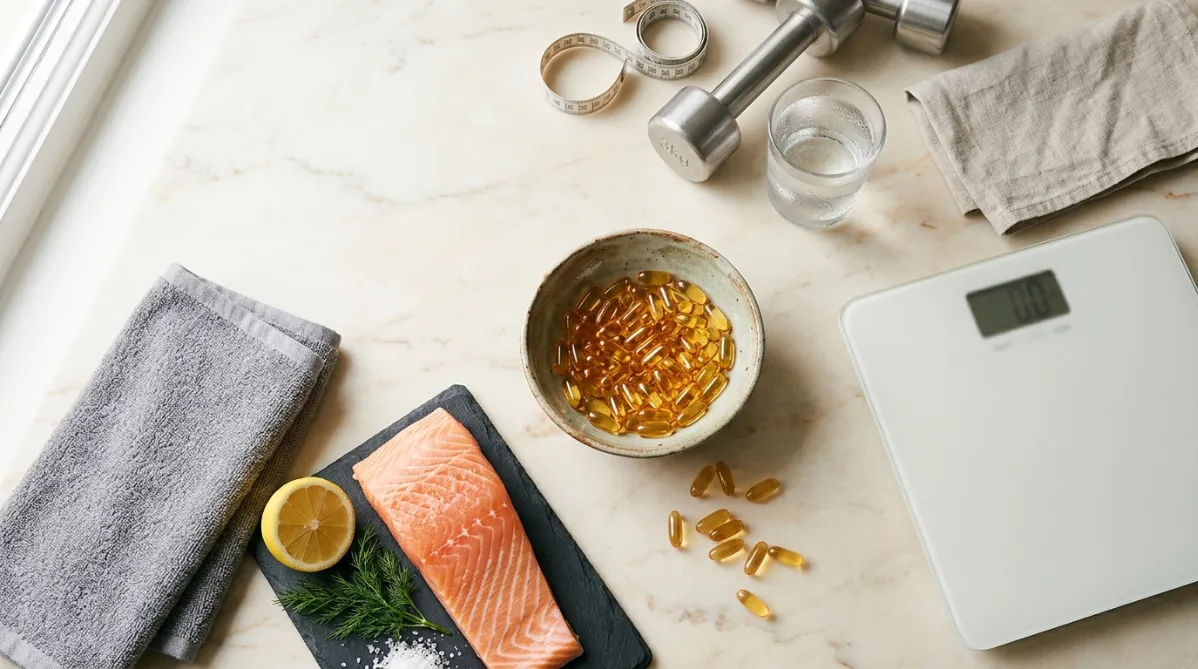
A wide, editorial-style flat lay photographed from above on a pale, warm-toned marble surface with soft natural window light coming from the left. At the center sits a shallow ceramic bowl filled with glistening golden-amber fish oil capsules, a few spilled casually onto the marble. Beside the bowl, a sleek minimalist bathroom scale in matte white sits at the right edge, its digital display blurred so it appears static. To the left, a neatly folded heather-gray athletic towel rests beside a small cluster of fresh ingredients: a halved lemon, a sprig of dill, and a fillet of raw salmon on a slate board, its coral-pink flesh with delicate white marbling catching the light. Near the top of the frame, a pair of brushed-steel dumbbells in a light finish and a soft tape measure curl loosely across the surface, suggesting body composition tracking without being clinical. A small glass of water with condensation and a linen napkin add quiet lifestyle detail. The color palette is calm and modern: cream, soft sage green, warm gold, coral, and muted gray. Shadows are soft and diffused, with gentle highlights on the capsules making them glow like tiny amber beads. The composition has generous negative space on the upper left for headline text, with a shallow depth of field that keeps the capsules and salmon crisp while the edges fall softly out of focus. The overall mood is clean, health-conscious, and contemporary, like a high-end wellness magazine or science journal cover, with a subtle film-like grain and natural, true-to-life tones. No people, no text, no futuristic elements.
nutrition

El aceite de pescado cambió grasa por músculo en 6 semanas; la báscula no se movió

BY DR. GYMBRO ·

¿Y si la báscula no se mueve, pero tu cuerpo intercambia silenciosamente grasa por músculo? Un ensayo doble ciego con 44 adultos sanos demostró que, tras 6 semanas de suplementación con aceite de pescado (≈ 2,4 g de EPA + DHA al día), la composición corporal cambió medio kilo en cada dirección sin variar el peso corporal. El cortisol salival disminuyó, aunque la asociación es solo correlacional. No hubo cambios en el gasto energético en reposo y la muestra fue limitada. Aquí tienes lo que realmente revelan los datos y cómo aplicarlos con criterio.

A wide, editorial-style photograph of a lone cyclist's legs and torso mid-sprint on a stationary indoor bike in a bright, minimalist performance studio. The scene is shot from a low three-quarter angle with shallow depth of field. The cyclist wears matte charcoal shorts and a fitted sage-green top, with a subtle sheen of sweat catching soft window light. Their hands grip the handlebars and the pedals are caught in a slight motion blur, which conveys explosive effort.

In the foreground, slightly out of focus on a pale oak side table, sit a small matte white scoop and a clear glass of water. Next to them is a little ceramic dish holding a few off-white capsules and a pinch of fine white powder. A folded linen towel and a slim stopwatch rest nearby. The stopwatch face is softly legible, hinting at timed sprint intervals.

The background is warm cream concrete and pale wood, with tall windows casting long diagonal shafts of golden morning light across the floor. Faint dust motes drift in the light. On the wall behind, a clean, abstract line graph is painted in muted terracotta and deep teal. It shows one line rising in steps like five sprint bouts and another line gently falling, a subtle visual nod to power up and lactate down. The graph is minimal and stylized, with no readable numbers or text.

The color palette is earthy and modern: sage green, terracotta, warm cream, soft charcoal, and touches of natural wood. The lighting is soft and directional with gentle highlights and natural shadows. The overall look is calm, refined, and contemporary, like a premium wellness and sports science magazine cover. The composition follows the rule of thirds, with the cyclist on the right and open negative space on the left for a headline. The image is crisp, grainy in a subtle film-like way, and free of any futuristic or sci-fi elements.
science research

Esta forma de carnitina aumentó la potencia de sprint hasta un 15 % y redujo el lactato

BY DR. GYMBRO ·

Un estudio cruzado de 2009 encontró que una dosis única de 4,5 g de glicina propionil‑L‑carnitina (GPLC) incrementó la potencia máxima y media en sprints entre un 2,6 % y un 15 % durante cinco series de ciclismo al máximo esfuerzo. Además, el lactato en sangre fue un 16,2 % más bajo 14 minutos después del ejercicio. Sin embargo, el “15 %” corresponde al extremo superior del rango, no a un promedio, y el estudio solo incluyó a 24 hombres en un único laboratorio. Este artículo explica cómo el GPLC difiere de la L‑carnitina tradicional y del ALCAR, dónde encaja la teoría del óxido nítrico y quién podría beneficiarse realmente. También se analizan la dosis, el momento de la ingesta y las limitaciones de la evidencia.

A wide, softly lit editorial still life on a pale oatmeal linen surface. In the center sits a tall, clear glass filled with deep garnet-red tart cherry juice, with condensation beading on the outside and a faint ruby glow where light passes through it. Around it are a scattering of fresh Montmorency cherries, some with stems and some halved to show pale amber flesh and a single pit. A few drops of juice have splashed onto the linen, leaving small crimson stains. To the right, slightly out of focus, lies a folded charcoal-gray running shirt, a pair of minimalist off-white running shoes, and a small brushed-steel kettlebell, suggesting both endurance and strength training without a gym in view. On the left, a ceramic pitcher in matte sage green holds more juice, and a sprig of fresh mint adds a small contrast.

Window light comes from the upper left, casting long, gentle shadows and creating a warm morning feel. The palette is restrained and modern: deep burgundy, cream, sage, and soft slate, with plenty of negative space in the upper right for headline text. The camera angle is a shallow three-quarter view from slightly above, with a shallow depth of field. The foreground cherries are razor sharp and the background melts into a creamy blur. Subtle film grain, natural color grading, and a clean, minimalist composition give it the polished feel of a contemporary health and science magazine. No text, no logos, no people, and no futuristic elements. The overall mood is calm, fresh, and restorative, hinting at recovery and balance.
recovery

Truco del jugo de cereza ácida: recuperación de fuerza más rápida y niveles de IL‑6 más bajos

BY DR. GYMBRO ·

Maratonistas y levantadores juran por el jugo de cereza ácida para recuperarse, y un estudio controlado con placebo lo puso a prueba. En 20 corredores, la fuerza isométrica se recuperó significativamente más rápido (P = 0.024), mientras que los niveles de IL‑6, CRP y ácido úrico descendieron y el estado antioxidante aumentó alrededor de un 10 %. Sin embargo, la creatina quinasa, LDH y el dolor muscular no cambiaron de forma significativa, lo que matiza las promesas publicitarias. Aquí explicamos qué hicieron, qué descubrieron y quién podría beneficiarse realmente.

This page is available in