Dr. Gymbro
←

#muscle connective tissue

1 article
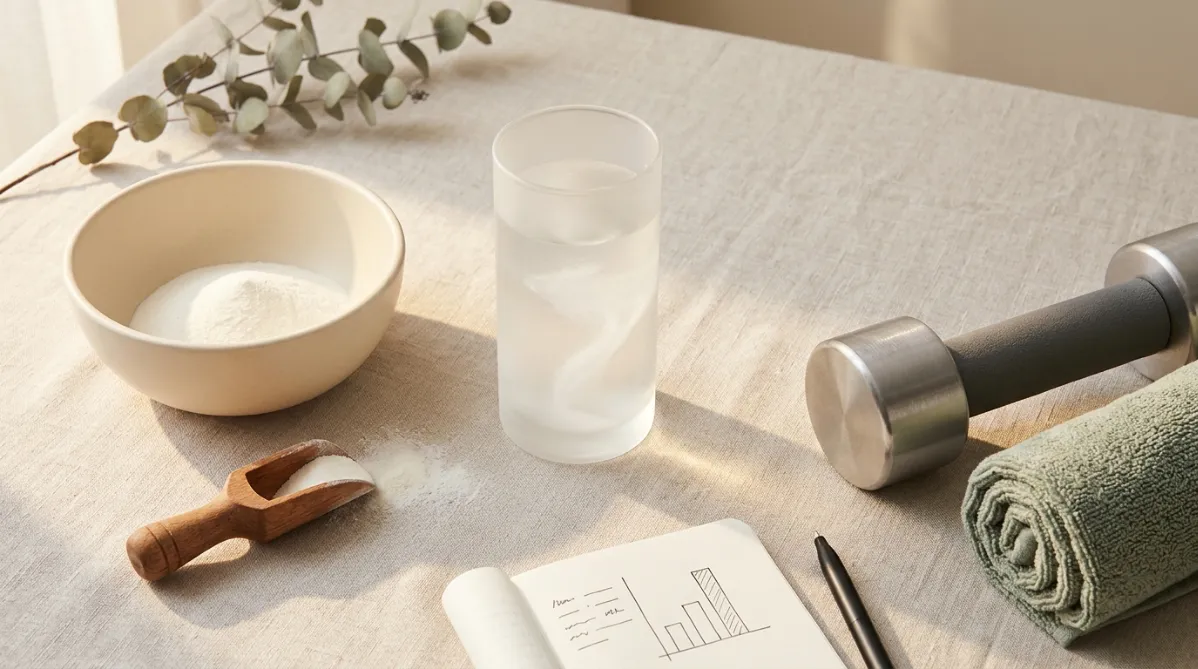
A softly lit, editorial-style flat lay on a pale oat-colored linen surface, shot from slightly above at a gentle angle. On the left, a matte ceramic bowl in warm cream holds a small mound of fine white collagen peptide powder, with a wooden scoop resting beside it and a light dusting of powder on the linen. In the center, a tall frosted glass of water with a faint swirl of dissolving powder catches soft window light. On the right, a single brushed-steel dumbbell with a muted charcoal grip sits partly in frame, with a rolled sage-green gym towel beside it. A small, clean, minimalist notebook lies open near the bottom edge with a thin pen and a few handwritten lines and a simple hand-drawn bar chart showing two bars of different heights. This subtly hints at data and scrutiny without any legible text. A sprig of dried eucalyptus adds an organic touch in the upper corner.

The light is warm morning sunlight from the left, producing long, soft shadows and a gentle golden glow, with a shallow depth of field that blurs the background edges into creamy neutrals. The palette is restrained and modern: oat, cream, sage, soft terracotta, and charcoal accents. The composition leaves open negative space on the upper right for title overlay. The overall mood is calm, thoughtful, and wellness-meets-science, in the style of a contemporary health and nutrition magazine, with crisp textures, natural grain, and a clean, trendy, slightly muted film-like finish.
science research

Los péptidos de colágeno triplicaron el aumento del colágeno tipo I en el músculo. ¿Cuál es el truco?

BY DR. GYMBRO ·

Doce semanas de entrenamiento con cargas pesadas más 15 g de péptidos de colágeno específicos al día aumentaron el colágeno tipo I dentro del cuádriceps en un 29,8 %, frente a un 9,9 % con placebo. Es un resultado confirmado por biopsia de un ensayo aleatorizado, algo raro en el mundo de los suplementos. Sin embargo, el resumen no reporta mejoras en fuerza ni tamaño muscular, y los tipos de colágeno III y IV subieron en ambos grupos. Además, uno de los coautores posee patentes relacionadas con el colágeno. Aquí se explica lo que realmente muestra el estudio, lo que no demuestra y a quién le puede interesar.

This page is available in