Dr. Gymbro
←

#arterial stiffness

1 article
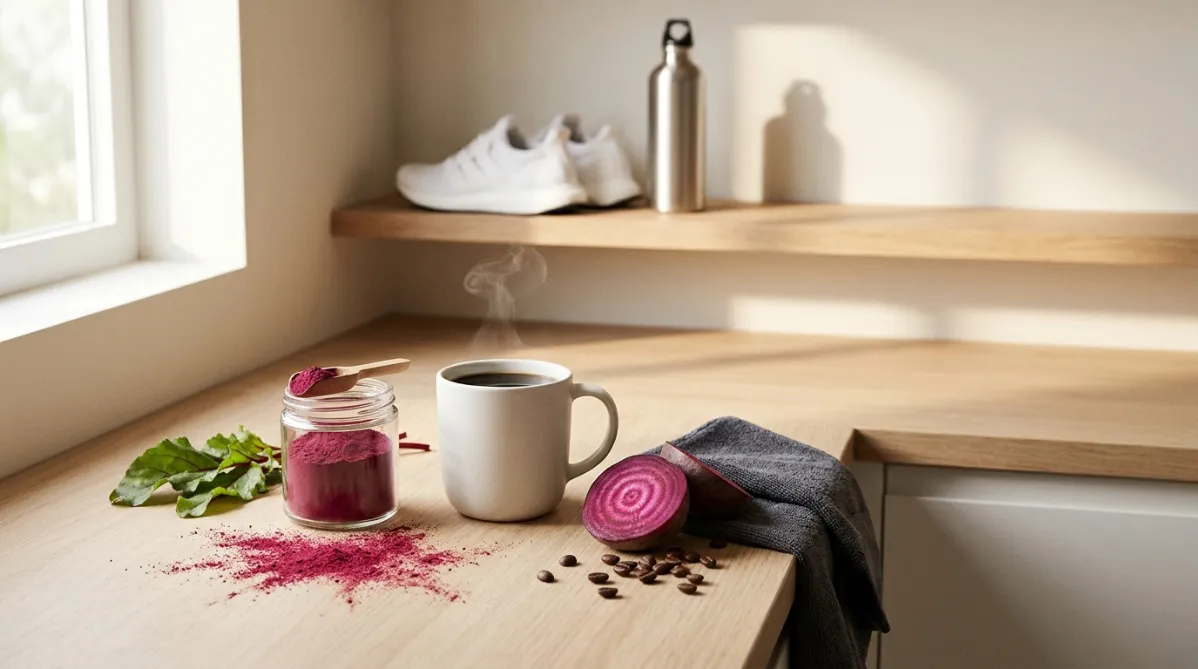
A sunlit, minimalist kitchen counter in a modern home, photographed from a slightly elevated three-quarter angle with soft natural morning light spilling in from a window on the left. In the center sits a matte white ceramic mug of black coffee with a thin curl of steam, beside a small glass jar of deep magenta beetroot powder with a wooden scoop resting on the lid. A scattering of fine crimson powder dusts the pale oak surface in an artful, casual swirl. Nearby, a halved raw beetroot reveals vivid concentric rings of purple and pink, next to a few roasted coffee beans and a neatly folded charcoal gym towel. In the soft-focus background, a pair of clean white running shoes and a stainless steel water bottle sit on a floating shelf, hinting at a pre-workout routine. A single sprig of green beet leaves adds a fresh accent.

The color palette is warm and editorial: creamy neutrals, espresso browns, and rich beet magenta, with gentle highlights and long soft shadows. The composition has generous negative space on the right side for headline text, shallow depth of field, and a crisp, tactile texture on the ceramic, powder, and wood grain. The mood is calm, health-conscious, and contemporary, like a lifestyle feature in a premium wellness magazine or a trendy nutrition journal. Clean, balanced, natural, with subtle film-like grain and a slightly muted, high-end finish.
science research

La caféine pré‑entraînement rigidifie les artères ; la poudre de betterave neutralise l’effet

BY DR. GYMBRO ·

Un essai croisé randomisé a montré qu’une dose de caféine équivalente à un pré‑workout (6 mg/kg) augmente les marqueurs de rigidité artérielle en 2,5 h. L’ajout d’une poudre de betterave contenant 400 mg de nitrate ramène ces marqueurs au niveau du placebo. La pression artérielle et la fonction endothéliale restent inchangées, ce qui indique un effet subtil plutôt qu’un signal d’alerte. L’étude, menée sur 24 jeunes adultes sains avec une seule prise, laisse de nombreuses questions ouvertes quant à l’usage à long terme et aux populations plus âgées ou hypertendues.

This page is available in