
Dr. Gymbro
←

#hormones

2 articles
A wide, editorial-style still life photographed from slightly above on a pale oak surface in soft morning window light. At the center, a small matte white supplement tub with a plain, unlabeled front sits tipped on its side, spilling a modest pile of fine white powder across the wood. Beside it, a wooden scoop rests in the powder, and a few white capsules are scattered in a loose arc. To the left, a clean glass of water catches the light and throws a delicate caustic shadow. To the right, a neatly arranged group of whole foods sits in contrast: two brown eggs, a small wedge of salmon fillet on parchment, a handful of raw almonds, and a sprig of rosemary. A matte black steel dumbbell handle is partly visible at the top edge of the frame, grounding the fitness theme. In the lower foreground, a slim, open linen-bound notebook holds a hand-drawn line graph with a single line trending gently downward, a thin ink pen lying across the page. The palette is muted and warm: cream, soft sage green, pale oak, charcoal accents, and a touch of terracotta from a ceramic dish holding the almonds. Shallow depth of field blurs the background, a softly lit minimalist kitchen counter with a hint of a plant leaf. The mood is calm, thoughtful, and scientific without being clinical, like a cover image for a contemporary health and nutrition journal. Natural shadows, subtle film grain, and generous negative space on the upper left leave room for a headline overlay. Crisp focus on the powder and scoop, with refined, understated composition and no text or logos visible.
nutrition

L’acide D‑aspartique diminue la testostérone à 6 g/j chez les haltérophiles entraînés

BY DR. GYMBRO ·

L’acide D‑aspartique est présenté comme un booster naturel de testostérone, mais une étude contrôlée portant sur 24 haltérophiles a montré que 6 g/jour font réellement baisser la testostérone totale et libre. La dose de 3 g, que l’on retrouve sur de nombreuses étiquettes, n’a aucun effet mesurable. Un essai de trois mois ultérieur n’a mis en évidence aucun gain de force ni de masse musculaire. Voici ce que révèle l’étude, pourquoi les athlètes entraînés peuvent réagir différemment des personnes sédentaires, et où votre argent serait mieux dépensé.
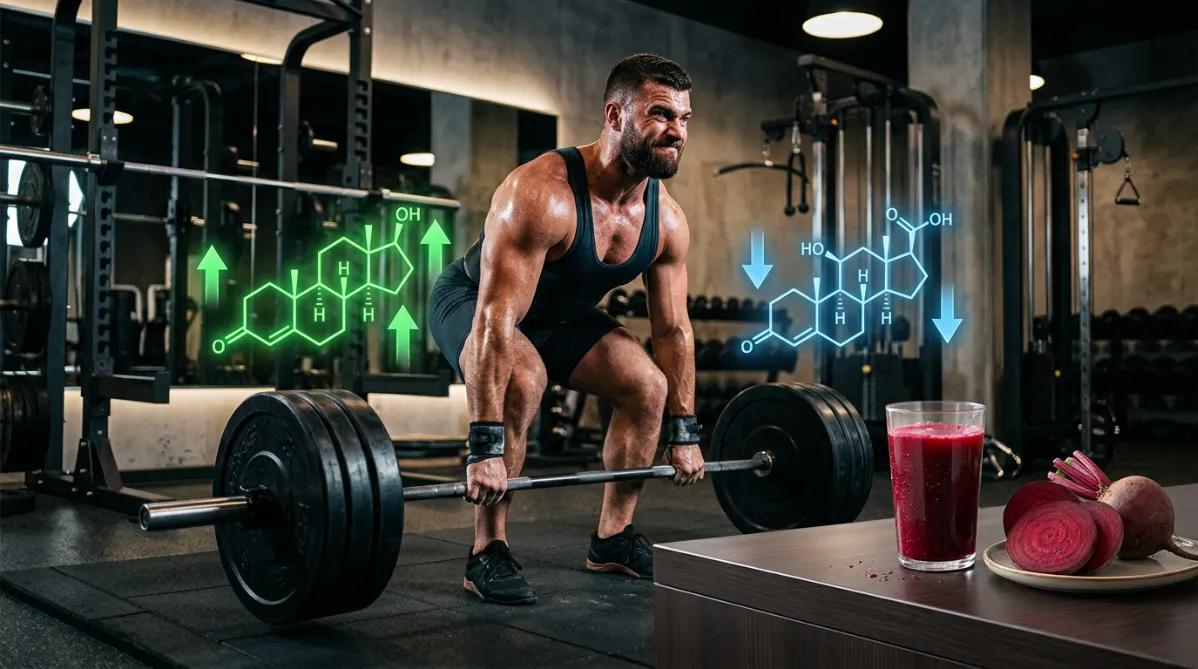
A muscular athlete in a modern gym performing a powerful deadlift, with intense focus and determination on their face. Sweat glistens on their skin as they grip a loaded barbell. In the foreground, a glass of deep red beet juice sits on a sleek counter, with fresh beetroot slices arranged nearby. The background features state-of-the-art gym equipment with soft lighting creating dramatic shadows. Overlaid translucent graphics show testosterone and cortisol molecular structures floating in the air, with upward arrows for testosterone (in vibrant green) and downward arrows for cortisol (in calming blue). The overall color palette combines deep reds from the beets, metallic grays from the gym equipment, and energetic greens and blues from the hormone visualizations, creating a scientific yet powerful atmosphere that represents the intersection of nutrition science and athletic performance.
general

Le secret scientifique pour maximiser la testostérone et écraser le cortisol : comment la bêtaïne transforme vos hormones d’entraînement

BY DR. GYMBRO ·

Des recherches récentes montrent que la supplémentation en bêtaïne peut augmenter significativement le taux de testostérone tout en atténuant la réponse corticosique chez les athlètes de force, créant ainsi un environnement hormonal optimal pour la croissance musculaire et la récupération. Ce composant naturel, présent dans les betteraves et d’autres aliments, agit sur plusieurs voies pour améliorer le profil hormonal anabolique, ce qui conduit à de meilleures adaptations à l’entraînement. Avec seulement 2,5 g par jour, les pratiquants constatent des gains mesurables de force, de composition corporelle et de récupération, grâce à la capacité unique de la bêtaïne d’élever simultanément la testostérone et de modérer l’augmentation du cortisol après des séances d’entraînement intenses.

This page is available in