
Dr. Gymbro
←

#hormones

2 articles
A wide, editorial-style still life photographed from slightly above on a pale oak surface in soft morning window light. At the center, a small matte white supplement tub with a plain, unlabeled front sits tipped on its side, spilling a modest pile of fine white powder across the wood. Beside it, a wooden scoop rests in the powder, and a few white capsules are scattered in a loose arc. To the left, a clean glass of water catches the light and throws a delicate caustic shadow. To the right, a neatly arranged group of whole foods sits in contrast: two brown eggs, a small wedge of salmon fillet on parchment, a handful of raw almonds, and a sprig of rosemary. A matte black steel dumbbell handle is partly visible at the top edge of the frame, grounding the fitness theme. In the lower foreground, a slim, open linen-bound notebook holds a hand-drawn line graph with a single line trending gently downward, a thin ink pen lying across the page. The palette is muted and warm: cream, soft sage green, pale oak, charcoal accents, and a touch of terracotta from a ceramic dish holding the almonds. Shallow depth of field blurs the background, a softly lit minimalist kitchen counter with a hint of a plant leaf. The mood is calm, thoughtful, and scientific without being clinical, like a cover image for a contemporary health and nutrition journal. Natural shadows, subtle film grain, and generous negative space on the upper left leave room for a headline overlay. Crisp focus on the powder and scoop, with refined, understated composition and no text or logos visible.
nutrition

D-Aspartic Acid Lowered Testosterone at 6 g/Day in Trained Lifters

BY DR. GYMBRO ·

D-aspartic acid is marketed as a natural testosterone booster, but in a controlled trial of 24 resistance-trained men, 6 g/day actually lowered both total and free testosterone. The 3 g dose found on many labels did nothing measurable. A later 3-month trial found no strength or muscle advantage either. Here is what the study found, why trained men may respond differently from sedentary ones, and where your supplement money is better spent.
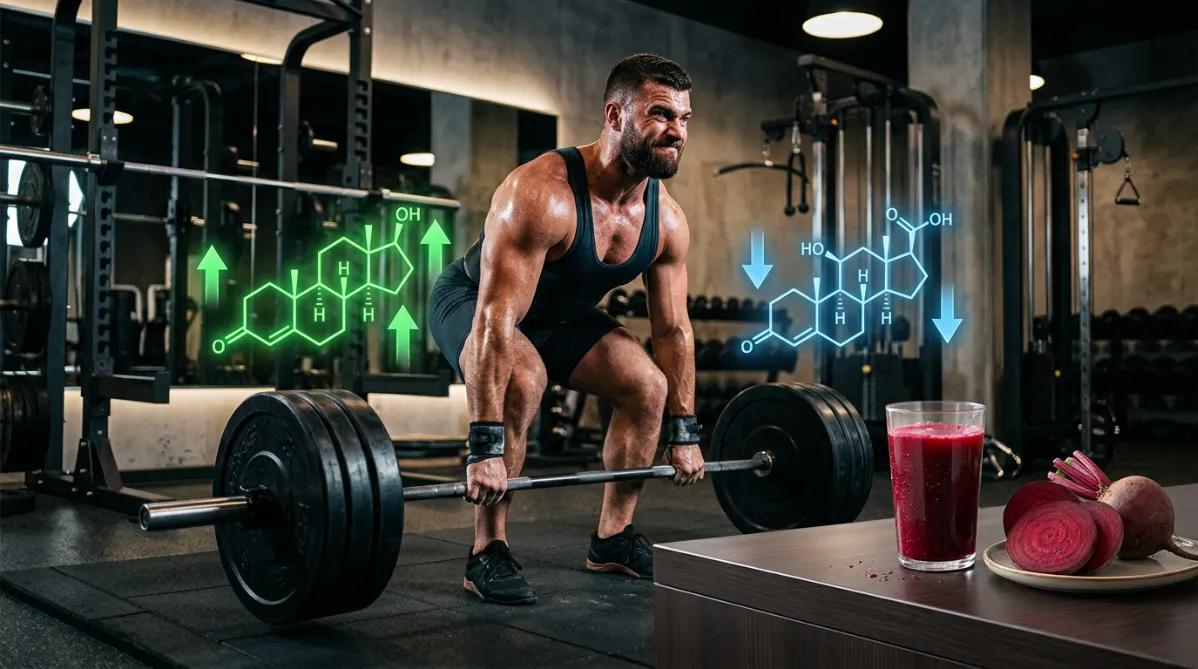
A muscular athlete in a modern gym performing a powerful deadlift, with intense focus and determination on their face. Sweat glistens on their skin as they grip a loaded barbell. In the foreground, a glass of deep red beet juice sits on a sleek counter, with fresh beetroot slices arranged nearby. The background features state-of-the-art gym equipment with soft lighting creating dramatic shadows. Overlaid translucent graphics show testosterone and cortisol molecular structures floating in the air, with upward arrows for testosterone (in vibrant green) and downward arrows for cortisol (in calming blue). The overall color palette combines deep reds from the beets, metallic grays from the gym equipment, and energetic greens and blues from the hormone visualizations, creating a scientific yet powerful atmosphere that represents the intersection of nutrition science and athletic performance.
general

The Science-Backed Secret to Maximizing Testosterone and Crushing Cortisol: How Betaine Transforms Your Training Hormones

BY DR. GYMBRO ·

Recent research reveals that betaine supplementation can significantly boost testosterone levels while reducing cortisol response in strength athletes, creating an optimal hormonal environment for muscle growth and recovery. This naturally occurring compound, found in beets and other foods, works through multiple pathways to enhance the anabolic hormone profile that drives training adaptations. With just 2.5 grams daily, athletes are experiencing measurable improvements in strength, body composition, and recovery that stem from betaine's unique ability to simultaneously elevate testosterone and moderate cortisol elevation following intense training sessions.

This page is available in