Dr. Gymbro
A wide, editorial-style flat lay photographed from above on a pale oat-colored linen surface in soft morning window light. On the left, a small matte white ceramic cup of black coffee with a delicate swirl of steam, beside a few scattered roasted coffee beans. On the right, a second matte sage-green ceramic cup holding a pale, creamy golden tea-like drink, mirroring the first. Between them, two small glass vials with cork stoppers sit side by side: one holding fine white powder, the other holding slightly warmer cream-colored powder, with a tiny brass measuring spoon resting nearby. In the lower foreground, a slim wooden rowing oar lies diagonally across the frame, its blade edge softly entering from the right, painted a muted navy with a thin terracotta stripe. A minimalist analog stopwatch with a brushed-steel case rests near the oar, and a folded cream notebook with a thin pencil suggests data-taking. In the upper corner, a crescent-shaped dried eucalyptus sprig and a small folded gray wool throw hint at sleep and calm without being literal. The palette is warm and restrained: oat, cream, sage, soft navy, terracotta, and espresso brown. Shadows are long and gentle, with shallow depth of field and subtle film grain, giving a refined, modern wellness-magazine feel. Generous negative space on the left third of the composition leaves room for a headline overlay. Clean, calm, tactile, and contemporary, with no text, logos, or futuristic elements.
Science & Research

Paraxanthina vs caffeina: la combinazione vincente e il salvavita per il sonno

Dr. Gymbro · · 4 min read

Paraxanthina vs caffeina: la combinazione vincente e il salvavita per il sonno

Paraxanthina, il principale metabolita della caffeina, ha appena confrontato la caffeina in una prova su 14 vogatori. La somministrazione congiunta di 200 mg di ciascuna sostanza ha superato il placebo su una gara di 2000 m, ma con un effetto di entità contenuta (d = 0,30). Nessuno dei due composti, somministrato da solo, ha prodotto un miglioramento netto delle prestazioni. La paraxanthina, tuttavia, si è dimostrata meno invasiva per il sonno soggettivo. Di seguito trovi i numeri, i limiti e chi potrebbe trarne beneficio.


Che cos'è la paraxanthina e perché è importante?

Quando bevi un caffè, il tuo fegato trasforma la maggior parte della caffeina in paraxanthina. Si tratta del metabolita predominante e si pensa che contribuisca agli effetti stimolanti percepiti. Esiste anche come integratore a sé stante, spesso pubblicizzato come alternativa "più dolce" alla caffeina.

Il marketing ha preso il sopravvento sulle prove scientifiche. Gli autori, guidati da Bingol Diedhiou, sottolineano che gli effetti della paraxanthina sulla performance sportiva e sul sonno non sono ancora stati studiati a fondo negli atleti. Questo trial è il primo tentativo di colmare tale lacuna.

Come è stato condotto lo studio

Il disegno è stato randomizzato, in doppio cieco e crossover, un approccio robusto soprattutto per un campione così ridotto, poiché ogni atleta funge da proprio controllo.

  • Partecipanti: 14 vogatori maschi universitari, età media 21,6 ± 1,9 anni, con circa 2,2 ± 1 anni di esperienza nel canottaggio.
  • Test: prove a tempo su vogatore ergometro di 2000 m.
  • Condizioni: caffeina + paraxanthina, caffeina + placebo, paraxanthina + placebo e placebo solo. La dose di ciascuna sostanza attiva era di 200 mg.
  • Outcome: tempo di completamento, potenza media, frequenza cardiaca, oltre a valutazioni soggettive della qualità del sonno e della sonnolenza diurna.
  • Analisi: ANOVA a misure ripetute con test post‑hoc di Bonferroni.

Il risultato principale: la combinazione ha vinto

Rispetto al placebo, la condizione combinata (200 mg di caffeina + 200 mg di paraxanthina) ha prodotto tempi di 2000 m più rapidi e una potenza media più alta (p = 0,044; d di Cohen = 0,30).

Si tratta di un risultato statisticamente significativo, ma appena al limite di rilevanza, e un d = 0,30 indica un effetto piccolo. È più un leggero sprone che una trasformazione radicale. L’abstract non riporta i secondi esatti guadagnati, perciò non occorre considerarlo un boost garantito.

La sorpresa: nessun ingrediente da solo ha superato la soglia

Questa è la parte che molti titoli tendono a trascurare. Né la caffeina né la paraxanthina hanno mostrato evidenze chiare di miglioramento delle performance in questo campione. Le stime andavano nella direzione favorevole rispetto al placebo, ma senza sufficiente robustezza da poterle dichiarare vincenti.

Gli autori concludono che la paraxanthina da sola non ha dimostrato un’efficacia ergogenica evidente a 200 mg; solo la combinazione ha prodotto un effetto rilevabile. Con soli 14 atleti, lo studio potrebbe semplicemente mancare di potenza statistica per rilevare effetti più piccoli dei singoli composti. "Non significativo" non è uguale a "inefficace".

Il colpo di scena sul sonno

Le condizioni contenenti caffeina sono state associate a una qualità del sonno soggettiva peggiore. La paraxanthina da sola ha mostrato risultati più favorevoli sul sonno.

Gli autori inquadrano il potenziale valore della paraxanthina più in termini di tollerabilità che di performance superiore. Questo è importante per chi si allena la sera, quando uno stimolante pre‑allenamento può compromettere la notte successiva. Lo studio non dimostra che la paraxanthina migliori il sonno, ma solo che non lo peggiora come fa la caffeina.

Limiti da non sottovalutare

  • Campione ridottissimo: 14 partecipanti, tutti giovani uomini e tutti vogatori. I risultati potrebbero non valere per donne, atleti più anziani o sport diversi.
  • Effetto piccolo: d = 0,30 è modesto, e p = 0,044 è al limite della significatività.
  • Bracci a singolo ingrediente non significativi, quindi non c’è prova che uno dei due funzioni da solo a questa dose.
  • Misure di sonno soggettive: nessun wearable o polisonnografia, perciò non è stata valutata la reale architettura del sonno.
  • Una sola dose: gli autori chiedono esplicitamente studi di dose‑response.
  • Disegno a breve termine: nulla su uso prolungato o sicurezza a lungo termine.

Gli autori dichiarano di non avere conflitti di interesse.

Consigli pratici

Dose: lo studio ha usato 200 mg di ciascuna sostanza. Non intenderlo come una raccomandazione a superare il tuo consumo abituale. Una combinazione di 200 mg di caffeina + 200 mg di paraxanthina aumenta il carico stimolante totale; verifica la tua tolleranza prima di provarla.

Tempistica: l’abstract non specifica l’intervallo di tempo pre‑allenamento, quindi segui le indicazioni del prodotto e sperimenta in allenamento, non il giorno di gara. Se ti alleni la sera, ricorda che i dati sul sonno hanno favorito la paraxanthina da sola rispetto alle condizioni con caffeina.

Chi potrebbe trarne beneficio:

  • Atleti che si allenano al pomeriggio/sera e vogliono limitare le interferenze con il sonno.
  • Persone sensibili alla caffeina che sperimentano agitazione o sonno disturbato con dosi standard.
  • Atleti di endurance curiosi di sperimentare lo “stacking”, purché accettino che le prove siano ancora preliminari.

Chi dovrebbe evitarla o procedere con cautela:

  • Persone con problemi cardiaci, pressione alta, ansia o in gravidanza, salvo autorizzazione medica.
  • Chi già assume più stimolanti.
  • Chi si aspetta un salto di performance notevole. L’effetto riscontrato è stato piccolo.

Conclusione

L’interpretazione più prudente è una sentenza divisa: caffeina più paraxanthina ha dato la migliore performance in canottaggio rispetto al placebo, mentre la paraxanthina da sola è risultata la scelta migliore per il sonno soggettivo. Nessuno dei due ingredienti, se assunto isolatamente, ha mostrato benefici prestazionali. È una pista promettente, non una risposta definitiva, e sono necessari studi più ampi con monitoraggio oggettivo del sonno.
Original study

Read the original research on pubmed.ncbi.nlm.nih.gov →

This article summarizes published research for general information. It is not medical advice.

DG

Written by

Dr. Gymbro

Dr. Gymbro writes for Dr. Gymbro: science-backed fitness, nutrition & performance.

Related Articles

A wide, softly lit editorial flat-lay on a pale warm-gray stone countertop, shot from slightly above. On the left, a small rustic ceramic bowl in matte cream holds a handful of dried guarana seeds, dark glossy brown with pale cream arils, a few spilling onto the surface. Beside it sits a halved fresh guarana fruit in vivid red-orange, split open to show the white flesh and black seed inside, looking like a tiny eye. On the right, two open clear capsules rest side by side. One is filled with fine white caffeine powder, the other with a fine earthy brown guarana powder, and a little of each dusts the stone in delicate, deliberate lines. Between them, a minimalist matte-black espresso cup with a thin ribbon of steam rises on the right edge of the frame. A brushed-steel stopwatch and a slim dark-green linen notebook with a pencil sit in the upper background, slightly out of focus, to hint at performance testing without clutter. A few green leaves of a guarana vine curve in from the top-left corner, catching soft light.

The lighting is natural window light from the left, with gentle long shadows and a subtle warm highlight on the seeds. The palette is muted and modern: warm creams, terracotta red, deep espresso brown, sage green, and charcoal accents. The background is clean with generous negative space on the upper right for headline text. Shallow depth of field, crisp focus on the seeds and capsules, fine grain, and a calm premium magazine look like a contemporary wellness and sports-science journal. No people, no text, no logos, no futuristic elements.
science research

Guarana vs caffeina: stessa dose, solo il guarana aumenta la potenza di picco

BY DR. GYMBRO ·

In uno studio crossover randomizzato su 18 uomini attivi, una dose equivalente a 5 mg/kg di caffeina ha fatto emergere un incremento significativo della potenza di picco solo per il guarana, mentre la caffeina anidra non ha raggiunto la significatività. Il guarana non ha però superato la caffeina in modo statistico; le differenze tra i due integratori sono rimaste marginali. Ecco i risultati, i limiti dello studio e i consigli pratici per dosare il guarana in base al contenuto di caffeina.

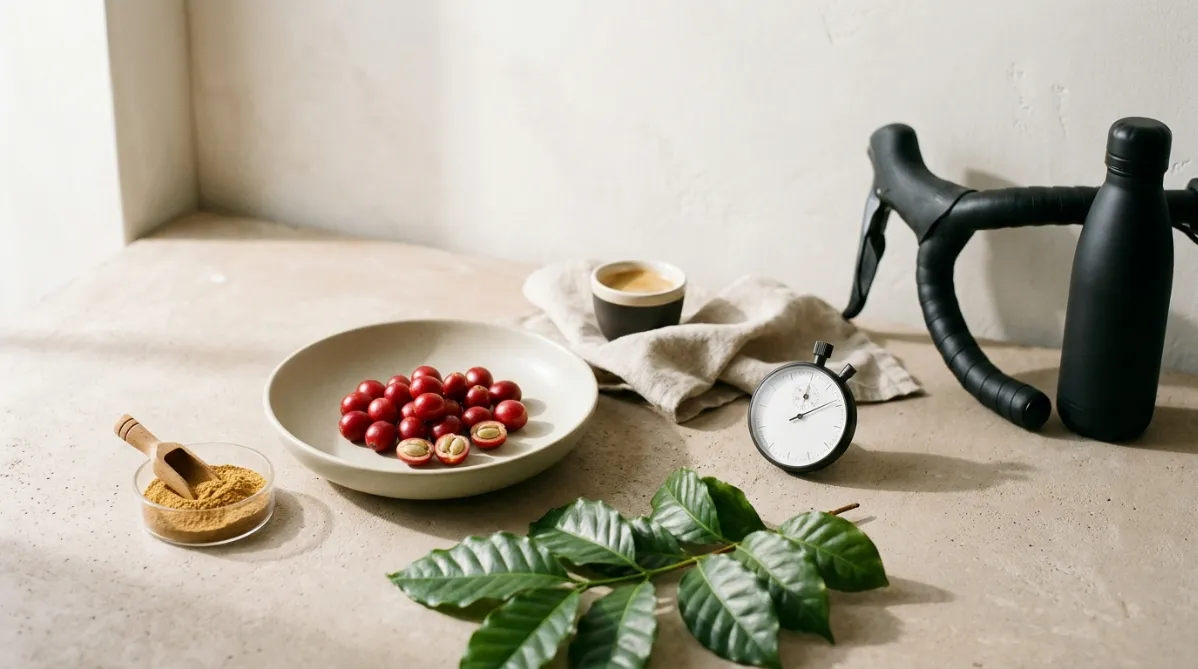
A wide editorial still life on a pale, warm-toned concrete surface in soft morning window light. In the center-left, a shallow matte ceramic bowl holds a small pile of bright red coffee cherries with glossy skins, a few sliced open to reveal pale mucilage and paired green-tan beans. Beside it, a small glass dish of fine, golden-brown powdered extract with a tiny wooden scoop resting on its edge. A sprig of coffee plant leaves, deep green and waxy, arcs across the foreground.

On the right side, slightly out of focus, a sleek road cyclist's handlebar and a matte black water bottle lean against a light plaster wall, suggesting athletic training without showing a person. A minimalist analog stopwatch with a clean white face and thin black hands sits in the mid-ground, angled toward the camera, its hands paused near the fifteen-minute mark. A folded linen cloth in oatmeal beige and a single small espresso cup with a thin crema ring add quiet texture.

The color palette is restrained and modern: cherry red, sage green, cream, soft terracotta, and charcoal accents. Light comes from the left, casting long, gentle shadows with a subtle warm glow and a hint of dust in the air. Shallow depth of field with crisp focus on the cherries and stopwatch, creamy bokeh in the background. Composition leaves open negative space in the upper right for a headline overlay. The overall feel is a clean, trendy health-and-science magazine cover: tactile, natural, minimal, and calm, shot in a 16:9 landscape frame with fine film-like grain and true-to-life tones.
nutrition

Estratto di ciliegia di caffè: 200 mg di caffeina aumentano la produzione in ciclismo del 4,6 %

BY DR. GYMBRO ·

Una dose bassa di 200 mg di caffeina proveniente da estratto di ciliegia di caffè intera ha consentito a ciclisti allenati di produrre il 4,6 % in più di lavoro in una prova di 15 minuti. Tuttavia, l’idea diffusa che favorisca una più rapida ricarica del glicogeno non è risultata valida. Lo studio, randomizzato, in doppio cieco e a crossover, ha coinvolto solo 12 ciclisti ed è stato finanziato dall’industria, senza un gruppo di confronto con caffeina pura. Ecco cosa mostrano i dati, cosa non mostrano e chi potrebbe voler provare questo integratore.

A sleek aluminum energy drink can and a matte scoop of white pre-workout powder sit side by side on a pale concrete gym bench, lit by soft morning window light. The can is slim and minimalist, with a muted sage green label and no legible text. Beside it is a clear glass shaker half full of cloudy, lightly frothy liquid with condensation beading on its surface. A few fine grains of powder are scattered across the bench, catching the light. Behind them, slightly out of focus, a stainless steel barbell rests on a rack, and a folded charcoal gym towel sits at the edge of the frame.

The color palette is warm neutral: oatmeal, soft gray, and sage, with a single accent of pale citrus yellow from a halved lemon wedge placed near the glass. A thin, elegant shadow from the window blinds falls diagonally across the scene, giving it an editorial, magazine-style rhythm. The composition leaves generous negative space on the right third of the frame, a smooth blurred wall in warm off-white, suitable for headline text overlay.

The shot is a low-angle, shallow depth-of-field product-style photograph, as if taken with an 85mm lens at f/2. The foreground objects are tack sharp and the background melts into creamy blur. The mood is calm, clean, and modern, like a wellness or science journal feature. Subtle film grain and gentle contrast add a tactile, contemporary lifestyle feel. There are no people, no logos, and no futuristic or sci-fi elements, just a quiet, considered still life that suggests the choice between a canned drink and a scooped supplement.
nutrition

La tua bevanda energetica potrebbe fungere da pre‑allenamento—con un unico inconveniente

BY DR. GYMBRO ·

Caffeina e taurina sono spesso associate nelle bevande energetiche e nei supplementi pre‑allenamento, ma la loro combinazione migliora davvero le performance? Una meta‑analisi di 11 studi randomizzati (234 partecipanti) indica un moderato incremento della potenza massima e del tempo di esaurimento, oltre a una percezione dell’esercizio più leggera. La frequenza cardiaca non cambia e il risultato sul tempo di reazione risulta troppo eterogeneo per essere affidabile. Il limite principale è la dimensione ridotta degli studi, che non permette di stabilire se la taurina aggiunga un vero beneficio rispetto alla sola caffeina.

A landscape editorial photograph with a modern, clean magazine feel, shot on a pale warm-gray concrete surface in soft natural window light from the left. In the foreground, two matte white ceramic espresso cups sit side by side. The left cup holds a small amount of dark espresso with golden crema. The right cup is filled twice as high. Beside them, two small stainless steel scoops hold fine coffee-colored powder, one half full and one heaped, suggesting a dose comparison without any text or labels. A pair of worn red leather boxing gloves rests slightly out of focus behind the cups, laces loosely draped, with a white hand wrap rolled neatly beside them. A minimalist digital kitchen scale in matte black sits at the edge of the frame, with a few roasted coffee beans scattered across the surface. In the soft-focus background, a boxing gym corner appears: a hanging heavy bag in muted charcoal, pale wood plank flooring, and a tall window with diffused morning light. The palette is warm cream, espresso brown, brick red, and soft slate gray, with gentle shadows and a shallow depth of field. The composition follows the rule of thirds, with the cups and scoops in the lower left third and open negative space on the right for headline overlay. The look is tactile and refined, like a high-end health and performance journal. It has natural grain, subtle contrast, and a calm, confident mood. There are no people, no text, no logos, and no futuristic elements.
nutrition

Raddoppiare la caffeina ha aiutato a malapena i pugili – ecco cosa ha funzionato

BY DR. GYMBRO ·

Pensate che due dosi di pre‑allenamento equivalgano a doppia prestazione? Un nuovo studio crossover su 15 pugili competitivi ha confrontato 3 mg/kg e 6 mg/kg di caffeina, e la dose più alta non è risultata sistematicamente migliore. Entrambe le dosi hanno aumentato l’altezza del salto e la potenza a 60 minuti, mentre i 6 mg/kg si sono distinti solo in alcuni parametri, come la potenza del push‑up balistico e la coppia di estensione del ginocchio. Qui trovate la conversione mg‑per‑kg per i pesi corporei più comuni, il timing supportato dai dati e le avvertenze realistiche, incluso il fatto che la capacità di colpire non è mai stata testata.

This page is available in