Dr. Gymbro
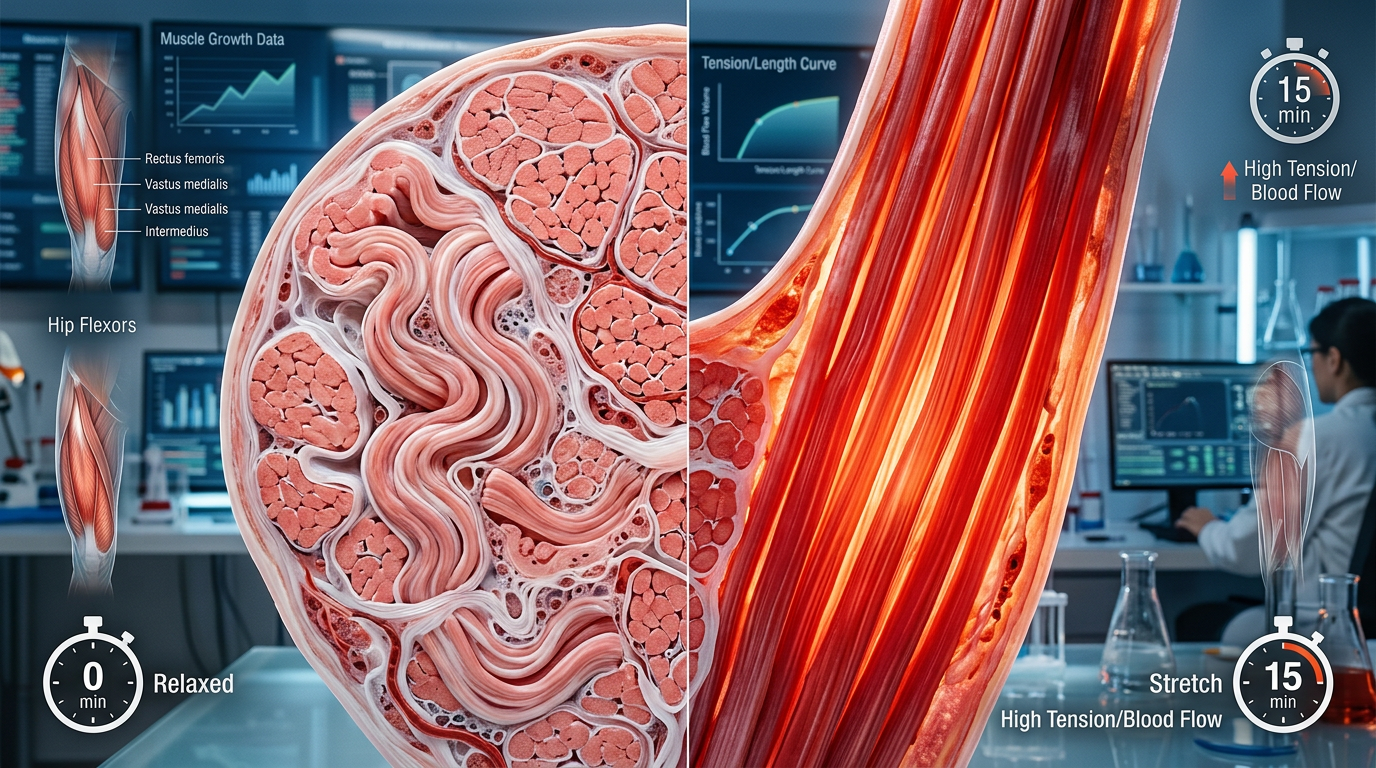
A split-screen composition showing the transformation of muscle fibers during stretching. On the left, a detailed cross-section view of relaxed muscle tissue with loose, wavy fibers in soft pink and white tones. On the right, the same muscle tissue during an intense stretch, with fibers elongated and aligned, glowing with increased blood flow in vibrant reds and oranges. The background features a modern research laboratory setting with charts and graphs displaying muscle growth data. Overlaying the image are subtle anatomical illustrations of the quadriceps muscle group and hip flexors. The lighting is clinical yet warm, with blue-white laboratory lighting contrasting against the organic warm tones of the muscle tissue. Small visual elements like stopwatch icons showing "15 min" and strength measurement indicators add scientific context to the transformative muscle-building process.
General

Rekken voor Spiergroei: Nieuwe Studie Onthult Hoe 15‑minutensessies Kracht Opbouwen

Dr. Gymbro · · 2 min read

Rekken voor Spiergroei: Nieuwe Studie Onthult Hoe 15‑minutensessies Kracht Opbouwen

Een baanbrekende studie van de Universiteit van Graz heeft de gangbare opvattingen over spieropbouw op hun kop gezet: intensief rekken alleen kan aanzienlijke spiergroei en krachttoename teweegbrengen. De resultaten, gepubliceerd in Scientific Reports, tonen aan dat slechts 15 minuten begeleid rekken, drie keer per week, meetbare hypertrofie van de quadriceps oplevert.

De wetenschap achter rek‑geïnduceerde groei

In het onderzoek volgden 49 recreatief actieve deelnemers gedurende vier à vijf weken. De helft van hen onderging een gespecialiseerd heupbuiger‑rekprotocol, terwijl de controlegroep haar normale activiteiten voortzette. Met behulp van echografie werden de dikteveranderingen in de rectus femoris en vastus lateralis gemeten vóór en na de interventie.

De uitkomsten waren opvallend: deelnemers die het rek‑protocol uitvoerden, vertoonden een significante toename in spierdikte, vooral in de rectus femoris. Het proximale deel van deze spier liet effectgroottes zien tussen 0,24 en 0,41, het distale deel tussen 0,14 en 0,40 – een matige tot grote toename.

Krachttoename zonder gewichten

Naast spiergroei leverde de rek‑interventie ook meetbare winst in kracht op. De proefpersonen toonden een significante stijging in isometrische beenextensie‑kracht wanneer getest op een kniestoelhoek van 70 graden, wat overeenkomt met de verkorte positie van de spier. Interessant genoeg waren deze krachtwinsten positie‑specifiek: ze verschenen alleen bij de verkorte spierlengte en niet bij een hoek van 110 graden (de uitgebreide positie).

De sterkte‑verbeteringen verschilden tussen de benen, met effectgroottes van 0,09 voor het rechterbeen en 0,21 voor het linkerbeen – wat suggereert dat individuele reacties op rek‑geïnduceerde training variëren op basis van ledemaat‑dominantie of andere factoren.

Balansvoordelen: een onverwacht pluspunt

Misschien wel het meest verrassende was de bevinding dat het rek‑protocol de dynamische balansprestaties verbetert. Deelnemers toonden meer stabiliteit in verschillende richtingen: anterieure beweging van de linkervoet, posterolaterale beweging van de linkervoet en posteromediale beweging van de rechtervoet. Deze balansverbeteringen kunnen grote gevolgen hebben voor blessurepreventie en sportprestaties.

Implicaties voor training en revalidatie

Dit onderzoek opent nieuwe mogelijkheden voor mensen die geen traditionele weerstandstraining kunnen uitvoeren vanwege een blessure, een gebrek aan apparatuur of andere beperkingen. Dr. Konstantin Warneke, de hoofdonderzoeker, merkt op dat dit de eerste studie is die rek‑geïnduceerde effecten specifiek op de quadriceps onderzoekt, voortbouwend op eerder onderzoek dat zich vooral op de onderbenen richtte.

De bevindingen suggereren dat een rek‑routine met hoge volume en intensiteit een levensvatbaar alternatief of aanvulling kan vormen op conventionele krachttrainingsprogramma’s. Dit is bijzonder relevant in revalidatie‑omgevingen, waar patiënten beperkt zijn in het uitvoeren van traditionele weerstandsoefeningen, maar wel baat kunnen hebben bij begeleide reksessies.

Hoewel meer onderzoek nodig is om optimale protocollen, diverse spiergroepen en klinische toepassingen te verkennen, levert deze studie overtuigend bewijs dat het eenvoudige rekken – mits uitgevoerd met voldoende intensiteit en duur – fysiologische aanpassingen kan veroorzaken die normaal gesproken aan weerstandstraining worden toegeschreven.
Original study

Read the original research on nature.com →

This article summarizes published research for general information. It is not medical advice.

DG

Written by

Dr. Gymbro

Dr. Gymbro writes for Dr. Gymbro: science-backed fitness, nutrition & performance.

Related Articles

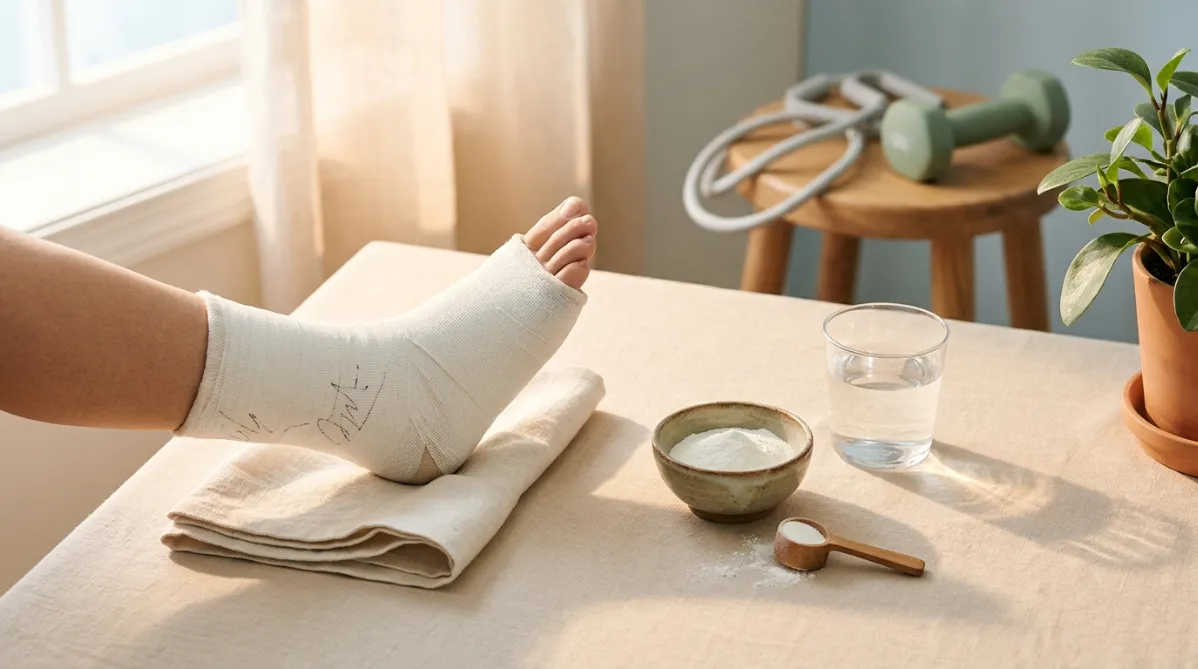
A wide, softly lit editorial still life on a warm, pale oat-colored surface. At the left, a lower leg and foot rest on a folded cream linen towel, wrapped in a matte white fiberglass cast with a subtle texture and a few faint pen scribbles near the ankle. The skin tone is natural and the lighting is gentle. At the center-right, a small ceramic bowl holds fine white creatine powder, with a matte wooden scoop resting beside it and a dusting of powder on the surface. Next to the bowl is a clear glass of water with light refracting through it, casting soft caustic ripples on the table. This hints at the water-retention idea without being literal.

In the background on the right, slightly out of focus, a pair of light grey resistance bands and a small sage-green dumbbell sit on a wooden stool, suggesting rehab. A tall, leafy plant in a terracotta pot adds organic greenery at the edge of the frame. Morning sunlight streams from a window on the left and creates long, soft shadows and a warm golden-peach glow. The palette is cream, sage green, terracotta, soft sky-blue shadows, and touches of natural wood. The composition has generous negative space in the upper left for a title overlay. Shallow depth of field, shot as if with an 85mm lens, with fine film grain. The look is clean, calm, modern wellness-magazine photography with a minimalist, tactile, trendy feel.
recovery

Creatine in een gipsbehandeling redt je spieren niet duidelijk, maar bij revalidatie is het anders

BY DR. GYMBRO ·

Iedereen wil weten of creatine je spiermassa kan redden als je door een blessure in een gips zit. Een nieuwe systematische review van zes gerandomiseerde trials (118 jongeren, 1‑2 weken immobilisatie) toont gemengde resultaten tijdens immobilisatie, waarbij vermeende toename in magere massa misschien alleen maar water is. Het interessantere signaal komt tijdens de revalidatie, waar twee studies grotere winst in quadricepsgrootte, vermogen en kracht zagen met creatine. Hier vind je de echte cijfers, de beperkingen en voor wie het een overweging kan zijn.

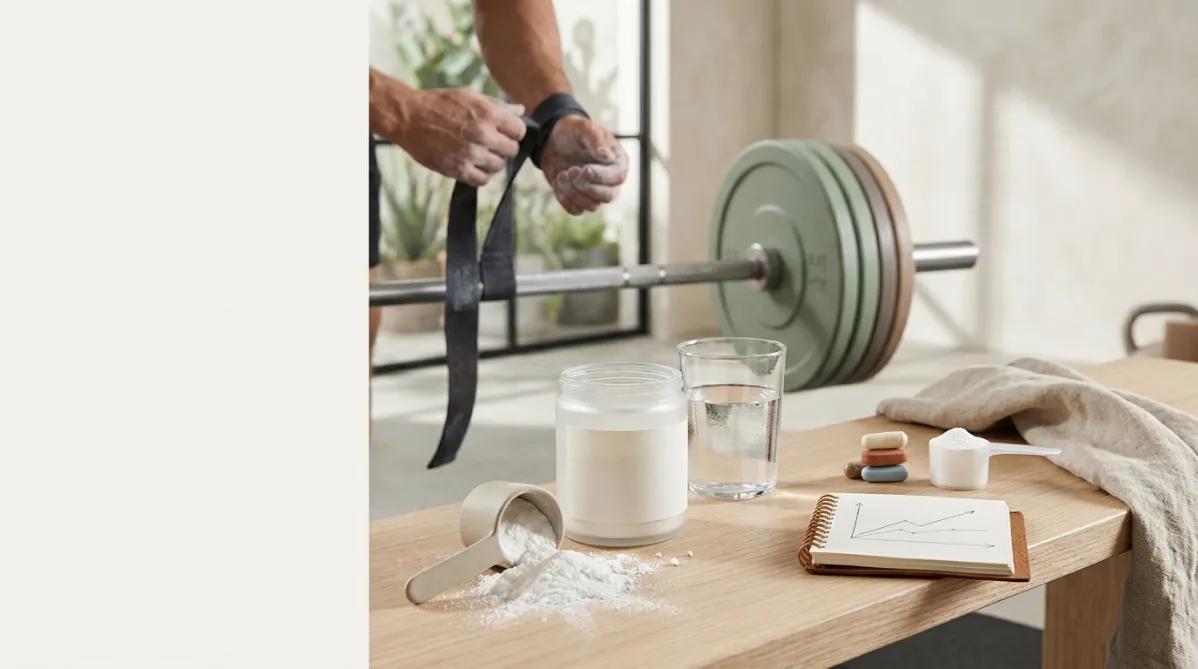
A wide, editorial-style still life photographed in soft natural window light, set on a pale oak gym bench or light wooden table. In the foreground, a matte ceramic scoop rests in a small mound of fine white creatine powder, with a few loose grains scattered across the surface. Next to it sits a minimalist frosted glass jar with a plain unbranded label. Beside the jar is a clear glass of water with delicate condensation. A pair of worn chalk-dusted hands is out of focus in the background, wrapping a lifting strap around a barbell. The barbell is a brushed steel bar with a few muted sage-green and warm gray bumper plates.

On the right side of the frame, a small stack of three different supplement capsules and tablets in neutral cream, terracotta, and soft blue sits next to a single clean white scoop of powder. This subtly contrasts the "stack" with the "plain" option. A folded linen towel in oatmeal beige drapes over the end of the bench. A small leather-bound notebook lies open, with a simple hand-drawn line graph showing two lines, one rising steadily and one flat, in pencil.

The background is softly blurred and shows a bright, airy, modern home gym with large windows, pale plaster walls, and a few green plants. Warm morning sunlight casts long, gentle shadows diagonally across the scene. The color palette is muted and sophisticated: cream, warm white, sage green, soft terracotta, and charcoal accents. Shallow depth of field with a crisp focus on the powder and scoop. Generous negative space on the left third for headline overlay. The mood is calm, thoughtful, and trustworthy, like a high-end health and science magazine cover, with subtle film grain and natural textures. No text, no logos, no futuristic elements.
nutrition

Creatine‑stack vergroot spierspieren bij beginners, maar niet de kracht – waarom?

BY DR. GYMBRO ·

Een gerandomiseerde vier‑weekse trial met beginnende sporters toonde een creatine‑gebaseerde supplementenmix die spiermassa, een gunstiger testosteroon‑/cortisol‑verhouding en een beter herstel‑gevoel gaf. De leg‑press‑1RM bleef echter gelijk aan die van de placebogroep. Mogelijke verklaringen zijn onder meer de snelle neurale winst van beginners, de korte studieduur en een waterretentie‑effect. Nierwaarden bleven normaal, maar de studie was klein, alleen mannen en industrie‑gesponsord.

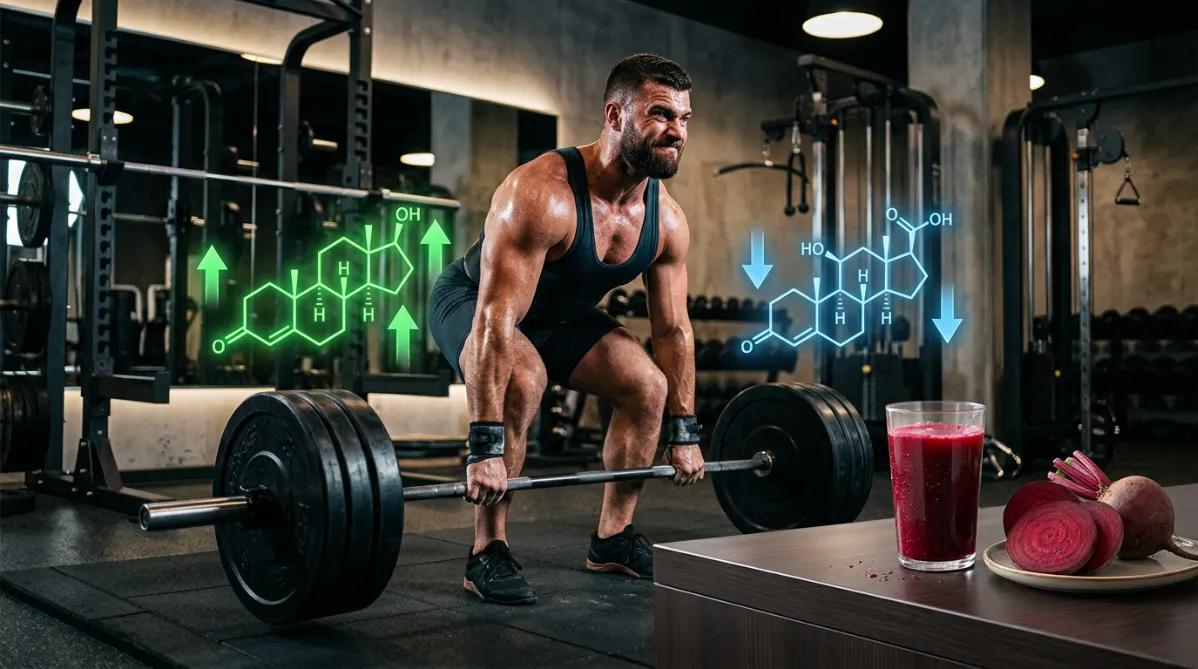
A muscular athlete in a modern gym performing a powerful deadlift, with intense focus and determination on their face. Sweat glistens on their skin as they grip a loaded barbell. In the foreground, a glass of deep red beet juice sits on a sleek counter, with fresh beetroot slices arranged nearby. The background features state-of-the-art gym equipment with soft lighting creating dramatic shadows. Overlaid translucent graphics show testosterone and cortisol molecular structures floating in the air, with upward arrows for testosterone (in vibrant green) and downward arrows for cortisol (in calming blue). The overall color palette combines deep reds from the beets, metallic grays from the gym equipment, and energetic greens and blues from the hormone visualizations, creating a scientific yet powerful atmosphere that represents the intersection of nutrition science and athletic performance.
general

Het wetenschappelijk onderbouwde geheim voor het maximaliseren van testosteron en het onderdrukken van cortisol: hoe betaïne je trainingshormonen transformeert

BY DR. GYMBRO ·

Recente onderzoeken laten zien dat betaïnesuppletie de testosteronniveaus aanzienlijk kan verhogen, terwijl de cortisolrespons bij krachtsporters wordt verminderd. Dit creëert een optimale hormonale omgeving voor spiergroei en herstel. De van nature voorkomende stof, die in bieten en andere voedingsmiddelen voorkomt, werkt via verschillende routes om het anabole hormoonprofiel te verbeteren, wat trainingadaptaties stimuleert. Met slechts 2,5 gram per dag ervaren sporters meetbare verbeteringen in kracht, lichaamssamenstelling en herstel, dankzij betaïnes unieke vermogen om zowel testosteron te verhogen als cortisol na intensieve trainingssessies te matigen.

A serene, minimalist scene showing a smartphone lying face-down on a smooth white marble surface, surrounded by calming natural elements. Soft morning sunlight streams through a nearby window, casting gentle shadows. A small potted succulent sits nearby alongside a steaming cup of herbal tea in a ceramic mug. The phone's screen is completely black, emphasizing disconnection from digital noise. In the background, slightly blurred, are elements suggesting wellness and tranquility: a yoga mat partially visible, a small stack of books, and dried eucalyptus branches in a simple glass vase. The color palette consists of warm whites, soft beiges, muted greens, and golden sunlight, creating an atmosphere of peace and mindful living. The composition suggests intentional digital minimalism and the conscious choice to step away from technology for mental wellbeing.
general

De verborgen cortisolkosten van sociale media: Waarom je een Facebook-detox moet overwegen

BY DR. GYMBRO ·

Baanbrekend onderzoek toont aan dat slechts vijf dagen zonder Facebook leidt tot meetbare dalingen van het cortisolniveau, wat een eenvoudige strategie biedt om chronische stress te bestrijden. Voor fitnessliefhebbers die “cortisolmaxxing” willen vermijden, kan een social‑media‑detox een van de meest over het hoofd geziene, maar effectieve interventies zijn om hormoonspiegels te optimaliseren. Deze uitgebreide analyse onderzoekt de wetenschap achter stress door sociale media en biedt praktische strategieën om cortisol te verlagen via gerichte digitale pauzes. Het artikel bespreekt de onderliggende biologische mechanismen en geeft concrete tips voor een haalbare Facebook‑detox.

This page is available in