Dr. Gymbro
←

#protein

4 articles
nutrition

20 g de whey não ativam a síntese muscular em homens mais velhos

BY DR. GYMBRO ·

Whey, proteína vegetal e proteína vegetal enriquecida com leucina falharam no mesmo teste em um novo estudo de Maastricht com 45 homens de cerca de 69 anos. Os níveis de aminoácidos no sangue comportaram‑se como esperado, com whey apresentando o maior valor geral e a mistura enriquecida exibindo o pico mais alto de leucina. Contudo, a síntese de proteína muscular foi idêntica entre os grupos e não superou os níveis de jejum. A principal lição é que a quantidade pode ser mais importante que a origem da proteína em idosos. A seguir, o que o estudo investigou, o que não testou e como aplicar os achados.
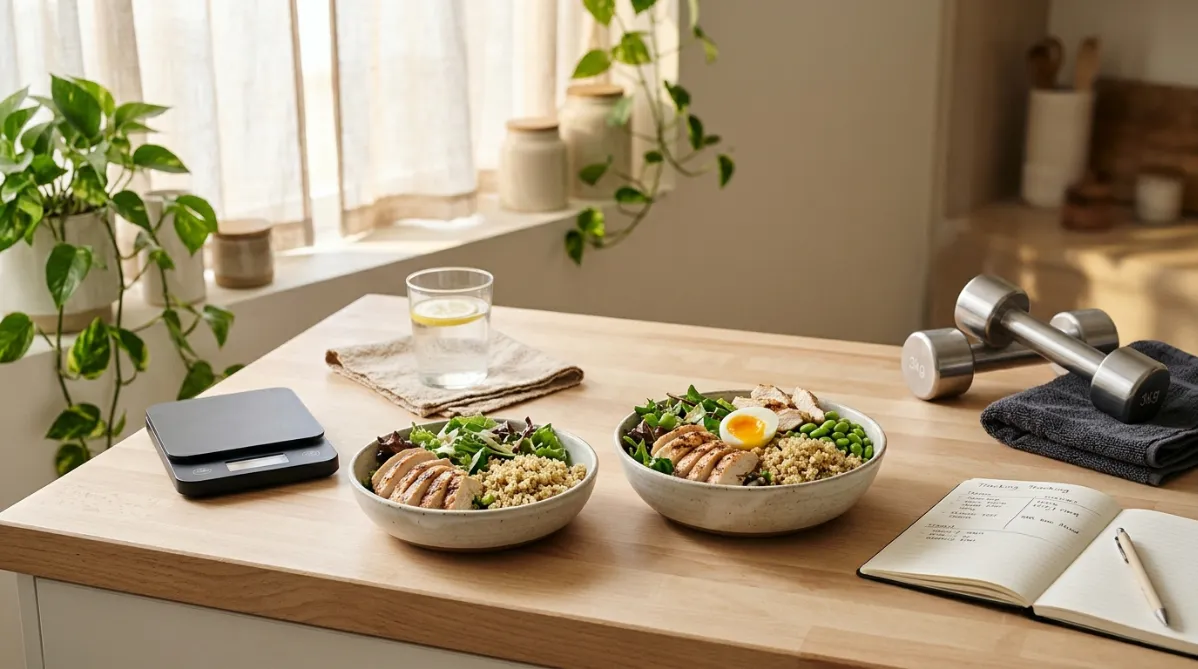
A wide landscape editorial photograph of a clean, sunlit kitchen counter in soft natural morning light, styled like a modern wellness journal cover. In the foreground, two matching ceramic bowls sit side by side on a pale oak butcher block. The left bowl holds a modest portion of sliced grilled chicken breast, quinoa, and greens. The right bowl holds a noticeably larger, double-sized portion of the same ingredients, with extra chicken, a soft-boiled egg, and edamame. The contrast in portion size is clear but elegant. Beside the bowls are a matte black digital kitchen scale, a tall glass of water with a lemon slice, and a small linen napkin in warm oatmeal tone. A pair of sleek brushed-steel dumbbells rests slightly out of focus on the counter's edge, and a folded charcoal gym towel sits next to them. In the soft-focus background, a large window with sheer curtains lets in diffused golden light, and a trailing green pothos plant adds an organic touch. A small, minimal notebook with a pen lies open to the side, suggesting careful tracking. The color palette is muted and cohesive: warm creams, sage green, soft terracotta, charcoal, and natural wood. Shallow depth of field, crisp focus on the bowls, gentle shadows, and subtle film-like grain. Composition follows the rule of thirds with generous negative space on the upper right for headline text. The mood is calm, thoughtful, and trustworthy, like a contemporary health and science magazine feature. There are no people, no text, and no futuristic elements.
nutrition

3,2 g/kg de proteína por 16 semanas: isso prejudicou os rins dos levantadores?

BY DR. GYMBRO ·

Comer o dobro da proteína que a maioria dos praticantes de musculação costuma consumir está sabotando silenciosamente os rins? Um ensaio randomizado de 16 semanas com 44 homens treinados em resistência comparou 3,2 g/kg de proteína contra 1,6 g/kg. A análise estatística não encontrou diferença significativa nos marcadores renais, independentemente de os participantes treinarem apenas força ou força + cardio. Contudo, os grupos de alta proteína apresentaram leves elevações de BUN e cystatin C e pequenas quedas de eGFR, resultados que os autores classificam como meramente descritivos. A seguir, explicamos o que isso significa, o que o estudo não pode responder e quem deve ficar mais atento.
A landscape editorial photograph of a sunlit kitchen table in soft morning light, styled like a modern wellness journal cover. In the center sits a simple white ceramic bowl of plain Greek yogurt topped with walnuts and blueberries. Beside it are a small glass of water and a matte stone scoop holding a pale powder, with a few loose grains scattered on a light oak surface. To the left, a pair of weathered hands, clearly an older man's with silver hair on the wrist, rests near a neatly folded linen napkin and a slim stainless steel wristwatch. To the right, a pair of modest hex dumbbells in muted sage green sits on a woven rug at the edge of the frame, slightly out of focus, hinting at strength training. In the background, a tall window with sheer curtains lets in warm golden light, and a small potted olive plant stands on the sill. A minimalist analog clock on the wall is softly blurred, suggesting fasting windows without being literal. The palette is calm and earthy: warm cream, oatmeal, sage green, soft terracotta, and pale wood tones. The composition uses generous negative space on the upper left for headline overlay, shallow depth of field, and gentle natural shadows. The style is clean, contemporary, and slightly muted, like a lifestyle magazine or health journal feature, shot on a 50mm lens with soft film-like grain. Calm, thoughtful, and quietly authoritative, with no text, logos, or futuristic elements.
nutrition

Leucina vs Proteína em Dietas de Jejum: Resultado Surpreendente em Homens Mais Velhos

BY DR. GYMBRO ·

A leucina costuma ser chamada de “interruptor mestre” dos músculos, por isso se esperava que protegesse os atletas mais velhos em dietas de jejum. Contudo, em um estudo randomizado de 28 dias com 61 homens mais velhos submetidos a jejum em dias alternados, os suplementos de leucina e de proteína não apresentaram vantagem sobre o grupo controle. Todos os grupos melhoraram força, função, pressão arterial e marcadores de colesterol. Veja as doses testadas, quem ainda pode se beneficiar, quem pode dispensar e as limitações do estudo.
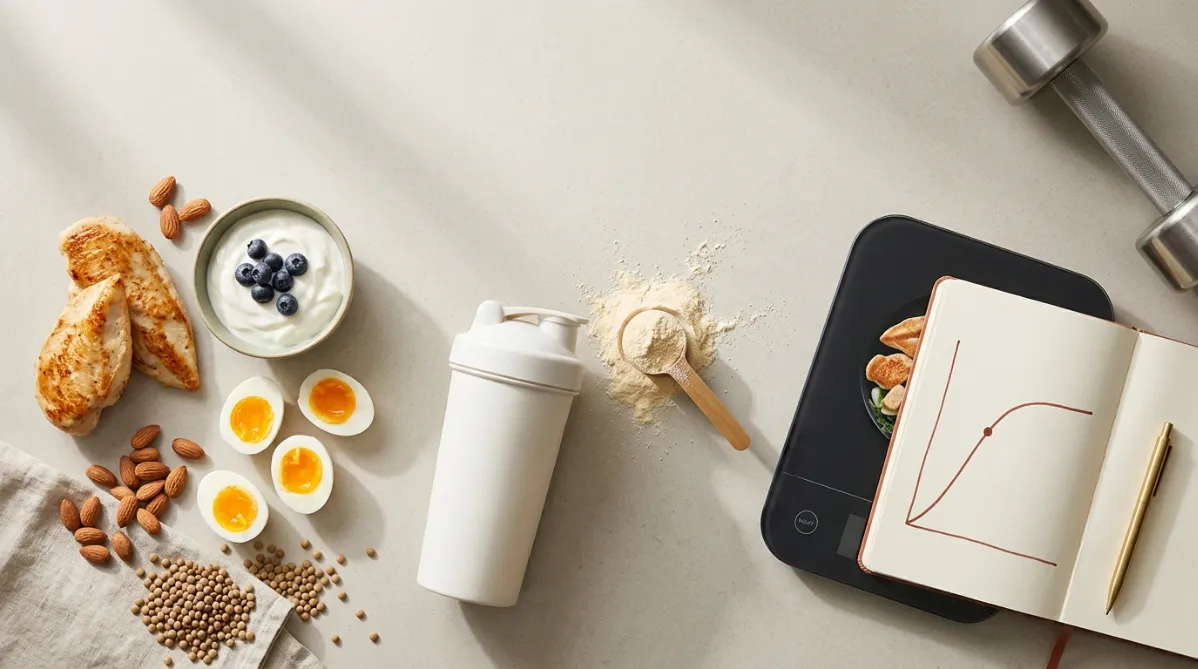
A wide, editorial flat-lay photograph shot from directly above on a pale warm-gray stone countertop, lit by soft natural morning window light with gentle diagonal shadows. On the left, a neatly arranged cluster of whole-food protein sources: two seared chicken breast slices with a golden crust, a small ceramic bowl of creamy Greek yogurt topped with blueberries, three halved soft-boiled eggs with jammy orange yolks, a handful of raw almonds, and a small pile of dried lentils scattered on a linen napkin. At the center, a matte white shaker bottle and a wooden scoop resting in a pile of fine vanilla-colored protein powder, a few grains dusted artfully across the surface. On the right, a minimalist kitchen scale in matte black displaying a portion of food, next to an open notebook with a hand-drawn curve that rises steeply and then flattens into a plateau, drawn in a deep terracotta ink pen, with a small dot marking the bend. A brass pen lies beside the notebook. A single dumbbell with a brushed steel finish sits partially in frame at the upper right corner, grounding the fitness theme without feeling gym-like. Color palette: warm cream, sage green, terracotta, soft charcoal, and butter yellow accents, with generous negative space along the top edge for title overlay. Shallow depth of field, crisp textures, subtle film grain, modern lifestyle magazine aesthetic, clean and calm composition, 16:9 landscape.
nutrition

Quanto proteína realmente maximiza o músculo? O platô de 1,6 g/kg explicado

BY DR. GYMBRO ·

Acha que precisa de mais de 2 g de proteína por quilograma para ganhar músculo? Uma meta‑análise de 49 ensaios com 1.863 adultos mostrou que o benefício estabiliza por volta de 1,6 g/kg/dia, com o limite superior da confiança em torno de 2,2 g/kg. Levantadores experientes obtiveram os maiores ganhos com a suplementação, enquanto o efeito diminuía com a idade. Veja como esses números se traduzem no seu prato, no seu copo de shake e no seu bolso.

This page is available in