Dr. Gymbro
←

#protein

4 articles
nutrition

20 g serwatki nie wystarczy do budowy mięśni u starszych mężczyzn

BY DR. GYMBRO ·

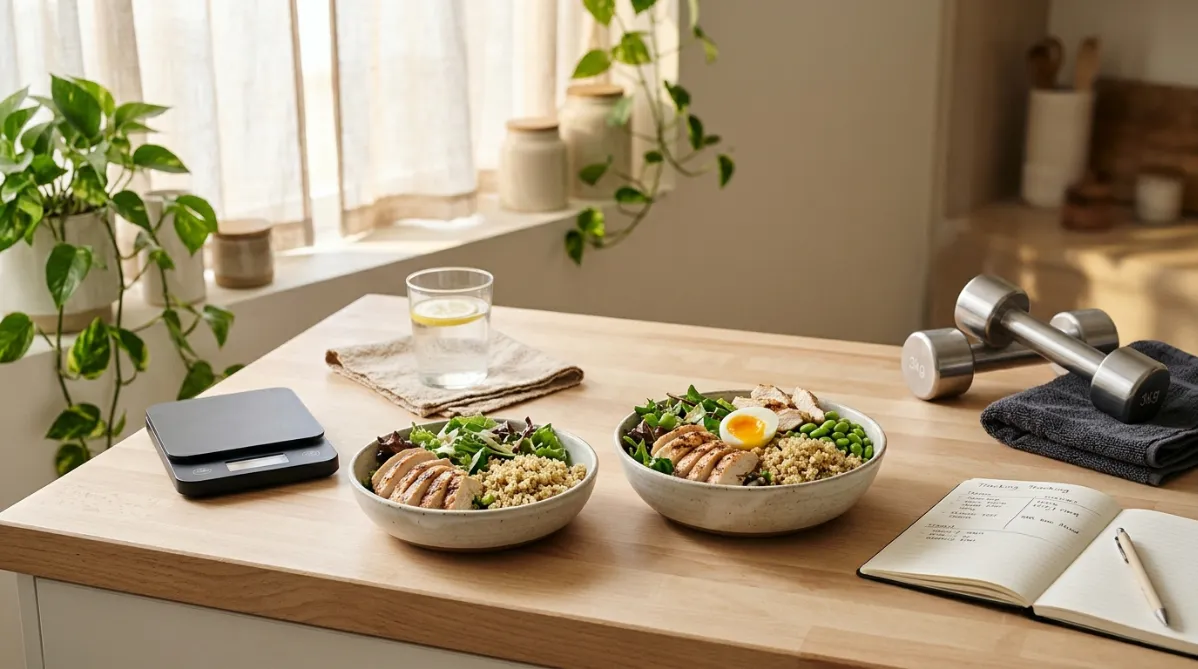
Serwatka, białko roślinne i białko roślinne wzbogacone leucyną nie przeszły testu w nowym badaniu z Maastricht, w którym uczestniczyło 45 mężczyzn w średnim wieku 69 lat. Poziomy aminokwasów we krwi różniły się zgodnie z oczekiwaniami – serwatka dawała najwyższą wartość ogólną, a mieszanka z leucyną osiągała szczytowy poziom leucyny. Mimo to synteza białka mięśniowego była identyczna we wszystkich grupach i nie przewyższała poziomu w stanie postu. Wynik sugeruje, że dla osób starszych większe znaczenie może mieć dawka białka niż jego źródło. Oto, co badanie testowało i czego nie, oraz jak można to zastosować w praktyce.
A wide landscape editorial photograph of a clean, sunlit kitchen counter in soft natural morning light, styled like a modern wellness journal cover. In the foreground, two matching ceramic bowls sit side by side on a pale oak butcher block. The left bowl holds a modest portion of sliced grilled chicken breast, quinoa, and greens. The right bowl holds a noticeably larger, double-sized portion of the same ingredients, with extra chicken, a soft-boiled egg, and edamame. The contrast in portion size is clear but elegant. Beside the bowls are a matte black digital kitchen scale, a tall glass of water with a lemon slice, and a small linen napkin in warm oatmeal tone. A pair of sleek brushed-steel dumbbells rests slightly out of focus on the counter's edge, and a folded charcoal gym towel sits next to them. In the soft-focus background, a large window with sheer curtains lets in diffused golden light, and a trailing green pothos plant adds an organic touch. A small, minimal notebook with a pen lies open to the side, suggesting careful tracking. The color palette is muted and cohesive: warm creams, sage green, soft terracotta, charcoal, and natural wood. Shallow depth of field, crisp focus on the bowls, gentle shadows, and subtle film-like grain. Composition follows the rule of thirds with generous negative space on the upper right for headline text. The mood is calm, thoughtful, and trustworthy, like a contemporary health and science magazine feature. There are no people, no text, and no futuristic elements.
nutrition

3,2 g/kg białka przez 16 tygodni: Czy zaszkodziło nerkom kulturystów?

BY DR. GYMBRO ·

Czy podwójna porcja białka, którą spożywają podnoszący ciężary, potajemnie niszczy ich nerki? 16‑tygodniowe randomizowane badanie na 44 mężczyznach trenujących siłowo porównało 3,2 g/kg białka z 1,6 g/kg. Nie wykazano istotnych różnic w markerach nerkowych, niezależnie od tego, czy uczestnicy trenowali wyłącznie siłowo, czy łączyli trening z cardio. Grupy wysokobiałkowe odnotowały jednak niewielkie wzrosty BUN i cystatyny C oraz spadki eGFR, co autorzy określają jedynie jako opisowe zmiany. Poniżej wyjaśniamy, co to oznacza, czego nie dowodzi badanie i kto powinien zachować ostrożność.
A landscape editorial photograph of a sunlit kitchen table in soft morning light, styled like a modern wellness journal cover. In the center sits a simple white ceramic bowl of plain Greek yogurt topped with walnuts and blueberries. Beside it are a small glass of water and a matte stone scoop holding a pale powder, with a few loose grains scattered on a light oak surface. To the left, a pair of weathered hands, clearly an older man's with silver hair on the wrist, rests near a neatly folded linen napkin and a slim stainless steel wristwatch. To the right, a pair of modest hex dumbbells in muted sage green sits on a woven rug at the edge of the frame, slightly out of focus, hinting at strength training. In the background, a tall window with sheer curtains lets in warm golden light, and a small potted olive plant stands on the sill. A minimalist analog clock on the wall is softly blurred, suggesting fasting windows without being literal. The palette is calm and earthy: warm cream, oatmeal, sage green, soft terracotta, and pale wood tones. The composition uses generous negative space on the upper left for headline overlay, shallow depth of field, and gentle natural shadows. The style is clean, contemporary, and slightly muted, like a lifestyle magazine or health journal feature, shot on a 50mm lens with soft film-like grain. Calm, thoughtful, and quietly authoritative, with no text, logos, or futuristic elements.
nutrition

Leucyna vs białko w dietach postnych: zaskakujące wyniki u starszych mężczyzn

BY DR. GYMBRO ·

Leucyna jest często określana jako „główny przełącznik” mięśni, dlatego można było się spodziewać, że ochroni starszych mężczyzn stosujących diety postne. W 28‑dniowym, randomizowanym badaniu 61 seniorów na diecie naprzemiennego postu (ADF) testowano suplementację leucyną i białkiem w porównaniu z grupą kontrolną. Siła, funkcja, ciśnienie krwi oraz profile lipidowe poprawiły się we wszystkich grupach, a suplementy nie wykazały wymiernej przewagi w większości parametrów. Poniżej podajemy zastosowane dawki, kto może z nich skorzystać, kto może je pominąć oraz ograniczenia badania.
A wide, editorial flat-lay photograph shot from directly above on a pale warm-gray stone countertop, lit by soft natural morning window light with gentle diagonal shadows. On the left, a neatly arranged cluster of whole-food protein sources: two seared chicken breast slices with a golden crust, a small ceramic bowl of creamy Greek yogurt topped with blueberries, three halved soft-boiled eggs with jammy orange yolks, a handful of raw almonds, and a small pile of dried lentils scattered on a linen napkin. At the center, a matte white shaker bottle and a wooden scoop resting in a pile of fine vanilla-colored protein powder, a few grains dusted artfully across the surface. On the right, a minimalist kitchen scale in matte black displaying a portion of food, next to an open notebook with a hand-drawn curve that rises steeply and then flattens into a plateau, drawn in a deep terracotta ink pen, with a small dot marking the bend. A brass pen lies beside the notebook. A single dumbbell with a brushed steel finish sits partially in frame at the upper right corner, grounding the fitness theme without feeling gym-like. Color palette: warm cream, sage green, terracotta, soft charcoal, and butter yellow accents, with generous negative space along the top edge for title overlay. Shallow depth of field, crisp textures, subtle film grain, modern lifestyle magazine aesthetic, clean and calm composition, 16:9 landscape.
nutrition

Ile białka naprawdę maksymalizuje przyrost mięśni? Plateau 1,6 g/kg wyjaśnione

BY DR. GYMBRO ·

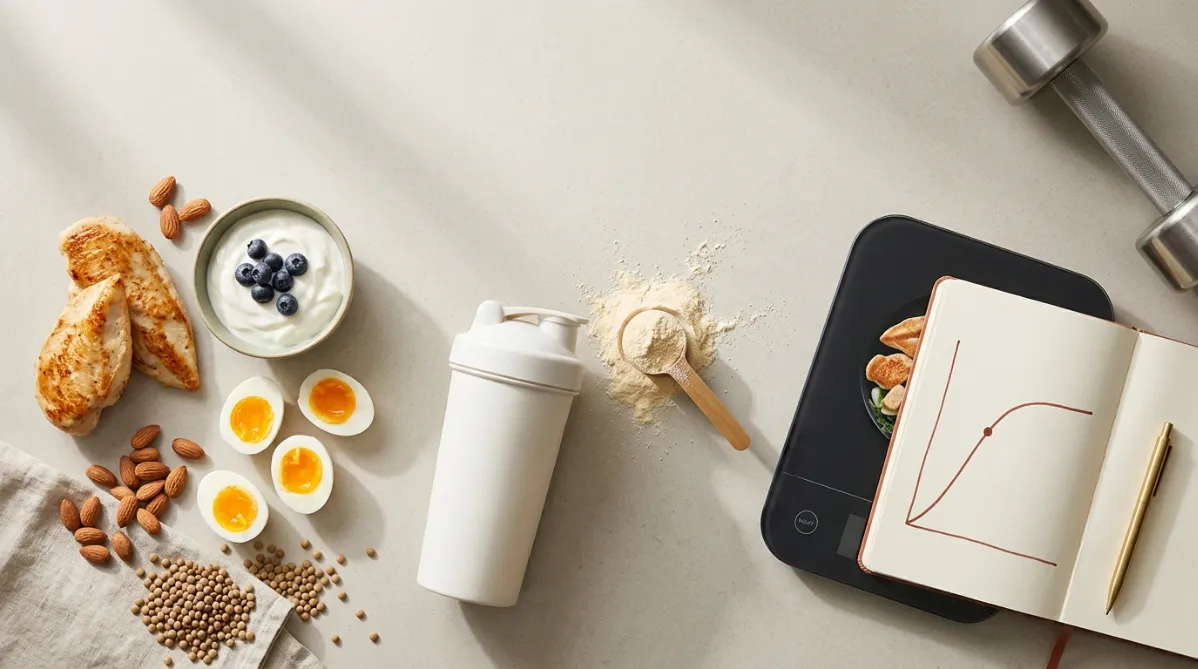
Myślisz, że aby przybrać na masie, potrzebujesz ponad 2 gramy białka na funt? Meta‑analiza 49 badań i 1 863 dorosłych wykazała, że korzyści z budowania mięśni wyraźnie spadają już przy ok. 1,6 g/kg dziennie. Górny kres przedziału ufności wynosił około 2,2 g/kg, co daje podnoszącym ciężary praktyczny zakres zamiast arbitralnej „mega‑dawki”. Najwięcej korzyści z suplementacji odnotowali doświadczeni kulturzyści, a efekt malał wraz z wiekiem. Oto co te liczby znaczą dla Twojego talerza, shakera i portfela.

This page is available in