Dr. Gymbro
←

#protein

4 articles
nutrition

20 g of Whey Didn't Switch On Muscle Building in Older Men

BY DR. GYMBRO ·

Whey, plant protein, and leucine-boosted plant protein all failed the same test in a new Maastricht trial of 45 men around age 69. Blood amino acid levels differed as expected, with whey highest overall and the leucine blend peaking highest for leucine. Yet muscle protein synthesis was identical across groups and no higher than fasting levels. The takeaway is that dose may matter more than protein source for older adults. Here is what the study did and didn't test, and how to apply it.
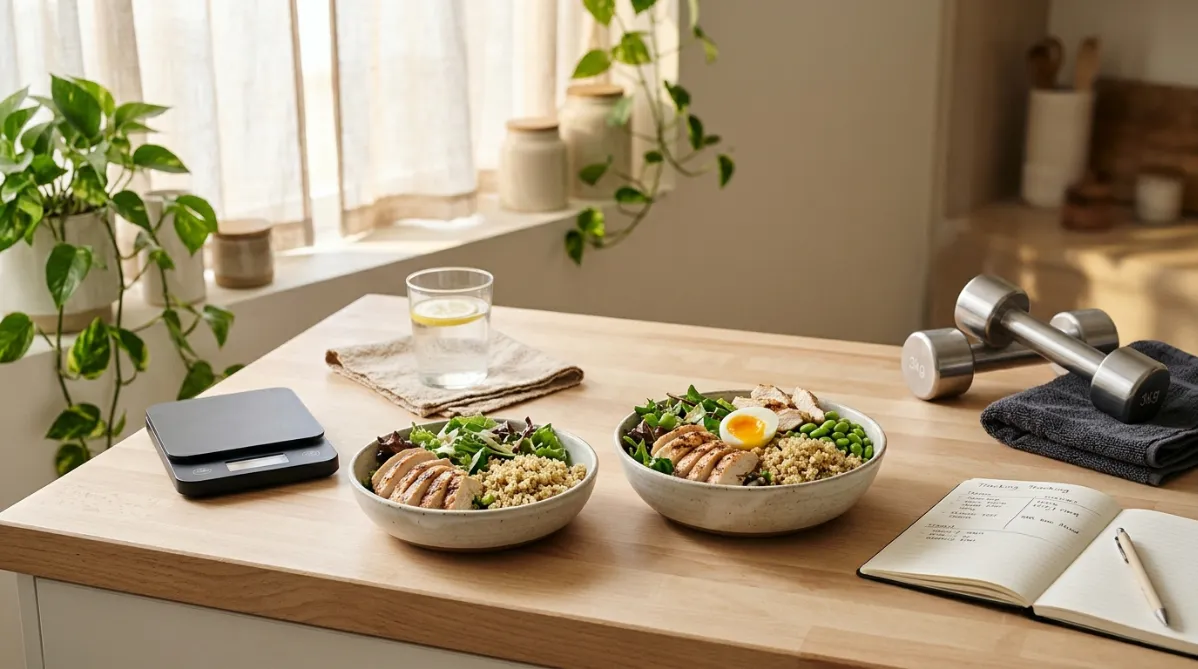
A wide landscape editorial photograph of a clean, sunlit kitchen counter in soft natural morning light, styled like a modern wellness journal cover. In the foreground, two matching ceramic bowls sit side by side on a pale oak butcher block. The left bowl holds a modest portion of sliced grilled chicken breast, quinoa, and greens. The right bowl holds a noticeably larger, double-sized portion of the same ingredients, with extra chicken, a soft-boiled egg, and edamame. The contrast in portion size is clear but elegant. Beside the bowls are a matte black digital kitchen scale, a tall glass of water with a lemon slice, and a small linen napkin in warm oatmeal tone. A pair of sleek brushed-steel dumbbells rests slightly out of focus on the counter's edge, and a folded charcoal gym towel sits next to them. In the soft-focus background, a large window with sheer curtains lets in diffused golden light, and a trailing green pothos plant adds an organic touch. A small, minimal notebook with a pen lies open to the side, suggesting careful tracking. The color palette is muted and cohesive: warm creams, sage green, soft terracotta, charcoal, and natural wood. Shallow depth of field, crisp focus on the bowls, gentle shadows, and subtle film-like grain. Composition follows the rule of thirds with generous negative space on the upper right for headline text. The mood is calm, thoughtful, and trustworthy, like a contemporary health and science magazine feature. There are no people, no text, and no futuristic elements.
nutrition

3.2 g/kg Protein for 16 Weeks: Did It Hurt Lifters' Kidneys?

BY DR. GYMBRO ·

Is eating double the usual lifter's protein secretly wrecking your kidneys? A 16-week randomized trial of 44 resistance-trained men tested 3.2 g/kg protein against 1.6 g/kg. The statistical comparison found no significant difference in kidney markers, whether men lifted alone or combined lifting with cardio. But the high-protein groups did show small rises in BUN and cystatin C and dips in eGFR, which the authors call descriptive only. Here is what that means, what the study can't tell you, and who should be careful.
A landscape editorial photograph of a sunlit kitchen table in soft morning light, styled like a modern wellness journal cover. In the center sits a simple white ceramic bowl of plain Greek yogurt topped with walnuts and blueberries. Beside it are a small glass of water and a matte stone scoop holding a pale powder, with a few loose grains scattered on a light oak surface. To the left, a pair of weathered hands, clearly an older man's with silver hair on the wrist, rests near a neatly folded linen napkin and a slim stainless steel wristwatch. To the right, a pair of modest hex dumbbells in muted sage green sits on a woven rug at the edge of the frame, slightly out of focus, hinting at strength training. In the background, a tall window with sheer curtains lets in warm golden light, and a small potted olive plant stands on the sill. A minimalist analog clock on the wall is softly blurred, suggesting fasting windows without being literal. The palette is calm and earthy: warm cream, oatmeal, sage green, soft terracotta, and pale wood tones. The composition uses generous negative space on the upper left for headline overlay, shallow depth of field, and gentle natural shadows. The style is clean, contemporary, and slightly muted, like a lifestyle magazine or health journal feature, shot on a 50mm lens with soft film-like grain. Calm, thoughtful, and quietly authoritative, with no text, logos, or futuristic elements.
nutrition

Leucine vs Protein on Fasting Diets: Older Men's Surprise Result

BY DR. GYMBRO ·

Leucine is often called the muscle "master switch," so you'd expect it to protect older lifters on fasting diets. A 28-day randomized trial of 61 older men on alternate-day fasting tested leucine and protein supplements against a control. Strength, function, blood pressure and cholesterol markers improved in all groups, and the supplements added no measurable edge on most outcomes. Here are the doses tested, who might still benefit, who can skip it, and where the study falls short.
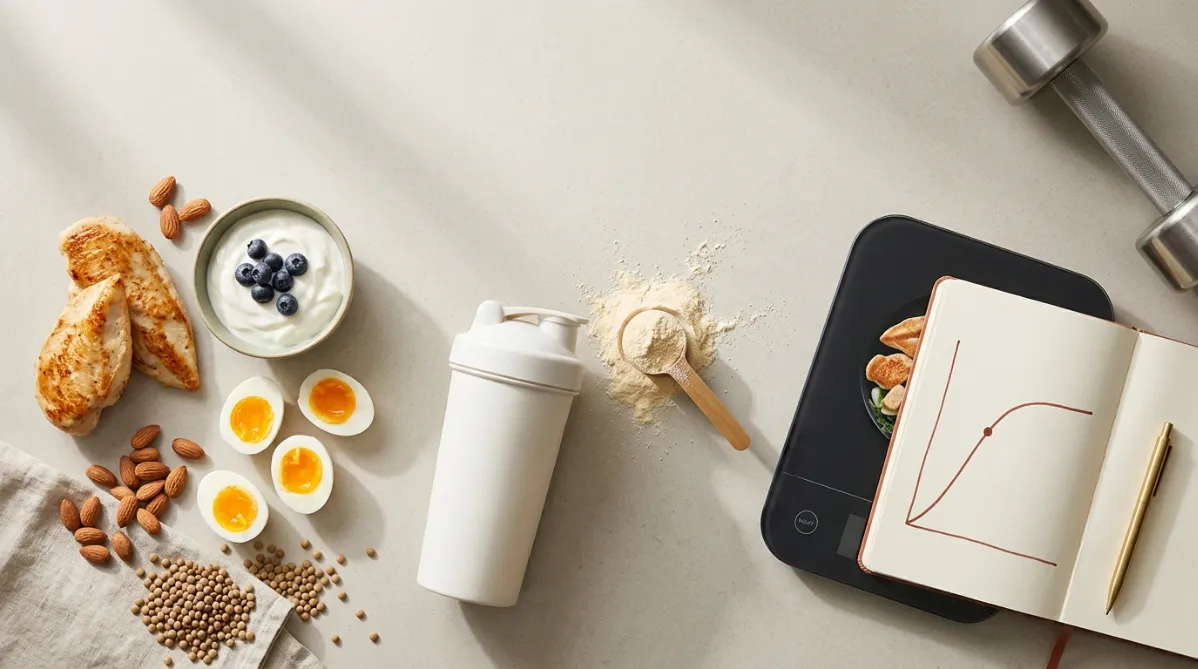
A wide, editorial flat-lay photograph shot from directly above on a pale warm-gray stone countertop, lit by soft natural morning window light with gentle diagonal shadows. On the left, a neatly arranged cluster of whole-food protein sources: two seared chicken breast slices with a golden crust, a small ceramic bowl of creamy Greek yogurt topped with blueberries, three halved soft-boiled eggs with jammy orange yolks, a handful of raw almonds, and a small pile of dried lentils scattered on a linen napkin. At the center, a matte white shaker bottle and a wooden scoop resting in a pile of fine vanilla-colored protein powder, a few grains dusted artfully across the surface. On the right, a minimalist kitchen scale in matte black displaying a portion of food, next to an open notebook with a hand-drawn curve that rises steeply and then flattens into a plateau, drawn in a deep terracotta ink pen, with a small dot marking the bend. A brass pen lies beside the notebook. A single dumbbell with a brushed steel finish sits partially in frame at the upper right corner, grounding the fitness theme without feeling gym-like. Color palette: warm cream, sage green, terracotta, soft charcoal, and butter yellow accents, with generous negative space along the top edge for title overlay. Shallow depth of field, crisp textures, subtle film grain, modern lifestyle magazine aesthetic, clean and calm composition, 16:9 landscape.
nutrition

How Much Protein Actually Maximizes Muscle? The 1.6 g/kg Plateau, Explained

BY DR. GYMBRO ·

Think you need 2+ grams of protein per pound to grow? A meta-analysis of 49 trials and 1,863 adults found muscle-building benefits leveled off around 1.6 g/kg per day. The upper confidence limit reached about 2.2 g/kg, giving lifters a practical range instead of an arbitrary mega-dose. Trained lifters gained the most from supplementation, while the benefit shrank with age. Here is what the numbers mean for your plate, your shaker bottle and your budget.

This page is available in