Dr. Gymbro
←

#extracellular matrix

1 article
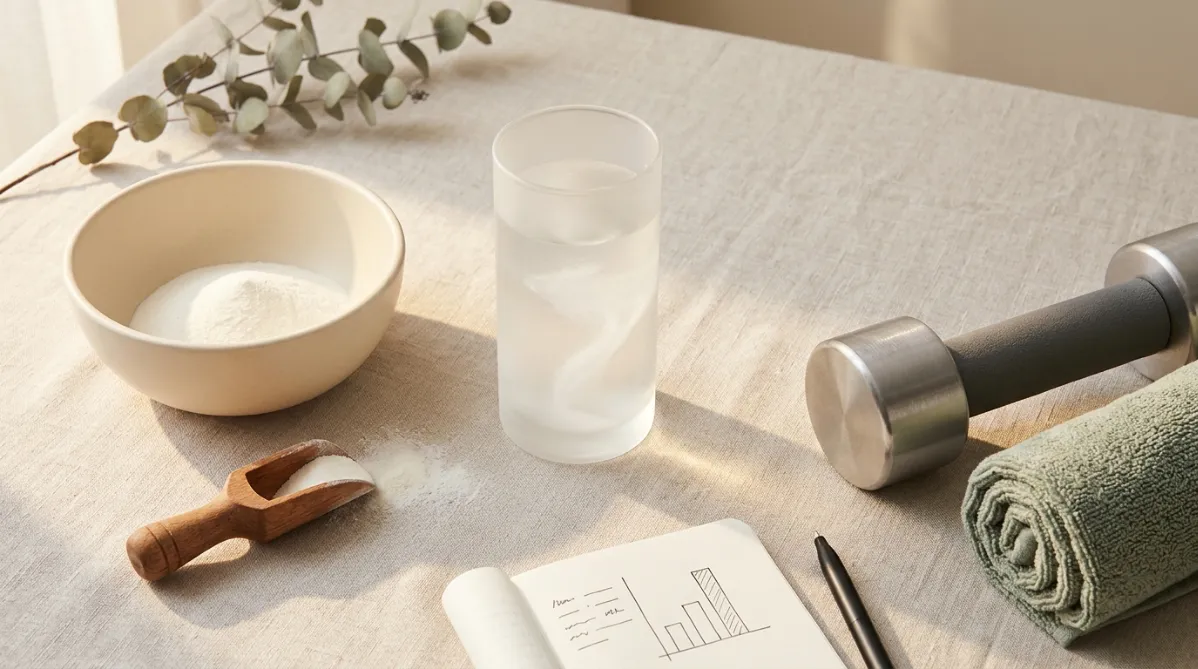
A softly lit, editorial-style flat lay on a pale oat-colored linen surface, shot from slightly above at a gentle angle. On the left, a matte ceramic bowl in warm cream holds a small mound of fine white collagen peptide powder, with a wooden scoop resting beside it and a light dusting of powder on the linen. In the center, a tall frosted glass of water with a faint swirl of dissolving powder catches soft window light. On the right, a single brushed-steel dumbbell with a muted charcoal grip sits partly in frame, with a rolled sage-green gym towel beside it. A small, clean, minimalist notebook lies open near the bottom edge with a thin pen and a few handwritten lines and a simple hand-drawn bar chart showing two bars of different heights. This subtly hints at data and scrutiny without any legible text. A sprig of dried eucalyptus adds an organic touch in the upper corner.

The light is warm morning sunlight from the left, producing long, soft shadows and a gentle golden glow, with a shallow depth of field that blurs the background edges into creamy neutrals. The palette is restrained and modern: oat, cream, sage, soft terracotta, and charcoal accents. The composition leaves open negative space on the upper right for title overlay. The overall mood is calm, thoughtful, and wellness-meets-science, in the style of a contemporary health and nutrition magazine, with crisp textures, natural grain, and a clean, trendy, slightly muted film-like finish.
science research

Collagen Peptides Tripled Muscle Collagen I Gains. What's the Catch?

BY DR. GYMBRO ·

Twelve weeks of heavy lifting plus 15 g of specific collagen peptides a day increased collagen type I inside the quad muscle by 29.8%, compared with 9.9% for placebo. It's a biopsy-confirmed result from a randomized trial, which is rare in the supplement world. But the abstract reports no strength or muscle-size outcomes, collagen types III and IV rose in both groups, and one co-author holds collagen-related patents. Here's what the study really shows, what it doesn't, and who might care.

This page is available in