Dr. Gymbro
←

#randomized-controlled-trial

2 articles
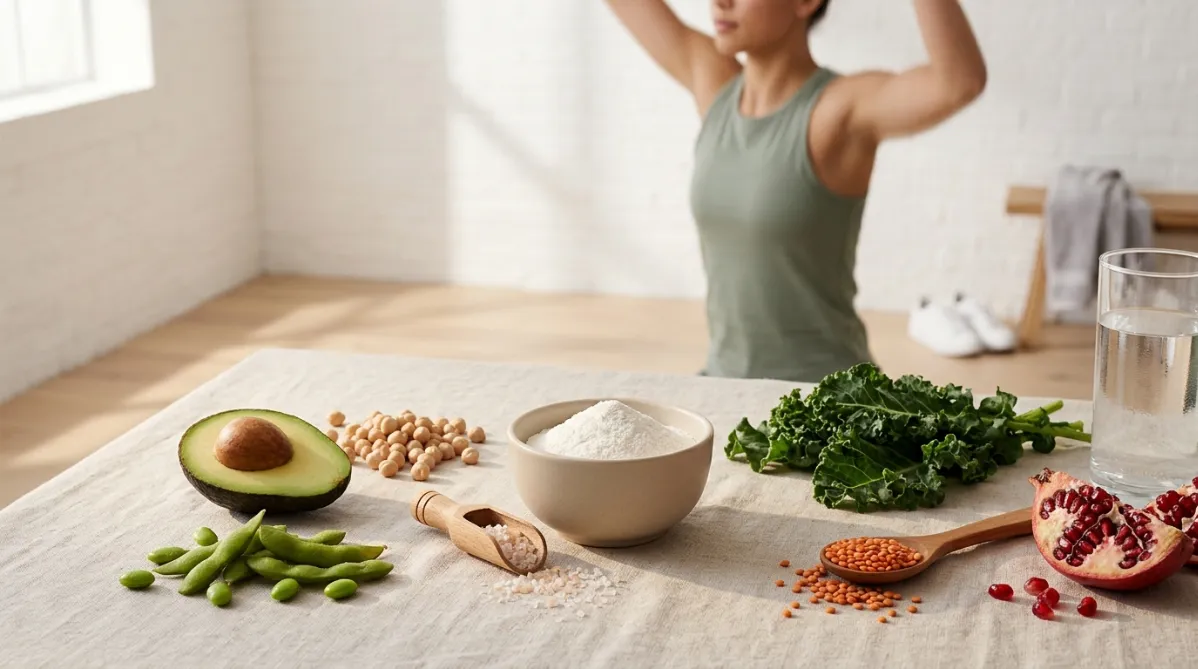
A wide, softly lit editorial still life on a pale oatmeal-colored linen surface. In the center sits a small matte ceramic bowl of fine white creatine powder, with a wooden scoop resting beside it and a few loose pale crystals scattered across the linen. Around the bowl, a fresh plant-based spread is arranged in an organic, uncluttered way: a halved avocado, a handful of chickpeas, bright green edamame pods, a cluster of dark leafy kale, a few red lentils spilled from a small wooden spoon, and a split pomegranate with glossy ruby seeds. A tall glass of water with condensation stands on the right, catching a sliver of window light.

In the soft-focus background, a young athlete in a muted sage-green tank top is mid-jump in a bright, minimalist studio with whitewashed brick walls and pale hardwood floors. The figure is slightly blurred and only partly in frame, which gives a sense of motion and vertical lift without pulling attention from the foreground. A pair of clean white sneakers and a folded gray towel sit on a low wooden bench nearby.

The light is warm natural morning daylight from the left. It casts gentle long shadows and subtle highlights on the powder and the glass. The palette is earthy and calm: cream, sage green, terracotta, warm wood tones, and small pops of avocado green and pomegranate red. The depth of field is shallow, with crisp focus on the bowl and scoop. The composition leaves generous negative space on the upper left for a title overlay, in the clean, contemporary style of a modern health and science magazine. Photographic, high-resolution, refined, and minimal.
science research

Vegans Took Creatine for 4 Weeks: Jumps Rose, Sprints Didn't

BY DR. GYMBRO ·

Vegans eat almost no dietary creatine, so does supplementing hit harder? A new randomized, triple-blind human trial gave 20 active vegans 0.1 g/kg/day of creatine monohydrate for four weeks. Jump performance improved, and so did some body composition measures, but sprint, handgrip and mid-thigh pull results didn't budge. Body water climbed 1.4 kg, and the study couldn't compare vegans with meat-eaters. Here's what the numbers show, what they don't, and who might want to try it.
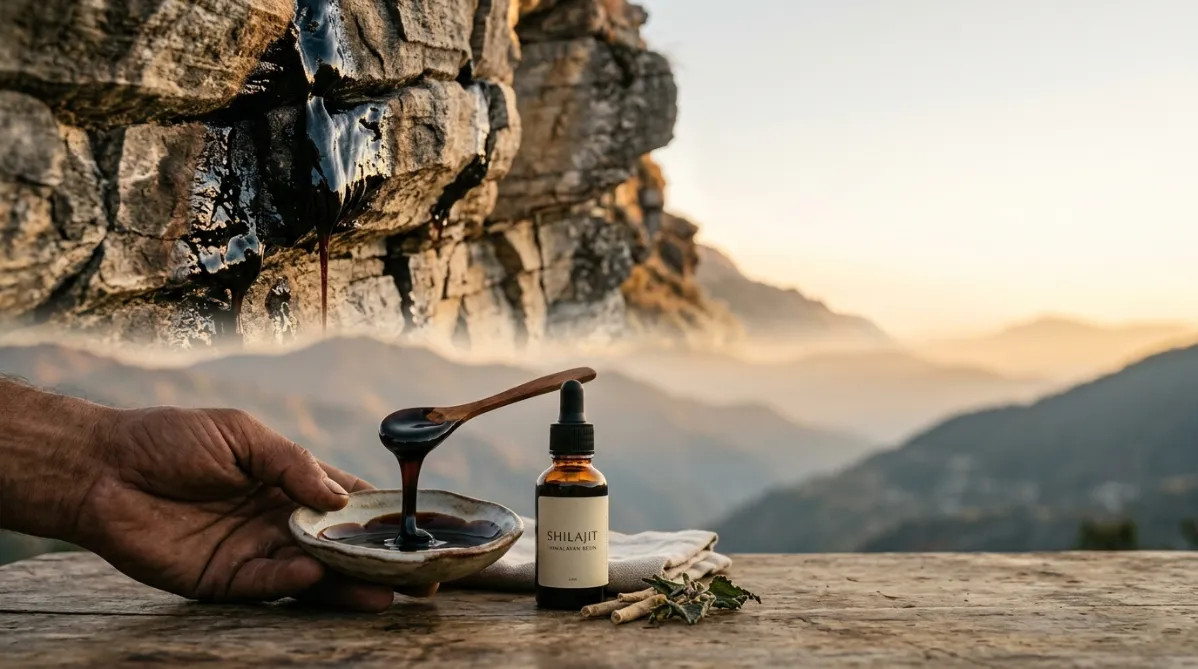
A wide, editorial-style photograph of a rugged Himalayan cliff face at golden hour, with dark, glossy resin seeping from the cracks in the layered stone. Thick, tar-like droplets catch the warm light and shine like polished obsidian. In the foreground, a weathered hand holds a small, rustic ceramic dish with a spoonful of purified Shilajit. The resin is deep brown-black, glossy, and stretches in a slow, viscous ribbon from the spoon. Beside the dish sits a simple, minimalist amber glass dropper bottle with a plain cream label, a folded linen cloth, and a few scattered dried herbs, suggesting a modern wellness ritual. The mid-ground shows soft layers of misty mountain ridges fading into a pale peach and dusty blue sky. The background is gently blurred, with shallow depth of field and creamy bokeh. The color palette is earthy and muted: warm ochre, charcoal, sage green, and soft cream, with a subtle film-grain texture. Natural side lighting creates long, gentle shadows and highlights the textures of the stone, resin, and ceramic. The composition follows the rule of thirds, with the dish and bottle in the lower left and open negative space on the right for headline overlay. The mood is calm, grounded, and credible, like a high-end health and science magazine feature, with a refined, contemporary, slightly documentary look. There is no text, no people's faces, and no futuristic elements.
science research

Shilajit Tested: Can 'Mountain Tar' Really Raise Testosterone?

BY DR. GYMBRO ·

Shilajit, the Himalayan "mountain tar" sold as a natural testosterone booster, was put through a randomized, double-blind, placebo-controlled trial. In men aged 45 to 55, 250 mg of purified Shilajit twice daily for 90 days significantly raised total testosterone, free testosterone and DHEAS versus placebo, while LH and FSH stayed stable. The study is promising but modest, limited to middle-aged men, and reports hormone levels rather than gym performance. Here's what the research shows, what it doesn't, and why purity and heavy-metal testing matter when buying.

This page is available in