Dr. Gymbro
←

#sports supplements

12 articles
supplements

Ketone Ester After Workouts Doubled VO2peak Gains in Cyclists

BY DR. GYMBRO ·

A ketone monoester drink taken after workouts and before bed helped trained cyclists produce about 4% more power in a 30-minute time trial after eight weeks. Their VO2peak gains also doubled, rising 12% versus 6% on placebo. Muscle tests showed 14% higher citrate synthase and a 25% rise in OXPHOS complex II, while heart adaptations were unchanged. The KU Leuven trial is small, included only men and the supplement is costly, so the results are promising rather than proven. Here is what the study found and what it means for your training.
A quiet, sunlit editorial still life on a pale oatmeal linen surface, shot from a slightly elevated three-quarter angle with soft morning window light raking in from the left. On the left side, a small matte ceramic dish holds a few white round tablets, next to a minimalist amber glass bottle with a blank cream label. In the center, a slim glass of water sits beside a handmade stoneware espresso cup filled with dark coffee, with a thin ribbon of steam curling upward. On the right, a pair of worn but clean sage-green running shoes rests on a pale wooden bench, with a folded charcoal athletic towel and a stainless steel stopwatch beside them. The background is softly blurred: a calm bedroom-to-morning transition, with the left third of the frame in cool, dusky blue-gray tones suggesting night, with rumpled white bedding and a small bedside lamp glowing dimly. The tones then blend gradually across the frame into warm golden peach morning light on the right, where a blurred indoor court or track line is faintly visible through a tall window. The color palette is muted and modern: warm cream, soft sage, dusty blue, terracotta accents, and hints of amber. Delicate shadows, shallow depth of field, fine natural film grain, and generous negative space across the top of the frame for headline text. The mood is calm, precise, and thoughtful, in the style of a contemporary wellness and science journal photograph, clean and minimalist with tactile textures of linen, ceramic, glass, and wood.
nutrition

Melatonin Then Caffeine: Only the Combo Cut Muscle-Damage Markers

BY DR. GYMBRO ·

Caffeine made trained men run farther in a shuttle test, but only the melatonin-plus-caffeine stack also lowered muscle-damage and inflammation markers. The protocol was 6 mg of melatonin before bed, then 3 mg/kg of caffeine an hour before testing. Melatonin did not change measured sleep, which makes the result even more curious. The study was a small crossover with 14 trained males and a single performance test, so the findings are early. Here is what was tested, who it might suit, and what it does not prove.
A landscape editorial photograph with a clean, modern magazine feel. On a pale concrete bench in a softly lit locker room, a single small glass shot of deep magenta-red beetroot juice sits in the left third of the frame. It is slightly out of focus in the foreground, with condensation beading on the glass and a faint ruby glow cast on the surface beneath it. Behind it, in crisp focus, is a neat row of seven identical small glass bottles of the same vivid juice, lined up like a weekly calendar. The bottles suggest multi-day loading, and the last one is subtly set apart from the others, with a simple analog wall clock blurred in the background.

Around the bottles are a few styled props: a halved raw beetroot showing concentric pink and crimson rings, a few small green-stemmed beet leaves, and a folded charcoal athletic towel. A pair of worn white and gray football cleats rests at the edge of the frame, with a hint of turf on the soles. A mesh-fabric team jersey in muted navy hangs on a wooden locker door in the soft background.

The lighting is natural window light from the right, with soft diffused shadows, warm highlights, and a gentle morning feel. The color palette is restrained and contemporary: deep beet magenta, warm off-white, slate gray, light oak, and touches of fresh leaf green. The composition has generous negative space on the right side, where the light falls across the empty bench, so there is room for a headline overlay. Shallow depth of field, a 35mm lens look, fine film-like grain, and a minimalist, high-end lifestyle-journal aesthetic. No people's faces, no text, no futuristic elements.
nutrition

Beetroot Juice for Team Sports: Why One Pre-Game Shot Falls Flat

BY DR. GYMBRO ·

That red shot in the locker room might not be doing what you think. A new meta-analysis of 24 trials in team sport athletes found beetroot juice and dietary nitrate give small but real benefits, mainly in team sport-specific tasks (g = 0.143, moderate certainty). The best-supported approach is multi-day loading with a final dose 2-3 hours before exercise, while single pre-game doses showed no clear effect. Single sprints, most metabolic markers, and cardiorespiratory responses didn't improve, and no clear dose-response emerged. Here's who should try it, who should skip it, and why the chronic-versus-acute story is shakier than it looks.
A wide, editorial-style photograph of a clear glass of water on a weathered concrete ledge at the edge of an outdoor running track, shot in soft golden-hour light. Tiny, fine bubbles cling to the inside of the glass and drift upward, catching warm backlight so the water looks luminous and crisp. The glass is about three-quarters full, with delicate condensation beading on its surface. In the softly blurred background, the curved lanes of a terracotta-red track sweep diagonally across the frame, with faint white lane lines leading toward the horizon. A lone sprinter in a charcoal athletic top crouches in a starting position, out of focus, rendered as a muted silhouette. Long shadows stretch across the track, and a hazy line of trees glows amber in the distance.

Foreground details are sharp: a matte black sports watch rests beside the glass, its screen dark, and a folded white towel sits at the edge of the frame. The palette is warm and restrained, with terracotta, sand, soft peach sky, charcoal, and the cool, clean glint of water as the focal accent. Shallow depth of field, 85mm lens look, fine film grain, gentle natural lens flare from the low sun. The composition follows the rule of thirds, with the glass placed on the left third and generous negative space on the right for headline text. The mood is calm, athletic, and modern, like a contemporary health and performance magazine cover, with no text, logos, or futuristic elements.
science research

Hydrogen Water Before Sprints: Power Held Up and Recovery Sped Up

BY DR. GYMBRO ·

A single 280 mL glass of hydrogen-rich water, drunk about a minute before all-out sprints, kept power output higher in a new crossover study. Athletes also showed faster heart rate variability recovery afterward, and blood lactate was about 1 mmol/L lower at 3 minutes post-exercise. But the study had just 13 men, was only single-blind, and tested one acute dose. Here's what the researchers found, how they dosed it, who it might suit, and why you should stay skeptical.
A wide, editorial-style photograph of a marathon runner seen from behind and slightly to the side, mid-stride on a quiet tree-lined road at early morning golden hour. The runner wears a fitted sage-green technical shirt and charcoal shorts, with a plain unnumbered bib pinned at the back. Soft sunlight filters through the leaves and creates long, gentle shadows and a warm amber glow on the asphalt. Behind the runner, other runners blur into a soft bokeh background of muted greens and warm light.

In the lower right foreground, slightly out of focus, a small ceramic dish on a weathered light-oak surface holds two golden, translucent softgel capsules. Beside it sits a simple glass of water with sunlight refracting through it, casting a tiny warm caustic on the wood. A sprig of green leaves adds a natural touch. The foreground and the runner are separated by a shallow depth of field, which suggests the link between supplementation and endurance without being literal.

The palette is warm and natural: soft yellows, sunlit gold, sage green, cream, and light wood tones. The mood is calm, health-focused, and contemporary, like a modern wellness or science journal feature. The composition uses generous negative space in the upper left sky area for title text overlay. The lighting is natural and soft with a subtle film-like grain, and the image is clean, minimal, and crisp. There are no text overlays, logos, or medical clichés such as hearts or graphs, and no futuristic elements.
science research

Runners on Vitamin D3 Had Lower Heart-Stress Markers After 42 km

BY DR. GYMBRO ·

Marathoners who took vitamin D3 for 8 weeks had lower CK and CK-MB 24 hours after racing 42.195 km than runners on placebo. Protein carbonyls, a marker of oxidative damage, also rose less in the vitamin D group. But the trial was tiny (n=21), single-blind, and only some markers differed. Immune effects were purely descriptive, and CK-MB is a stress biomarker, not proof of heart damage. Here is what the study shows, who might benefit, and who should skip it.
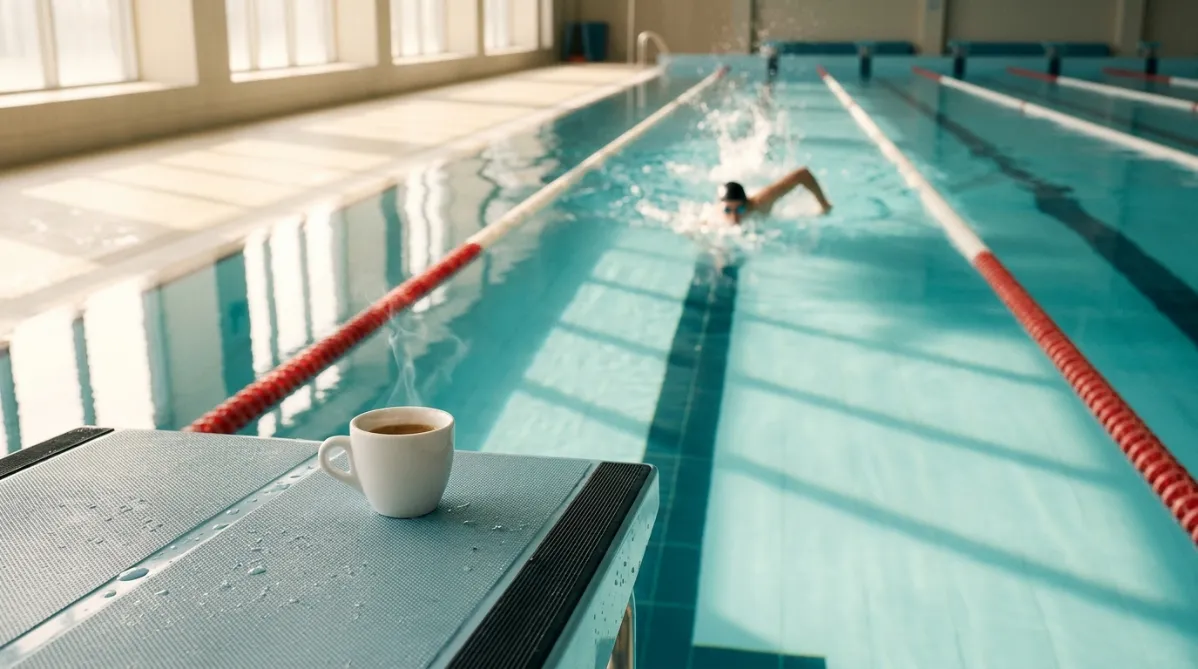
A wide, editorial-style photograph of a competition swimming pool lane seen from just above the water line at the starting end, in soft morning light. In the foreground, on the pool deck, a white ceramic espresso cup sits on the edge of a blue-gray starting block, a thin curl of steam rising from it. The cup is in crisp focus, with a few droplets of water on the textured non-slip deck around it. Behind it, the pool stretches into the distance as a series of calm lanes divided by red and white lane ropes. The turquoise water glints with gentle ripples and long, shimmering reflections. At the far end, a lone swimmer in a dark cap and goggles is mid-stroke, caught in a small burst of white splash, and slightly out of focus because of the shallow depth of field.

Large windows along the side wall let in pale golden sunlight, which throws soft diagonal light across the water and the deck. The palette is clean and modern: aqua, deep teal, warm cream and a small accent of coffee brown. The cup's warm tones stand out against the cool blues. The composition follows the rule of thirds, with the cup in the lower left third and open negative space of water and light on the right, leaving room for headline text. The look is minimal, airy and contemporary, like a high-end sports and science magazine, with subtle film grain, natural color grading, and a slightly desaturated, calm mood. Faint stopwatch-like details appear only as a thin black timing pad edge on the starting block, with no text or numbers visible. The overall feel is quiet anticipation just before a race, precise and fresh, with a sense of small margins and measured performance.
nutrition

Caffeine Makes Swimmers Faster, But by Less Than You'd Think

BY DR. GYMBRO ·

Swimmers have swigged coffee before races for years, but does it actually make them faster? A new multilevel meta-analysis of 13 crossover trials puts the gain at about 1.7%, a meaningful margin in a sport decided by hundredths of a second. The surprise is in the details: the clearest benefit appeared at 6 mg/kg or more, while lower doses did not show a convincing effect. Caffeine also raised post-race blood lactate, and results varied widely between studies. Here is what the evidence supports and what it leaves open.
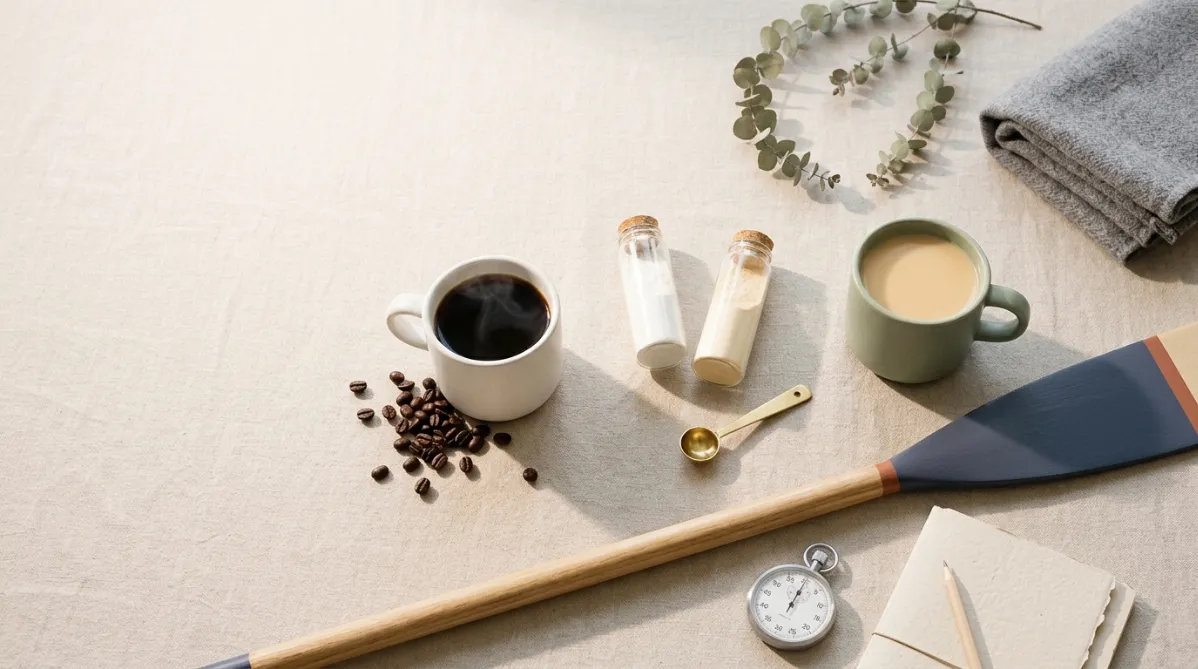
A wide, editorial-style flat lay photographed from above on a pale oat-colored linen surface in soft morning window light. On the left, a small matte white ceramic cup of black coffee with a delicate swirl of steam, beside a few scattered roasted coffee beans. On the right, a second matte sage-green ceramic cup holding a pale, creamy golden tea-like drink, mirroring the first. Between them, two small glass vials with cork stoppers sit side by side: one holding fine white powder, the other holding slightly warmer cream-colored powder, with a tiny brass measuring spoon resting nearby. In the lower foreground, a slim wooden rowing oar lies diagonally across the frame, its blade edge softly entering from the right, painted a muted navy with a thin terracotta stripe. A minimalist analog stopwatch with a brushed-steel case rests near the oar, and a folded cream notebook with a thin pencil suggests data-taking. In the upper corner, a crescent-shaped dried eucalyptus sprig and a small folded gray wool throw hint at sleep and calm without being literal. The palette is warm and restrained: oat, cream, sage, soft navy, terracotta, and espresso brown. Shadows are long and gentle, with shallow depth of field and subtle film grain, giving a refined, modern wellness-magazine feel. Generous negative space on the left third of the composition leaves room for a headline overlay. Clean, calm, tactile, and contemporary, with no text, logos, or futuristic elements.
science research

Paraxanthine vs Caffeine: The Combo That Won, and the Sleep-Saver

BY DR. GYMBRO ·

Paraxanthine, caffeine's main metabolite, just went head-to-head with caffeine in a trial of 14 rowers. The combo of 200 mg each beat placebo on a 2000-m row, but only with a small effect (d = 0.30). Neither compound alone clearly improved performance. Paraxanthine alone, however, looked friendlier to subjective sleep. Here are the numbers, the limits, and who might actually benefit.
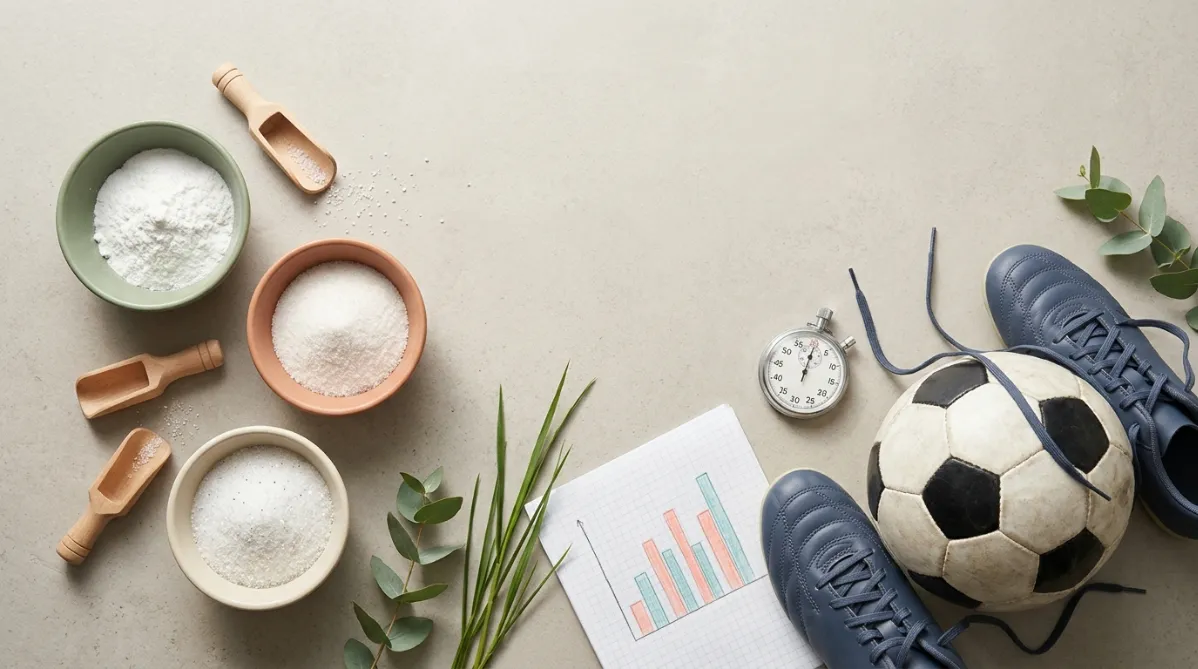
A wide, editorial-style flat lay photographed from above on a pale warm-gray concrete surface, lit by soft natural window light with gentle shadows. On the left, three small matte ceramic bowls in sage green, soft terracotta, and cream, each holding a different white crystalline powder. The textures vary subtly: fine and powdery, slightly granular, and glittery with tiny crystalline flecks. Beside them rest three minimalist wooden scoops, a few scattered grains catching the light. In the center-right, a worn classic black-and-white soccer ball sits slightly off-frame, partially cropped by the edge, with a pair of muted navy cleats resting nearby, laces loosely draped. A small stopwatch with a brushed-steel finish and a folded sheet of graph paper with a hand-drawn bar chart in soft coral and teal pencil add a subtle sense of data and measurement. A few blades of fresh-cut grass and a sprig of eucalyptus add organic accents. The palette is calm and modern: warm neutrals, sage, terracotta, and muted navy, with one pop of coral. The composition leaves generous negative space in the upper right for headline text. The mood is clean, curious, and trustworthy, like a contemporary health and science journal. Shallow depth of field, crisp focus on the powders, with the soccer elements slightly softer. High-end editorial photography, 16:9 landscape.
science research

Creatine HCl Beat Monohydrate in Soccer Players—Don't Toss Yours Yet

BY DR. GYMBRO ·

A new randomized trial in 40 soccer players found that creatine HCl and ethyl ester out-gained plain monohydrate on jump, sprint, agility and peak power after just four weeks. Every creatine form beat placebo, but the "fancy" versions pulled further ahead on the explosive measures. Before you swap tubs, though, the study has just 10 athletes per group, no reported doses in the abstract, and a result that clashes with earlier research. Here is what it showed, what it did not, and how to think about it.
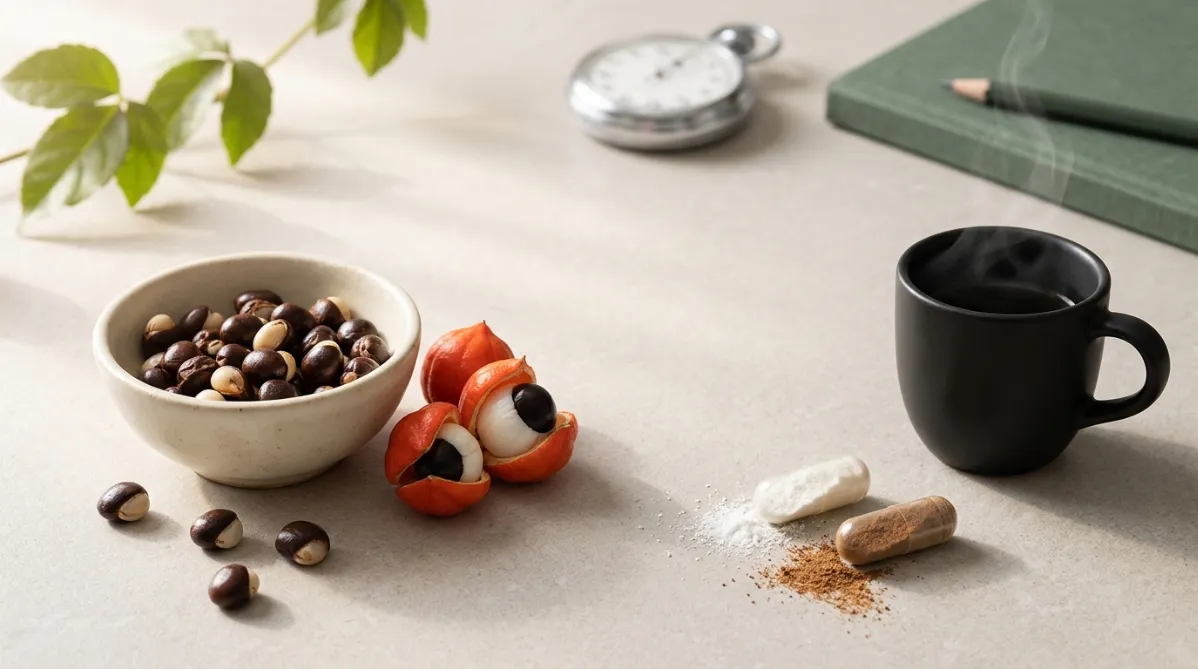
A wide, softly lit editorial flat-lay on a pale warm-gray stone countertop, shot from slightly above. On the left, a small rustic ceramic bowl in matte cream holds a handful of dried guarana seeds, dark glossy brown with pale cream arils, a few spilling onto the surface. Beside it sits a halved fresh guarana fruit in vivid red-orange, split open to show the white flesh and black seed inside, looking like a tiny eye. On the right, two open clear capsules rest side by side. One is filled with fine white caffeine powder, the other with a fine earthy brown guarana powder, and a little of each dusts the stone in delicate, deliberate lines. Between them, a minimalist matte-black espresso cup with a thin ribbon of steam rises on the right edge of the frame. A brushed-steel stopwatch and a slim dark-green linen notebook with a pencil sit in the upper background, slightly out of focus, to hint at performance testing without clutter. A few green leaves of a guarana vine curve in from the top-left corner, catching soft light.

The lighting is natural window light from the left, with gentle long shadows and a subtle warm highlight on the seeds. The palette is muted and modern: warm creams, terracotta red, deep espresso brown, sage green, and charcoal accents. The background is clean with generous negative space on the upper right for headline text. Shallow depth of field, crisp focus on the seeds and capsules, fine grain, and a calm premium magazine look like a contemporary wellness and sports-science journal. No people, no text, no logos, no futuristic elements.
science research

Guarana vs Caffeine: Same Dose, Only Guarana Lifted Peak Power

BY DR. GYMBRO ·

Same caffeine dose, different capsule, and only guarana produced a statistically significant boost in peak power. In a randomized crossover trial of 18 active men, guarana raised peak power output by 4.0% over placebo while anhydrous caffeine did not reach significance. But here's the catch: guarana didn't significantly beat caffeine head-to-head, and the differences between them were only descriptive. Here's what the numbers show, where the study falls short, and how to dose guarana by caffeine content if you want to try it.
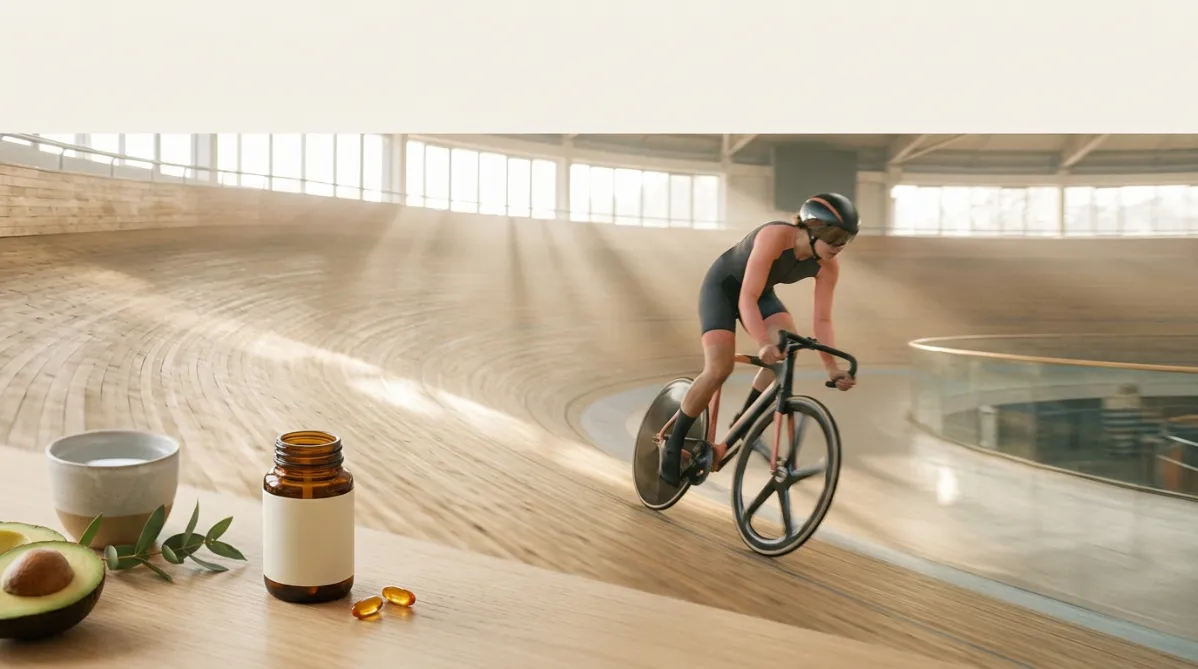
A wide, editorial-style photograph of a professional track cyclist mid-stride on a velodrome's sloping wooden boards, captured from a low side angle with a shallow depth of field. The cyclist is in a sleek matte charcoal and soft coral skinsuit with an aerodynamic helmet, slightly motion-blurred, while the wood grain of the track glows in warm honey tones. Soft morning light streams through high arena windows, creating long, gentle beams and a subtle haze.

In the foreground, slightly out of focus, a minimalist still-life is arranged on a pale oak surface: a small amber glass supplement bottle with a clean cream label, two golden-orange softgel capsules resting beside it, and a ceramic cup of water. A small sprig of green leaves and a halved avocado add a fresh, natural touch, hinting at taking the supplement with fat. The composition places the still-life in the lower left third, with the cyclist blurring into the background on the right, creating a layered sense of depth.

The color palette is warm and refined: creamy off-white, honey wood, muted coral, soft amber, and touches of sage green. A thin, elegant overlay of subtle graph-like lines, such as two delicate rising curves in white, one slightly higher than the other, floats faintly over the upper right negative space, suggesting the small performance gap without any text or numbers. The overall look is clean, modern, and magazine-quality, like a wellness and sports science journal feature, with natural film-like grain, soft contrast, and generous negative space at the top for headline placement. Landscape 16:9 composition, calm and sophisticated mood, no text, no logos.
nutrition

Olympic Hopefuls Took 300 mg Ubiquinol: The 2.5% Power Edge

BY DR. GYMBRO ·

In a double-blind study of 100 athletes preparing for the London 2012 Olympics, everyone got stronger on the bike, but the group taking 300 mg of ubiquinol improved more: +11% versus +8.5% on placebo. That roughly 2.5% edge was statistically significant, yet the study has caveats, including uncontrolled training and industry ties. We break down ubiquinol versus ubiquinone, what the numbers mean, and why the gap could matter to an elite cyclist but not to a recreational lifter. Plus: dosing, timing with fat, who should talk to a doctor first, and whether the cost is worth it.
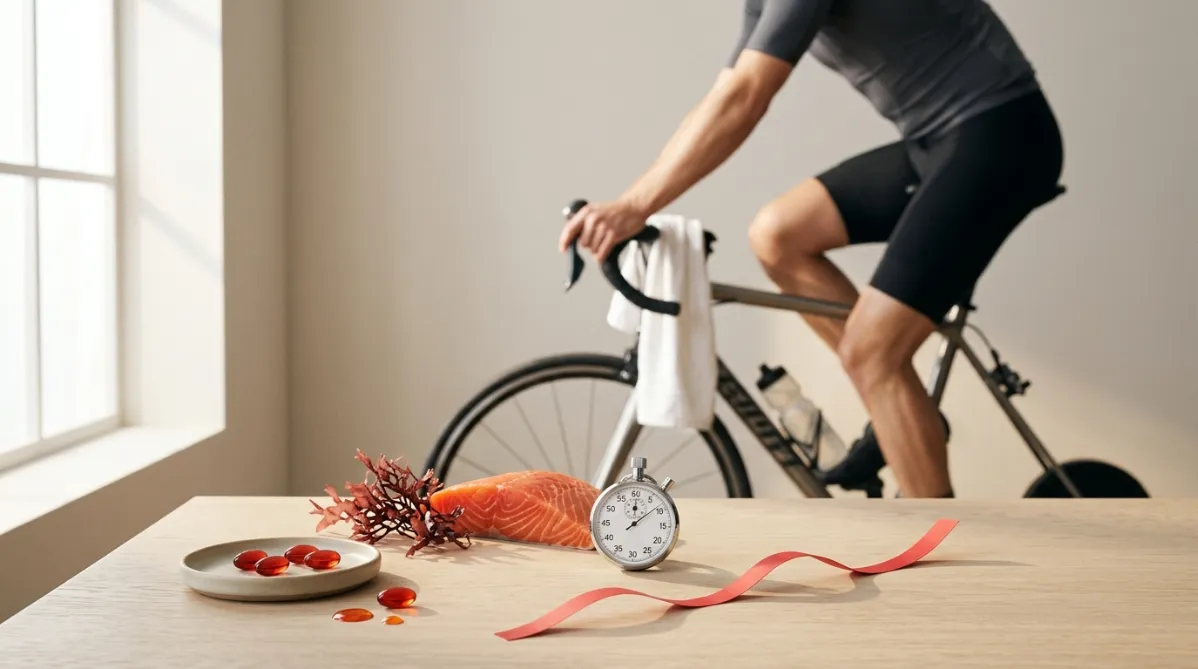
A cyclist's legs mid-pedal on a stationary road bike, shot in a bright, airy, minimalist studio with a soft warm-grey backdrop. In the foreground on a pale oak table sits a small ceramic dish holding four deep coral-red softgel capsules, with a few translucent droplets of red-orange oil glistening beside them. Beside the dish is a sprig of dried red microalgae-toned seaweed and a halved wild salmon fillet, its coral flesh echoing the capsule color. Behind the table, slightly out of focus, a cyclist in a fitted charcoal jersey and matte black shorts rides a bike on an indoor trainer. Only the torso and legs are visible, with no face. A white towel hangs over the handlebars and a clear water bottle catches the light.

Soft diffused morning light streams from a large window on the left, creating long gentle shadows and a subtle golden-hour glow on the skin and the glossy capsules. The palette is restrained and editorial: warm cream, sand, soft grey and charcoal, with vivid coral-red as the single accent color. A minimalist analog stopwatch with a clean white face sits on the table, its hands near the 85-minute mark. A thin, elegant line-graph shape is subtly suggested by a curved strip of red ribbon lying on the table, rising from left to right to hint at the performance gain without any text.

The composition follows the rule of thirds, with the capsules and stopwatch in the lower left and the cyclist's motion-blurred legs sweeping across the right. Shallow depth of field, crisp macro detail on the capsules, and a fine film-like grain. The overall feel is a modern health and science magazine cover: clean, calm, sophisticated, and natural, with negative space in the upper area for a headline. There are no futuristic elements, no glowing effects, no laboratory equipment, and no text or logos. Landscape 16:9 format.
nutrition

Astaxanthin for 4 Days Boosted Cycling Time-to-Exhaustion From 72 to 85 Minutes in a Small Trial

BY DR. GYMBRO ·

Four days of astaxanthin at 28 mg/day lengthened cycling time to exhaustion from about 72 to 85 minutes in a small randomized trial, a gain of roughly 18%. The same protocol blunted rises in muscle damage markers (CK and LDH) and lipid peroxidation (MDA) after a hard ride at 75% VO2max. Inflammation markers and fuel use did not change, so the mechanism is still unclear. The dose is also well above what many softgels provide, and the study had just ten young men. Here is what the numbers show and where the evidence stops.
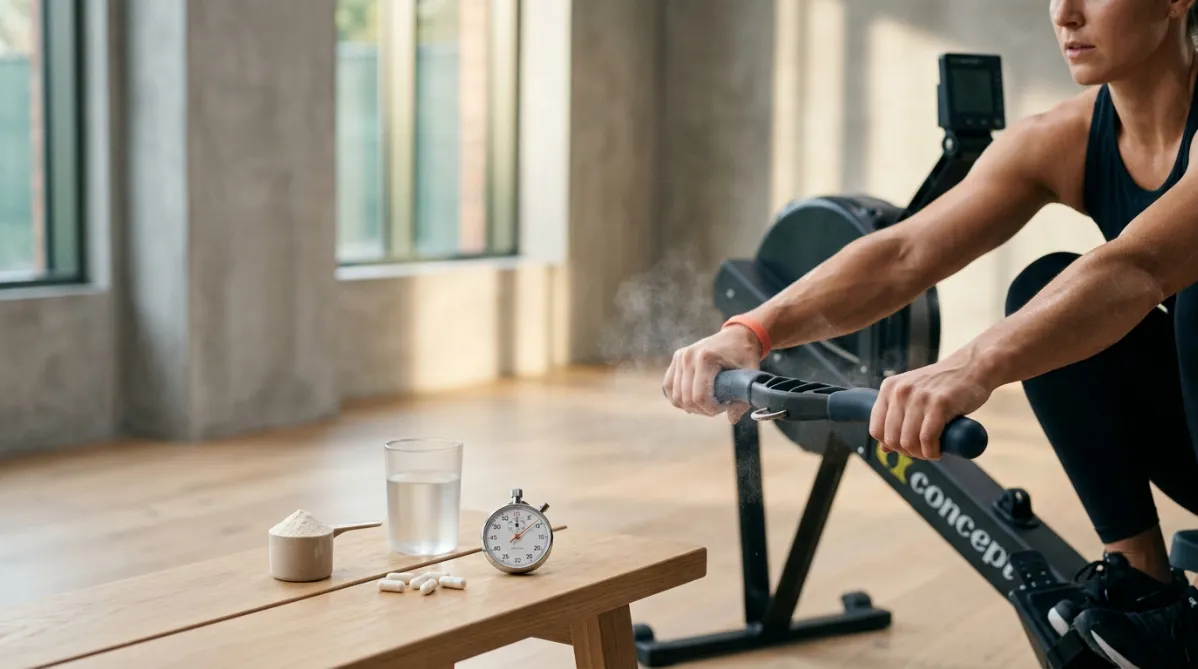
A wide, minimalist editorial scene of an athlete's hands and forearms gripping the handles of a rowing ergometer, shot in soft natural light from a large window in a clean, airy training studio. The athlete is mid-pull, forearm muscles subtly defined, a light sheen of sweat on the skin, chalk dust floating in the air. In the foreground on a pale oak bench sits a small ceramic scoop of fine white powder beside a matte glass of water, with a few loose white capsules arranged neatly in a gentle curve. A minimalist analog stopwatch with a clean white face lies next to them, its hand paused near the two-minute mark.

The color palette is calm and modern: warm off-white, soft sand, muted sage green, and a single accent of coral orange in the stopwatch hand and the rower's wristband. The background is softly blurred concrete and pale wood with long, gentle shadows stretching across the floor. Shallow depth of field keeps the hands, powder, and stopwatch crisp while the rest dissolves into creamy bokeh.

Composition follows the rule of thirds: the rowing handles and hands occupy the right third, the bench still life sits in the lower left, and open negative space in the upper left leaves room for a title overlay. The mood is focused, quiet, and intentional, like a high-end health and science journal feature. Fine film grain, subtle matte finish, editorial photography style, natural color grading, and no text or logos.
nutrition

Does Beta-Alanine Work? A Meta-Analysis Says Yes for Efforts Lasting 60–240 Seconds

BY DR. GYMBRO ·

Beta-alanine has long been marketed as a way to push back against the burn of hard exercise, but does it deliver? A meta-analysis of 15 studies and 360 participants found a real but modest benefit, with an estimated median gain of 2.85%. The effect was clearest for efforts lasting 60–240 seconds, was smaller beyond four minutes, and did not appear for sprints under a minute. The article also covers the commonly used loading approach of 3.2–6.4 g per day for four or more weeks, how splitting doses can reduce tingling, and which athletes stand to gain most.

This page is available in