Dr. Gymbro
←

#sports supplements

12 articles
supplements

Gli esteri di chetoni dopo l'allenamento raddoppiano i guadagni di VO2peak nei ciclisti

BY DR. GYMBRO ·

Un drink a base di monoesteri di chetoni assunto subito dopo gli allenamenti e prima di andare a letto ha permesso a ciclisti allenati di produrre circa il 4 % di potenza in più in una prova di 30 minuti dopo otto settimane. I loro guadagni di VO2peak sono raddoppiati, passando dal 6 % con placebo al 12 %. I test muscolari hanno mostrato un aumento del 14 % dell’attività della citrato sintasi e del 25 % della proteina complesso II dell’OXPHOS, mentre le adattazioni cardiache sono rimaste invariate. Lo studio della KU Leuven è piccolo, comprende solo uomini ed è costoso, quindi i risultati sono promettenti ma non definitivi. Ecco cosa ha scoperto la ricerca e cosa significa per il tuo allenamento.
A quiet, sunlit editorial still life on a pale oatmeal linen surface, shot from a slightly elevated three-quarter angle with soft morning window light raking in from the left. On the left side, a small matte ceramic dish holds a few white round tablets, next to a minimalist amber glass bottle with a blank cream label. In the center, a slim glass of water sits beside a handmade stoneware espresso cup filled with dark coffee, with a thin ribbon of steam curling upward. On the right, a pair of worn but clean sage-green running shoes rests on a pale wooden bench, with a folded charcoal athletic towel and a stainless steel stopwatch beside them. The background is softly blurred: a calm bedroom-to-morning transition, with the left third of the frame in cool, dusky blue-gray tones suggesting night, with rumpled white bedding and a small bedside lamp glowing dimly. The tones then blend gradually across the frame into warm golden peach morning light on the right, where a blurred indoor court or track line is faintly visible through a tall window. The color palette is muted and modern: warm cream, soft sage, dusty blue, terracotta accents, and hints of amber. Delicate shadows, shallow depth of field, fine natural film grain, and generous negative space across the top of the frame for headline text. The mood is calm, precise, and thoughtful, in the style of a contemporary wellness and science journal photograph, clean and minimalist with tactile textures of linen, ceramic, glass, and wood.
nutrition

Melatonina e poi caffeina: solo la combinazione riduce i marcatori di danno muscolare

BY DR. GYMBRO ·

La caffeina ha fatto correre più lontano uomini allenati, ma solo la combinazione melatonina‑caffeina ha anche ridotto i marcatori di danno muscolare e di infiammazione. Il protocollo prevedeva 6 mg di melatonina prima di andare a letto, seguiti da 3 mg/kg di caffeina un’ora prima del test. La melatonina non ha modificato il sonno misurato, rendendo il risultato ancora più curioso. Lo studio, un piccolo crossover con 14 uomini allenati e un unico test di performance, è comunque preliminare. Ecco cosa è stato testato, a chi potrebbe interessare e cosa non dimostra.
A landscape editorial photograph with a clean, modern magazine feel. On a pale concrete bench in a softly lit locker room, a single small glass shot of deep magenta-red beetroot juice sits in the left third of the frame. It is slightly out of focus in the foreground, with condensation beading on the glass and a faint ruby glow cast on the surface beneath it. Behind it, in crisp focus, is a neat row of seven identical small glass bottles of the same vivid juice, lined up like a weekly calendar. The bottles suggest multi-day loading, and the last one is subtly set apart from the others, with a simple analog wall clock blurred in the background.

Around the bottles are a few styled props: a halved raw beetroot showing concentric pink and crimson rings, a few small green-stemmed beet leaves, and a folded charcoal athletic towel. A pair of worn white and gray football cleats rests at the edge of the frame, with a hint of turf on the soles. A mesh-fabric team jersey in muted navy hangs on a wooden locker door in the soft background.

The lighting is natural window light from the right, with soft diffused shadows, warm highlights, and a gentle morning feel. The color palette is restrained and contemporary: deep beet magenta, warm off-white, slate gray, light oak, and touches of fresh leaf green. The composition has generous negative space on the right side, where the light falls across the empty bench, so there is room for a headline overlay. Shallow depth of field, a 35mm lens look, fine film-like grain, and a minimalist, high-end lifestyle-journal aesthetic. No people's faces, no text, no futuristic elements.
nutrition

Succo di barbabietola per gli sport di squadra: perché un colpo pre‑partita non funziona

BY DR. GYMBRO ·

Quel piccolo bicchiere rosso nello spogliatoio potrebbe non fare quello che credi. Una nuova meta‑analisi su 24 studi con atleti di sport di squadra ha rilevato che il succo di barbabietola e il nitrato dietetico offrono benefici modesti ma reali, soprattutto nei compiti specifici di squadra (g = 0,143, certezza moderata). L’approccio più supportato è quello di un caricamento di più giorni con un’ultima dose assunta 2‑3 ore prima dell’esercizio, mentre le singole dosi pre‑partita non hanno mostrato effetti chiari. Sprint singoli, la maggior parte dei marcatori metabolici e le risposte cardiorespiratorie non sono migliorati, e non è emersa una relazione dose‑risposta.
A wide, editorial-style photograph of a clear glass of water on a weathered concrete ledge at the edge of an outdoor running track, shot in soft golden-hour light. Tiny, fine bubbles cling to the inside of the glass and drift upward, catching warm backlight so the water looks luminous and crisp. The glass is about three-quarters full, with delicate condensation beading on its surface. In the softly blurred background, the curved lanes of a terracotta-red track sweep diagonally across the frame, with faint white lane lines leading toward the horizon. A lone sprinter in a charcoal athletic top crouches in a starting position, out of focus, rendered as a muted silhouette. Long shadows stretch across the track, and a hazy line of trees glows amber in the distance.

Foreground details are sharp: a matte black sports watch rests beside the glass, its screen dark, and a folded white towel sits at the edge of the frame. The palette is warm and restrained, with terracotta, sand, soft peach sky, charcoal, and the cool, clean glint of water as the focal accent. Shallow depth of field, 85mm lens look, fine film grain, gentle natural lens flare from the low sun. The composition follows the rule of thirds, with the glass placed on the left third and generous negative space on the right for headline text. The mood is calm, athletic, and modern, like a contemporary health and performance magazine cover, with no text, logos, or futuristic elements.
science research

Acqua di Idrogeno Prima degli Sprint: Potenza Mantenuta e Recupero Accelerato

BY DR. GYMBRO ·

Un unico bicchiere da 280 mL di acqua arricchita d’idrogeno, bevuto circa un minuto prima di sprint massimali, ha consentito di mantenere più alta la potenza in un nuovo studio crossover. Gli atleti hanno mostrato anche un recupero più rapido della variabilità della frequenza cardiaca, e il lattato sanguigno era circa 1 mmol/L più basso a 3 minuti dall’esercizio. Lo studio, però, ha coinvolto solo 13 uomini, è stato a singolo cieco e ha testato una singola dose acuta. Ecco cosa hanno scoperto i ricercatori, come l’hanno dosato, a chi potrebbe interessare e perché è bene rimanere scettici.
A wide, editorial-style photograph of a marathon runner seen from behind and slightly to the side, mid-stride on a quiet tree-lined road at early morning golden hour. The runner wears a fitted sage-green technical shirt and charcoal shorts, with a plain unnumbered bib pinned at the back. Soft sunlight filters through the leaves and creates long, gentle shadows and a warm amber glow on the asphalt. Behind the runner, other runners blur into a soft bokeh background of muted greens and warm light.

In the lower right foreground, slightly out of focus, a small ceramic dish on a weathered light-oak surface holds two golden, translucent softgel capsules. Beside it sits a simple glass of water with sunlight refracting through it, casting a tiny warm caustic on the wood. A sprig of green leaves adds a natural touch. The foreground and the runner are separated by a shallow depth of field, which suggests the link between supplementation and endurance without being literal.

The palette is warm and natural: soft yellows, sunlit gold, sage green, cream, and light wood tones. The mood is calm, health-focused, and contemporary, like a modern wellness or science journal feature. The composition uses generous negative space in the upper left sky area for title text overlay. The lighting is natural and soft with a subtle film-like grain, and the image is clean, minimal, and crisp. There are no text overlays, logos, or medical clichés such as hearts or graphs, and no futuristic elements.
science research

I corridori che hanno assunto vitamina D3 hanno mostrato marcatori di stress cardiaco più bassi dopo 42 km

BY DR. GYMBRO ·

I maratoneti che hanno assunto vitamina D3 per otto settimane hanno registrato valori più bassi di CK e CK‑MB a 24 ore dalla gara rispetto a chi ha preso il placebo. Anche le carbonili proteiche, indicatore di danno ossidativo, sono aumentate meno nel gruppo con vitamina D. Lo studio è però molto piccolo (n=21), a singolo cieco, e solo alcuni parametri sono risultati differenti. Gli effetti sul sistema immunitario sono descrittivi, e il CK‑MB è un biomarcatore di stress, non prova di danno al cuore. Ecco cosa dimostra la ricerca, a chi può interessare e a chi conviene evitarla.
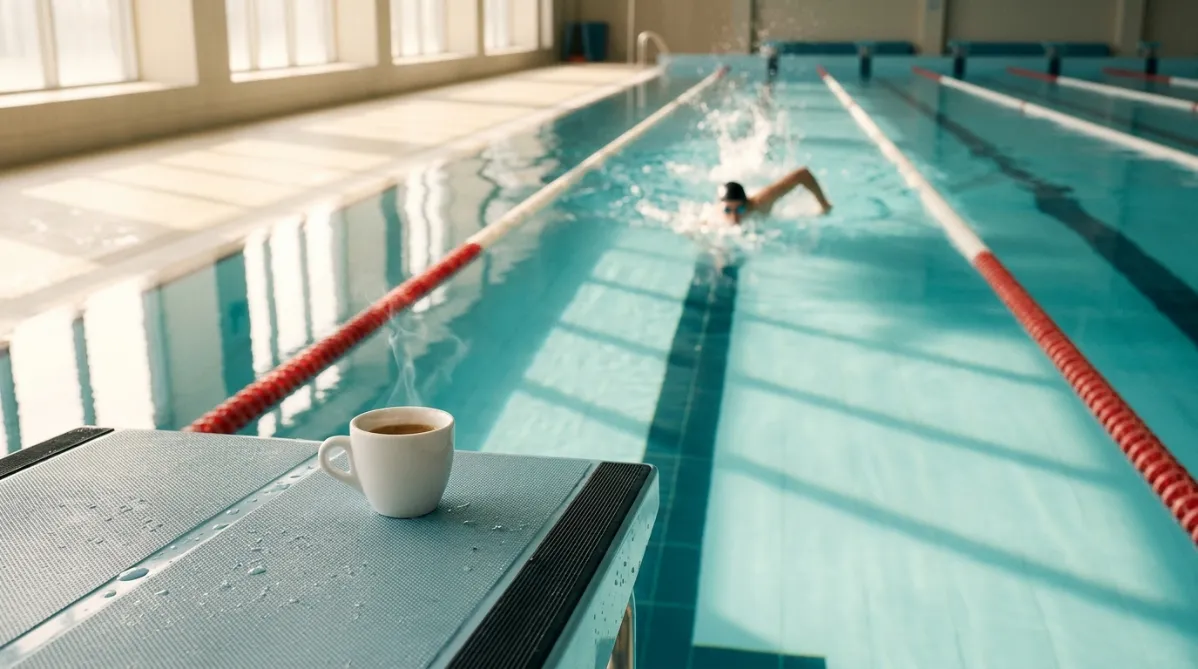
A wide, editorial-style photograph of a competition swimming pool lane seen from just above the water line at the starting end, in soft morning light. In the foreground, on the pool deck, a white ceramic espresso cup sits on the edge of a blue-gray starting block, a thin curl of steam rising from it. The cup is in crisp focus, with a few droplets of water on the textured non-slip deck around it. Behind it, the pool stretches into the distance as a series of calm lanes divided by red and white lane ropes. The turquoise water glints with gentle ripples and long, shimmering reflections. At the far end, a lone swimmer in a dark cap and goggles is mid-stroke, caught in a small burst of white splash, and slightly out of focus because of the shallow depth of field.

Large windows along the side wall let in pale golden sunlight, which throws soft diagonal light across the water and the deck. The palette is clean and modern: aqua, deep teal, warm cream and a small accent of coffee brown. The cup's warm tones stand out against the cool blues. The composition follows the rule of thirds, with the cup in the lower left third and open negative space of water and light on the right, leaving room for headline text. The look is minimal, airy and contemporary, like a high-end sports and science magazine, with subtle film grain, natural color grading, and a slightly desaturated, calm mood. Faint stopwatch-like details appear only as a thin black timing pad edge on the starting block, with no text or numbers visible. The overall feel is quiet anticipation just before a race, precise and fresh, with a sense of small margins and measured performance.
nutrition

La caffeina rende i nuotatori più veloci, ma di meno di quanto pensi

BY DR. GYMBRO ·

I nuotatori hanno sorseggiato caffè prima delle gare per anni, ma la ricerca dimostra davvero un miglioramento? Una nuova meta‑analisi multilivello su 13 studi crossover indica un guadagno di circa 1,7 %, un margine significativo in uno sport deciso al centesimo di secondo. Il beneficio più evidente appare a dosi di 6 mg/kg o più, mentre dosi più basse non mostrano un effetto convincente. La caffeina aumenta anche il lattato ematico post‑gara, e i risultati variano molto tra gli studi. Ecco cosa conferma l’evidenza e quali domande restano aperte.
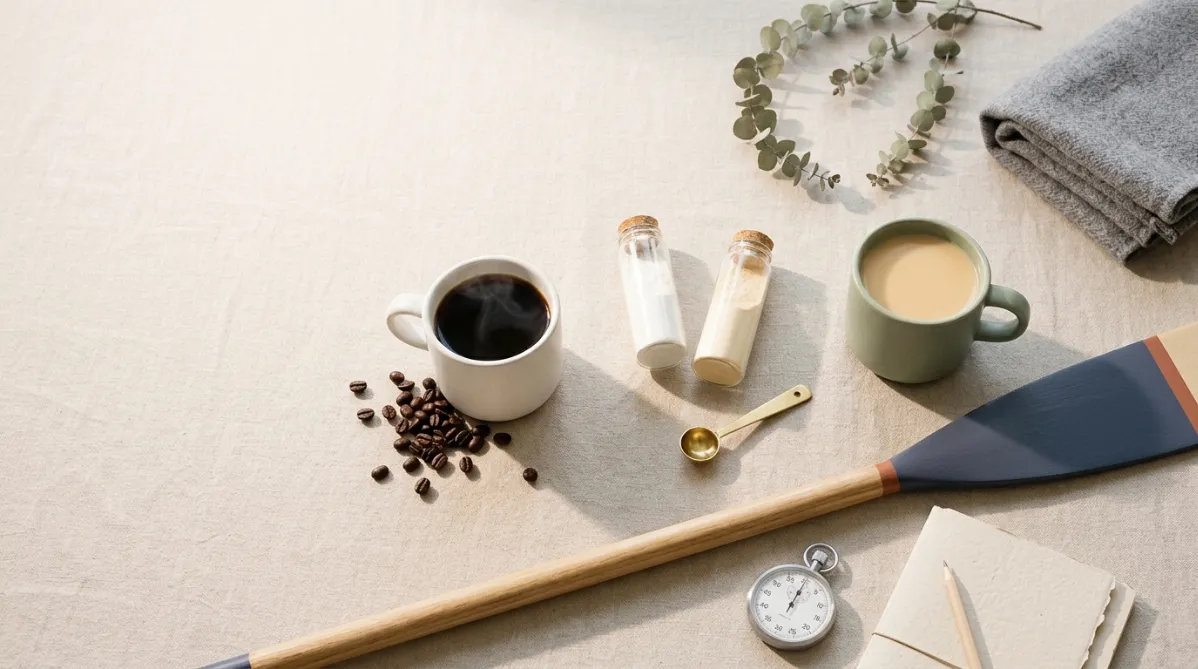
A wide, editorial-style flat lay photographed from above on a pale oat-colored linen surface in soft morning window light. On the left, a small matte white ceramic cup of black coffee with a delicate swirl of steam, beside a few scattered roasted coffee beans. On the right, a second matte sage-green ceramic cup holding a pale, creamy golden tea-like drink, mirroring the first. Between them, two small glass vials with cork stoppers sit side by side: one holding fine white powder, the other holding slightly warmer cream-colored powder, with a tiny brass measuring spoon resting nearby. In the lower foreground, a slim wooden rowing oar lies diagonally across the frame, its blade edge softly entering from the right, painted a muted navy with a thin terracotta stripe. A minimalist analog stopwatch with a brushed-steel case rests near the oar, and a folded cream notebook with a thin pencil suggests data-taking. In the upper corner, a crescent-shaped dried eucalyptus sprig and a small folded gray wool throw hint at sleep and calm without being literal. The palette is warm and restrained: oat, cream, sage, soft navy, terracotta, and espresso brown. Shadows are long and gentle, with shallow depth of field and subtle film grain, giving a refined, modern wellness-magazine feel. Generous negative space on the left third of the composition leaves room for a headline overlay. Clean, calm, tactile, and contemporary, with no text, logos, or futuristic elements.
science research

Paraxanthina vs caffeina: la combinazione vincente e il salvavita per il sonno

BY DR. GYMBRO ·

Uno studio su 14 vogatori ha confrontato paraxanthina e caffeina (200 mg ciascuna). La combinazione ha superato il placebo su una prova di 2000 m, ma l’effetto è stato piccolo (d = 0,30). Né la caffeina né la paraxanthina da sole hanno migliorato significativamente le performance, mentre la paraxanthina ha mostrato un impatto meno negativo sul sonno soggettivo. Ecco i dati, i limiti e a chi potrebbe interessare.
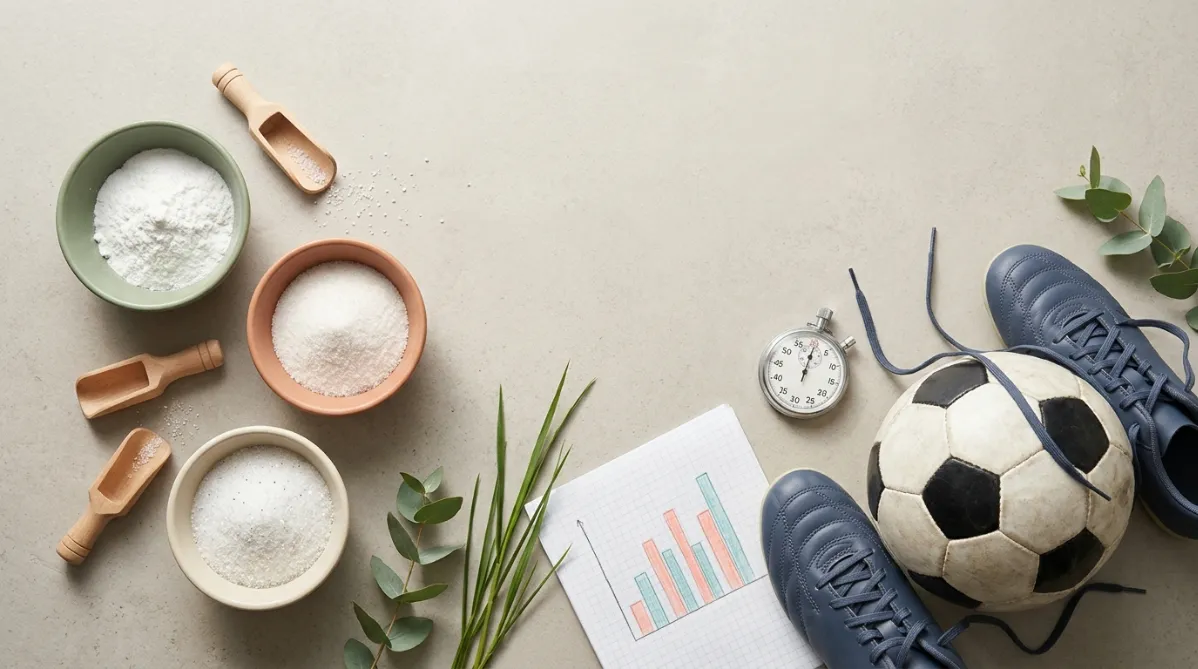
A wide, editorial-style flat lay photographed from above on a pale warm-gray concrete surface, lit by soft natural window light with gentle shadows. On the left, three small matte ceramic bowls in sage green, soft terracotta, and cream, each holding a different white crystalline powder. The textures vary subtly: fine and powdery, slightly granular, and glittery with tiny crystalline flecks. Beside them rest three minimalist wooden scoops, a few scattered grains catching the light. In the center-right, a worn classic black-and-white soccer ball sits slightly off-frame, partially cropped by the edge, with a pair of muted navy cleats resting nearby, laces loosely draped. A small stopwatch with a brushed-steel finish and a folded sheet of graph paper with a hand-drawn bar chart in soft coral and teal pencil add a subtle sense of data and measurement. A few blades of fresh-cut grass and a sprig of eucalyptus add organic accents. The palette is calm and modern: warm neutrals, sage, terracotta, and muted navy, with one pop of coral. The composition leaves generous negative space in the upper right for headline text. The mood is clean, curious, and trustworthy, like a contemporary health and science journal. Shallow depth of field, crisp focus on the powders, with the soccer elements slightly softer. High-end editorial photography, 16:9 landscape.
science research

Creatina HCl batte il monoidrato nei calciatori — Non buttarla ancora

BY DR. GYMBRO ·

Un nuovo studio randomizzato su 40 calciatori ha dimostrato che la creatina HCl e l’ethyl‑ester hanno superato la classica monoidrato in salto, sprint, agilità e potenza di picco dopo sole quattro settimane. Tutte le forme di creatina hanno superato il placebo, ma le versioni “di moda” hanno mostrato vantaggi maggiori nelle misure esplosive. Tuttavia, il campione è piccolo (10 atleti per gruppo), le dosi non sono state riportate nell’abstract e i risultati contrastano ricerche precedenti. Ecco cosa ha mostrato lo studio, cosa non ha dimostrato e come interpretarlo.
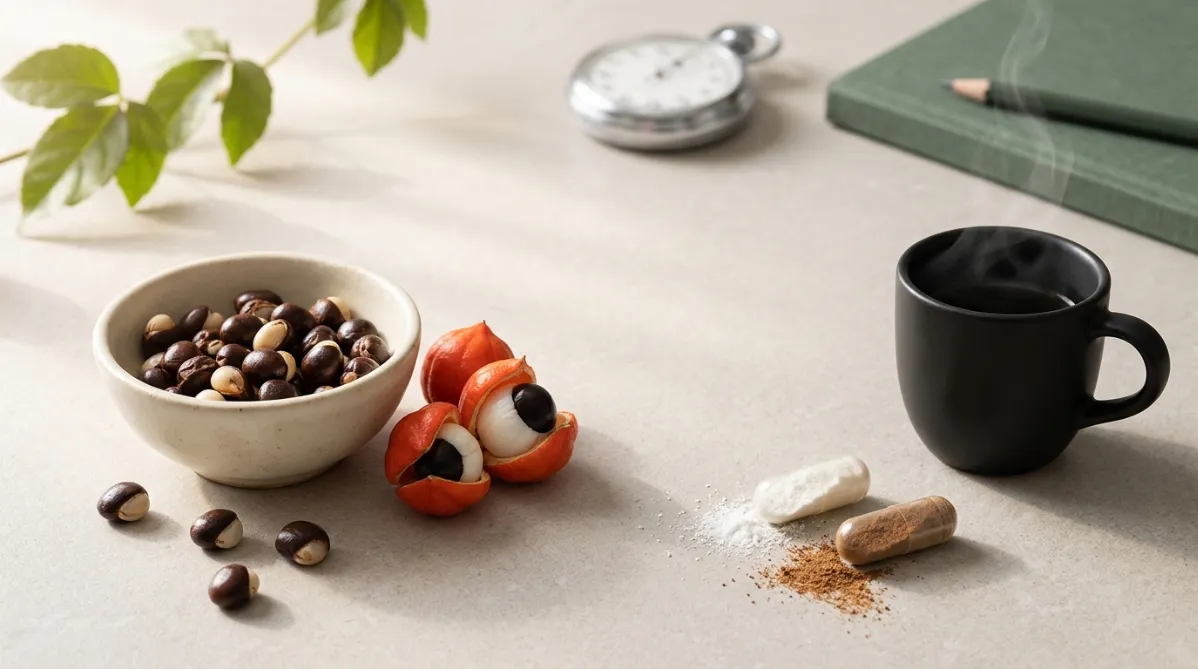
A wide, softly lit editorial flat-lay on a pale warm-gray stone countertop, shot from slightly above. On the left, a small rustic ceramic bowl in matte cream holds a handful of dried guarana seeds, dark glossy brown with pale cream arils, a few spilling onto the surface. Beside it sits a halved fresh guarana fruit in vivid red-orange, split open to show the white flesh and black seed inside, looking like a tiny eye. On the right, two open clear capsules rest side by side. One is filled with fine white caffeine powder, the other with a fine earthy brown guarana powder, and a little of each dusts the stone in delicate, deliberate lines. Between them, a minimalist matte-black espresso cup with a thin ribbon of steam rises on the right edge of the frame. A brushed-steel stopwatch and a slim dark-green linen notebook with a pencil sit in the upper background, slightly out of focus, to hint at performance testing without clutter. A few green leaves of a guarana vine curve in from the top-left corner, catching soft light.

The lighting is natural window light from the left, with gentle long shadows and a subtle warm highlight on the seeds. The palette is muted and modern: warm creams, terracotta red, deep espresso brown, sage green, and charcoal accents. The background is clean with generous negative space on the upper right for headline text. Shallow depth of field, crisp focus on the seeds and capsules, fine grain, and a calm premium magazine look like a contemporary wellness and sports-science journal. No people, no text, no logos, no futuristic elements.
science research

Guarana vs caffeina: stessa dose, solo il guarana aumenta la potenza di picco

BY DR. GYMBRO ·

In uno studio crossover randomizzato su 18 uomini attivi, una dose equivalente a 5 mg/kg di caffeina ha fatto emergere un incremento significativo della potenza di picco solo per il guarana, mentre la caffeina anidra non ha raggiunto la significatività. Il guarana non ha però superato la caffeina in modo statistico; le differenze tra i due integratori sono rimaste marginali. Ecco i risultati, i limiti dello studio e i consigli pratici per dosare il guarana in base al contenuto di caffeina.
A wide, editorial-style photograph of a professional track cyclist mid-stride on a velodrome's sloping wooden boards, captured from a low side angle with a shallow depth of field. The cyclist is in a sleek matte charcoal and soft coral skinsuit with an aerodynamic helmet, slightly motion-blurred, while the wood grain of the track glows in warm honey tones. Soft morning light streams through high arena windows, creating long, gentle beams and a subtle haze.

In the foreground, slightly out of focus, a minimalist still-life is arranged on a pale oak surface: a small amber glass supplement bottle with a clean cream label, two golden-orange softgel capsules resting beside it, and a ceramic cup of water. A small sprig of green leaves and a halved avocado add a fresh, natural touch, hinting at taking the supplement with fat. The composition places the still-life in the lower left third, with the cyclist blurring into the background on the right, creating a layered sense of depth.

The color palette is warm and refined: creamy off-white, honey wood, muted coral, soft amber, and touches of sage green. A thin, elegant overlay of subtle graph-like lines, such as two delicate rising curves in white, one slightly higher than the other, floats faintly over the upper right negative space, suggesting the small performance gap without any text or numbers. The overall look is clean, modern, and magazine-quality, like a wellness and sports science journal feature, with natural film-like grain, soft contrast, and generous negative space at the top for headline placement. Landscape 16:9 composition, calm and sophisticated mood, no text, no logos.
nutrition

Gli aspiranti olimpici hanno assunto 300 mg di ubiquinolo: il vantaggio del 2,5 %

BY DR. GYMBRO ·

In uno studio in doppio cieco su 100 atleti in preparazione per le Olimpiadi di Londra 2012, tutti hanno migliorato le prestazioni in bici, ma il gruppo che ha assunto 300 mg di ubiquinolo ha registrato un incremento superiore: +11 % contro +8,5 % con il placebo. Questi 2,5 % di vantaggio sono risultati statisticamente significativi, ma lo studio presenta alcune limitazioni, tra cui l’allenamento non controllato e legami con l’industria.
A cyclist's legs mid-pedal on a stationary road bike, shot in a bright, airy, minimalist studio with a soft warm-grey backdrop. In the foreground on a pale oak table sits a small ceramic dish holding four deep coral-red softgel capsules, with a few translucent droplets of red-orange oil glistening beside them. Beside the dish is a sprig of dried red microalgae-toned seaweed and a halved wild salmon fillet, its coral flesh echoing the capsule color. Behind the table, slightly out of focus, a cyclist in a fitted charcoal jersey and matte black shorts rides a bike on an indoor trainer. Only the torso and legs are visible, with no face. A white towel hangs over the handlebars and a clear water bottle catches the light.

Soft diffused morning light streams from a large window on the left, creating long gentle shadows and a subtle golden-hour glow on the skin and the glossy capsules. The palette is restrained and editorial: warm cream, sand, soft grey and charcoal, with vivid coral-red as the single accent color. A minimalist analog stopwatch with a clean white face sits on the table, its hands near the 85-minute mark. A thin, elegant line-graph shape is subtly suggested by a curved strip of red ribbon lying on the table, rising from left to right to hint at the performance gain without any text.

The composition follows the rule of thirds, with the capsules and stopwatch in the lower left and the cyclist's motion-blurred legs sweeping across the right. Shallow depth of field, crisp macro detail on the capsules, and a fine film-like grain. The overall feel is a modern health and science magazine cover: clean, calm, sophisticated, and natural, with negative space in the upper area for a headline. There are no futuristic elements, no glowing effects, no laboratory equipment, and no text or logos. Landscape 16:9 format.
nutrition

Astaxantina per 4 giorni aumenta il tempo di esaurimento in bicicletta da 72 a 85 minuti in un piccolo studio

BY DR. GYMBRO ·

Quattro giorni di integrazione con astaxantina a 28 mg al giorno hanno prolungato il tempo di esaurimento su bici da circa 72 a 85 minuti in un piccolo studio randomizzato, corrispondente a un guadagno del 18 %. Lo stesso protocollo ha attenuato l’aumento dei marcatori di danno muscolare (CK e LDH) e della perossidazione lipidica (MDA) dopo una pedalata intensa al 75 % di VO₂max. I marcatori infiammatori e il consumo di carburante non sono cambiati, quindi il meccanismo resta incerto. La dose è molto superiore a quella contenuta nella maggior parte delle softgel, e lo studio ha coinvolto solo dieci giovani uomini. Ecco cosa mostrano i numeri e dove si fermano le evidenze.
A wide, minimalist editorial scene of an athlete's hands and forearms gripping the handles of a rowing ergometer, shot in soft natural light from a large window in a clean, airy training studio. The athlete is mid-pull, forearm muscles subtly defined, a light sheen of sweat on the skin, chalk dust floating in the air. In the foreground on a pale oak bench sits a small ceramic scoop of fine white powder beside a matte glass of water, with a few loose white capsules arranged neatly in a gentle curve. A minimalist analog stopwatch with a clean white face lies next to them, its hand paused near the two-minute mark.

The color palette is calm and modern: warm off-white, soft sand, muted sage green, and a single accent of coral orange in the stopwatch hand and the rower's wristband. The background is softly blurred concrete and pale wood with long, gentle shadows stretching across the floor. Shallow depth of field keeps the hands, powder, and stopwatch crisp while the rest dissolves into creamy bokeh.

Composition follows the rule of thirds: the rowing handles and hands occupy the right third, the bench still life sits in the lower left, and open negative space in the upper left leaves room for a title overlay. The mood is focused, quiet, and intentional, like a high-end health and science journal feature. Fine film grain, subtle matte finish, editorial photography style, natural color grading, and no text or logos.
nutrition

Beta‑alanina Funziona? Una Meta‑analisi Conferma i Benefici per Sforzi di 60–240 secondi

BY DR. GYMBRO ·

La beta‑alanina è stata a lungo pubblicizzata per contrastare il bruciore dell’esercizio intenso, ma funziona davvero? Una meta‑analisi che ha raccolto 15 studi e 360 soggetti evidenzia un beneficio reale, seppur modesto, con un guadagno medio del 2,85 %. L’effetto è più marcato per sforzi durati tra 60 e 240 secondi, diminuisce oltre i quattro minuti e non si osserva negli sprint più brevi. L’articolo spiega inoltre il regime di caricamento più comune (3,2–6,4 g al giorno per almeno quattro settimane), come frazionare le dosi per limitare il formicolio e quali sportivi possono trarne il maggior vantaggio.

This page is available in