Dr. Gymbro
←

#nitric oxide

5 articles
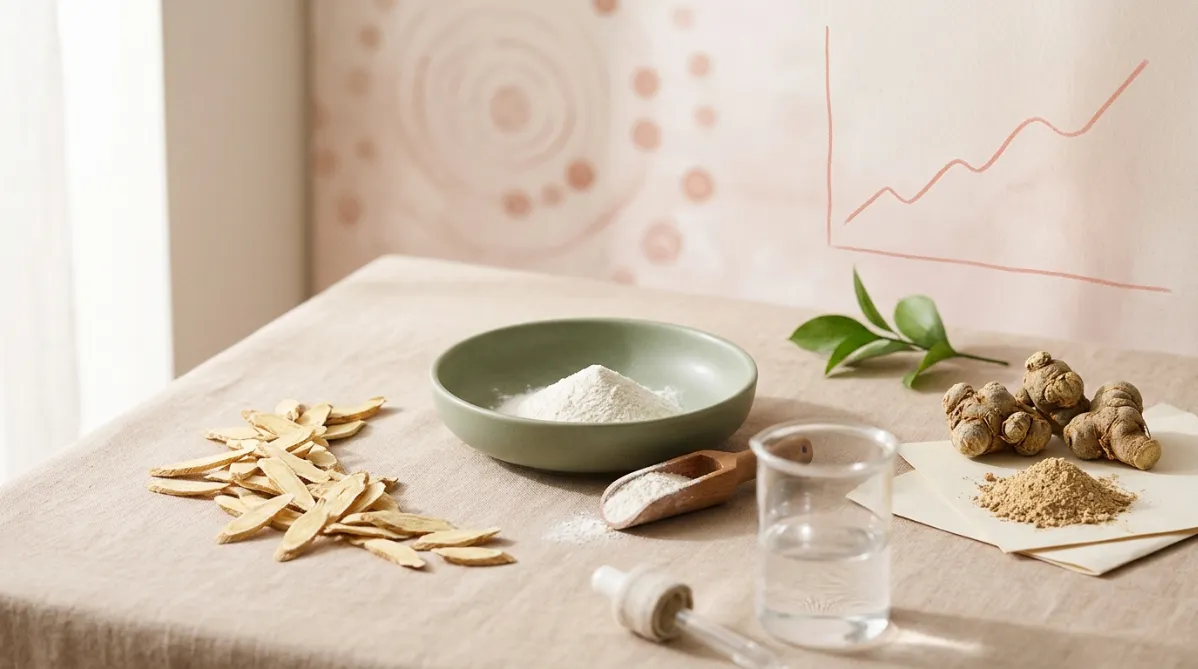
A landscape editorial still life on a soft, warm oat-colored linen surface, lit by diffused natural window light from the left. In the center sits a shallow matte ceramic bowl in muted sage green holding a small mound of fine white arginine powder. Beside it rests a wooden scoop dusted with powder. To the left, a loose arrangement of dried Astragalus root slices, pale golden and delicate, fans out in a graceful curve. To the right, a few whole Panax notoginseng roots, knobbly and earthy brown, sit next to a small pile of finely ground tan powder on a folded cream paper. A single sprig of fresh green leaf adds a gentle accent in the background.

In the foreground, a minimalist glass beaker with clear water and a thin linen-wrapped glass dropper sit slightly out of focus. Behind the objects, a softly blurred backdrop in pale blush and sand tones carries a faint, abstract pattern of soft circular shapes, like ripples or molecular dots drawn in subtle terracotta ink. A thin hand-drawn line graph in dusty coral rises gently across the upper right of the background, as if sketched on textured paper, with no readable text.

The composition uses generous negative space on the upper left, which leaves room for a headline overlay. The palette is earthy and calm: sage, cream, terracotta, honey gold, and soft blush. The shallow depth of field gives creamy bokeh. Gentle shadows fall to the right. The overall feel is clean and contemporary, like a wellness and science journal cover, with subtle film grain, high-end editorial photography, and tactile natural textures.
nutrition

El suplemento que incrementó la absorción de arginina en un 17 % en un pequeño estudio

BY DR. GYMBRO ·

Un ensayo cruzado de 2023 mostró que combinar 5 g de arginina con una cápsula de saponinas de Astrágalo y Panax notoginseng (APS) incrementó la absorción de arginina en un 17,3 % y elevó la relación arginina/ADMA en un 167,1 %. Los marcadores urinarios de nitrato y cGMP también subieron. Sin embargo, solo 24 participantes fueron analizados después de descartar a seis por diferencias individuales pronunciadas, y nadie midió el rendimiento deportivo. Aquí vemos qué demuestran los datos, qué no y a quién le conviene ser cauteloso.
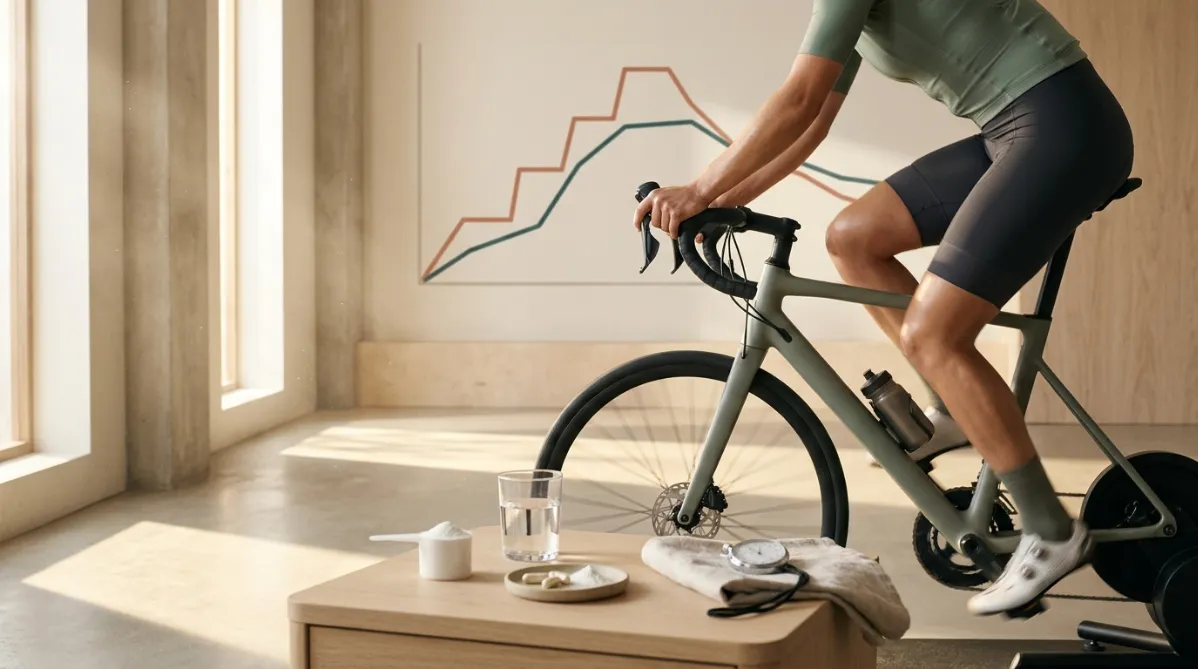
A wide, editorial-style photograph of a lone cyclist's legs and torso mid-sprint on a stationary indoor bike in a bright, minimalist performance studio. The scene is shot from a low three-quarter angle with shallow depth of field. The cyclist wears matte charcoal shorts and a fitted sage-green top, with a subtle sheen of sweat catching soft window light. Their hands grip the handlebars and the pedals are caught in a slight motion blur, which conveys explosive effort.

In the foreground, slightly out of focus on a pale oak side table, sit a small matte white scoop and a clear glass of water. Next to them is a little ceramic dish holding a few off-white capsules and a pinch of fine white powder. A folded linen towel and a slim stopwatch rest nearby. The stopwatch face is softly legible, hinting at timed sprint intervals.

The background is warm cream concrete and pale wood, with tall windows casting long diagonal shafts of golden morning light across the floor. Faint dust motes drift in the light. On the wall behind, a clean, abstract line graph is painted in muted terracotta and deep teal. It shows one line rising in steps like five sprint bouts and another line gently falling, a subtle visual nod to power up and lactate down. The graph is minimal and stylized, with no readable numbers or text.

The color palette is earthy and modern: sage green, terracotta, warm cream, soft charcoal, and touches of natural wood. The lighting is soft and directional with gentle highlights and natural shadows. The overall look is calm, refined, and contemporary, like a premium wellness and sports science magazine cover. The composition follows the rule of thirds, with the cyclist on the right and open negative space on the left for a headline. The image is crisp, grainy in a subtle film-like way, and free of any futuristic or sci-fi elements.
science research

Esta forma de carnitina aumentó la potencia de sprint hasta un 15 % y redujo el lactato

BY DR. GYMBRO ·

Un estudio cruzado de 2009 encontró que una dosis única de 4,5 g de glicina propionil‑L‑carnitina (GPLC) incrementó la potencia máxima y media en sprints entre un 2,6 % y un 15 % durante cinco series de ciclismo al máximo esfuerzo. Además, el lactato en sangre fue un 16,2 % más bajo 14 minutos después del ejercicio. Sin embargo, el “15 %” corresponde al extremo superior del rango, no a un promedio, y el estudio solo incluyó a 24 hombres en un único laboratorio. Este artículo explica cómo el GPLC difiere de la L‑carnitina tradicional y del ALCAR, dónde encaja la teoría del óxido nítrico y quién podría beneficiarse realmente. También se analizan la dosis, el momento de la ingesta y las limitaciones de la evidencia.
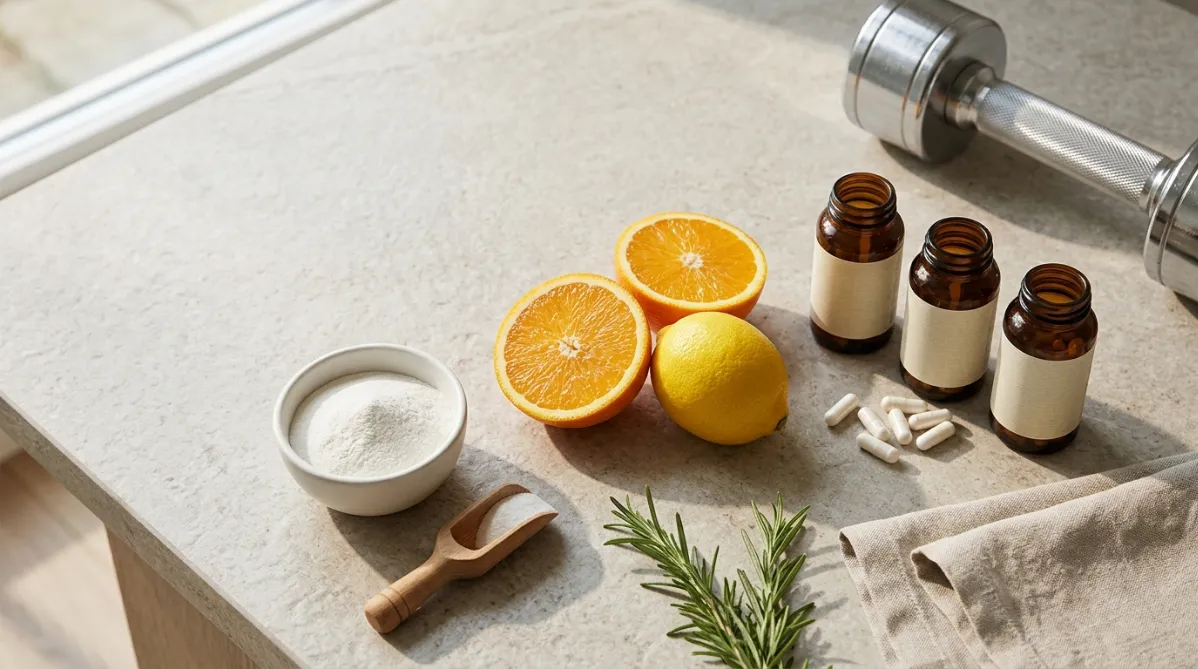
A wide, editorial-style flat lay photographed from above on a pale warm-gray stone countertop in soft morning window light. On the left, a small matte white ceramic bowl holds fine white arginine powder, with a wooden scoop resting beside it. At the center, two halved oranges and one whole lemon in saturated citrus tones, with a few glossy droplets of water on the cut surfaces, to suggest vitamin C. On the right, three slim amber glass capsule bottles with minimal cream labels and no legible text stand in a loose row, with a few white capsules spilling out. A single chrome dumbbell handle enters the frame from the upper right corner, partly cropped, its cool metallic sheen contrasting with the warm fruit. A sprig of green rosemary and a folded linen napkin in oatmeal beige add texture. Long soft shadows fall to the left. The palette is warm cream, sunny orange, soft yellow, and muted sage, with a few crisp accents of steel gray. The composition is airy and uncluttered, with generous negative space in the upper left for a title overlay. It has a shallow depth of field, a crisp foreground, and a faintly blurred background. The look is clean, contemporary, and wellness-magazine, like a premium health and fitness journal cover, with natural grain, high-end product photography quality, and a calm, fresh, trustworthy mood.
science research

3 g de arginina + 500 mg de vitamina C: la testosterona sube un 26 % en los levantadores

BY DR. GYMBRO ·

Durante años la arginina ha sido tachada como un potenciador de óxido nítrico sobrevalorado, pero un nuevo ensayo aleatorizado le da la vuelta al combinarla con vitamina C. En 50 culturistas masculinos, 3 g de arginina (divididos en tres tomas) y 500 mg de vitamina C durante 45 días elevaron significativamente la testosterona y el VO₂máx frente al placebo, mientras la grasa corporal disminuyó. La hormona de crecimiento, el cortisol y el balance de nitrógeno no mostraron diferencias notables. Es una combinación económica que merece atención, aunque proviene de un único estudio pequeño y un mayor nivel de testosterona no garantiza más masa muscular.
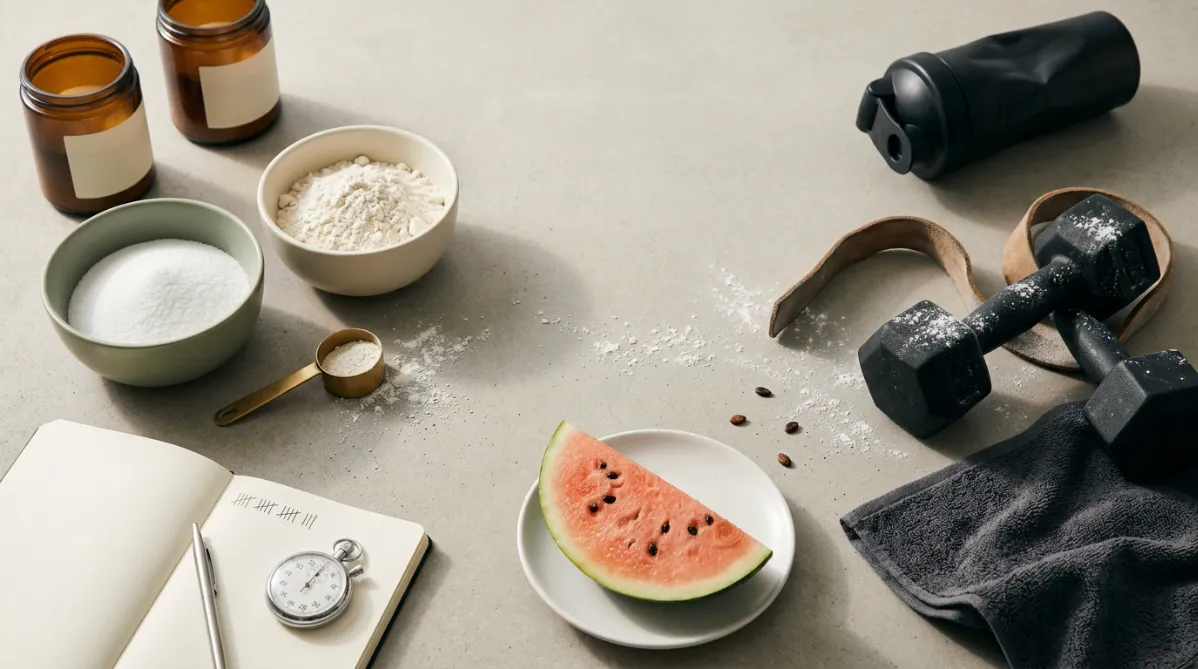
A wide, editorial-style flat lay photographed from above on a pale warm-gray concrete surface, lit by soft natural window light with gentle long shadows. On the left, two matte ceramic bowls in muted sage green and cream sit side by side. One holds fine white crystalline powder, the other holds slightly coarser off-white powder. Between them, a small brass measuring scoop rests on the surface, dusted with powder. Behind the bowls, two simple amber glass jars with minimal cream labels and no legible text stand slightly out of focus.

On the right side, a pair of chalk-dusted black hex dumbbells and a worn leather lifting strap curve across the frame. A folded charcoal gym towel sits beneath them. A rumpled matte-black shaker bottle lies on its side near the top edge. A slice of watermelon, the natural source of citrulline, sits on a small white ceramic plate in the lower center. Its vivid coral-pink flesh and dark seeds add a saturated pop of color against the neutral palette. A few loose watermelon seeds and a scattering of white powder dust trail across the surface toward the dumbbells, tying the composition together.

In the lower left corner, an open notebook with blank cream pages holds a slim silver pen and a minimalist analog stopwatch. A thin line of hand-drawn tally marks suggests counted reps, with no readable words or numbers.

The palette is restrained and contemporary: warm grays, sage, cream, charcoal, and amber, with the watermelon's coral-pink as the single bright accent. The mood is calm, clean, and precise, like a modern wellness or science-journal feature. Shallow depth of field keeps the powder bowls and watermelon crisp while the background items soften slightly. Generous negative space across the upper center leaves room for a headline overlay. The photograph looks high-end and tactile, with a subtle film-grain finish.
nutrition

L‑citrulina vs citrulina malato: el giro de la resistencia de la parte superior

BY DR. GYMBRO ·

Todos discuten si conviene más la L‑citrulina pura o la citrulina malato, pero un estudio de seis semanas reveló algo más interesante. Ambas formas superaron al placebo en repeticiones hasta el fallo de la parte superior del cuerpo y aumentaron los metabolitos de óxido nítrico. Sin embargo, ninguna mejoró la fuerza máxima (1RM) y los resultados en piernas fueron solo una tendencia. Con sólo 33 hombres entrenados, este hallazgo es una señal prometedora, no una conclusión definitiva. Veamos qué implican las dosis, el momento de toma y los detalles para tu entrenamiento.
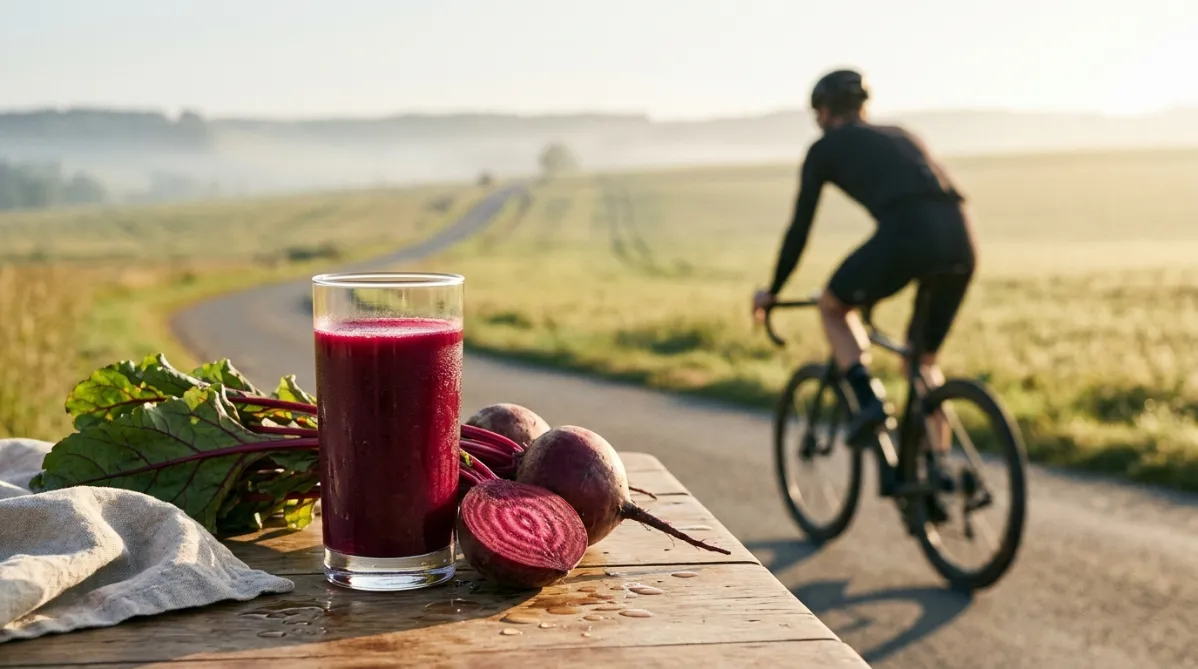
A cyclist in a fitted matte-black kit, shot from a low three-quarter angle, rides a sunlit country road at early morning, slightly out of focus with soft motion blur on the wheels. In the foreground on the left sits a rustic wooden table with a tall glass of deep magenta beetroot juice. Condensation beads on the glass, and the light catches its vivid jewel-toned color. Beside it lie two whole beetroots with their leafy red-veined greens still attached, and one halved beet shows concentric crimson-and-pink rings. A small linen napkin and a scatter of water droplets add an editorial still-life feel.

The background is a gently rolling landscape with golden-green fields and a thin ribbon of asphalt curving toward the horizon. Pale mist hangs low and warm sunlight comes from the right, creating long soft shadows and a golden rim light on the glass and the cyclist's silhouette. The shallow depth of field keeps the juice and beets crisp while the rider stays a dreamy blurred suggestion of speed.

The palette is rich magenta, burgundy, warm cream, sage green, and soft gold, with muted, slightly desaturated tones in the background so the beetroot color stands out. The composition follows the rule of thirds, with the still-life in the lower left third and open negative space in the upper right for the title. The overall look is a clean, modern lifestyle-magazine photograph with natural film-like grain, calm and athletic, and no text, logos, or futuristic elements.
nutrition

Jugo de remolacha antes de una prueba contrarreloj: cómo 0,5 L redujo los tiempos en recorridos de 4 km y 16,1 km en casi un 3 %

BY DR. GYMBRO ·

Un pequeño pero influyente ensayo cruzado de 2011 investigó si una sola ingesta de jugo de remolacha podía acelerar las pruebas contrarreloj reales. Nueve ciclistas competitivos masculinos bebieron 0,5 L de jugo rico en nitrato (≈ 6,2 mmol) unas 2,5 h antes de la carrera. El nitrito plasmático se duplicó, la potencia media aumentó y los tiempos de 4 km y 16,1 km mejoraron en 2,8 % y 2,7 % respectivamente. Lo crucial es que el consumo de oxígeno se mantuvo igual, lo que sugiere una mejora de la economía ciclista más que un aumento de la capacidad aeróbica.

This page is available in