Dr. Gymbro
←

#research

8 articles
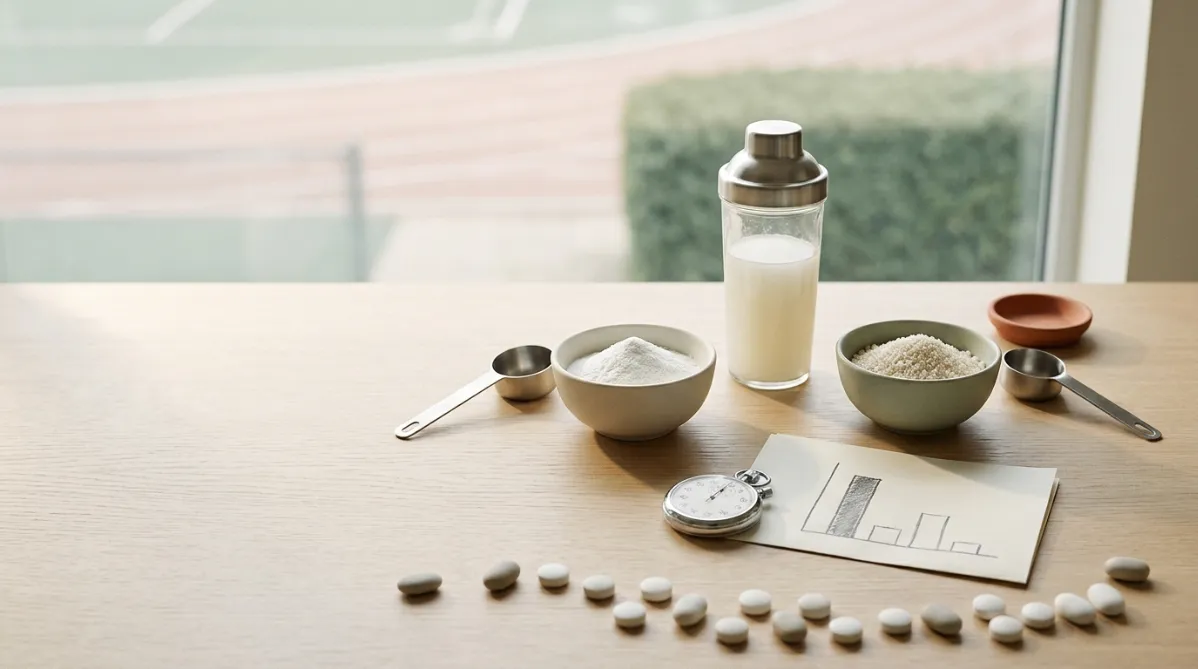
A wide, editorial-style still life shot from a slightly elevated angle on a pale oak laboratory-meets-kitchen countertop, bathed in soft, diffused morning window light. In the center, two small matte ceramic bowls sit side by side: one holds fine white creatine powder, the other holds slightly coarser off-white L-arginine crystals. A brushed steel scoop rests beside each. Between and slightly behind them stands a clear glass shaker bottle filled with a cloudy, pale liquid, catching a gentle highlight. In the foreground, a minimalist analog stopwatch lies on the wood surface, its face crisp and legible, next to a folded sheet of off-white paper with a hand-drawn simple bar chart in charcoal pencil, with one tall bar and a few shorter ones, no text or numbers. In the soft-focus background, a blurred gym-style window view shows a pale running track and a muted sage-green hedge, suggesting sprinting and athletic testing without any people. Eighteen small smooth stones or white pills are arranged in a neat loose arc across the lower edge of the frame, a subtle nod to the small sample size, with one stone set slightly apart. The color palette is calm and modern: warm cream, bone white, soft sage, muted terracotta accents from a small clay dish, and thin touches of brushed metal. Shadows are long and gentle, the depth of field shallow, with a fine film-like grain. The composition leaves generous negative space on the left third for a title overlay. The mood is clean, thoughtful, and trustworthy, like a contemporary health and science journal cover, with no futuristic elements, no glowing effects, and no text.
nutrition

Creatina + L‑arginina aumenta ~99 W de potencia máxima: el truco

BY DR. GYMBRO ·

Un ensayo cruzado reciente mostró que, al tomar creatina y L‑arginina juntas una hora antes de la prueba, la potencia máxima del sprint aumentó en unos 99 W respecto al placebo. La combinación también superó a cada suplemento por separado tanto en potencia máxima como en altura del salto con contramovimiento. Sin embargo, los autores no hallaron sinergia real y el estudio incluyó solo a 18 hombres. Aquí analizamos los datos, las dosis empleadas y quién debería ser cauteloso.
A bright, editorial flat-lay photograph shot from slightly above on a pale oat-colored linen surface in soft natural window light. At the center, a small white ceramic cup of black coffee sits on a matte saucer, with a delicate curl of steam. To its left, a shallow wooden bowl holds glossy red coffee cherries, the fruit of the coffee plant, with a few scattered on the linen and one sliced open to show the pale seed inside. To the right, three identical small amber glass vials with minimalist cream labels stand in a row, and a few loose beige capsules and a small pile of fine tan powder rest on a speckled stone dish beside them. A few roasted coffee beans are scattered casually across the composition. A thin sprig of green coffee leaves with waxy, dark foliage arcs in from the top edge. A brass measuring spoon and a folded cream notepad with a pencil sit near the lower right, hinting at a lab-style comparison without any clinical equipment. The palette is warm and restrained: terracotta red, cream, espresso brown, soft sage green, and touches of amber and brushed brass. Shadows are gentle and diffuse, with shallow depth of field that softens the background edges. The composition leaves generous negative space on the left third for title text, and the whole scene feels calm, modern, and curated, like a lifestyle and wellness magazine cover. Fine film-like grain, true-to-life color, and crisp textures in the linen weave, the glossy cherry skins, and the glass vials. No text, no logos, no people, wide 16:9 landscape framing.
science research

Extracto de fruta de café fracasa frente a 75 mg de cafeína en un nuevo ensayo

BY DR. GYMBRO ·

El extracto de fruta de café se promociona como un impulso energético más inteligente y suave, pero un ensayo cruzado doble ciego lo comparó con cafeína pura y encontró una diferencia sorprendente. En 28 adultos, ni 100 mg ni 300 mg de extracto de coffeeberry mejoraron la alerta, la energía mental, la fatiga mental ni el rendimiento en ciclismo. En cambio, una dosis moderada de 75 mg de cafeína sí aumentó la alerta y la energía mental, aunque de forma breve. Se trata de un estudio agudo de dosis única, por lo que no constituye la palabra final. A continuación, lo que encontró el ensayo, lo que no puede decirnos y cómo leer las etiquetas de los suplementos.
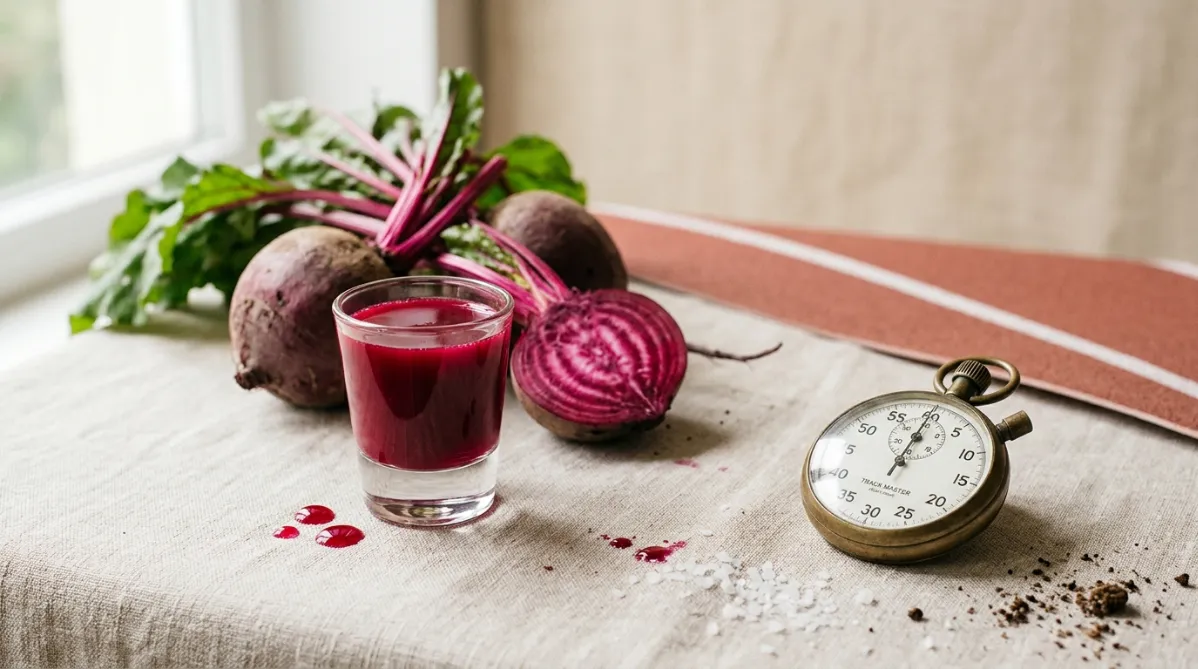
A wide editorial still life on a clean, pale oatmeal-colored linen surface, lit by soft natural window light from the left. In the center-left, a small clear glass shot glass filled with deep magenta-crimson beetroot juice catches a glowing highlight, with a few droplets beaded on the surface beside it. Behind it sit two whole beetroots with their leafy stems, the skins a dusty burgundy and the stems a vivid pink-red, and one beetroot sliced in half to reveal concentric rings of magenta and soft pink. To the right, a vintage-style brass stopwatch rests at an angle on the linen, its white face crisp and its hands frozen, slightly out of focus in the foreground edge. A faint curve of a sprinting track lane, in muted terracotta with thin white lines, sweeps diagonally across the blurred background, hinting at a running track without showing any people. Scattered across the surface are a few small, delicate beet-colored splashes and a light dusting of coarse sea salt. The palette is restrained and modern: warm cream, terracotta, dusty rose, deep magenta, and touches of sage green from the leaves. Shallow depth of field and a gentle film-like grain give it a contemporary lifestyle-magazine feel. The composition leaves generous negative space on the upper right for title overlay. Minimalist, tactile, calm, and sophisticated, in the style of a high-end health and science journal's editorial photography, 16:9 landscape.
nutrition

El jugo de remolacha elevó el nitrito 35 veces, pero los velocistas no fueron más rápidos

BY DR. GYMBRO ·

Un estudio con 12 velocistas entrenados mostró que 70 mL de jugo de remolacha aumentaron el nitrito salival unas 35 veces, pero no mejoraron ni el sprint de 60 m ni el de 100 m, ni la altura del salto ni la mayoría de los parámetros musculares. Aquí analizamos qué se hizo, qué no se pudo demostrar y a quién conviene (o no) invertir en este suplemento.
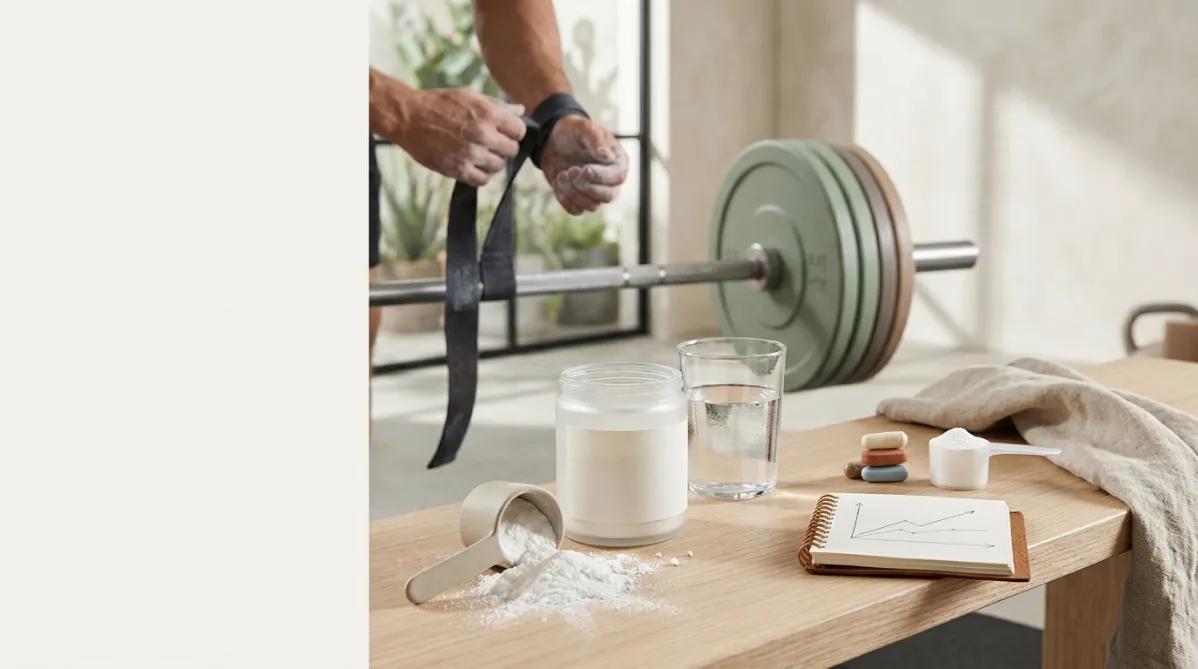
A wide, editorial-style still life photographed in soft natural window light, set on a pale oak gym bench or light wooden table. In the foreground, a matte ceramic scoop rests in a small mound of fine white creatine powder, with a few loose grains scattered across the surface. Next to it sits a minimalist frosted glass jar with a plain unbranded label. Beside the jar is a clear glass of water with delicate condensation. A pair of worn chalk-dusted hands is out of focus in the background, wrapping a lifting strap around a barbell. The barbell is a brushed steel bar with a few muted sage-green and warm gray bumper plates.

On the right side of the frame, a small stack of three different supplement capsules and tablets in neutral cream, terracotta, and soft blue sits next to a single clean white scoop of powder. This subtly contrasts the "stack" with the "plain" option. A folded linen towel in oatmeal beige drapes over the end of the bench. A small leather-bound notebook lies open, with a simple hand-drawn line graph showing two lines, one rising steadily and one flat, in pencil.

The background is softly blurred and shows a bright, airy, modern home gym with large windows, pale plaster walls, and a few green plants. Warm morning sunlight casts long, gentle shadows diagonally across the scene. The color palette is muted and sophisticated: cream, warm white, sage green, soft terracotta, and charcoal accents. Shallow depth of field with a crisp focus on the powder and scoop. Generous negative space on the left third for headline overlay. The mood is calm, thoughtful, and trustworthy, like a high-end health and science magazine cover, with subtle film grain and natural textures. No text, no logos, no futuristic elements.
nutrition

Una pila de creatina aumentó la masa muscular en principiantes, pero no la fuerza. ¿Por qué?

BY DR. GYMBRO ·

Un nuevo ensayo aleatorizado administró a levantadores novatos una mezcla de suplementos basada en creatina durante cuatro semanas y observó mayor masa muscular, un patrón testosterona/cortisol más favorable y mejor recuperación. Sin embargo, la fuerza máxima en prensa de piernas no superó al placebo. Las posibles causas incluyen ganancias neurales típicas de principiantes, la corta duración del estudio y la retención temprana de agua, aunque el artículo no puede determinar cuál es la responsable. Los marcadores renales se mantuvieron normales, pero el estudio fue pequeño, solo con hombres, financiado por la industria y no describió la fórmula completa. Para los recién iniciados, la opción más segura basada en evidencia sigue siendo la creatina monohidratada pura.
A wide, softly lit bedroom scene at dusk, styled like a modern editorial photograph. In the foreground, a rumpled bed with textured oatmeal linen sheets and a single dented pillow sits beside a light oak nightstand. On the nightstand is a tall glass of creamy, milky white protein shake, a small wooden scoop and a matte ceramic tub with no readable label, beside a minimalist analog alarm clock. The clock's hands show a late hour, and it casts a faint shadow on the wall. A pair of clean white running shoes rests on the floor by the bed. A folded gray athletic hoodie lies at the foot of the bed, suggesting an athlete's lifestyle.

Warm amber light from a bedside lamp mixes with cool blue-gray twilight from a tall window with sheer curtains. The glow lands on the glass and gives the milky surface a soft sheen. Through the window, a muted city skyline fades into evening haze.

The palette is calm and sophisticated: warm cream, soft sage green, dusty blue, and a touch of terracotta from a small ceramic vase holding dried pampas grass. The composition follows the rule of thirds, with the glass and clock in the right third and open negative space on the left for headline text. Shallow depth of field keeps the glass and clock crisp while the background blurs gently.

The mood is quiet, slightly restless, and thoughtful, hinting at a night that does not go as planned. A subtle detail, a half-drawn curtain letting in a thin stripe of light across the rumpled sheets, suggests interrupted sleep. The look is clean, contemporary, and magazine-quality, with fine film grain, natural tones, and soft shadows, like a lifestyle wellness journal cover. No people, no text, no futuristic elements.
recovery

La “proteína del sueño” que hizo que los que duermen mal se despertaran con mayor frecuencia

BY DR. GYMBRO ·

Alpha‑lactalbumina se comercializa como la “proteína del sueño” y estudios agudos anteriores sugerían que podría ayudar a los deportistas a dormir y rendir mejor. Un nuevo ensayo aleatorizado cruzado la puso a prueba en 24 atletas con verdaderos problemas de sueño. Tras una semana de 40 g tomados 2 horas antes de acostarse, no hubo mejora del sueño; los despertares aumentaron ligeramente (11,01 vs 10,25) y la altura del salto disminuyó (27,68 vs 28,58 cm). El único aspecto positivo fue la reducción del estado de ánimo negativo por la noche. Aquí se explica qué se evaluó, qué muestran los datos y a quién conviene evitarlo.
A sun-lit editorial still life on a pale oak gym bench: a loaded barbell rests on a rack just above it, chalk dust drifting in the air. In the foreground sits a small ceramic bowl of roasted beets, some sliced to show their deep magenta rings, with a few whole beets still wearing their leafy burgundy stems. Next to the bowl is a matte white supplement tub with a minimal label, a wooden scoop of fine white powder, and a clear glass of water catching soft highlights. A slim notebook lies open beside them with a simple hand-drawn bar graph and a pen, suggesting data and analysis without any readable text. Behind the bench, a softly blurred minimalist training space: raw concrete wall, tall window with warm morning light, a rack of black dumbbells fading into bokeh. The palette is earthy and modern: beet magenta, warm cream, charcoal, brushed steel, and touches of sage green from the beet leaves. Soft directional light from the left creates long gentle shadows and a slight film-grain texture. Shallow depth of field keeps the beets and powder tack sharp. The composition is wide and balanced, with negative space on the right for headline overlay. The overall feel is a clean, contemporary health and fitness journal photograph, warm and tactile, with an understated scientific tone.
nutrition

La betaina aumentó la potencia del bench throw ~16 % en 14 días

BY DR. GYMBRO ·

Dos semanas de betaina, un compuesto presente en la remolacha y comercializado como TMG, se asociaron a un aumento de aproximadamente un 16 % en la potencia del bench throw en el primer día de una serie de pruebas intensas en hombres entrenados en resistencia. Un ensayo cruzado, aleatorizado y doble ciego también mostró mayor fuerza isométrica en el press de banca, con mejoras menores en la potencia del salto vertical y la fuerza isométrica en sentadilla. Sin embargo, ni el número de repeticiones ni la potencia del salto en cuclillas cambiaron, y el estudio solo incluyó a 12 hombres. Aquí se presentan los datos, la dosis utilizada y qué deben y qué no deben interpretar los levantadores.
¿Creatina antes o después del entrenamiento? Un pequeño estudio da ventaja al post‑entreno
nutrition

¿Creatina antes o después del entrenamiento? Un pequeño estudio da ventaja al post‑entreno

BY DR. GYMBRO ·

¿Debes tomar creatina antes o después de entrenar? Un estudio de 2013 con 19 culturistas masculinos mostró que la ingesta post‑entrenamiento produjo ligeras mejoras en masa magra, masa grasa y press de banca, aunque la prueba estadística formal no reveló diferencias significativas entre los grupos. Los autores sólo infirieron que podría ser “posiblemente más beneficiosa”. Aquí analizamos los datos, la importancia del tamaño de muestra y cómo aplicar los hallazgos con una rutina sencilla de 5 g al día.
A landscape, editorial-style flat lay photographed from above on a pale oak gym bench or a matte light-gray concrete surface. On the left side, a clear glass of water sits next to a small matte white ceramic bowl of fine white creatine powder, with a wooden scoop resting beside it and a few loose grains scattered naturally on the surface. In the center, a modern analog wall-style clock face is replaced by a simple minimalist stopwatch in brushed steel, its hands paused, subtly suggesting timing without any text or numbers emphasized. On the right, a neatly folded charcoal gym towel and a single chalk-dusted dumbbell handle enter the frame at the edge, with a faint dusting of white chalk on the wood. A small linen notebook with a pencil rests slightly off-center, its pages blank, hinting at data and study without any readable writing.

The color palette is soft and restrained: warm cream, oatmeal, sage green, and muted slate, with one accent of terracotta orange in the pencil or a small ceramic dish. Light comes from a large window at the upper left, casting long, gentle diagonal shadows and a soft highlight across the glass of water, creating delicate caustic reflections on the surface. The depth of field is shallow, with the creatine bowl and scoop in crisp focus and the edges softly blurred. The composition leaves generous negative space on the upper right for a headline overlay. The overall feel is calm, clean, and contemporary, like a wellness and science journal's cover image, with natural textures, subtle film grain, and a refined, premium magazine look. No people, no logos, no text, and no futuristic elements.
nutrition

¿Creatina antes o después de entrenar? Un pequeño estudio favorece el consumo post‑entrenamiento

BY DR. GYMBRO ·

¿Deberías tomar creatina antes o después de entrenar con pesas? Un estudio de 2013 con 19 culturistas masculinos halló que la suplementación post‑entrenamiento mostraba ligeras ventajas en masa magra, grasa y press de banca. No obstante, el análisis estadístico formal no reveló diferencias significativas entre los grupos, y los autores se limitaron a una cautelosa inferencia de “posiblemente más beneficioso”. A continuación explicamos qué dicen realmente los datos, por qué el tamaño de la muestra es crucial y cómo aplicar los resultados con una rutina diaria sencilla de 5 g.

This page is available in