Dr. Gymbro
←

#resistance-training

2 articles
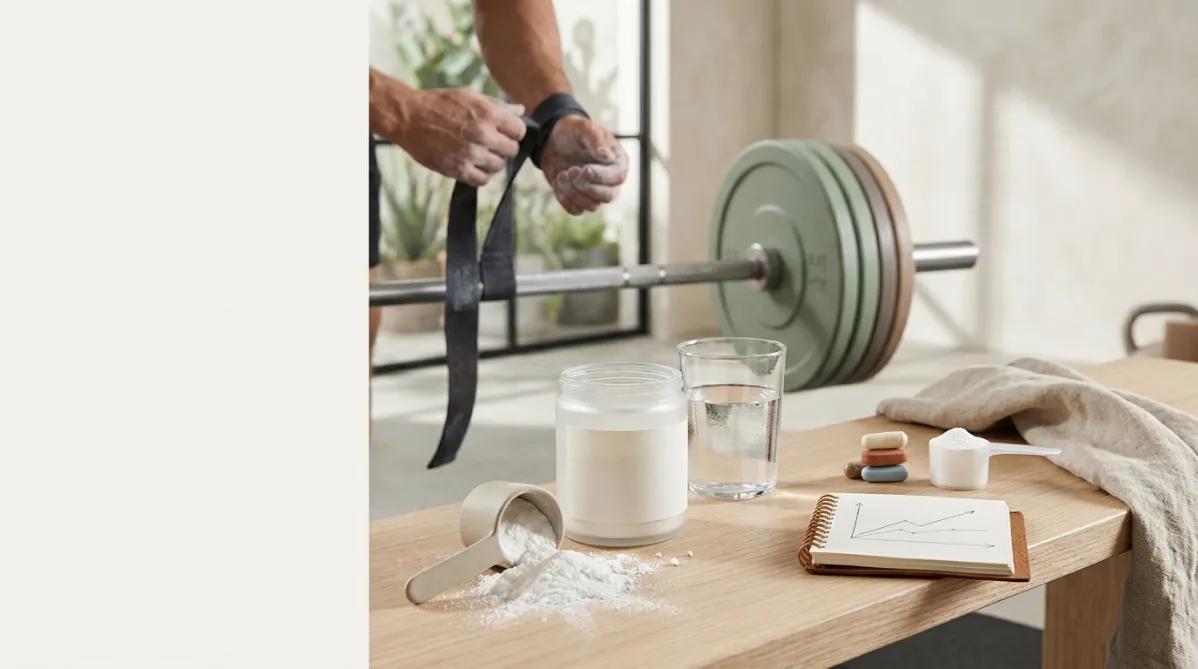
A wide, editorial-style still life photographed in soft natural window light, set on a pale oak gym bench or light wooden table. In the foreground, a matte ceramic scoop rests in a small mound of fine white creatine powder, with a few loose grains scattered across the surface. Next to it sits a minimalist frosted glass jar with a plain unbranded label. Beside the jar is a clear glass of water with delicate condensation. A pair of worn chalk-dusted hands is out of focus in the background, wrapping a lifting strap around a barbell. The barbell is a brushed steel bar with a few muted sage-green and warm gray bumper plates.

On the right side of the frame, a small stack of three different supplement capsules and tablets in neutral cream, terracotta, and soft blue sits next to a single clean white scoop of powder. This subtly contrasts the "stack" with the "plain" option. A folded linen towel in oatmeal beige drapes over the end of the bench. A small leather-bound notebook lies open, with a simple hand-drawn line graph showing two lines, one rising steadily and one flat, in pencil.

The background is softly blurred and shows a bright, airy, modern home gym with large windows, pale plaster walls, and a few green plants. Warm morning sunlight casts long, gentle shadows diagonally across the scene. The color palette is muted and sophisticated: cream, warm white, sage green, soft terracotta, and charcoal accents. Shallow depth of field with a crisp focus on the powder and scoop. Generous negative space on the left third for headline overlay. The mood is calm, thoughtful, and trustworthy, like a high-end health and science magazine cover, with subtle film grain and natural textures. No text, no logos, no futuristic elements.
nutrition

Un stack de créatine augmente la masse musculaire chez les débutants — mais pas la force. Pourquoi ?

BY DR. GYMBRO ·

Un essai randomisé a administré à des novices de musculation un mélange de suppléments à base de créatine pendant quatre semaines, révélant une prise de masse musculaire, un profil testostérone/cortisol plus favorable et une récupération améliorée. En revanche, le 1RM au leg‑press n’a guère progressé davantage que le placebo. Les explications évoquent les gains neuraux typiques des débutants, la courte durée de l’étude et une rétention d’eau précoce, bien que l’article ne puisse les confirmer. Les marqueurs rénaux sont restés normaux, mais l’étude était petite, uniquement masculine, financée par l’industrie et ne détaillait pas la formule complète. Pour les nouveaux haltérophiles, la solution la plus sûre et la mieux étayée reste la créatine monohydrate pure.
A sleek, modern gym interior with warm natural lighting streaming through large windows, featuring a minimalist weight training area with polished concrete floors and exposed brick walls. In the foreground, a single chrome barbell rests on a clean wooden bench, with perfectly organized dumbbells arranged on a contemporary rack in soft focus behind it. The scene captures a peaceful, contemplative moment with subtle shadows creating depth and visual interest. The color palette consists of warm grays, natural wood tones, and soft whites, with subtle amber lighting that creates an inviting, professional atmosphere perfect for serious training.
general

Les répétitions lentes développent‑plus de muscle ? Une méta‑analyse révolutionnaire révèle la vérité sur l’entraînement au tempo

BY DR. GYMBRO ·

Une méta‑analyse révolutionnaire a enfin mis un terme au débat sur le tempo des répétitions et la prise de muscle. En analysant des dizaines d’études réalisées auprès d’hommes adultes en bonne santé, les chercheurs ont évalué si les répétitions lentes favorisent réellement davantage d’hypertrophie que les mouvements plus rapides. Les résultats montrent que des tempos modérés (2‑4 s par répétition) combinés à un volume d’entraînement plus élevé donnent des gains supérieurs aux répétitions ultra‑lentes, remettant en cause les idées reçues du milieu du fitness. Cette découverte ouvre la voie à des programmes d’entraînement plus efficaces et fondés sur des données scientifiques.

This page is available in