Dr. Gymbro
←

#muscle function

1 article
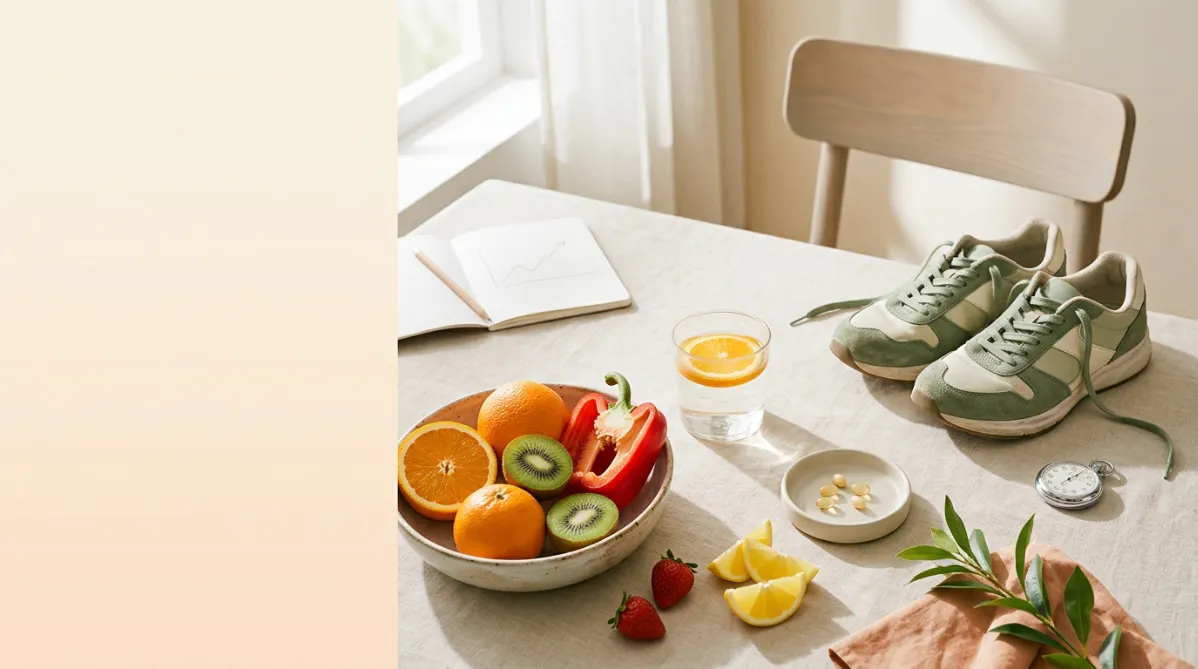
A bright, airy editorial still life photographed from slightly above on a pale oat-colored linen surface, in soft natural window light with gentle long shadows. In the foreground, a rustic ceramic bowl holds halved and whole oranges, glossy red bell pepper slices, and a few kiwi halves with emerald flesh. Beside it sit loose strawberries and a small pile of bright yellow lemon wedges. Their colors pop against the muted neutral palette. A single clear glass of water with a slice of orange rests nearby, catching the light.

On the right side of the frame, a pair of well-worn but clean walking sneakers in sage green and cream sits casually on the surface, with one lace loosely trailing. Behind them, a simple wooden chair with a light ash finish is partly visible and slightly out of focus, a quiet nod to the sit-to-stand test. A small stainless-steel stopwatch lies next to the shoes, with a subtle reflective glint.

A minimalist ceramic dish holds a few small, round, pale-yellow vitamin capsules, kept understated. A sprig of green leaves and a folded cotton napkin in soft terracotta add a warm accent. A small open notebook with a pencil rests in the upper left, its page blank except for faint, abstract pencil lines suggesting a simple rising graph, with no legible text.

The composition leaves generous negative space on the left third for title overlay, with a soft cream-to-peach gradient background. The mood is fresh, healthy, and contemplative, like a modern wellness magazine or a trendy online journal. The color palette is warm citrus orange, sunny yellow, sage green, and soft cream, with gentle terracotta accents. The depth of field is shallow, with crisp focus on the fruit and shoes and a creamy blur in the background. The overall look is clean, natural, and editorial, with fine film-like grain, true-to-life color, and a calm, optimistic tone. Landscape 16:9 framing.
nutrition

Tania witamina związana z silniejszymi nogami w miarę starzenia

BY DR. GYMBRO ·

Duże brytyjskie badanie obejmujące ponad 5 000 osób w wieku od 48 do 92 lat wykazało, że osoby z optymalnym poziomem witaminy C we krwi (≥ 50 µmol/L) chodziły szybciej i szybciej wstawały z krzesła niż osoby z niskim poziomem. Kobiety miały także silniejszy chwyt skorygowany o wzrost, podczas gdy u mężczyzn nie zaobserwowano takiego związku. Witamina C pochodząca z pożywienia wykazywała powiązania tylko u kobiet i nie tworzyła wyraźnego wzoru. Badanie jest przekrojowe, więc nie może udowodnić, że witamina C powoduje lepszą funkcję. Oto, co pokazują liczby, czego nie pokazują i dlaczego warto sprawdzić swój poziom we krwi.

This page is available in