Dr. Gymbro
←

#strength training

10 articles
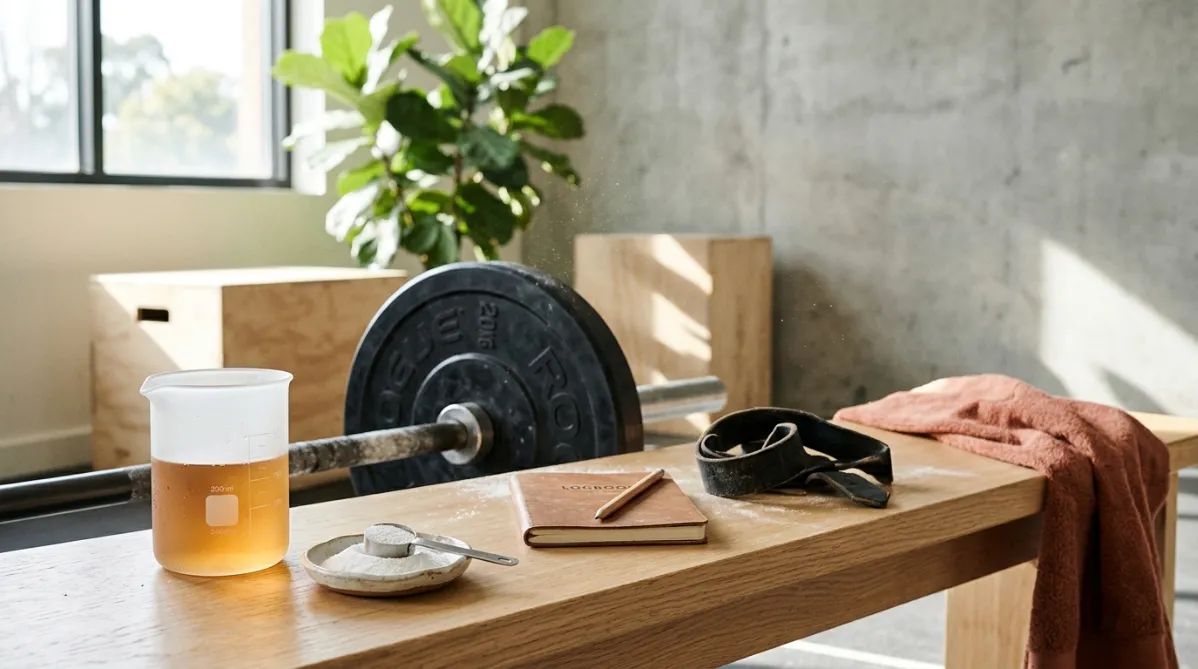
A wide, editorial-style still life shot from a slightly elevated three-quarter angle on a pale oak gym bench, lit by soft morning window light. In the foreground sits a minimalist matte-white glass beaker of clear, faintly amber liquid, with a few condensation droplets on its surface. Beside it rests a small ceramic dish of white crystalline powder and a stainless steel scoop. In the middle ground, a chalk-dusted steel barbell with black bumper plates rests on the bench's edge. A pair of worn leather lifting straps and a small notebook with a pencil lie nearby, suggesting data logging. Behind them, softly blurred, is a bright, airy studio with concrete walls, a wooden plyo box, and a tall leafy plant catching the light.

The palette is warm and muted: cream, sand, soft sage green, and charcoal, with one small accent of burnt orange in the amber liquid and a terracotta towel draped over the bench. Fine chalk dust floats in sunbeams that cut diagonally across the frame. The shallow depth of field keeps the beaker and barbell sharp while the background melts into creamy bokeh. Composition follows the rule of thirds, with the beaker on the left third and generous negative space on the right for headline text. The mood is calm, premium, and contemporary, like a high-end wellness and sports-science magazine photograph with subtle film grain, natural shadows, and realistic textures.
nutrition

Ketones Kept Force Output 8% Higher, But Jumps Didn't Budge

BY DR. GYMBRO ·

Fifty grams of a ketone precursor kept rate of force development 8% higher an hour later in a new Ohio State study, yet it did nothing for countermovement jumps. The randomized crossover trial of 20 active men and women found blood ketones peaking around 2.2 mM at 120 minutes. It also found a 24% drop in blood glucose and a 13 bpm rise in heart rate. That makes it intriguing for lifters doing repeated max-strength efforts, but this was a small, acute study. Here is what the data show, who might care, and who should hold off.
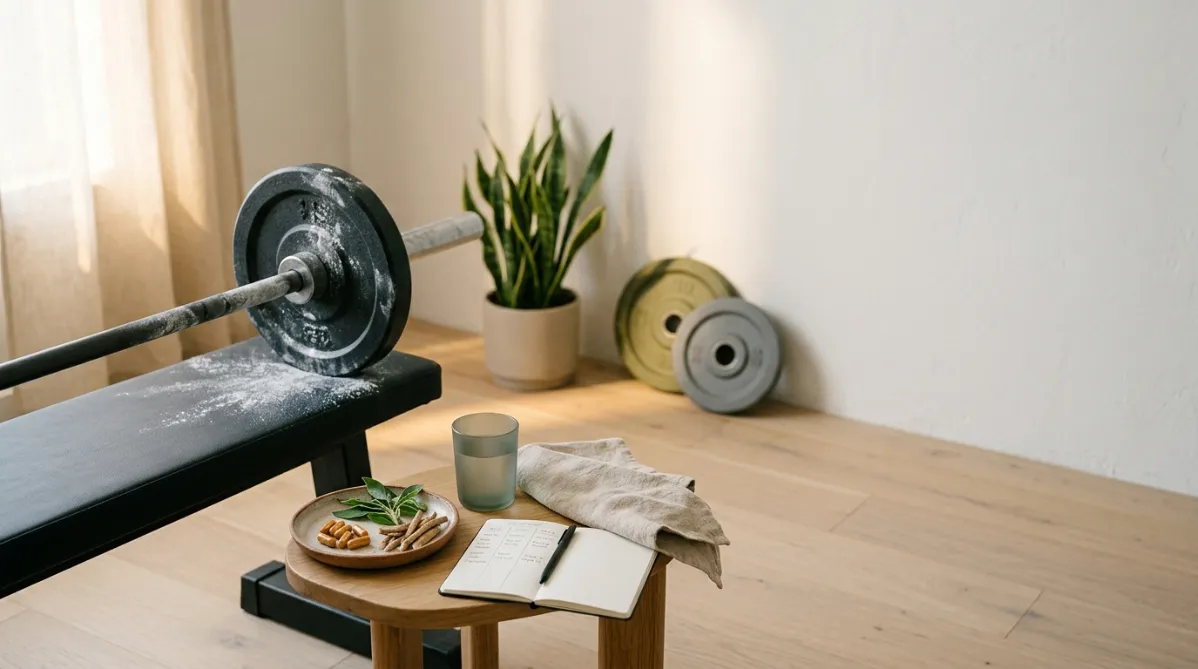
A wide landscape editorial photograph of a modern, softly lit home gym corner with pale oak flooring and a matte white wall. In the foreground, a chalk-dusted barbell rests across a minimalist bench, shot at a low angle with shallow depth of field. On a small natural-wood side table beside it sits a ceramic dish holding a few amber-colored capsules, a handful of dried ashwagandha roots, and a few green leaves. A matte glass of water and a folded linen towel sit nearby. A slim open notebook with a pen lies next to the dish, suggesting careful reading and note-taking, with blurred handwritten columns that suggest comparison, but no legible text.

Soft morning window light enters from the left, casting long, gentle shadows and a warm golden glow across the scene. The palette is muted and earthy: sage green, warm sand, cream, charcoal gray, and touches of terracotta. A single potted green plant in the background adds texture. Two weight plates in stacked, muted tones lean against the wall, slightly out of focus.

The composition follows the rule of thirds, with the barbell and supplement dish on the left and generous negative space on the right for headline overlay. The mood is calm, trustworthy, and analytical, like a contemporary health and science magazine cover. Crisp detail, natural film-like grain, subtle color grading, and a clean, uncluttered, premium lifestyle feel. No people, no text, no logos, no futuristic elements.
supplements

Ashwagandha SR Doubled Bench Gains in 90 Days—Read the Fine Print

BY DR. GYMBRO ·

A once-daily sustained-release ashwagandha capsule roughly doubled bench press gains versus placebo in a 90-day randomized trial. Participants taking 300 mg of AshwaSR added 15.31 kg to their 1-RM, compared with 7.33 kg on placebo. But the testosterone rise in men did not beat placebo, the study was funded by the product's developer, and the VO2max numbers look unusually large. Here's what the trial actually shows, the dose used, who it may suit, and who should skip it.
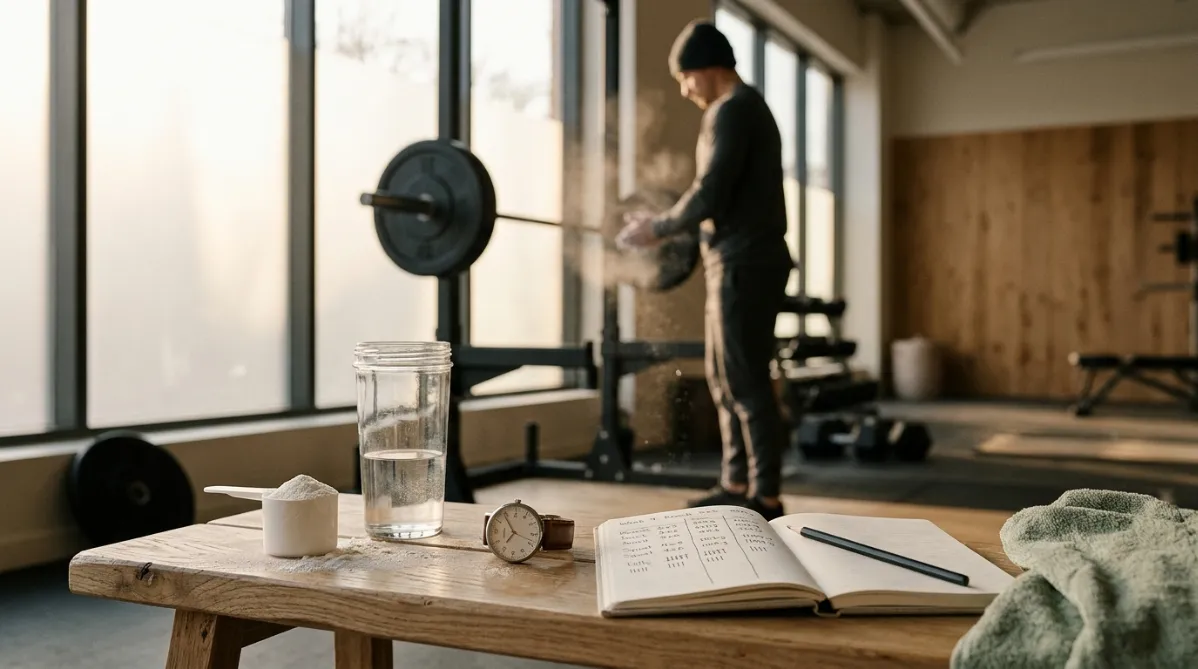
A wide, softly lit editorial photograph of a modern minimalist gym corner, shot at golden hour with warm light streaming through large frosted windows. In the foreground, a matte white scoop of fine creatine powder rests on a pale oak bench beside a clear glass shaker bottle half-filled with water. A small pile of loose white powder dusts the wood surface. Just behind them, a matte black barbell loaded with charcoal bumper plates rests on a squat rack, slightly out of focus, with chalk dust floating in the sunbeams.

On the bench, a simple analog wall-style clock or a sleek minimalist wristwatch lies face up, hinting at timing without being the main focus. Next to it sits a slim open notebook with a pencil and a few hand-drawn tally marks and neat columns, suggesting tracked training data. A folded sage-green towel sits at the edge of the frame.

The color palette is calm and sophisticated: cream, warm oak, soft sage green, charcoal, and a touch of terracotta. The shallow depth of field gives creamy bokeh in the background, where the soft silhouette of a lifter in neutral athletic wear chalks their hands near the rack, rendered anonymously and without a visible face.

The composition follows a rule-of-thirds layout, with the powder and shaker in the lower left third and open negative space on the right, suitable for headline overlay. The mood is clean, focused, and quietly motivated, like a premium health and science journal feature. The lighting is natural and diffused, with gentle shadows, subtle film grain, and true-to-life textures. Shot on a 50mm lens at f/2, with crisp detail on the powder and a high-end lifestyle magazine finish.
nutrition

Creatine Before Training Won This Timing Test—But There's a Catch

BY DR. GYMBRO ·

Does it matter when you take your creatine? A new randomized crossover pilot trial in Nutrients says the pre-workout window may have an edge: 0.1 g/kg of creatine monohydrate before training was linked to more total load lifted in the bench press and back squat than placebo or no supplement. Taking it during or after training didn't show the same advantage, and no differences appeared in jumping, mood, cognition, or soreness. But the study had only 11 men and tested a single dose, and the authors call it exploratory. Here's the exact dose, what the data show, and who should be cautious.
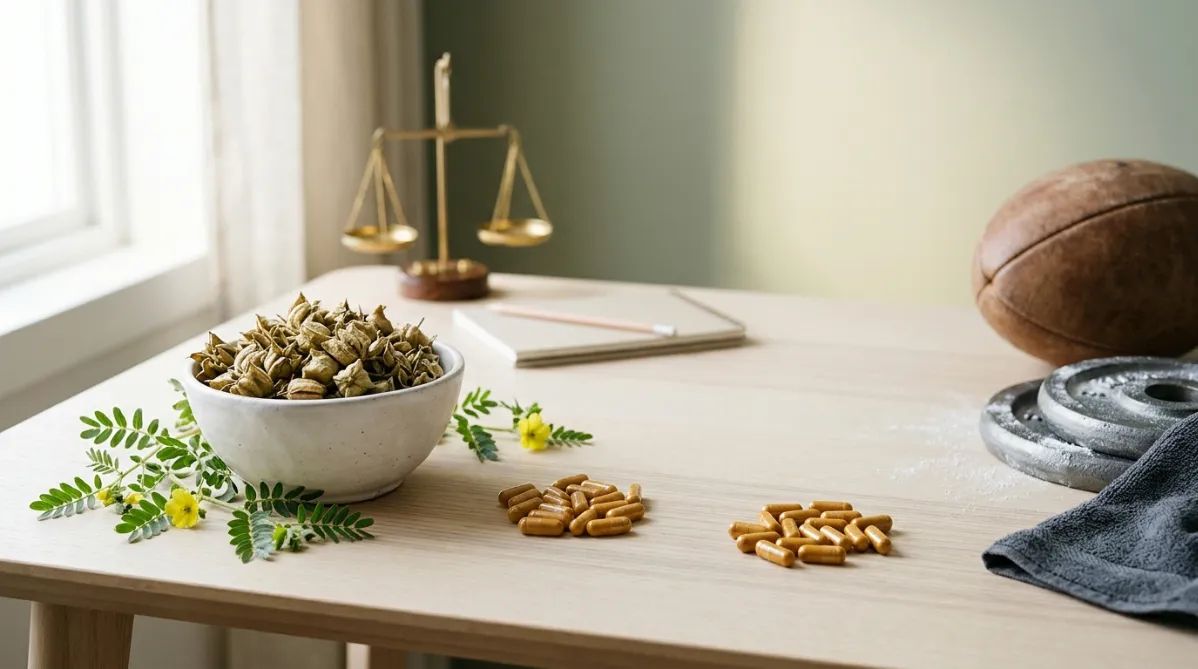
A wide, landscape editorial photograph shot from slightly above, showing a rustic matte-white ceramic bowl of dried tribulus terrestris, spiky star-shaped seed pods in warm tan and khaki tones, with a few fresh green trailing vines and tiny yellow flowers draped beside it. The bowl sits at the left third of the frame on a pale ash-wood table. Scattered nearby are two identical sets of plain, unlabeled amber supplement capsules, one pile slightly apart from the other, hinting at a placebo comparison. To the right, slightly out of focus, a worn leather rugby ball rests next to a chalk-dusted steel barbell plate and a folded charcoal-gray athletic towel.

Soft diffused natural light streams in from a window on the left, creating gentle long shadows and a calm, clean atmosphere. The background is a muted sage-green and cream gradient with a shallow depth of field, leaving generous negative space on the right side for title overlay. A small, minimal notebook with a pencil and a simple balance scale made of brushed brass sits subtly in the midground, suggesting scientific scrutiny without any laboratory clutter.

The color palette is earthy and refined: sage green, sand, warm amber, charcoal, and off-white. The style is modern lifestyle-magazine photography, crisp textures, subtle film grain, and a high-end wellness journal feel. The composition is balanced, uncluttered, and minimalist, with a quiet, thoughtful mood that conveys skepticism and evidence-based inquiry. No text, no logos, no people, no futuristic or sci-fi elements.
science research

Tribulus Terrestris Flopped in Elite Rugby Players: 5-Week Trial

BY DR. GYMBRO ·

Tribulus terrestris is marketed as a natural testosterone booster that builds muscle in under a month. So researchers tested it on elite rugby league players in a double-blind trial. Everyone got stronger and gained fat-free mass, but the placebo group did just as well. The supplement also didn't change the urinary T/E ratio. Here's what the study found, its limits, and where your money is better spent.
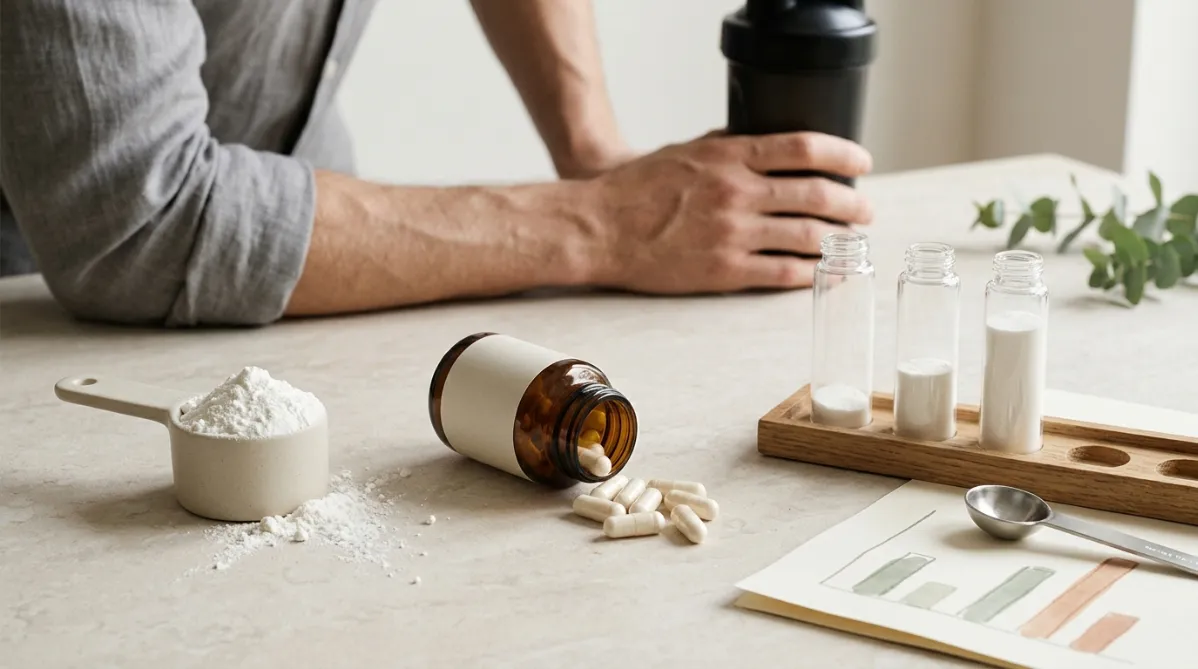
A modern editorial still life photographed from a slightly elevated angle on a pale, matte stone surface in soft natural window light. On the left, a heaping mound of fine white creatine monohydrate powder spills from a matte ceramic scoop, with a few crisp grains scattered across the surface. In the center, a small, minimalist amber glass capsule bottle sits tipped on its side, with a handful of off-white capsules spilling out. The label is blank and clean. On the right, a neat row of three clear glass lab-style vials rests on a slim oak tray. The vials hold different amounts of white powder: the first nearly empty, the second slightly fuller, the third filled almost to the brim. This quietly suggests the difference in dose and result. Beside the tray lies a simple stainless steel measuring spoon and a folded sheet of cream paper with soft, abstract bar-chart lines in muted sage green and terracotta. The lines are hand-drawn and unlabeled.

Behind the objects, slightly out of focus, a lean athletic forearm in a gray linen sleeve rests on the edge of the surface, one hand loosely holding a matte shaker bottle. This hints at a training context without showing a face. A single sprig of eucalyptus in the corner adds a soft organic touch.

The palette is warm neutral: bone white, oatmeal, soft sage, muted terracotta, and touches of amber. Shadows are gentle and long, with a shallow depth of field that gives creamy bokeh in the background. The mood is calm, clean, and trustworthy, like a premium health and science journal's feature spread, with generous negative space at the top and right for headline overlay. The composition is wide, balanced, and uncluttered, with subtle film-like grain and a natural, true-to-life color grade. No text, no logos, no futuristic elements.
nutrition

Kre-Alkalyn's Label Dose Didn't Lift Muscle Creatine, Biopsies Show

BY DR. GYMBRO ·

Buffered creatine like Kre-Alkalyn promises better absorption, lower doses and less bloating. A double-blind Texas A&M trial put that to the test with actual muscle biopsies in 36 trained lifters over 28 days. At the label dose of 1.5 g/day, muscle creatine barely moved, while monohydrate raised it clearly more. Strength, body composition and side effects showed no advantage for the buffered product. Here is what the numbers show and how to dose creatine instead.
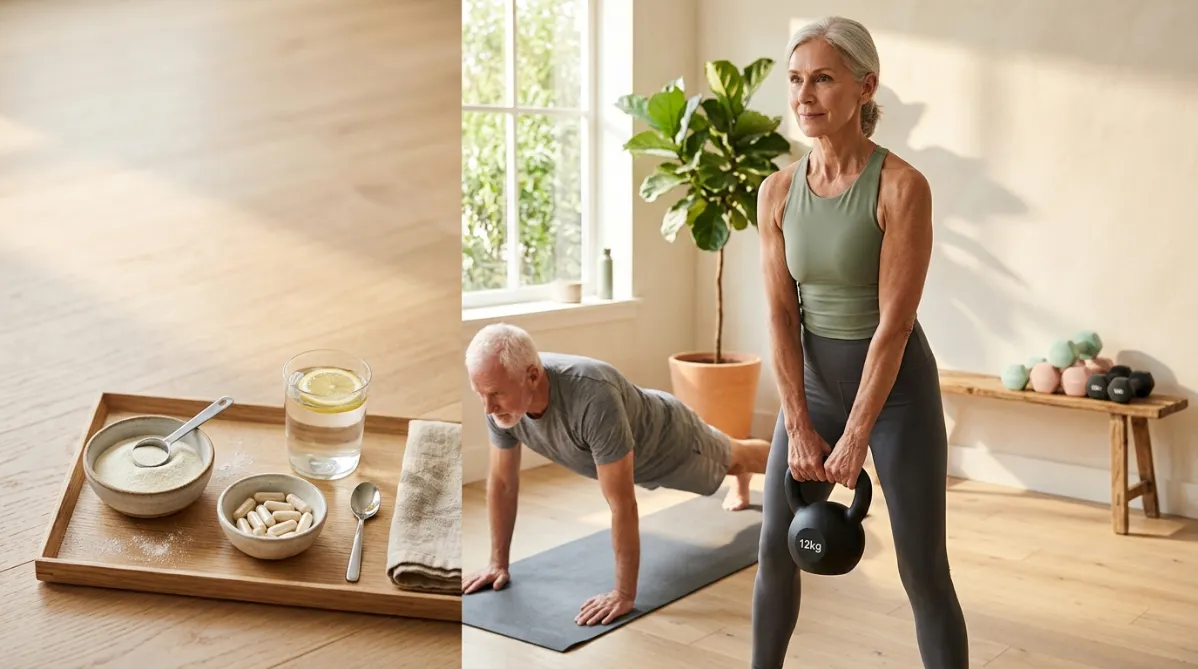
A warm, softly lit modern home gym or sunlit studio, photographed in a clean editorial style. In the center-right of the frame, a silver-haired woman in her mid-60s with a calm, confident expression grips a matte black kettlebell at hip height. She wears a fitted sage-green athletic top and charcoal leggings. Her forearms and shoulders show lean, defined strength rather than bulk. Beside her, slightly out of focus, a man in his late 60s with short white hair and a trim beard performs a controlled bodyweight plank on a pale oak floor.

In the foreground on the left, a minimalist wooden tray holds two small ceramic bowls. One contains fine white powder and the other holds a few cream-colored capsules. Next to them sit a glass of water with a lemon slice and a folded linen towel. A subtle scatter of powder dusts the tray. The foreground is shot with shallow depth of field and a creamy bokeh falloff.

Behind them, tall windows pour in golden morning light, with long soft shadows across the floor. A potted fiddle-leaf fig and a stacked set of pastel-toned dumbbells on a low wooden shelf add texture. The wall is warm off-white plaster with a hint of terracotta in the corner.

The palette is muted and modern: sage green, warm cream, soft terracotta, natural oak, and charcoal, with gentle highlights. The mood is quietly optimistic, focused, and grounded, suggesting strength, vitality, and measured scientific curiosity. The composition leaves clean negative space in the upper-left for a headline overlay. The look is a high-end wellness magazine cover with natural film-like grain, soft contrast, and crisp detail on the hands and kettlebell. There is no text, no logos, and no futuristic elements, only authentic, aspirational realism.
nutrition

Creatine + HMB Made Over-60s Stronger in 6 Weeks, Not Bigger

BY DR. GYMBRO ·

Over-60s on a creatine + HMB stack got stronger in just six weeks, yet the muscle-mass numbers barely moved. This double-blind crossover trial of 30 active older adults found gains in leg, back and arm strength plus upper-body and core endurance. Regression analyses suggested the improvements were largely independent of muscle size, pointing toward a neuromuscular effect. Before you rush to buy, there are real caveats: a short six-week window, a small sample, and body composition measured by BIA. Here's what the study found, what it didn't, and how to read it.
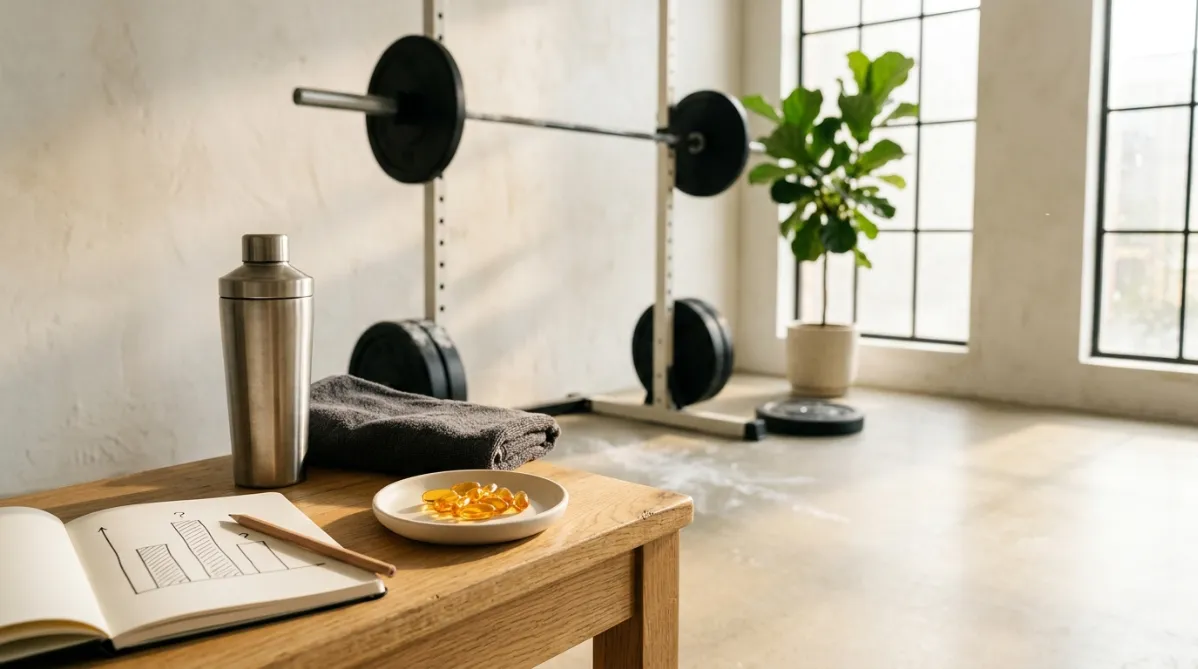
A wide landscape editorial photograph of a sunlit minimalist gym corner with warm, natural morning light streaming through tall windows. In the foreground on a light oak wooden bench sits a small matte ceramic dish holding a few translucent amber softgel capsules, next to a brushed steel shaker bottle and a folded charcoal gray towel. The capsules catch the light with a soft golden glow, shallow depth of field blurring them slightly against the background.

In the softly blurred midground, a barbell loaded with black plates rests on a squat rack, with chalk dust lightly floating in the sunbeams. The walls are textured off-white plaster, and the floor is pale polished concrete. A potted green plant adds a touch of organic color near the window.

Laid casually beside the dish is an open notebook with a clean, hand-drawn bar chart in black ink: two bars of slightly different heights, one marked with a small question mark, suggesting uncertainty and interpretation. A slim pencil rests across the page. No readable text beyond simple marks.

The color palette is muted and modern: cream, warm beige, soft amber, charcoal, and sage green accents. The composition follows the rule of thirds, with the capsules and notebook in the lower left third and open negative space toward the upper right, ideal for headline overlay. Soft shadows, subtle film grain, and a calm, contemplative mood reminiscent of a contemporary health and science magazine. Shot as if with a 50mm lens at f/2.0, high-end lifestyle editorial aesthetic, clean and trendy, with no futuristic or sci-fi elements.
science research

750 mg of PA Added 2.6% Lean Mass in 8 Weeks—But There's a Catch

BY DR. GYMBRO ·

One small study found that trained men taking 750 mg of phosphatidic acid daily gained 2.6% lean mass in eight weeks, while the placebo group gained just 0.1%. Squat strength also rose more with PA, 12.7% versus 9.3%. But the authors' own conventional analysis found no significant differences. Their conclusions rest on a more lenient statistical method applied to just 16 men. Here is the dose, the results, and why this pilot study is a promising signal rather than proof.
Creatine Before or After Your Workout? A Small Study Gives Post-Workout the Edge
nutrition

Creatine Before or After Your Workout? A Small Study Gives Post-Workout the Edge

BY DR. GYMBRO ·

Should you take creatine before or after you lift? A 2013 study of 19 male bodybuilders found that post-workout dosing edged out pre-workout on lean mass, fat mass and bench press. But the formal statistical test showed no significant difference between the groups, and the authors relied on a cautious "possibly more beneficial" inference. Here is what the data actually say, why the sample size matters, and how to apply the findings with a simple 5 g daily routine.
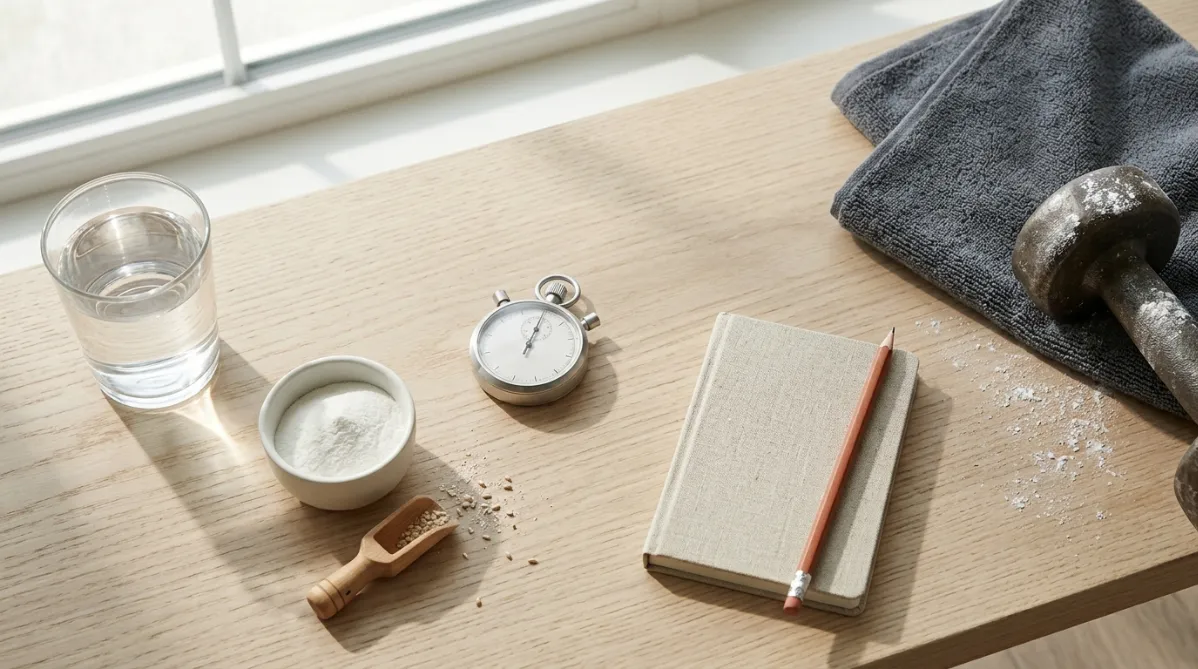
A landscape, editorial-style flat lay photographed from above on a pale oak gym bench or a matte light-gray concrete surface. On the left side, a clear glass of water sits next to a small matte white ceramic bowl of fine white creatine powder, with a wooden scoop resting beside it and a few loose grains scattered naturally on the surface. In the center, a modern analog wall-style clock face is replaced by a simple minimalist stopwatch in brushed steel, its hands paused, subtly suggesting timing without any text or numbers emphasized. On the right, a neatly folded charcoal gym towel and a single chalk-dusted dumbbell handle enter the frame at the edge, with a faint dusting of white chalk on the wood. A small linen notebook with a pencil rests slightly off-center, its pages blank, hinting at data and study without any readable writing.

The color palette is soft and restrained: warm cream, oatmeal, sage green, and muted slate, with one accent of terracotta orange in the pencil or a small ceramic dish. Light comes from a large window at the upper left, casting long, gentle diagonal shadows and a soft highlight across the glass of water, creating delicate caustic reflections on the surface. The depth of field is shallow, with the creatine bowl and scoop in crisp focus and the edges softly blurred. The composition leaves generous negative space on the upper right for a headline overlay. The overall feel is calm, clean, and contemporary, like a wellness and science journal's cover image, with natural textures, subtle film grain, and a refined, premium magazine look. No people, no logos, no text, and no futuristic elements.
nutrition

Creatine Before or After Your Workout? A Small Study Gives Post-Workout the Edge

BY DR. GYMBRO ·

Should you take creatine before or after you lift? A 2013 study of 19 male bodybuilders found that post-workout dosing edged out pre-workout on lean mass, fat mass and bench press. But the formal statistical test showed no significant difference between the groups, and the authors relied on a cautious "possibly more beneficial" inference. Here is what the data actually say, why the sample size matters, and how to apply the findings with a simple 5 g daily routine.
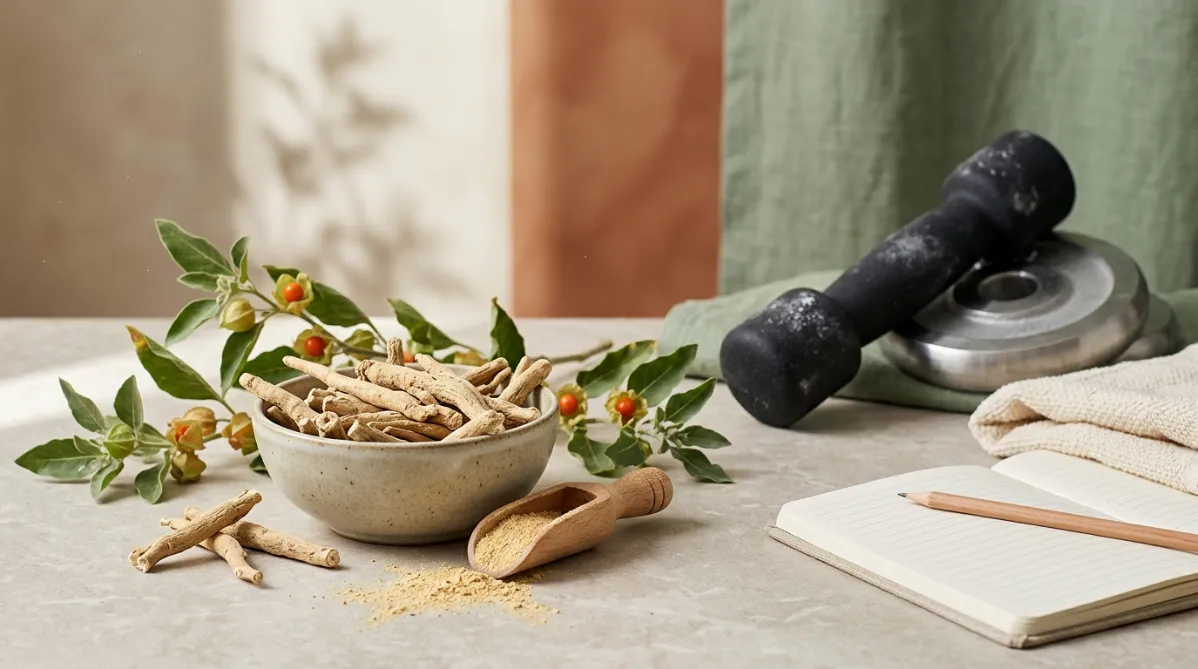
A wide editorial still life on a pale, warm-gray stone surface lit by soft morning window light from the left. In the foreground, a rustic ceramic bowl in matte oatmeal glaze holds dried ashwagandha roots, pale tan and gnarled, with a few scattered beside it. A small wooden scoop dusted with fine golden-beige powder rests next to the bowl. Behind them, a few olive-green ashwagandha sprigs with small orange-red berries in papery husks arc across the frame, adding a quiet pop of color.

Midground right: a matte black chalk-dusted dumbbell handle and a single brushed-steel weight plate lean casually against a linen-textured backdrop in muted sage. A folded cream cotton towel and a slim notebook with a pencil suggest a training log. The notebook is open to blank, softly lined pages with no legible text.

The background fades into a gentle blur of neutral beige and soft terracotta tones, with a hint of a plant shadow cast across the wall in dappled light. Fine dust and powder particles float in the light beams, giving a tactile, organic feel.

The composition follows the rule of thirds: botanical elements on the left and center, gym elements on the right, and negative space in the upper right for headline overlay. Shallow depth of field, crisp focus on the roots and powder, creamy bokeh behind. Color palette: sage green, warm sand, terracotta, charcoal black, and a touch of burnt orange. The mood is calm, modern, and trustworthy, like a premium wellness and science magazine. Photographed on a 50mm lens, natural grain, subtle film-like contrast, clean minimalist styling, high-end editorial photography.
nutrition

The Ancient Herb That Beat Placebo in an 8-Week Lifting Trial: Strength, Muscle Size and Testosterone

BY DR. GYMBRO ·

Could a centuries-old Ayurvedic root really out-lift a placebo? In an 8-week randomized trial of 57 novice lifters, men taking 300 mg of ashwagandha extract twice daily gained more bench-press strength, more arm and chest size, and a bigger testosterone rise than the placebo group. They also lost more body fat. The catch is that the study was small, short and limited to beginner men. Here's what the data show, how the dosing worked, who might benefit and why you should stay skeptical.

This page is available in