Dr. Gymbro
←

#rehabilitation

2 articles
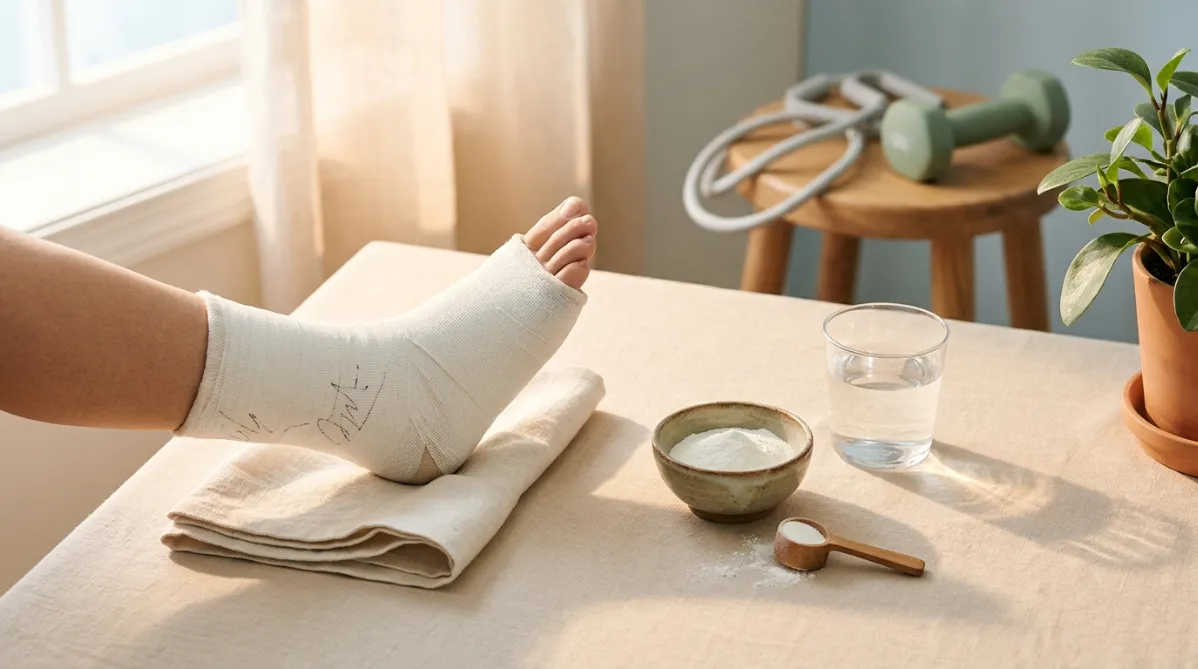
A wide, softly lit editorial still life on a warm, pale oat-colored surface. At the left, a lower leg and foot rest on a folded cream linen towel, wrapped in a matte white fiberglass cast with a subtle texture and a few faint pen scribbles near the ankle. The skin tone is natural and the lighting is gentle. At the center-right, a small ceramic bowl holds fine white creatine powder, with a matte wooden scoop resting beside it and a dusting of powder on the surface. Next to the bowl is a clear glass of water with light refracting through it, casting soft caustic ripples on the table. This hints at the water-retention idea without being literal.

In the background on the right, slightly out of focus, a pair of light grey resistance bands and a small sage-green dumbbell sit on a wooden stool, suggesting rehab. A tall, leafy plant in a terracotta pot adds organic greenery at the edge of the frame. Morning sunlight streams from a window on the left and creates long, soft shadows and a warm golden-peach glow. The palette is cream, sage green, terracotta, soft sky-blue shadows, and touches of natural wood. The composition has generous negative space in the upper left for a title overlay. Shallow depth of field, shot as if with an 85mm lens, with fine film grain. The look is clean, calm, modern wellness-magazine photography with a minimalist, tactile, trendy feel.
recovery

La creatina en un yeso no protege el músculo de forma clara, pero sí en la fase de rehabilitación

BY DR. GYMBRO ·

Muchos se preguntan si la creatina puede proteger el músculo cuando una lesión obliga a inmovilizarse en un yeso. Una revisión sistemática reciente, que incluye seis ensayos controlados aleatorios con 118 jóvenes y entre una y dos semanas de inmovilización, indica que la evidencia durante la fase de inmovilización es mixta y que los aparentes beneficios en masa magra podrían deberse simplemente a una mayor retención de agua. La señal más interesante surge en la fase de rehabilitación, donde dos estudios observaron mayores incrementos en el tamaño del cuádriceps, la potencia y la fuerza en los sujetos que recibieron creatina. A continuación, los datos concretos, sus limitaciones y a quiénes podría interesar probarla.
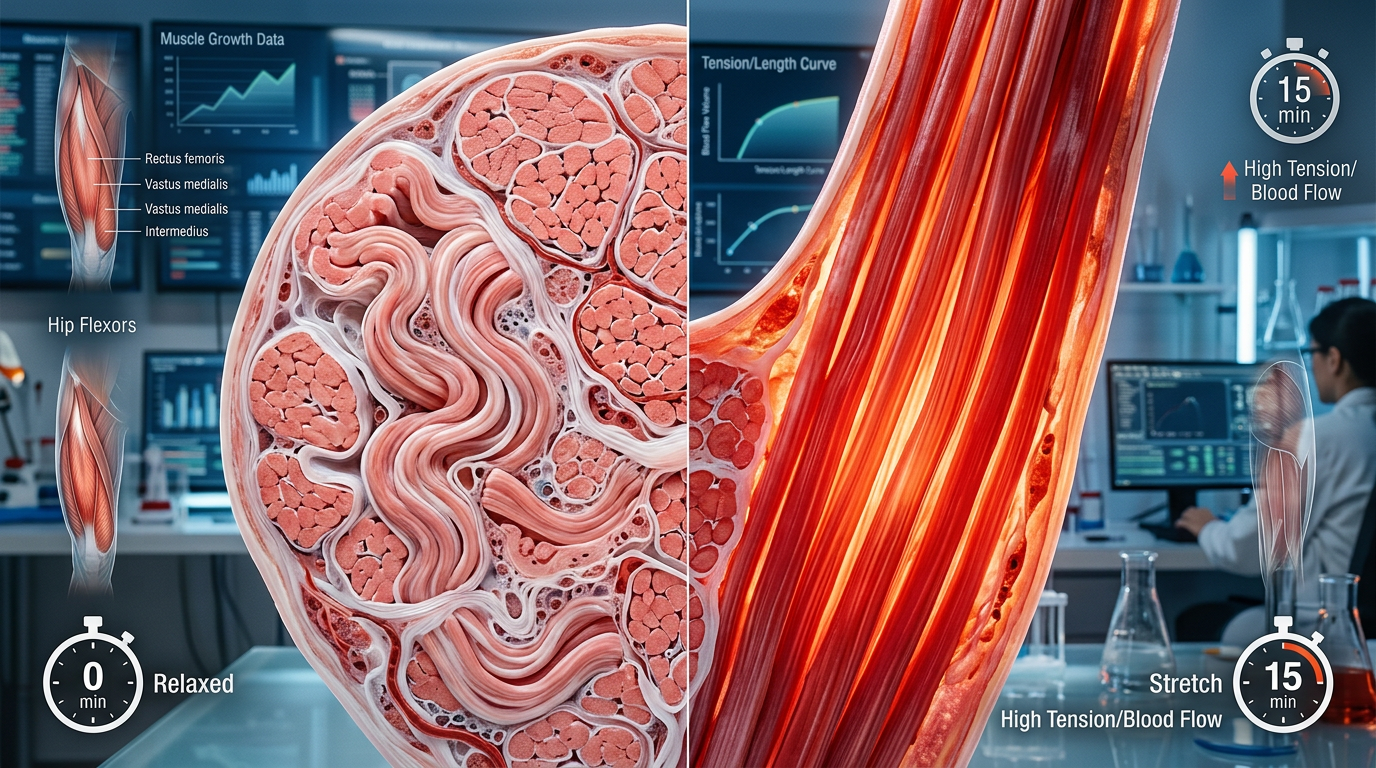
A split-screen composition showing the transformation of muscle fibers during stretching. On the left, a detailed cross-section view of relaxed muscle tissue with loose, wavy fibers in soft pink and white tones. On the right, the same muscle tissue during an intense stretch, with fibers elongated and aligned, glowing with increased blood flow in vibrant reds and oranges. The background features a modern research laboratory setting with charts and graphs displaying muscle growth data. Overlaying the image are subtle anatomical illustrations of the quadriceps muscle group and hip flexors. The lighting is clinical yet warm, with blue-white laboratory lighting contrasting against the organic warm tones of the muscle tissue. Small visual elements like stopwatch icons showing "15 min" and strength measurement indicators add scientific context to the transformative muscle-building process.
general

Estiramiento para el Crecimiento Muscular: Un nuevo estudio revela cómo sesiones de 15 minutos generan fuerza

BY DR. GYMBRO ·

Un estudio revolucionario de la Universidad de Graz ha demostrado que solo 15 minutos de estiramiento de alta intensidad, realizados tres veces por semana, pueden producir un crecimiento muscular significativo y aumentar la fuerza en los cuádriceps. Los hallazgos cuestionan los paradigmas tradicionales al mostrar que el estiramiento supervisado del flexor de cadera no solo aumenta el grosor muscular, sino que también mejora la fuerza isométrica y el equilibrio dinámico, ofreciendo una alternativa viable para quienes no pueden entrenar con pesas por lesiones o falta de equipamiento.

This page is available in