Dr. Gymbro
←

#pilot study

2 articles
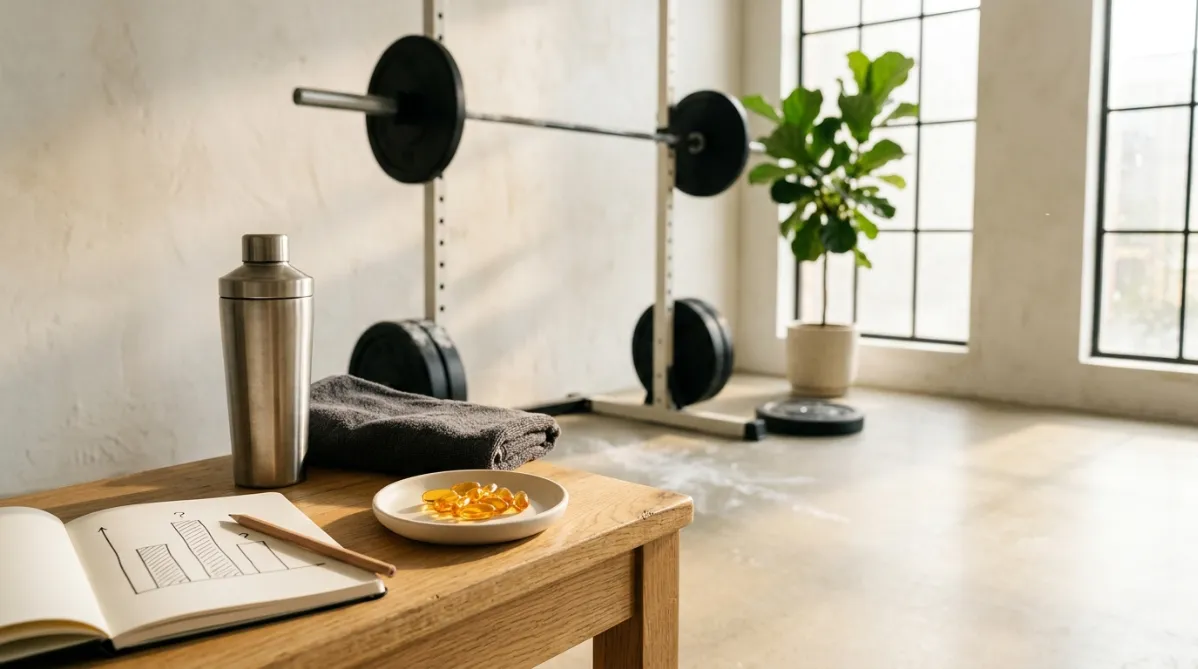
A wide landscape editorial photograph of a sunlit minimalist gym corner with warm, natural morning light streaming through tall windows. In the foreground on a light oak wooden bench sits a small matte ceramic dish holding a few translucent amber softgel capsules, next to a brushed steel shaker bottle and a folded charcoal gray towel. The capsules catch the light with a soft golden glow, shallow depth of field blurring them slightly against the background.

In the softly blurred midground, a barbell loaded with black plates rests on a squat rack, with chalk dust lightly floating in the sunbeams. The walls are textured off-white plaster, and the floor is pale polished concrete. A potted green plant adds a touch of organic color near the window.

Laid casually beside the dish is an open notebook with a clean, hand-drawn bar chart in black ink: two bars of slightly different heights, one marked with a small question mark, suggesting uncertainty and interpretation. A slim pencil rests across the page. No readable text beyond simple marks.

The color palette is muted and modern: cream, warm beige, soft amber, charcoal, and sage green accents. The composition follows the rule of thirds, with the capsules and notebook in the lower left third and open negative space toward the upper right, ideal for headline overlay. Soft shadows, subtle film grain, and a calm, contemplative mood reminiscent of a contemporary health and science magazine. Shot as if with a 50mm lens at f/2.0, high-end lifestyle editorial aesthetic, clean and trendy, with no futuristic or sci-fi elements.
science research

750 mg de PA ont fait gagner 2,6 % de masse maigre en 8 semaines – mais il y a un hic

BY DR. GYMBRO ·

Une petite étude a montré que des hommes entraînés prenant 750 mg d’acide phosphatidique chaque jour augmentaient de 2,6 % leur masse maigre en huit semaines, alors que le groupe placebo n’a gagné que 0,1 %. La force au squat a également progressé davantage avec le PA, 12,7 % contre 9,3 %. Cependant, l’analyse statistique conventionnelle n’a pas mis en évidence de différences significatives. Les auteurs se sont donc appuyés sur une méthode plus indulgente appliquée à seulement 16 participants. Voici la dose, les résultats, et pourquoi cette étude pilote représente un signal prometteur plutôt qu’une preuve concluante.
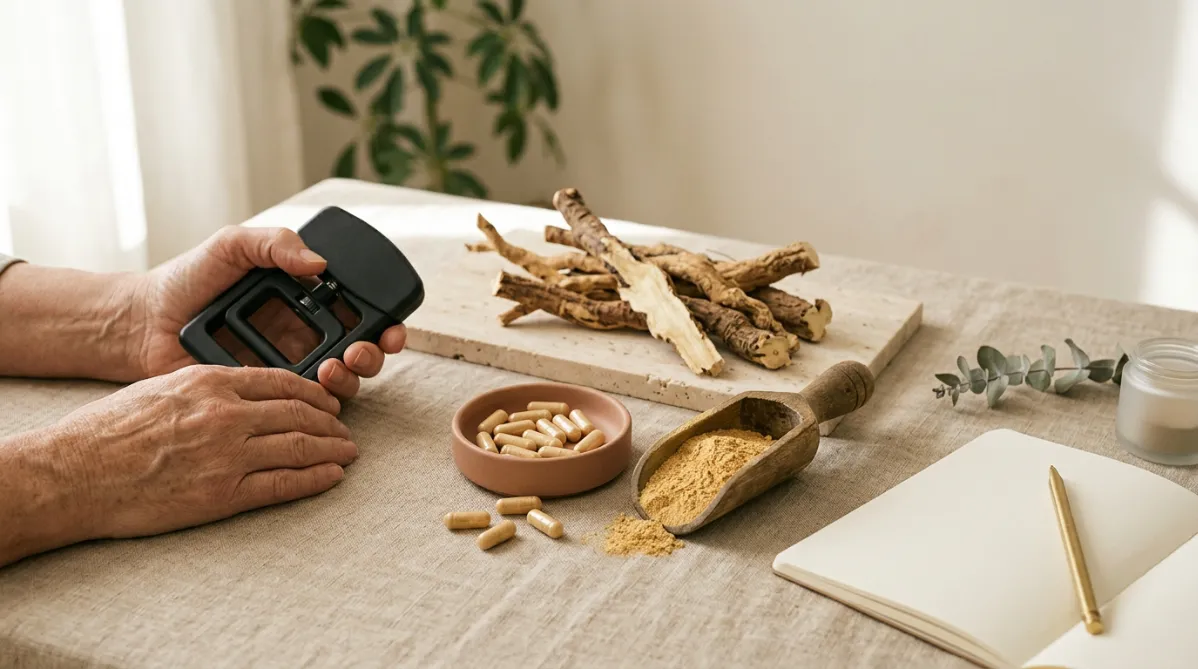
A landscape editorial still life on a warm, softly textured oatmeal-colored linen surface, photographed from a slightly elevated three-quarter angle in gentle morning window light. At the center sits a small matte ceramic dish in muted terracotta holding a handful of pale amber capsules, with a few spilled casually onto the linen. Beside it is a rustic wooden scoop holding a pile of fine, golden-tan powdered root extract. Behind these, a loose arrangement of raw Tongkat Ali root pieces, gnarled and fibrous with pale cream interiors and rough brown bark, rests on a slab of pale travertine stone.

On the left, a pair of older adult hands, seen only from the wrists down, with natural skin texture, hold a simple matte-black hand dynamometer in a relaxed grip. The tone is dignified and healthy, not athletic or posed. A sage-green ceramic mug of tea sits slightly out of focus nearby, with a thin curl of steam.

On the right, a minimalist open notebook with blank cream pages and a slim brass pen lies beside a sprig of dried eucalyptus. A small frosted glass jar adds a quiet pharmacy-apothecary note.

The palette is earthy and calm: warm beige, terracotta, sage, soft brown, and cream, with subtle brass accents. The shadows are long and soft, the depth of field shallow with a creamy blurred background of a sunlit neutral wall and a hint of a leafy plant. Negative space on the upper right suits headline overlay.

The style is modern wellness-journal photography, like a high-end health magazine or a Kinfolk-inspired lifestyle site: tactile, calm, and refined, with subtle film grain and natural color grading. There is no text, no logos, no futuristic elements, and no clinical lab equipment.
nutrition

Tongkat Ali : 400 mg pendant 5 semaines augmentent la testostérone et la force de préhension

BY DR. GYMBRO ·

Le Tongkat Ali est l’un des boosters de testostérone les plus recherchés sur le net, et une petite étude pilote lui fournit des données humaines concrètes. Vingt‑cinq adultes actifs âgés de 57 à 72 ans ont pris 400 mg d’extrait chaque jour pendant 5 semaines, ce qui a fait grimper la testostérone totale et libre ainsi que la force de préhension. Le taux de testostérone libre des femmes a aussi augmenté, probablement parce que le SHBG a baissé. L’absence de groupe placebo empêche d’affirmer une preuve définitive, mais les résultats sont encourageants.

This page is available in