Dr. Gymbro
←

#stress

1 article
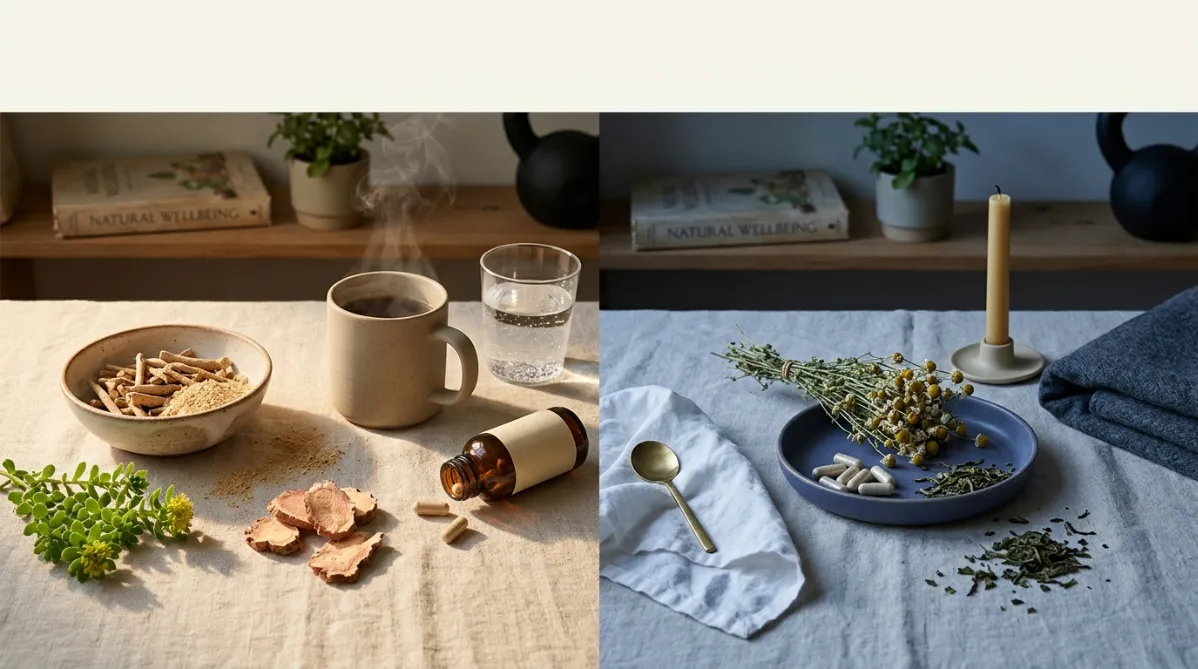
A landscape editorial still life shot from slightly above on a pale oat-colored linen surface, lit by soft morning window light with gentle long shadows. On the left, in warm golden sunlight, sits a small ceramic bowl of dried ashwagandha root pieces and a scatter of fine tan powder. Beside it are a few rough, rosy-gold slices of Rhodiola rosea root and a sprig of tiny succulent-like green leaves with yellow blossoms. A matte sand-colored stoneware mug of steaming tea and a simple glass of water stand nearby. A small amber glass bottle with a minimal unbranded label tips out two capsules.

The right side of the frame is cooler and bluer, as if dusk is arriving. It holds a muted indigo ceramic dish with a few pale capsules, a small bundle of dried chamomile flowers (the source of apigenin), and a few green tea leaves. A slim, unlit beeswax candle and a folded charcoal wool blanket suggest evening. The warm and cool halves meet softly in the center, where a rumpled white cotton napkin sits beneath a small brass spoon.

In the background, out of focus, a wooden shelf holds a worn paperback, a small potted plant, and the edge of a kettlebell in matte black, hinting at an active lifestyle. Subtle film grain, shallow depth of field, and a muted palette of cream, terracotta, sage green, and deep indigo give it a clean, modern wellness-magazine feel. Leave generous negative space in the upper third for a headline overlay. No text, no logos, no people.
recovery

Ashwagandha + Rhodiola : le combo du matin porte ses fruits, le stack du soir n’apporte rien

BY DR. GYMBRO ·

Un nouvel essai en quatre bras surprend les adeptes de la cumulation de compléments. Chez 103 adultes en bonne santé et actifs, un combo matinal de 600 mg d’ashwagandha et 300 mg de Rhodiola rosea a réduit le stress perçu, amélioré la qualité du sommeil et boosté l’humeur. Le stack nocturne populaire de magnésium L‑thréonate, L‑théanine et apigénine n’a rien ajouté, et le combiner avec les adaptogènes a même tendance à détériorer l’affect positif. Voici ce que révèle l’étude, ses limites et comment les pratiquants pourraient s’en servir.

This page is available in