Dr. Gymbro
←

#ergogenic aids

25 articles
supplements

Waterstofwater maakte elitezwemmers 0,6 % sneller: het addertje onder het gras

BY DR. GYMBRO ·

Een glas water met opgeloste waterstofgas maakte nationale finswimmers 0,6 % sneller over 400 m in een dubbelblinde crossover‑studie. Dat klinkt marginaal, maar op elite‑niveau kan het het verschil maken tussen een medaille en de vierde plaats. Hetzelfde protocol had geen effect op herhaalde 50‑m sprints, bloedlactaat, waargenomen inspanning of oxidatieve stress, waardoor het mechanisme onduidelijk blijft. Hieronder vind je de exacte dosering, voor wie het potentieel interessant kan zijn en waarom je deze kleine studie met 12 atleten met de nodige voorzichtigheid moet bekijken.

science research

Cafeïnes sprintboost hield 3,5 uur aan — en sprinten voelt minder pijnlijk

BY DR. GYMBRO ·

Een hoge dosis cafeïne (5,5 mg per kg) ingenomen ongeveer een uur voor de training houdt de sprint‑power tot wel 3,5 uur verhoogd. Bovendien voelen de sprints minder pijnlijk en minder belastend. De winst is bescheiden (0,5‑3,7 %) en werd waargenomen bij slechts 12 deelnemers. Wel ging het gepaard met een hogere hartslag en een lagere bloedstroomsnelheid in de hersenen, dus dit is hoe de dosis eruitziet en voor wie hij nuttig kan zijn.

nutrition

Cafeïne maakt voetballers sneller, maar niet beter in reageren

BY DR. GYMBRO ·

Veel mensen gaan ervan uit dat cafeïne sporters overal scherper maakt, maar een recent dubbelblinde onderzoek met amateurvoetballers laat een genuanceerder beeld zien. Een dosis van 300 mg (ongeveer 3,7 mg per kg lichaamsgewicht) verbetert de geplande wendbaarheid (effectgrootte 0,62) en de sprongprestaties, maar bij reactieve taken – reageren op een lichtsignaal of een menselijke tegenstander – zijn de voordelen klein of zelfs niet‑significant. Hieronder vind je de belangrijkste bevindingen, hoe je de resultaten moet interpreteren en voor wie ze echt van waarde kunnen zijn.

A lone trail runner pauses on a high alpine ridge at dawn, holding a small enamel camp mug of steaming coffee, with thin ribbons of steam curling into crisp, cold air. She wears a fitted charcoal running vest and a muted sage windbreaker, and her breath is faintly visible. Behind her, layered mountain ranges fade into soft blue and lavender haze, and a sea of low clouds fills the valley below. Warm golden sunlight skims the ridgeline and rim-lights her profile, shoulders, and the rising steam. In the foreground, a scattering of dried alpine grasses and lichen-covered stones is in sharp focus, with a worn trail snaking toward the summit. Near the mug sits a small pair of trail running shoes with dusty soles and a simple analog wristwatch resting on a flat rock.

The composition follows a wide 16:9 editorial layout. The subject sits slightly right of center on the rule of thirds, leaving generous negative space in the pale peach-and-powder-blue sky on the left, where headline text could sit. The palette is restrained and modern: warm amber, soft cream, dusty sage, slate blue, and a touch of terracotta. The look is cinematic but natural, with shallow depth of field on the foreground details, gentle film grain, and a slightly matte finish. It evokes a high-end outdoor lifestyle magazine or a contemporary wellness journal. The mood is calm, focused, and quietly determined, capturing the contrast between thin, cold altitude air and the warmth of a coffee ritual. The image has no text, logos, or futuristic elements, and no gym equipment, only natural light, texture, and atmosphere.
nutrition

Cafeïne in dunne lucht: de uithoudingsboost die hypoxie niet kan neutraliseren

BY DR. GYMBRO ·

Dunne lucht vermindert je uithoudingsvermogen, maar een nieuwe meta‑analyse suggereert dat cafeïne een deel van dit verlies kan compenseren. In negen placebogecontroleerde crossover‑studies met 117 deelnemers werd een matig‑tot‑groot prestatievoordeel gevonden onder hypoxische omstandigheden (g = 0,76). Verrassend genoeg veranderden de zuurstofsaturatie en de waargenomen inspanning niet, terwijl hartslag, lactaat en ventilatie wel stegen. Het bewijs heeft echter een lage zekerheid en slechts 19 van de deelnemers waren vrouwen, waardoor de bevindingen veelbelovend maar nog niet overtuigend blijven.
A landscape editorial photograph of a volleyball net in a softly lit indoor gym, shot from a low angle on the court. In the foreground, a pair of athletic hands in mid-block reach above the net, fingers spread, caught in crisp focus. The athlete's face is out of frame, so the attention stays on the hands and the net. In the lower left foreground, a small open foil pack of caffeine chewing gum sits on the polished maple floor, with two mint-green gum pieces beside it and a clear water bottle. The pack is unbranded and minimal.

The background is a warm blur of honey-toned hardwood, pale gym walls, and tall windows with diffused late-afternoon light streaming in. Dust motes glow in the light shafts. The palette is muted and modern: warm wood amber, soft cream, sage green, and a touch of deep navy from the athlete's jersey. Shallow depth of field and gentle film grain give the image a refined, magazine-like feel. The composition follows the rule of thirds, with the hands and net on the right and open negative space on the left, where headline text could sit.

The mood is calm, focused, and slightly cinematic, like a feature in a contemporary sports science journal. The lighting is soft and natural, with long gentle shadows across the court lines. No futuristic or digital elements, no charts, no text. The overall look is clean, tactile, and editorial.
nutrition

Vermoeidheid vertraagde reacties met 18 %: cafeïnekauwgom beperkte dit tot 3 %

BY DR. GYMBRO ·

Na een intensief, herhaald blok‑vermoeidheidsprotocol waren elite‑volleybalsters op placebo 18,4 % trager in hun reactieve blokvolgorde. Met 6 mg/kg cafeïnekauwgom was die vertraging slechts 3,0 %, en bij 3 mg/kg kwam hij uit op 6,4 %. Block‑sprongkracht en drop‑jump‑stijfheid bleven ook beter behouden met cafeïne. Het onderzoek betrof echter slechts 15 atleten, de blinde opzet was niet perfect en bij de hogere dosis traden meer bijwerkingen op. Er werd geen eenduidige optimale dosis vastgesteld.
A calm, editorial-style flat lay photographed from above on a pale, warm-gray stone countertop in soft morning window light. On the left, a small white ceramic cup of black coffee with a delicate swirl of steam, beside a scattering of whole roasted coffee beans. On the right, a minimalist glass jar of fine white baking soda powder with a wooden spoon resting beside it, a few soft white grains dusted across the surface. In the center, a clean white scale-like balance made of matte ceramic with two small dishes: one holding a few coffee beans, the other a small mound of white powder, perfectly level to suggest the idea of equal outcomes. A folded sage-green linen napkin and a simple stainless steel stopwatch rest near the top edge, along with a pair of minimalist white running shoes partially visible in the corner. Subtle long shadows, gentle natural highlights, and a shallow depth of field give a tactile, premium feel. The color palette is muted and modern: cream, warm espresso brown, soft sage, and chalky white, with a single accent of pale terracotta in a small ceramic dish. Composition is balanced and uncluttered with generous negative space on the upper right for a title overlay. The overall mood is clean, contemporary, and quietly scientific, like a cover from a trendy health and performance journal. Wide landscape 16:9 framing, crisp detail, natural film-like grain.
nutrition

Cafeïne‑zuiveringszout‑stack: Verslaat het één van beide afzonderlijk?

BY DR. GYMBRO ·

Het combineren van twee bewezen ergogene hulpmiddelen lijkt een gegarandeerde winst, maar een nieuwe meta‑analyse van dertien crossover‑studies laat zien dat de werkelijkheid minder eenduidig is. Ten opzichte van placebo leverde cafeïne + natriumbicarbonaat gemiddeld circa 8,4 W extra vermogen op en verkortte de tijdrit met ongeveer 1,6 %. Deze effecten verdwenen echter wanneer individuele studies werden weggelaten, en de combinatie presteerde niet beter dan cafeïne of bicarbonaat afzonderlijk. In dit artikel bekijken we wat de data aantonen, welke doseringen gangbaar zijn en voor wie de combinatie de moeite waard kan zijn.
A wide, editorial-style photograph of a sprinter crouched in starting blocks on a deep terracotta-red running track, shot from a low angle at the side as the first morning light rakes across the lanes. The athlete is mid-set, hips lifted, hands poised behind crisp white lane lines, with a soft focus on their muscular calves and spiked shoes in the foreground. Warm golden sunlight creates long, elegant shadows and subtle lens flare, while the distant lanes fade into a creamy bokeh.

In the lower right foreground, slightly out of focus, sits a minimalist still life on a matte concrete ledge beside the track: a small ceramic cup of black coffee with a thin wisp of steam, two loose roasted coffee beans, and a simple stopwatch with a clean white face. The ceramic is a muted sand color, adding a refined, modern lifestyle touch.

The color palette is restrained and trendy: terracotta, warm cream, soft charcoal, and a hint of sage green from trees blurred in the far background. The composition uses generous negative space across the upper left, ideal for headline text overlay. The look is similar to a contemporary health and sports science magazine: natural film-like grain, gentle contrast, shallow depth of field, and a calm, focused mood. No text, no logos, no graphics, and no futuristic elements, just a realistic, tactile, sunlit scene that suggests precision, preparation, and explosive speed.
science research

Dubbele dosis cafeïne, snellere sprints? Wat 6 mg/kg echt toevoegt

BY DR. GYMBRO ·

Een nieuw gerandomiseerd, dubbelblind crossover‑onderzoek vergeleek 3 mg/kg met 6 mg/kg cafeïne bij 21 getrainde mannelijke sprinters. Beide doses presteerden beter dan placebo, maar de hogere dosis leverde extra snelheid alleen op de eerste 30 en 60 m, niet op 10 m. Ook gaf het een extra boost aan spronghoogte en de krachtontwikkeling in de startblokken, maar niets meer voor reactietijd of Wingate piekvermogen. Hieronder zie je wat de doseringen betekenen in milligrammen voor een atleet van 70‑80 kg, wanneer je ze moet innemen, voor wie de bewijzen gelden, en wat het onderzoek niet vertelt over bijwerkingen.

A landscape editorial photograph in a bright, modern gym studio with soft natural light pouring through tall windows. In the foreground, a matte ceramic cup and a small glass jar of plain white powder sit on a light oak bench, with a wooden scoop resting beside them and a few loose grains dusted across the wood. The jar has no label, which hints at mystery without being heavy-handed. Slightly out of focus behind them, a female athlete in a sage green athletic set stands at a barbell, chalked hands gripping the bar, her expression calm and focused. A male cyclist on a stationary bike is blurred in the far background. The palette is warm neutrals: cream, soft sand, pale oak, muted sage, and a touch of terracotta, with gentle golden-hour highlights and soft shadows. The composition follows the rule of thirds, with the cup and jar in the lower left, the athlete on the right, and open negative space in the upper area for headline text. The depth of field is shallow, with a creamy bokeh background. The mood is contemplative, curious, and trendy, like a contemporary health and science magazine cover. Fine film grain, subtle matte finish, clean minimalist styling, and no text or logos.
science research

Valse cafeïne maakte atleten nog harder en sneller

BY DR. GYMBRO ·

Wat als een deel van je pre‑workout boost eigenlijk uit je hoofd komt en niet uit de schep? Een meta‑analyse uit 2026 van 17 onderzoeken toont aan dat een placebo waarvan atleten dachten dat het cafeïne was, toch de sportprestaties verbetert (d = 0.49) bij bankdrukken, fietstijdritten en herhaalde sprints. De effecten waren groter in studies waarin de onderzoekers geblinderd waren en waarin relatief meer vrouwen deelnamen, hoewel het bewijs een lage zekerheid heeft en een hoog risico op bias vertoont. Dit is geen reden om echte cafeïne (3‑6 mg/kg) over te slaan, maar wel een herinnering dat verwachting een prestatievariabele is.
A wide, editorial-style photograph of a single slim silver and blue energy drink can standing upright at center on a polished light-oak gym bench, shot in soft natural window light. The can is unbranded, with a clean, minimal design and a few beads of condensation. Behind it, the softly blurred interior of a bright modern indoor volleyball court stretches into the background, with a pale hardwood floor, a net, and a few volleyballs resting in a mesh cart. Warm morning sunlight enters through tall windows on the left and casts long, gentle shadows across the bench. Beside the can sit a small white towel folded neatly, a simple stopwatch, and a pair of white wireless earbuds. On the right, a small paper cup of white powder and a wooden scoop hint at measured dosing. They are placed deliberately, like a styled still life.

At the very edge of the frame, a pair of delicate white paper wings, origami-like and slightly crumpled, lie flat and unused on the bench, a subtle visual joke about the "wings" slogan. The wings are understated and tactile, not magical or glowing.

The color palette is muted and fresh: warm honey wood, soft cream, pale sky blue, and touches of silver, with a single accent of coral red from a volleyball panel in the background. The depth of field is shallow, with crisp focus on the can and the paper wings and a creamy bokeh background. The composition follows the rule of thirds, with the can slightly left of center and generous negative space on the right for a headline overlay. The mood is calm, clean, and contemporary, like a lifestyle and science magazine cover, with fine film grain and natural contrast. The camera angle is slightly low, at bench level, with a 50mm lens look.
nutrition

Geeft Red Bull je vleugels? 13 sporttesten vonden niets

BY DR. GYMBRO ·

Red Bull’s slogan belooft vleugels, maar een nieuwe crossover‑studie bij vrouwelijke volleybalsters vond geen effect. Eén standaardblik leverde geen verbetering op in dertien tests voor Wingate, sprong en handgreep, vergeleken met een placeboboost. Acht van de 15 sporters meldden milde misselijkheid. De cafeïnedosis bedroeg slechts circa 1,1 mg per kilogram lichaamsgewicht, veel lager dan de 3‑6 mg/kg die doorgaans als effectief wordt beschouwd.
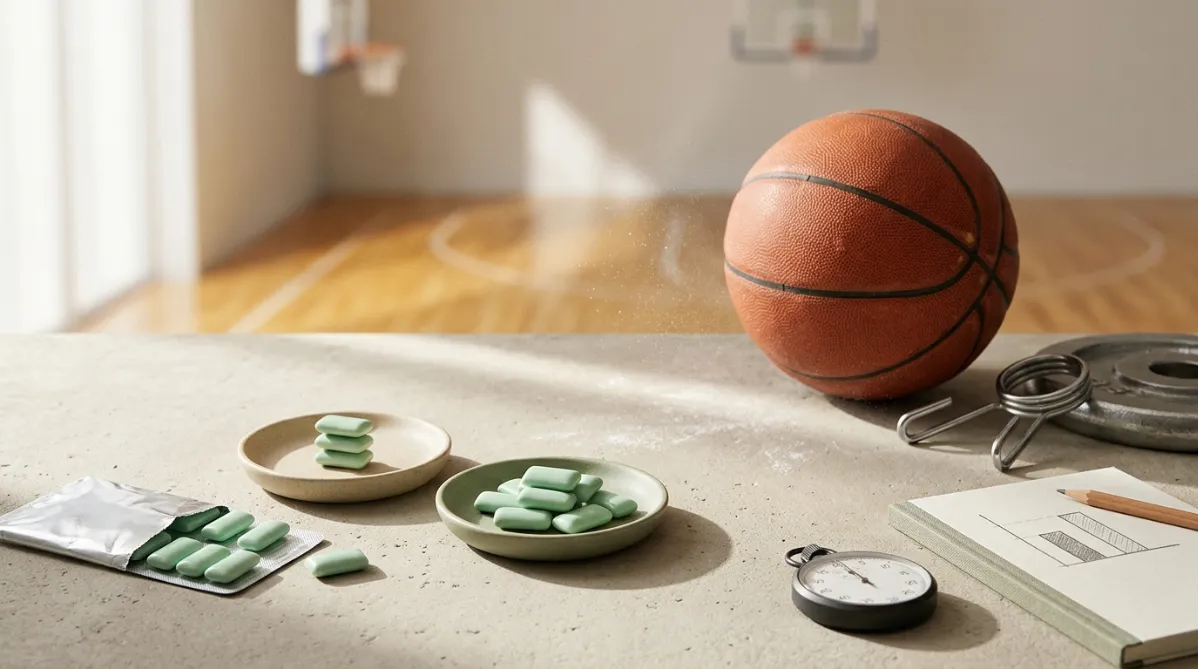
A landscape editorial still life on a pale warm-gray concrete surface, shot from a slightly elevated three-quarter angle in soft diffused morning window light. In the foreground left, a small open foil blister pack of mint-green caffeine gum sits beside two neatly arranged piles of gum pieces, one with three pieces and one with six, each on a small matte ceramic dish in oat and sage tones. The pieces are slightly glossy, rounded rectangles with crisp shadows. In the center-right, a worn leather basketball rests on the surface with deep amber-orange tones and visible pebbled texture. Next to it is a loosely chalked barbell collar and a single steel weight plate edge, partly out of focus. A minimalist analog stopwatch with a matte white face and a thin black hand lies at the lower right, and a slim notebook with a pencil rests nearby. The page shows a simple hand-drawn bar graph of two equal bars, with no legible text. In the soft-focus background, a blurred indoor basketball court with warm honey-colored hardwood and distant hoop lines fades into creamy bokeh. A narrow band of sunlight crosses the scene diagonally and picks out chalk dust particles in the air. The palette is muted and modern: sage green, warm oat, terracotta orange, charcoal, and cream. The composition leaves open negative space on the upper left for title overlay. Shallow depth of field, fine film grain, and a calm, clean magazine aesthetic like a contemporary health and science journal. No people, no text, no futuristic elements.
science research

Caféïnekauwgom en dezelfde‑dagprestaties: waarom 3 mg/kg net zo effectief is als 6 mg/kg

BY DR. GYMBRO ·

Een crossover‑studie bij basketbalspelers liet zien dat caféïnekauwgom van 3 mg/kg dezelfde‑dag kracht, power, sprint‑snelheid en reactieve behendigheid verbetert – ongeveer even sterk als een dosis van 6 mg/kg. Beide doseringen zorgden ook voor een hogere halssnelheid tijdens zware squat‑priming, maar na 24‑48 uur was het effect verdwenen. Omdat de studie geen basismetingen en geen zuivere caféïnedosis bevatte, moeten de resultaten kritisch worden bekeken. Hieronder lees je wat dit betekent voor dosering, timing en voor wie het relevant kan zijn.
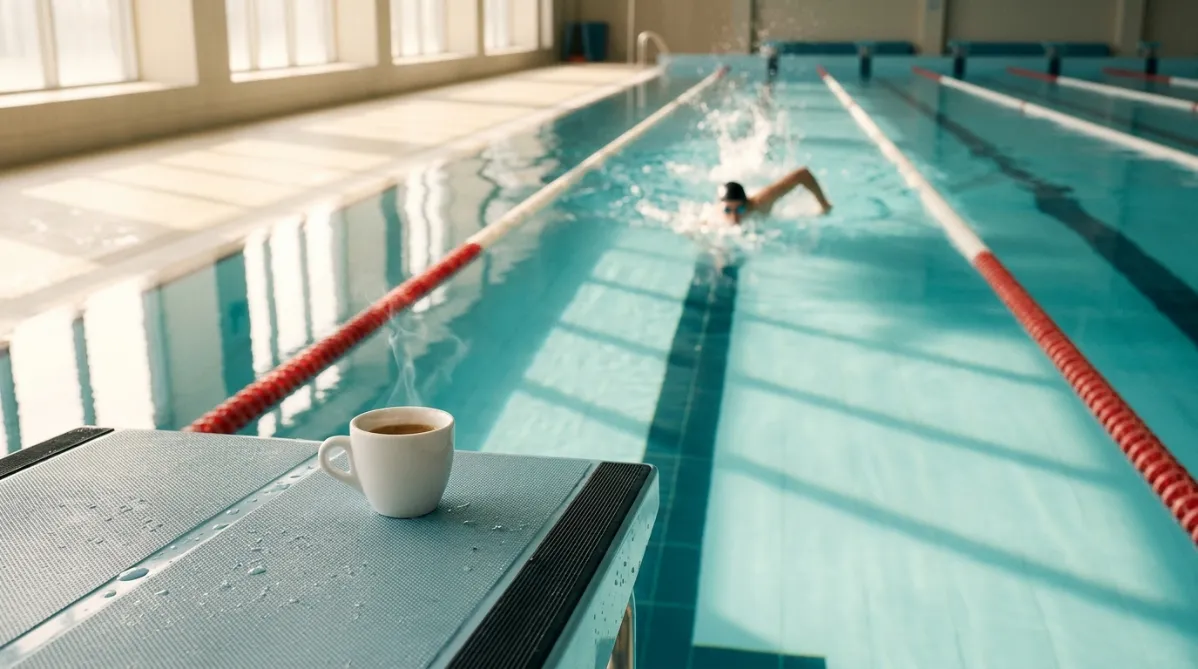
A wide, editorial-style photograph of a competition swimming pool lane seen from just above the water line at the starting end, in soft morning light. In the foreground, on the pool deck, a white ceramic espresso cup sits on the edge of a blue-gray starting block, a thin curl of steam rising from it. The cup is in crisp focus, with a few droplets of water on the textured non-slip deck around it. Behind it, the pool stretches into the distance as a series of calm lanes divided by red and white lane ropes. The turquoise water glints with gentle ripples and long, shimmering reflections. At the far end, a lone swimmer in a dark cap and goggles is mid-stroke, caught in a small burst of white splash, and slightly out of focus because of the shallow depth of field.

Large windows along the side wall let in pale golden sunlight, which throws soft diagonal light across the water and the deck. The palette is clean and modern: aqua, deep teal, warm cream and a small accent of coffee brown. The cup's warm tones stand out against the cool blues. The composition follows the rule of thirds, with the cup in the lower left third and open negative space of water and light on the right, leaving room for headline text. The look is minimal, airy and contemporary, like a high-end sports and science magazine, with subtle film grain, natural color grading, and a slightly desaturated, calm mood. Faint stopwatch-like details appear only as a thin black timing pad edge on the starting block, with no text or numbers visible. The overall feel is quiet anticipation just before a race, precise and fresh, with a sense of small margins and measured performance.
nutrition

Cafeïne maakt zwemmers sneller, maar minder dan je zou denken

BY DR. GYMBRO ·

Zwemmers drinken al jarenlang koffie vóór een wedstrijd, maar werkt het echt? Een nieuwe multilevel meta‑analyse van 13 crossover‑studies laat een winst van ongeveer 1,7 % zien – een relevant verschil in een sport waar honderdsten van een seconde tellen. Het verrassende detail: het duidelijkste effect bleek bij een dosering van 6 mg/kg of meer, terwijl lagere doses geen overtuigend effect lieten zien. Cafeïne verhoogde ook de bloedlactaat na de race, en de resultaten varieerden sterk tussen de onderzoeken. Hieronder wat de cijfers wel en niet ondersteunen.
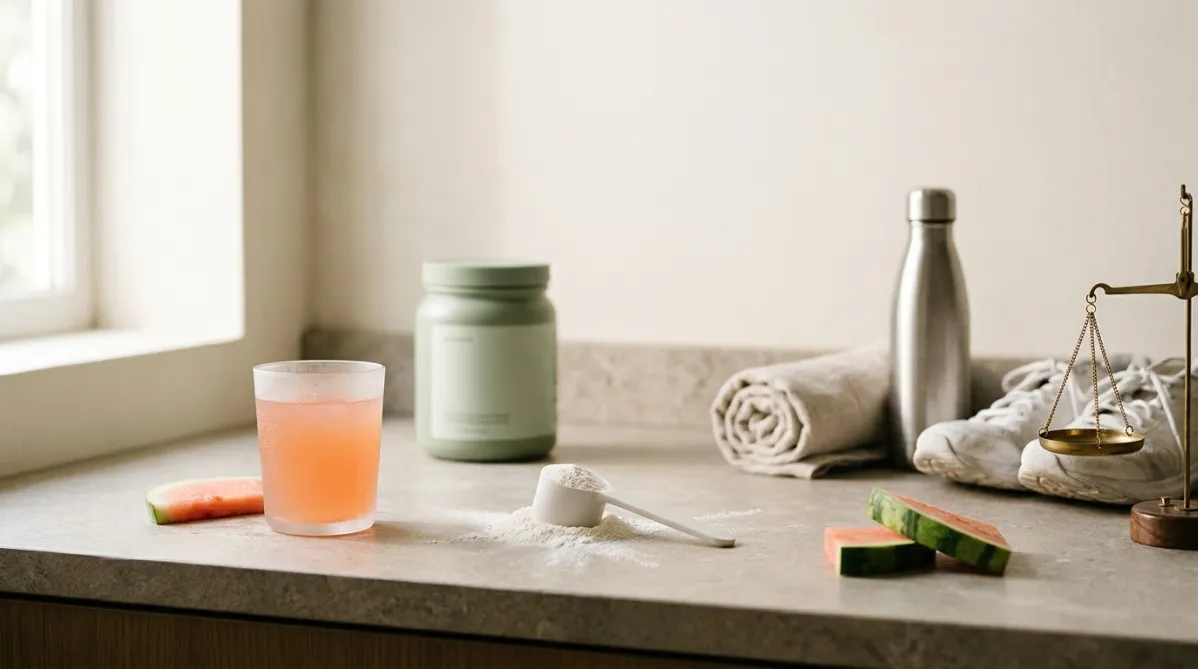
A wide landscape editorial photograph shot from slightly above, showing a clean matte stone countertop in soft morning light. On the left, a single frosted glass tumbler of pale pink-orange watermelon-colored drink sits with condensation beads on its surface, a thin slice of watermelon resting beside it. In the center, a minimalist matte white scoop rests on a small pile of fine white powder, with a few grains scattered naturally across the surface. Behind it, a blurred matte sage-green supplement tub with no legible text stands slightly out of focus. On the right, a neat arrangement of gym elements: a rolled linen towel, a slim stainless steel water bottle, and a pair of worn white running shoes with soft shadows. A small brass balance scale sits at the far right edge, one pan slightly higher than the other, hinting at weighing evidence versus hype. Scattered across the counter are a few cut watermelon rind wedges in vivid green and coral pink, adding natural color accents.

The color palette is warm and restrained: cream, soft blush pink, sage green, and warm gray, with a single pop of coral. Light enters from a window on the left, casting long, gentle diagonal shadows and a subtle highlight on the glass. Shallow depth of field with creamy bokeh in the background. Composition leaves generous negative space across the upper third and right side for headline text overlay. Style resembles a modern wellness magazine or trendy health journal cover: calm, tactile, minimal, slightly muted film-like grain, natural textures such as linen, stone, and glass. No people, no text, no logos, and no futuristic elements.
supplements

Citrulline Malate: Hype of Hulp? 30 studies wijzen op nauwelijks effect

BY DR. GYMBRO ·

Citrulline malate staat in bijna elk pre‑workout‑poeder, maar hoeveel effect heeft het écht? Een recente meta‑analyse van 30 gerandomiseerde onderzoeken met 644 deelnemers liet een zeer klein prestatievoordeel zien (Hedges' g = 0,16). De voorspelling‑intervallen waren breed, de GRADE‑zekerheid laag tot zeer laag en de waargenomen inspanning bleef ongewijzigd. Acute inname leek stabieler dan chronische, en er waren aanwijzingen voor aerobe en korte anaerobe taken, maar die waren niet robuust. Wat betekent dit voor dosering, timing en de praktische waarde?
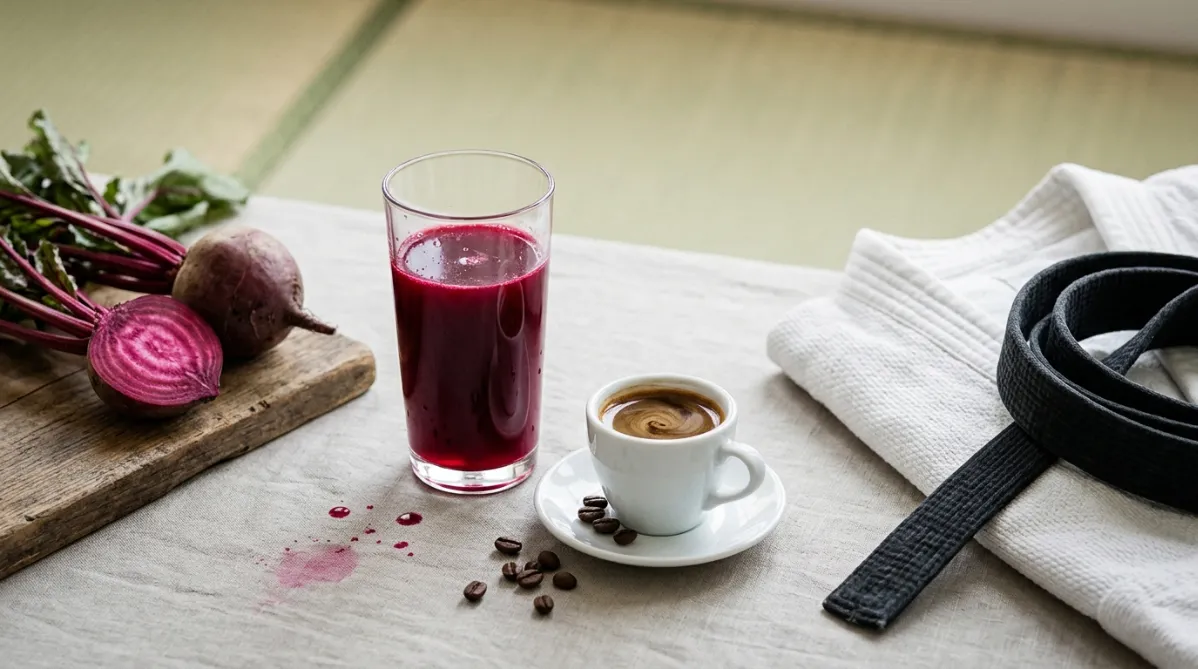
A wide landscape editorial still life on a pale warm-gray linen surface, shot from a slightly elevated three-quarter angle in soft diffused morning window light. At center-left, a tall clear glass filled with deep magenta-crimson beetroot juice catches the light, its edges glowing ruby with a few condensation droplets on the surface. Beside it sits a small white ceramic espresso cup with dark, glossy coffee and a delicate swirl of crema. A few roasted coffee beans are scattered casually near the cup's saucer. To the left, two whole raw beetroots with their leafy burgundy-veined greens still attached rest on a rustic wooden board, with one beet sliced in half to reveal concentric rings of vivid fuchsia and pale pink. A folded white judo gi sleeve with a worn black belt loosely coiled on top is draped along the right side of the frame, the cotton weave texture visible, hinting at the sport without any people. In the background, a soft-focus tatami mat texture in muted straw-green creates a subtle horizontal band, blurred into creamy bokeh. A small scattering of beet juice droplets and a faint magenta stain on the linen add an organic, lived-in touch. The palette is restrained and modern: magenta, espresso brown, off-white, muted sage, and warm beige. Composition leaves generous negative space on the upper right for headline overlay. The mood is clean, calm, and contemporary, like a premium health and science magazine cover, with shallow depth of field, crisp focus on the glass and cup, fine natural shadows, and subtle film-like grain.
nutrition

Bietensap + cafeïne: de judo‑truc die cafeïne alleen verslaat

BY DR. GYMBRO ·

Cafeïne is de standaard pre‑wedstrijdboost, maar een gerandomiseerde studie met 35 judoka’s laat zien dat het effect rond de vijfde ronde van een gesimuleerde wedstrijddag verdwijnt. Bietensap werkt juist omgekeerd en biedt pas later in de dag een voordeel. De combinatie levert zowel vroeg als laat een prestatievoordeel. In ronde 5 presteerden zowel bietensap als de combinatie beter dan alleen cafeïne op judo‑specifieke fitheid, neuromusculaire functie en cognitie. Hieronder lees je wat de studie aantoonde, voor wie het nuttig kan zijn, voor wie voorzichtigheid geboden is en welke kanttekeningen er zijn.
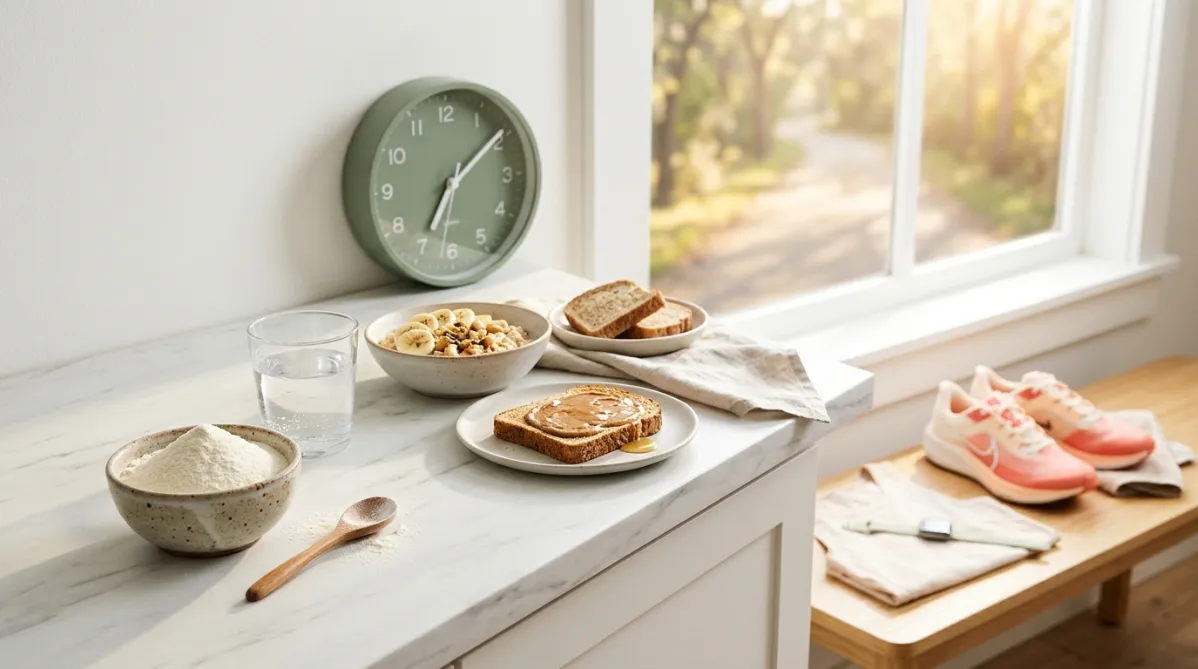
A bright, airy editorial photograph in landscape format of a clean white marble kitchen counter in soft morning light. On the left, a small rustic ceramic bowl holds a mound of fine white powder, with a wooden spoon resting beside it and a scattering of powder dusted across the marble. Next to it sits a glass of water with a faint ripple on its surface. In the middle ground, a simple breakfast spread: a bowl of oatmeal topped with sliced banana, a piece of toast with honey, and a few slices of white bread, all styled in muted, natural tones. A minimalist analog wall clock or a vintage round kitchen timer in matte sage green sits subtly in the background, hinting at the 90-minute timing.

On the right side of the frame, slightly out of focus, a pair of modern running shoes in soft coral and cream rests on a light oak floor or bench. Next to them are a folded running shirt and a slim sports watch. Through a large window behind the counter, a blurred sunlit tree-lined running path glows in warm golden light, suggesting a woman's morning run without showing a face.

The palette is soft and modern: warm whites, sage green, pale peach, light wood, and touches of coral. Shallow depth of field, gentle natural shadows, and a clean composition with generous negative space in the upper left for title overlay. The mood is fresh, trustworthy, and health-journal chic, like a high-end wellness magazine feature. Shot on a 50mm lens, crisp details, subtle film grain, and a calm, minimal, contemporary feel.
nutrition

Baking soda verkort de 10‑km‑tijd van vrouwen met 32 seconden – dit is de truc

BY DR. GYMBRO ·

Een goedkoop keukeningrediënt heeft de 10‑km‑tijden van recreatieve vrouwelijke hardlopers net een boost gegeven, en het maag‑ongemak dat meestal optreedt, was vrijwel afwezig. In een dubbel‑blind crossover‑onderzoek finishten 21 vrouwen gemiddeld 32 seconden sneller na inname van natriumbicarbonaat. Het geheim lag in de combinatie van het poeder met een koolhydraatrijke maaltijd 90 minuten vóór de loop. Hieronder vind je de dosering, het juiste tijdstip, voor wie het werkt en voor wie je beter eerst kunt overleggen.
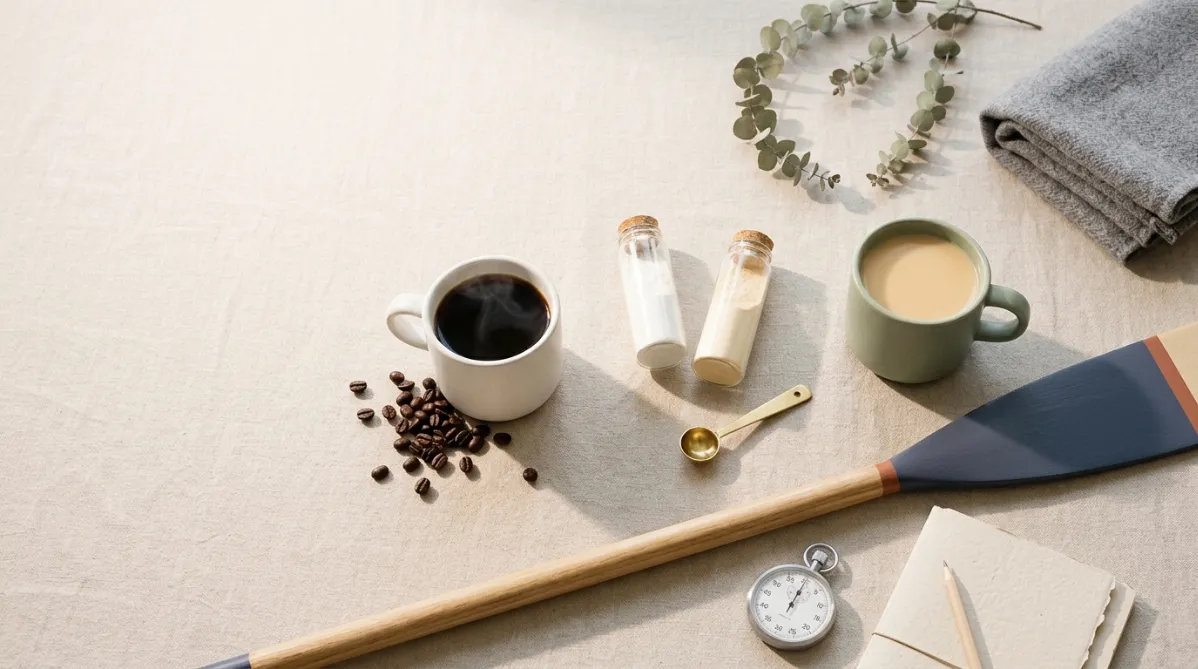
A wide, editorial-style flat lay photographed from above on a pale oat-colored linen surface in soft morning window light. On the left, a small matte white ceramic cup of black coffee with a delicate swirl of steam, beside a few scattered roasted coffee beans. On the right, a second matte sage-green ceramic cup holding a pale, creamy golden tea-like drink, mirroring the first. Between them, two small glass vials with cork stoppers sit side by side: one holding fine white powder, the other holding slightly warmer cream-colored powder, with a tiny brass measuring spoon resting nearby. In the lower foreground, a slim wooden rowing oar lies diagonally across the frame, its blade edge softly entering from the right, painted a muted navy with a thin terracotta stripe. A minimalist analog stopwatch with a brushed-steel case rests near the oar, and a folded cream notebook with a thin pencil suggests data-taking. In the upper corner, a crescent-shaped dried eucalyptus sprig and a small folded gray wool throw hint at sleep and calm without being literal. The palette is warm and restrained: oat, cream, sage, soft navy, terracotta, and espresso brown. Shadows are long and gentle, with shallow depth of field and subtle film grain, giving a refined, modern wellness-magazine feel. Generous negative space on the left third of the composition leaves room for a headline overlay. Clean, calm, tactile, and contemporary, with no text, logos, or futuristic elements.
science research

Paraxanthine vs cafeïne: de combinatie die won en de slaapbeschermer

BY DR. GYMBRO ·

Paraxanthine, de belangrijkste metaboliet van cafeïne, ging recentelijk de strijd aan met cafeïne in een proef met 14 roeiers. Een combinatie van 200 mg van elk versloeg placebo op een 2000‑m roeitocht, zij het met een klein effect (d = 0,30). Geen van beide stoffen toonde afzonderlijk een duidelijke prestatie‑winst. Paraxanthine alleen leek echter vriendelijker voor de subjectieve slaap. Hier staan de cijfers, de beperkingen en wie er daadwerkelijk van kan profiteren.
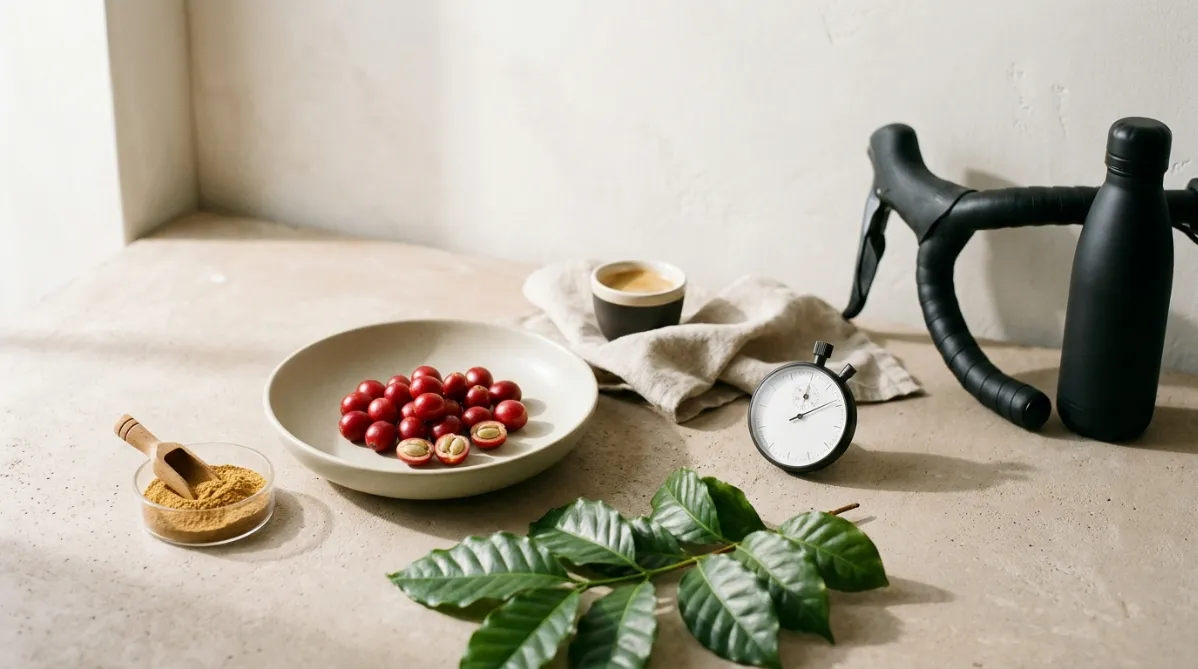
A wide editorial still life on a pale, warm-toned concrete surface in soft morning window light. In the center-left, a shallow matte ceramic bowl holds a small pile of bright red coffee cherries with glossy skins, a few sliced open to reveal pale mucilage and paired green-tan beans. Beside it, a small glass dish of fine, golden-brown powdered extract with a tiny wooden scoop resting on its edge. A sprig of coffee plant leaves, deep green and waxy, arcs across the foreground.

On the right side, slightly out of focus, a sleek road cyclist's handlebar and a matte black water bottle lean against a light plaster wall, suggesting athletic training without showing a person. A minimalist analog stopwatch with a clean white face and thin black hands sits in the mid-ground, angled toward the camera, its hands paused near the fifteen-minute mark. A folded linen cloth in oatmeal beige and a single small espresso cup with a thin crema ring add quiet texture.

The color palette is restrained and modern: cherry red, sage green, cream, soft terracotta, and charcoal accents. Light comes from the left, casting long, gentle shadows with a subtle warm glow and a hint of dust in the air. Shallow depth of field with crisp focus on the cherries and stopwatch, creamy bokeh in the background. Composition leaves open negative space in the upper right for a headline overlay. The overall feel is a clean, trendy health-and-science magazine cover: tactile, natural, minimal, and calm, shot in a 16:9 landscape frame with fine film-like grain and true-to-life tones.
nutrition

Koffie‑kersextract: 200 mg cafeïne verhoogde fietsprestatie met 4,6 %

BY DR. GYMBRO ·

Een lage dose van 200 mg cafeïne uit een geheel koffie‑kersextract hielp getrainde wielrenners om 4,6 % meer werk te leveren in een tijdrit van 15 minuut. Maar het populaire idee dat het de glycogeen‑herstel versnelt, bleek niet te kloppen. Deze gerandomiseerde, dubbelblinde cross‑over studie betrof slechts 12 wielrenners en werd gefinancierd door de industrie, zonder een zuivere cafeïne‑vergelijkingsgroep. Hier zie je wat de data laten zien, wat ze niet laten zien, en voor wie het interessant kan zijn.
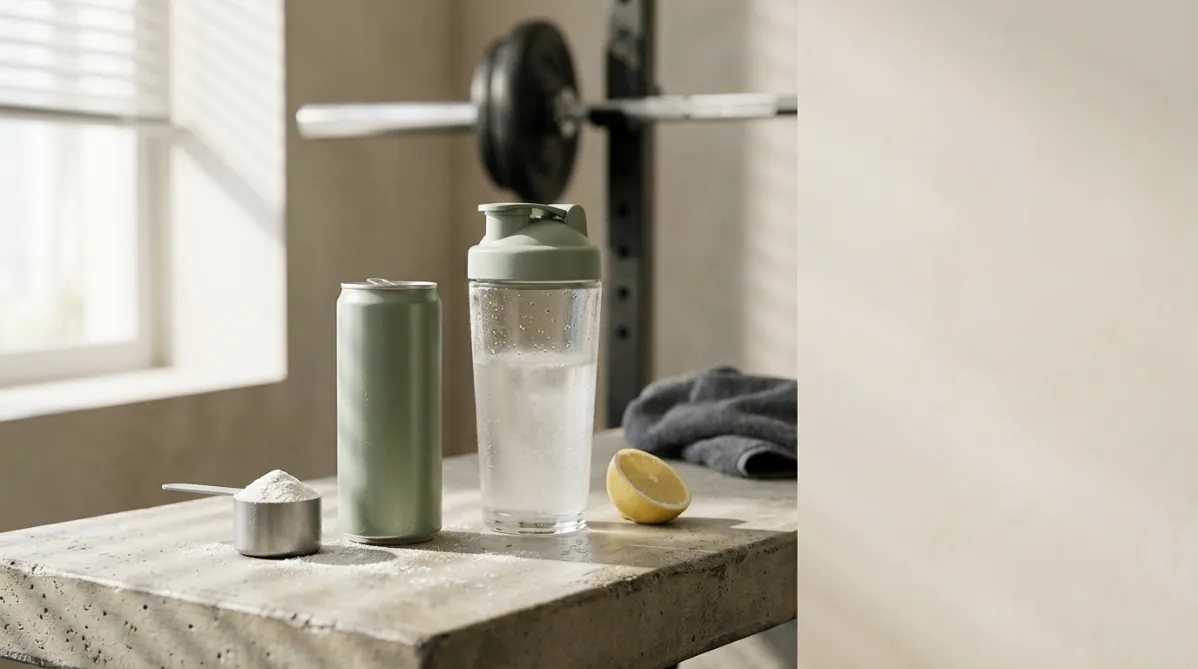
A sleek aluminum energy drink can and a matte scoop of white pre-workout powder sit side by side on a pale concrete gym bench, lit by soft morning window light. The can is slim and minimalist, with a muted sage green label and no legible text. Beside it is a clear glass shaker half full of cloudy, lightly frothy liquid with condensation beading on its surface. A few fine grains of powder are scattered across the bench, catching the light. Behind them, slightly out of focus, a stainless steel barbell rests on a rack, and a folded charcoal gym towel sits at the edge of the frame.

The color palette is warm neutral: oatmeal, soft gray, and sage, with a single accent of pale citrus yellow from a halved lemon wedge placed near the glass. A thin, elegant shadow from the window blinds falls diagonally across the scene, giving it an editorial, magazine-style rhythm. The composition leaves generous negative space on the right third of the frame, a smooth blurred wall in warm off-white, suitable for headline text overlay.

The shot is a low-angle, shallow depth-of-field product-style photograph, as if taken with an 85mm lens at f/2. The foreground objects are tack sharp and the background melts into creamy blur. The mood is calm, clean, and modern, like a wellness or science journal feature. Subtle film grain and gentle contrast add a tactile, contemporary lifestyle feel. There are no people, no logos, and no futuristic or sci-fi elements, just a quiet, considered still life that suggests the choice between a canned drink and a scooped supplement.
nutrition

Je energiedrank werkt misschien als pre‑workout — met één kanttekening

BY DR. GYMBRO ·

Cafeïne en taurine staan vaak naast elkaar in energiedranken en pre‑workouts, maar levert dat echt een prestatie‑boost op? Een nieuwe meta‑analyse van 11 gerandomiseerde studies (234 deelnemers) toonde een bescheiden verbetering in piekvermogen en tijd tot uitputting, plus een lager ervaren inspanningsniveau. De hartslag bleef onveranderd en het resultaat voor reactietijd was te inconsistent om te vertrouwen. Het grote probleem: de onderzoeken waren klein en kunnen niet aantonen of taurine iets extra’s biedt bovenop cafeïne.
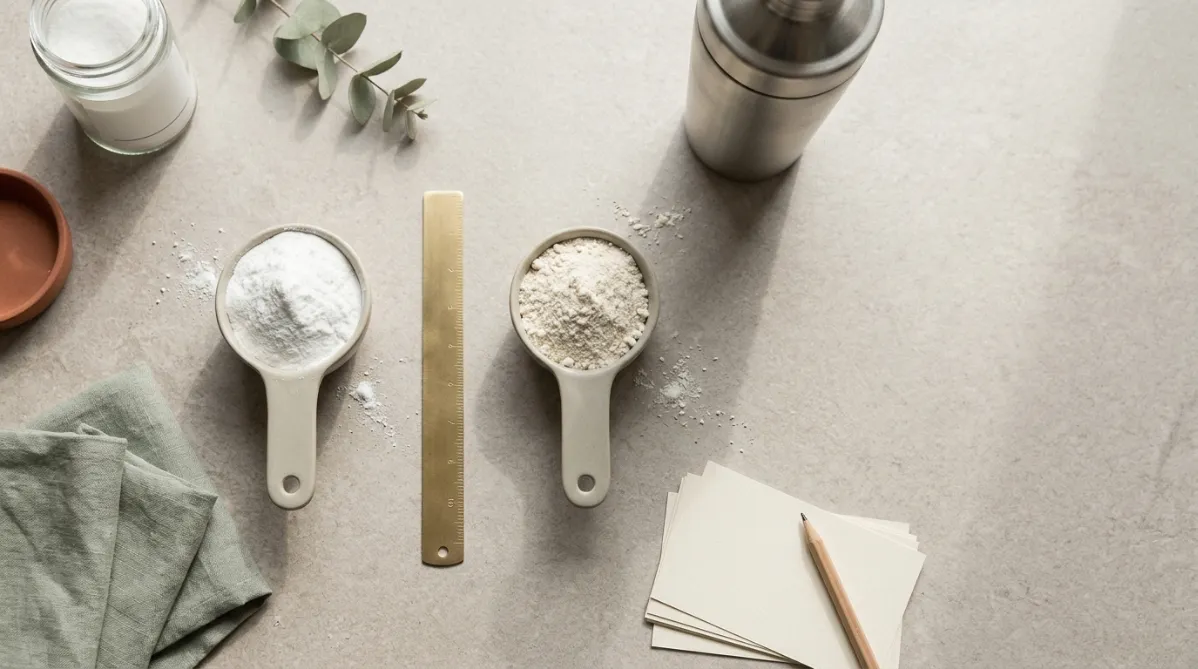
A bright, minimalist flat-lay photograph of two supplement scoops on a pale warm-gray stone surface, shot from directly above in soft natural window light. On the left, a matte ceramic scoop holds fine white creatine monohydrate powder, heaped in a clean mound. On the right, a second scoop of the same shape holds slightly coarser off-white beta-alanine powder, with a small, deliberate gap between the two. Each scoop sits in its own soft shadow, which suggests separation rather than combination. Between them, a thin brushed-brass ruler or a single slim line of fine powder runs across the surface and subtly divides the composition.

Around the scoops, a few restrained props in a muted editorial palette of sage green, cream, terracotta, and soft charcoal: a small glass jar with a minimalist label that has no readable text, a folded linen napkin, a single sprig of eucalyptus, and a stainless-steel shaker bottle softly out of focus in the upper corner. A few loose powder grains are scattered naturally across the stone. A small stack of blank cream index cards with a pencil rests in the lower right, hinting at research and note-taking without any legible writing.

The composition follows a clean rule-of-thirds layout, with generous negative space on the right third for headline overlay. The lighting is gentle and diffused, with long, soft shadows falling to the lower left. The color grading is calm and slightly desaturated, with creamy highlights and a subtle film-like grain. The overall look is a modern wellness and science journal cover, with an airy, trustworthy, contemporary editorial feel, shallow depth of field, and crisp detail on the powders.
nutrition

Creatine + beta‑alanine: de vermeende stack‑bonus die onderzoekers niet vonden

BY DR. GYMBRO ·

De combinatie van creatine en beta‑alanine wordt vaak aangeprijst als een krachtig duo voor sportprestaties, maar een recente netwerk‑meta‑analyse van 52 gerandomiseerde onderzoeken vond geen synergie tussen de twee. Creatine alleen verbeterde significant sprint‑, sprong‑, herhaalde‑sprint‑ en bovenlichaam‑uithoudingsvermogen vergeleken met placebo. De effecten van beta‑alanine waren niet‑significant of alleen in bepaalde contexten aanwezig, en de combinatie leverde geen extra voordeel op ten opzichte van creatine alleen. Hieronder lees je wat de onderzoekers deden, welke beperkingen er zijn en wat dit betekent voor je supplementenbudget.
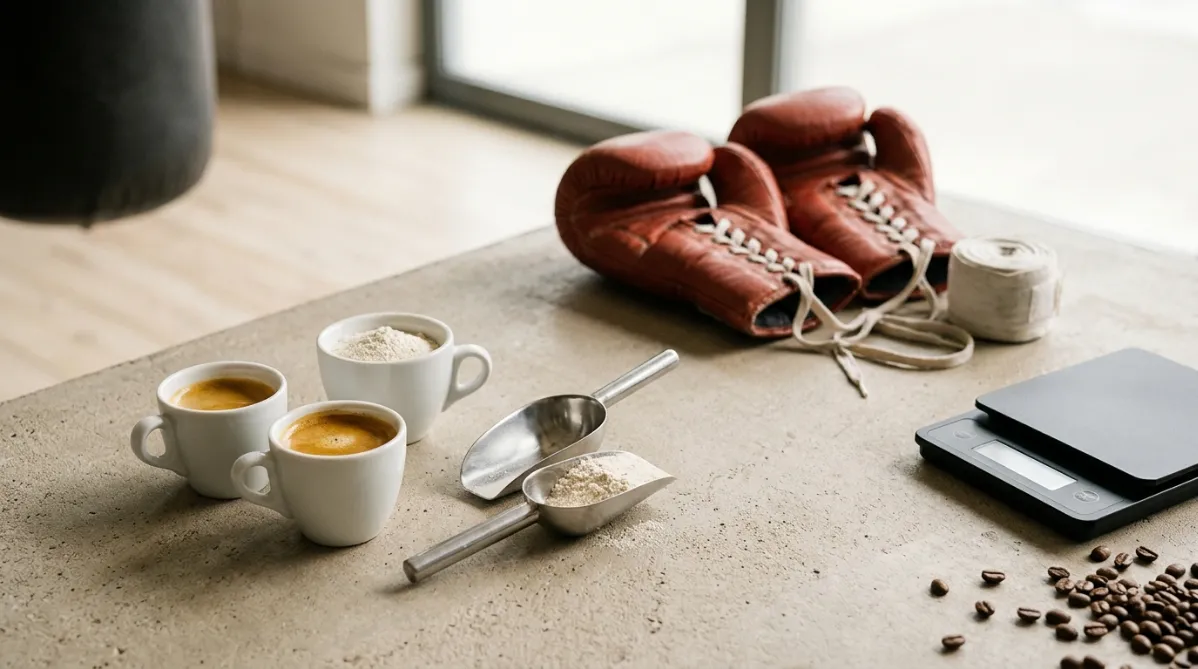
A landscape editorial photograph with a modern, clean magazine feel, shot on a pale warm-gray concrete surface in soft natural window light from the left. In the foreground, two matte white ceramic espresso cups sit side by side. The left cup holds a small amount of dark espresso with golden crema. The right cup is filled twice as high. Beside them, two small stainless steel scoops hold fine coffee-colored powder, one half full and one heaped, suggesting a dose comparison without any text or labels. A pair of worn red leather boxing gloves rests slightly out of focus behind the cups, laces loosely draped, with a white hand wrap rolled neatly beside them. A minimalist digital kitchen scale in matte black sits at the edge of the frame, with a few roasted coffee beans scattered across the surface. In the soft-focus background, a boxing gym corner appears: a hanging heavy bag in muted charcoal, pale wood plank flooring, and a tall window with diffused morning light. The palette is warm cream, espresso brown, brick red, and soft slate gray, with gentle shadows and a shallow depth of field. The composition follows the rule of thirds, with the cups and scoops in the lower left third and open negative space on the right for headline overlay. The look is tactile and refined, like a high-end health and performance journal. It has natural grain, subtle contrast, and a calm, confident mood. There are no people, no text, no logos, and no futuristic elements.
nutrition

Dubbel zo veel cafeïne hielp boksers nauwelijks — dit werkte wel

BY DR. GYMBRO ·

Denk je dat een dubbele schep pre‑workout je prestaties automatisch verdubbelt? Een nieuwe crossover‑studie met 15 competitieve boksers vergeleek 3 mg/kg met 6 mg/kg cafeïne en toonde aan dat de hogere dosis niet consequent beter was. Beide dosissen verhoogden de spronghoogte en kracht na 60 minuten, maar 6 mg/kg leverde alleen bij enkele uitkomsten – zoals de ballistic push‑up en knie‑torque – een extra voorsprong. Hieronder vind je een mg‑per‑kg‑omrekening voor veelvoorkomende lichaamsgewichten, de door de data ondersteunde timing, en enkele kanttekeningen, onder meer dat er geen effect op daadwerkelijke stoten is getest.
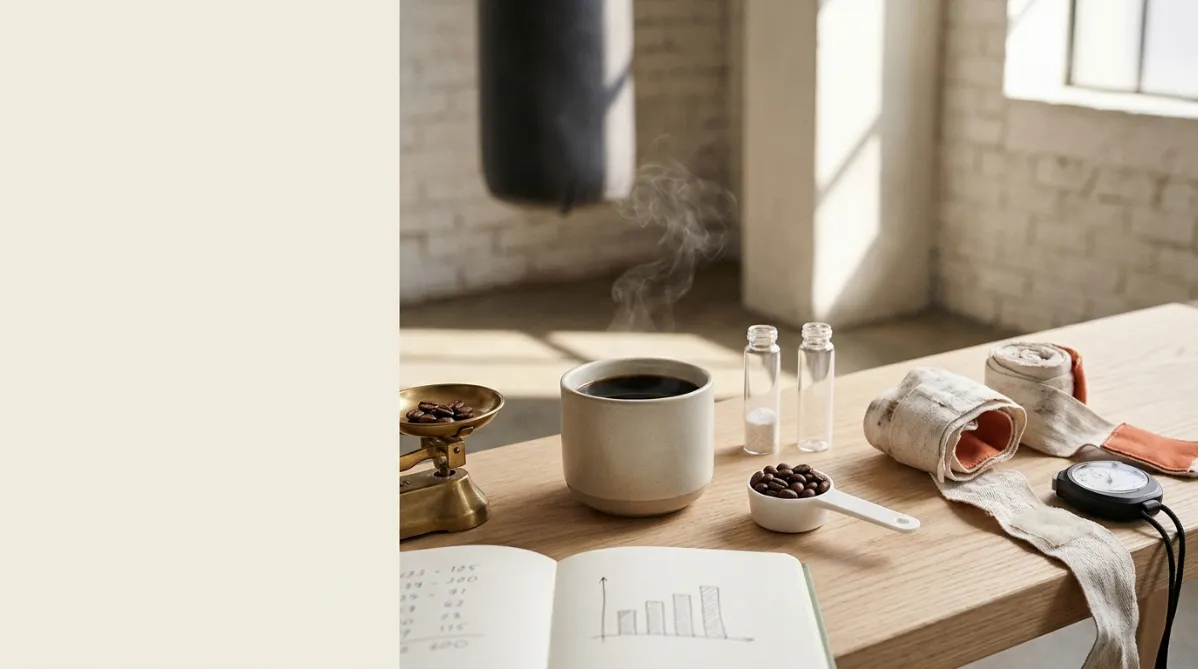
A wide, editorial-style still life shot from a slightly elevated angle on a pale oak gym bench, bathed in soft morning window light. In the center sits a matte ceramic cup of black coffee with delicate steam curling upward, flanked by a small white scoop of coffee beans and two identical glass vials, one filled with a few grains of fine powder and one empty, hinting at dose comparison. Next to the cup rests a pair of worn white boxing hand wraps, loosely coiled, and a slim black stopwatch with its face softly visible. In the foreground, a minimalist notebook lies open with blurred handwritten numbers and a simple pen sketch of a bar graph with bars of equal height, subtle and unreadable, suggesting a null result without any legible text. A small brass kitchen scale sits to the side with a few coffee beans on its tray.

In the soft-focus background, a boxing gym interior is visible: a hanging heavy bag in muted charcoal, exposed brick wall painted off-white, and tall windows casting long diagonal light across the floor. The color palette is warm and restrained: cream, sand, espresso brown, soft charcoal, with a single accent of muted terracotta orange in the hand wraps and a faint sage green in the notebook cover. Shallow depth of field with creamy bokeh, fine film grain, and gentle shadows give it a contemporary lifestyle-magazine and wellness-journal feel. The composition leaves generous negative space on the left third for headline overlay. Clean, calm, trendy, and tactile, with natural textures like wood grain, ceramic glaze, and cotton fabric. No people, no text, no futuristic elements.
science research

Koffie met lage cafeïnedosis gaf elite vechters geen sprintboost

BY DR. GYMBRO ·

Dacht je dat een pre‑workout kop koffie je sprints een boost geeft? Een nieuw, gerandomiseerd, dubbelblind crossover‑onderzoek met 15 nationale vechtsporters vond geen prestatiewinst bij cafeïnedoses van 1,5 mg/kg en 3 mg/kg – ongeveer 100 mg resp. 200 mg voor een sporter van 68 kg. Noch piek‑vermogen, gemiddeld vermogen, vermoeidheidsindex noch de geschatte bijdrage van de verschillende energiesystemen verschilden van decaf. Het betreft echter een kleine nulbevinding, geen bewijs dat cafeïne faalt, en de meeste positieve studies gebruiken capsules met 3–6 mg/kg.
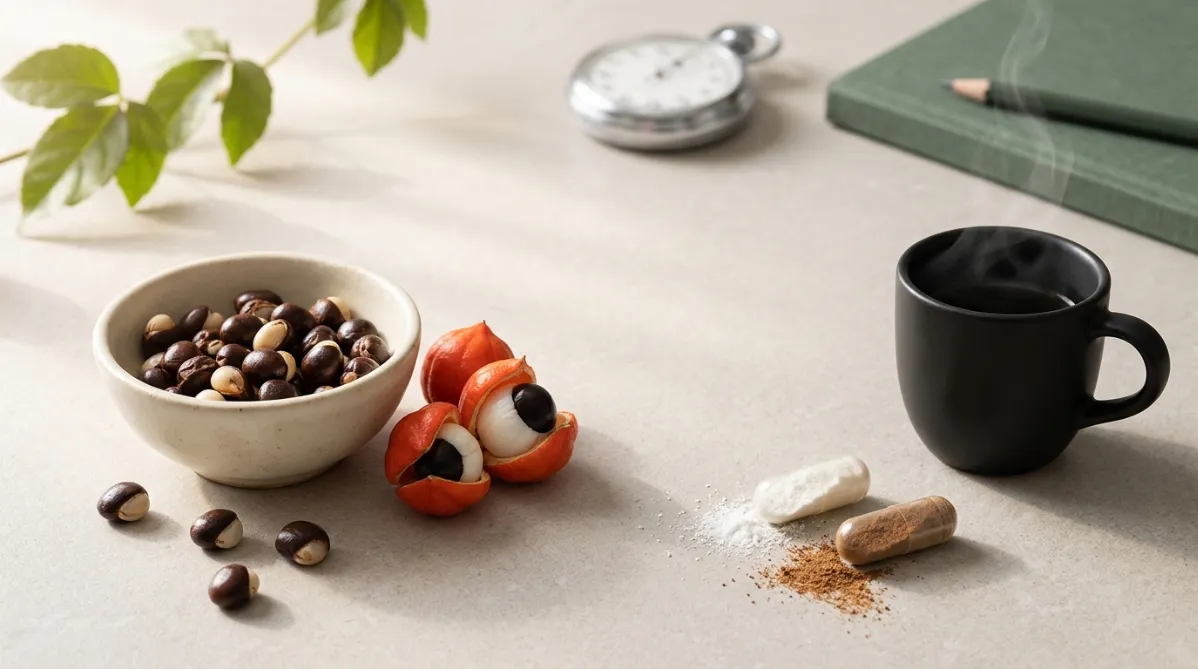
A wide, softly lit editorial flat-lay on a pale warm-gray stone countertop, shot from slightly above. On the left, a small rustic ceramic bowl in matte cream holds a handful of dried guarana seeds, dark glossy brown with pale cream arils, a few spilling onto the surface. Beside it sits a halved fresh guarana fruit in vivid red-orange, split open to show the white flesh and black seed inside, looking like a tiny eye. On the right, two open clear capsules rest side by side. One is filled with fine white caffeine powder, the other with a fine earthy brown guarana powder, and a little of each dusts the stone in delicate, deliberate lines. Between them, a minimalist matte-black espresso cup with a thin ribbon of steam rises on the right edge of the frame. A brushed-steel stopwatch and a slim dark-green linen notebook with a pencil sit in the upper background, slightly out of focus, to hint at performance testing without clutter. A few green leaves of a guarana vine curve in from the top-left corner, catching soft light.

The lighting is natural window light from the left, with gentle long shadows and a subtle warm highlight on the seeds. The palette is muted and modern: warm creams, terracotta red, deep espresso brown, sage green, and charcoal accents. The background is clean with generous negative space on the upper right for headline text. Shallow depth of field, crisp focus on the seeds and capsules, fine grain, and a calm premium magazine look like a contemporary wellness and sports-science journal. No people, no text, no logos, no futuristic elements.
science research

Guarana vs cafeïne: dezelfde dosis, alleen guarana verhoogde het maximale vermogen

BY DR. GYMBRO ·

Met dezelfde hoeveelheid cafeïne, maar een andere capsule, leverde alleen guarana een statistisch significante toename in piekvermogen op. In een gerandomiseerde crossover‑studie met 18 actieve mannen verhief guarana het piekvermogen met 4 % ten opzichte van placebo, terwijl anhydrous cafeïne geen significant effect liet zien. De verschillen tussen guarana en cafeïne waren echter niet statistisch significant – ze blijven beschrijvend. Hieronder vind je de resultaten, de beperkingen van de studie en praktische tips voor dosering op basis van cafeïne‑inhoud.
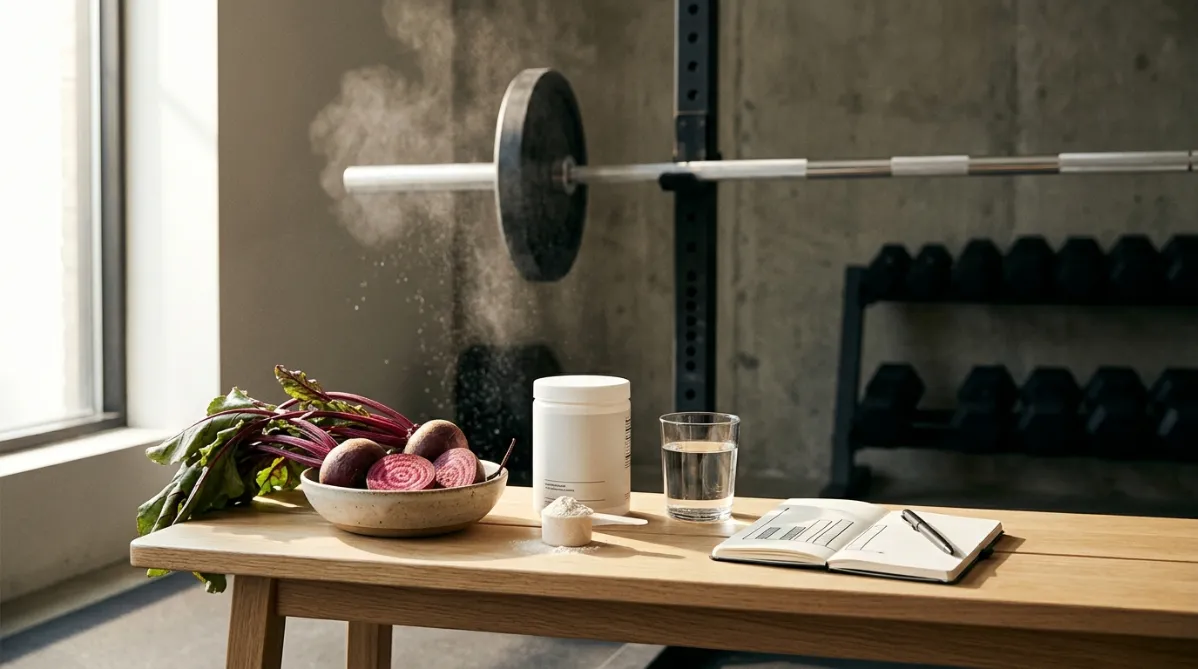
A sun-lit editorial still life on a pale oak gym bench: a loaded barbell rests on a rack just above it, chalk dust drifting in the air. In the foreground sits a small ceramic bowl of roasted beets, some sliced to show their deep magenta rings, with a few whole beets still wearing their leafy burgundy stems. Next to the bowl is a matte white supplement tub with a minimal label, a wooden scoop of fine white powder, and a clear glass of water catching soft highlights. A slim notebook lies open beside them with a simple hand-drawn bar graph and a pen, suggesting data and analysis without any readable text. Behind the bench, a softly blurred minimalist training space: raw concrete wall, tall window with warm morning light, a rack of black dumbbells fading into bokeh. The palette is earthy and modern: beet magenta, warm cream, charcoal, brushed steel, and touches of sage green from the beet leaves. Soft directional light from the left creates long gentle shadows and a slight film-grain texture. Shallow depth of field keeps the beets and powder tack sharp. The composition is wide and balanced, with negative space on the right for headline overlay. The overall feel is a clean, contemporary health and fitness journal photograph, warm and tactile, with an understated scientific tone.
nutrition

Betaïne verhoogt bench‑throw power met ongeveer 16 % in 14 dagen

BY DR. GYMBRO ·

Twee weken betaine, een verbinding uit bieten die ook als TMG wordt verkocht, leverden een toename van circa 16 % in bench‑throw power op de eerste dag van een intensief testblok bij weerstandstraining. Een gerandomiseerde, dubbel‑blinde crossover‑studie toonde bovendien hogere isometrische bench‑presskrachten, met een kleinere winst in verticale sprongkracht en isometrische squat‑kracht. Herhalingen en sprong‑squat‑kracht bleven echter gelijk, en de studie betrof slechts 12 mannen. Hieronder de resultaten, de gebruikte dosis en wat sporters er wel én niet van moeten afleiden.
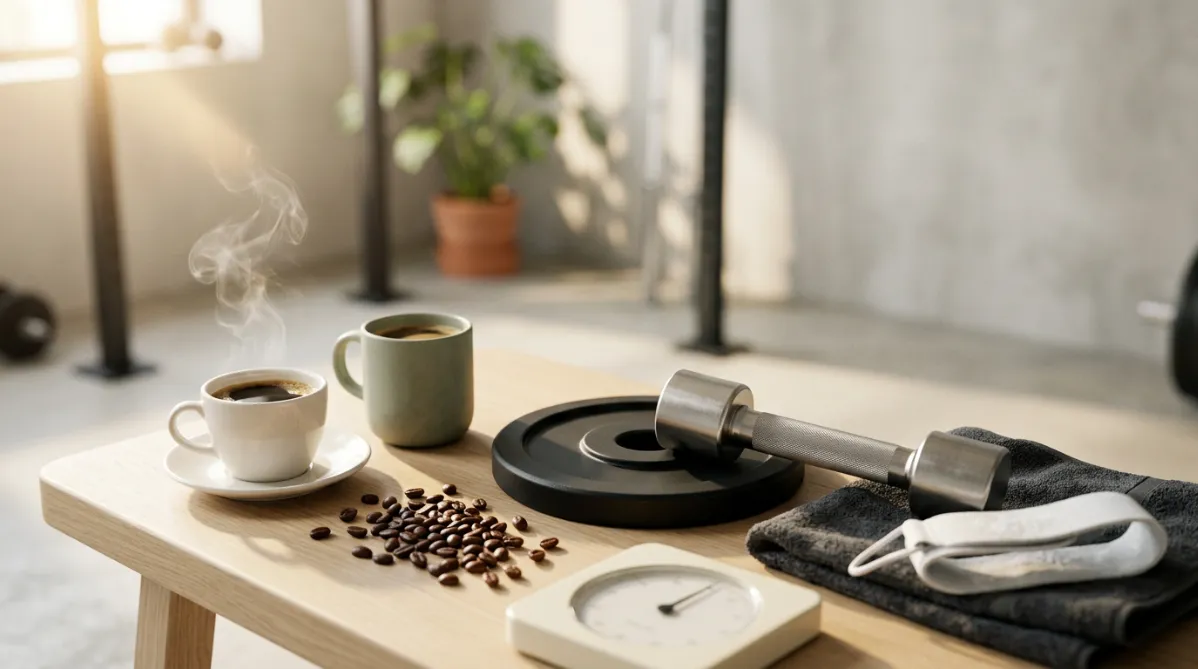
A wide, editorial-style flat lay photographed from slightly above on a pale oak gym bench with a soft matte finish. On the left, a small white ceramic cup of black coffee sits on a matching saucer, with a thin curl of steam rising and catching warm window light. Beside it is a second, slightly larger handleless stoneware mug in muted sage green, also filled with coffee, so the pair suggests one to two cups. In the center-right foreground rests a sleek matte-black steel barbell plate, partly overlapping a brushed-steel dumbbell with fine knurling. A folded charcoal gym towel and a clean white chalk-dusted wrist strap lie casually to one side. A small scatter of whole roasted coffee beans spills across the bench in front of the cups, glossy and deep brown. Near the bottom edge, a minimalist analog kitchen scale in soft cream with a thin black needle hints at precise dosing, without any readable numbers or text.

Soft morning sunlight streams in from the upper left, creating long, gentle shadows and a warm golden glow against cool neutral tones. The background is a softly blurred, airy home gym or boutique training studio with out-of-focus squat rack uprights, pale concrete walls, and a leafy green plant in a terracotta pot adding a touch of organic color. The palette is restrained and modern: warm cream, espresso brown, charcoal, sage green, and hints of brushed silver. Shallow depth of field keeps the cups and beans tack sharp while the background melts into creamy bokeh. The composition leaves generous negative space on the right third for a title overlay, with a balanced, calm, premium magazine feel, like a contemporary wellness and sports science journal. High-resolution, natural color grading, subtle film grain, realistic textures on ceramic, steel, and coffee crema.
nutrition

Hoeveel cafeïne voor gewichtheffen? Een meta‑analyse toont aan dat 1–2 mg/kg nog steeds werkt

BY DR. GYMBRO ·

De gebruikelijke aanbeveling voor cafeïne vóór het gewichtheffen is 3–6 mg per kilogram lichaamsgewicht, wat neerkomt op meerdere koppen koffie of een flinke schep pre‑workout. Een meta‑analyse uit 2022 van 12 onderzoeken liet zien dat al doses van 0,9–2 mg/kg de spierkracht (d ≈ 0,17), spieruithouding (d ≈ 0,21) en gemiddelde staaf‑snelheid (d ≈ 0,56) verbeteren. Voor de gemiddelde lifter komt dat overeen met één tot twee koppen koffie. De effecten zijn bescheiden en komen uit acute, één‑sessie‑studies, maar ze suggereren dat je met minder cafeïne een vergelijkbaar voordeel kunt behalen.
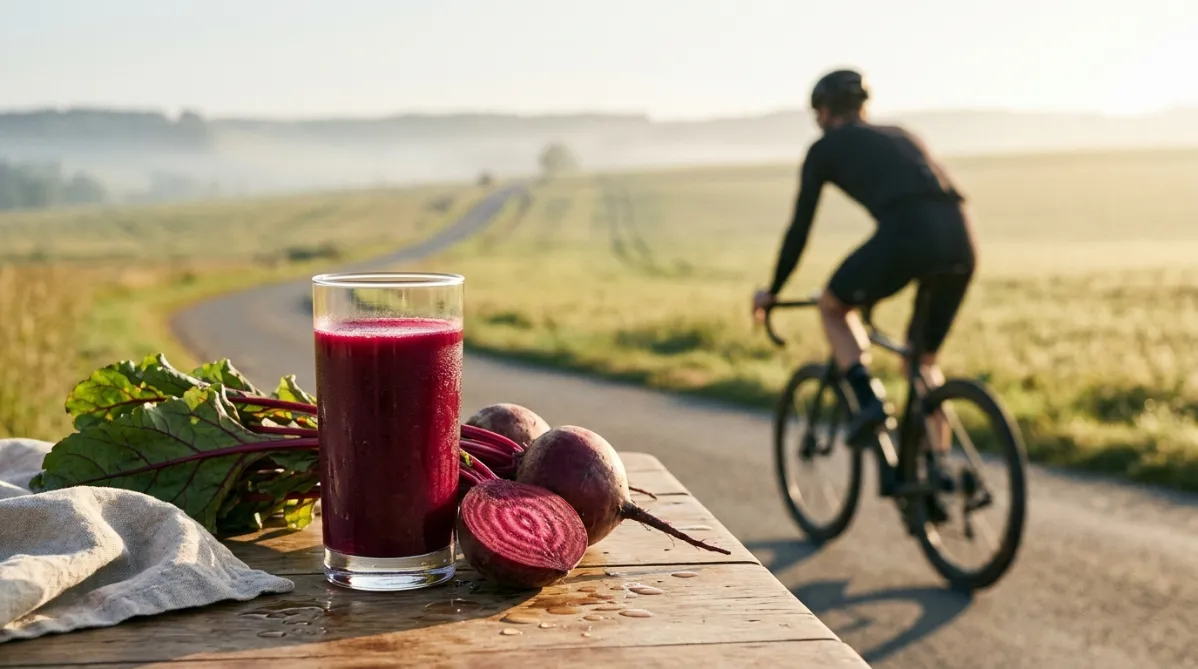
A cyclist in a fitted matte-black kit, shot from a low three-quarter angle, rides a sunlit country road at early morning, slightly out of focus with soft motion blur on the wheels. In the foreground on the left sits a rustic wooden table with a tall glass of deep magenta beetroot juice. Condensation beads on the glass, and the light catches its vivid jewel-toned color. Beside it lie two whole beetroots with their leafy red-veined greens still attached, and one halved beet shows concentric crimson-and-pink rings. A small linen napkin and a scatter of water droplets add an editorial still-life feel.

The background is a gently rolling landscape with golden-green fields and a thin ribbon of asphalt curving toward the horizon. Pale mist hangs low and warm sunlight comes from the right, creating long soft shadows and a golden rim light on the glass and the cyclist's silhouette. The shallow depth of field keeps the juice and beets crisp while the rider stays a dreamy blurred suggestion of speed.

The palette is rich magenta, burgundy, warm cream, sage green, and soft gold, with muted, slightly desaturated tones in the background so the beetroot color stands out. The composition follows the rule of thirds, with the still-life in the lower left third and open negative space in the upper right for the title. The overall look is a clean, modern lifestyle-magazine photograph with natural film-like grain, calm and athletic, and no text, logos, or futuristic elements.
nutrition

Bietensap voor een tijdrit: hoe 0,5 L de 4‑km‑ en 16,1‑km‑tijden verkort met bijna 3 %

BY DR. GYMBRO ·

Een kleine, maar invloedrijke crossover‑studie uit 2011 onderzocht of één enkele portie bietensap een tijdrit kan versnellen. Negen competitieve mannelijke wielrenners dronken 0,5 L nitraatrijk sap (≈ 6,2 mmol nitraat) ongeveer 2,5 uur voor de start. De plasma‑nitrietconcentratie verdubbelde, het gemiddelde vermogen steeg en de 4‑km‑ en 16,1‑km‑tijden verbeterden respectievelijk met 2,8 % en 2,7 %. Het zuurstofverbruik bleef gelijk, wat wijst op een betere fietseconomie in plaats van een krachtigere aerobe motor.
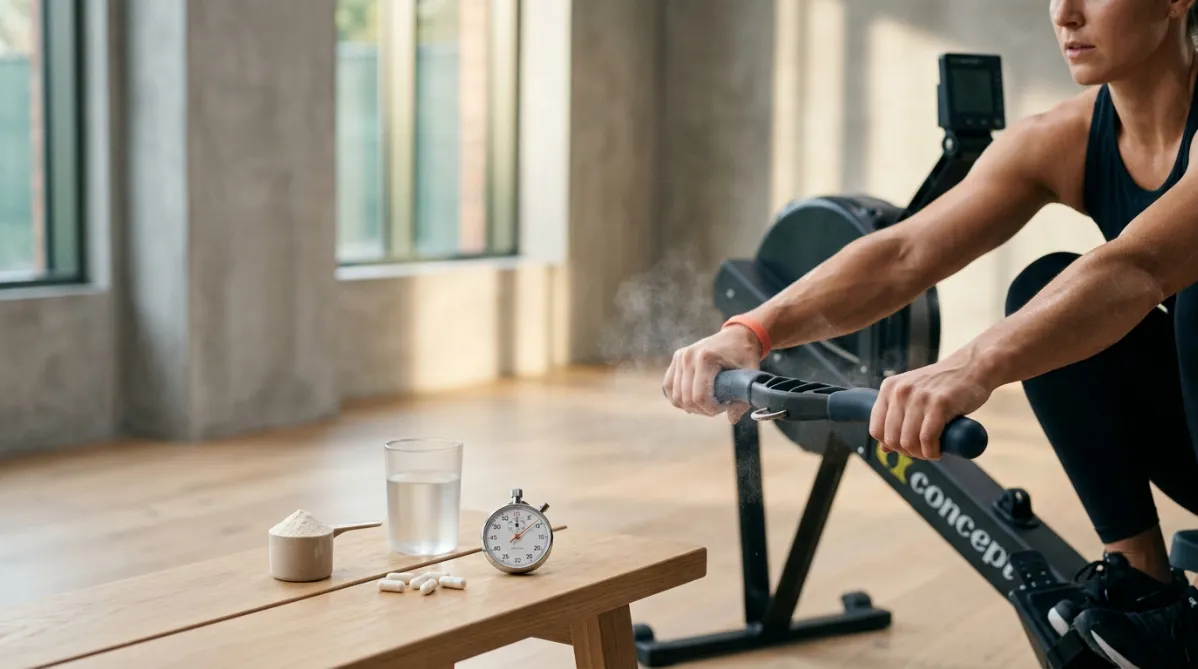
A wide, minimalist editorial scene of an athlete's hands and forearms gripping the handles of a rowing ergometer, shot in soft natural light from a large window in a clean, airy training studio. The athlete is mid-pull, forearm muscles subtly defined, a light sheen of sweat on the skin, chalk dust floating in the air. In the foreground on a pale oak bench sits a small ceramic scoop of fine white powder beside a matte glass of water, with a few loose white capsules arranged neatly in a gentle curve. A minimalist analog stopwatch with a clean white face lies next to them, its hand paused near the two-minute mark.

The color palette is calm and modern: warm off-white, soft sand, muted sage green, and a single accent of coral orange in the stopwatch hand and the rower's wristband. The background is softly blurred concrete and pale wood with long, gentle shadows stretching across the floor. Shallow depth of field keeps the hands, powder, and stopwatch crisp while the rest dissolves into creamy bokeh.

Composition follows the rule of thirds: the rowing handles and hands occupy the right third, the bench still life sits in the lower left, and open negative space in the upper left leaves room for a title overlay. The mood is focused, quiet, and intentional, like a high-end health and science journal feature. Fine film grain, subtle matte finish, editorial photography style, natural color grading, and no text or logos.
nutrition

Werkt beta‑alanine? Een meta‑analyse bevestigt effect voor inspanningen van 60–240 seconden

BY DR. GYMBRO ·

Beta‑alanine wordt al lang aangeprezen als middel tegen de branderigheid van zware inspanning, maar levert het echt iets op? Een meta‑analyse van 15 onderzoeken met 360 deelnemers toonde een reëel, maar bescheiden effect aan: een geschatte mediane winst van 2,85 %. Het voordeel was het duidelijkst voor inspanningen van 60–240 seconden, klein bij inspanningen langer dan vier minuten en afwezig voor sprints onder een minuut. Het artikel bespreekt tevens de gangbare laadstrategie van 3,2–6,4 g per dag gedurende vier of meer weken, hoe doseerspreiding tintelingen kan verminderen en welke sporters er het meeste aan hebben.

This page is available in