Dr. Gymbro
←

#ergogenic aids

25 articles
supplements

L'acqua a idrogeno ha reso i nuotatori d'élite più veloci dello 0,6 %: il trucco

BY DR. GYMBRO ·

Un bicchiere d’acqua con idrogeno disciolto ha reso i nuotatori di fin swimming a livello nazionale più veloci dello 0,6 % su 400 m in una prova doppio‑cieco crossover. Sembra poco, ma a livello d’élite può fare la differenza sul podio. Lo stesso protocollo non ha avuto alcun effetto su sprint ripetuti di 50 m, sul lattato ematico, sulla percezione dello sforzo o sullo stress ossidativo, lasciando il meccanismo nell’oscurità. Di seguito la dose esatta, chi potrebbe trarne beneficio e perché occorre trattare con cautela questo piccolo studio su 12 atleti.

science research

Il boost di sprint della caffeina è durato 3,5 ore e gli sprint sono stati meno dolorosi

BY DR. GYMBRO ·

Una grande dose di caffeina può mantenere i suoi effetti anche dopo il primo set. Uno studio dell'Università di Tsukuba ha mostrato che 5,5 mg/kg assunti circa un’ora prima dell’allenamento mantengono la potenza negli sprint ripetuti per fino a 3,5 ore. Gli sprint risultano meno dolorosi e meno faticosi. I guadagni sono modesti (0,5‑3,7 %) e provengono da un campione di soli 12 soggetti, ma sono accompagnati da una frequenza cardiaca più alta e da una riduzione del flusso sanguigno cerebrale.

nutrition

La caffeina ha reso i calciatori più veloci, ma non più reattivi

BY DR. GYMBRO ·

Molti credono che la caffeina migliori tutti gli aspetti della performance sportiva, ma uno studio controllato su calciatori amatoriali dipinge un quadro più sfumato. Una dose di 300 mg (circa 3,7 mg/kg) ha aumentato l’agilità pianificata e l’altezza del salto, mentre i benefici sulla reattività a luci o avversari umani sono stati minimi o non significativi. Scopri cosa ha evidenziato lo studio, come interpretare i risultati e a chi possono davvero servire questi dati.

A lone trail runner pauses on a high alpine ridge at dawn, holding a small enamel camp mug of steaming coffee, with thin ribbons of steam curling into crisp, cold air. She wears a fitted charcoal running vest and a muted sage windbreaker, and her breath is faintly visible. Behind her, layered mountain ranges fade into soft blue and lavender haze, and a sea of low clouds fills the valley below. Warm golden sunlight skims the ridgeline and rim-lights her profile, shoulders, and the rising steam. In the foreground, a scattering of dried alpine grasses and lichen-covered stones is in sharp focus, with a worn trail snaking toward the summit. Near the mug sits a small pair of trail running shoes with dusty soles and a simple analog wristwatch resting on a flat rock.

The composition follows a wide 16:9 editorial layout. The subject sits slightly right of center on the rule of thirds, leaving generous negative space in the pale peach-and-powder-blue sky on the left, where headline text could sit. The palette is restrained and modern: warm amber, soft cream, dusty sage, slate blue, and a touch of terracotta. The look is cinematic but natural, with shallow depth of field on the foreground details, gentle film grain, and a slightly matte finish. It evokes a high-end outdoor lifestyle magazine or a contemporary wellness journal. The mood is calm, focused, and quietly determined, capturing the contrast between thin, cold altitude air and the warmth of a coffee ritual. The image has no text, logos, or futuristic elements, and no gym equipment, only natural light, texture, and atmosphere.
nutrition

Caffeina in Alta Quota: il boost di resistenza che l'ipossia non può cancellare

BY DR. GYMBRO ·

L'aria rarefatta penalizza la resistenza, ma una nuova meta‑analisi suggerisce che la caffeina può recuperare parte di quel deficit. Analizzando nove studi crossover controllati con placebo (117 partecipanti), gli autori hanno riscontrato un aumento delle prestazioni di medio‑grande entità in ipossia (g = 0,76). Sorprendentemente, la saturazione di ossigeno e la percezione dello sforzo non sono cambiate, mentre frequenza cardiaca, lattato e ventilazione sono aumentati. La prova è di bassa certezza e solo 19 partecipanti erano donne, perciò il risultato è promettente ma non definitivo.
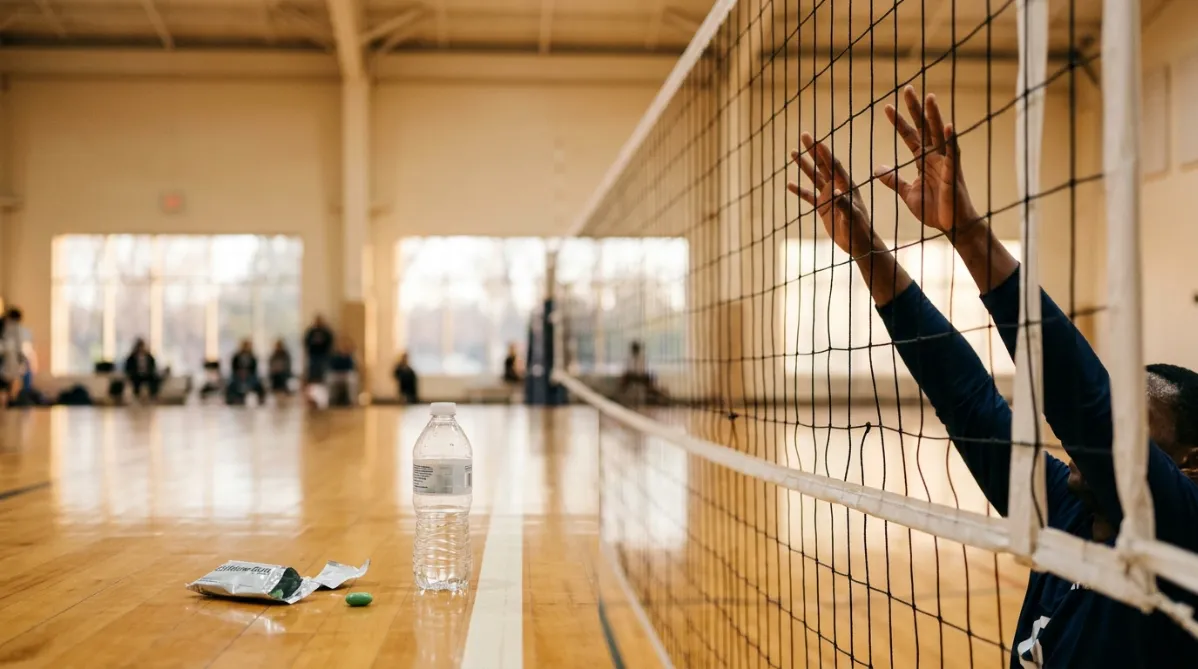
A landscape editorial photograph of a volleyball net in a softly lit indoor gym, shot from a low angle on the court. In the foreground, a pair of athletic hands in mid-block reach above the net, fingers spread, caught in crisp focus. The athlete's face is out of frame, so the attention stays on the hands and the net. In the lower left foreground, a small open foil pack of caffeine chewing gum sits on the polished maple floor, with two mint-green gum pieces beside it and a clear water bottle. The pack is unbranded and minimal.

The background is a warm blur of honey-toned hardwood, pale gym walls, and tall windows with diffused late-afternoon light streaming in. Dust motes glow in the light shafts. The palette is muted and modern: warm wood amber, soft cream, sage green, and a touch of deep navy from the athlete's jersey. Shallow depth of field and gentle film grain give the image a refined, magazine-like feel. The composition follows the rule of thirds, with the hands and net on the right and open negative space on the left, where headline text could sit.

The mood is calm, focused, and slightly cinematic, like a feature in a contemporary sports science journal. The lighting is soft and natural, with long gentle shadows across the court lines. No futuristic or digital elements, no charts, no text. The overall look is clean, tactile, and editorial.
nutrition

Affaticamento rallenta le reazioni del 18 %: la gomma alla caffeina le riduce al 3 %

BY DR. GYMBRO ·

Dopo un protocollo di affaticamento ripetuto e intensissimo, le giocatrici di pallavolo d'élite che hanno assunto il placebo hanno rallentato le sequenze di blocco reattivo del 18,4 %. Con la gomma alla caffeina a 6 mg/kg il rallentamento è sceso al 3,0 %, mentre a 3 mg/kg è stato del 6,4 %. La potenza del salto‑blocco e la rigidità del drop‑jump sono rimaste più alte con la caffeina. Lo studio, però, ha coinvolto solo 15 atlete, il blinding era incompleto e gli effetti collaterali erano più frequenti alla dose più alta, senza che venisse stabilita una dose ideale. Ecco cosa significano i numeri in milligrammi reali e chi potrebbe davvero trarne vantaggio.
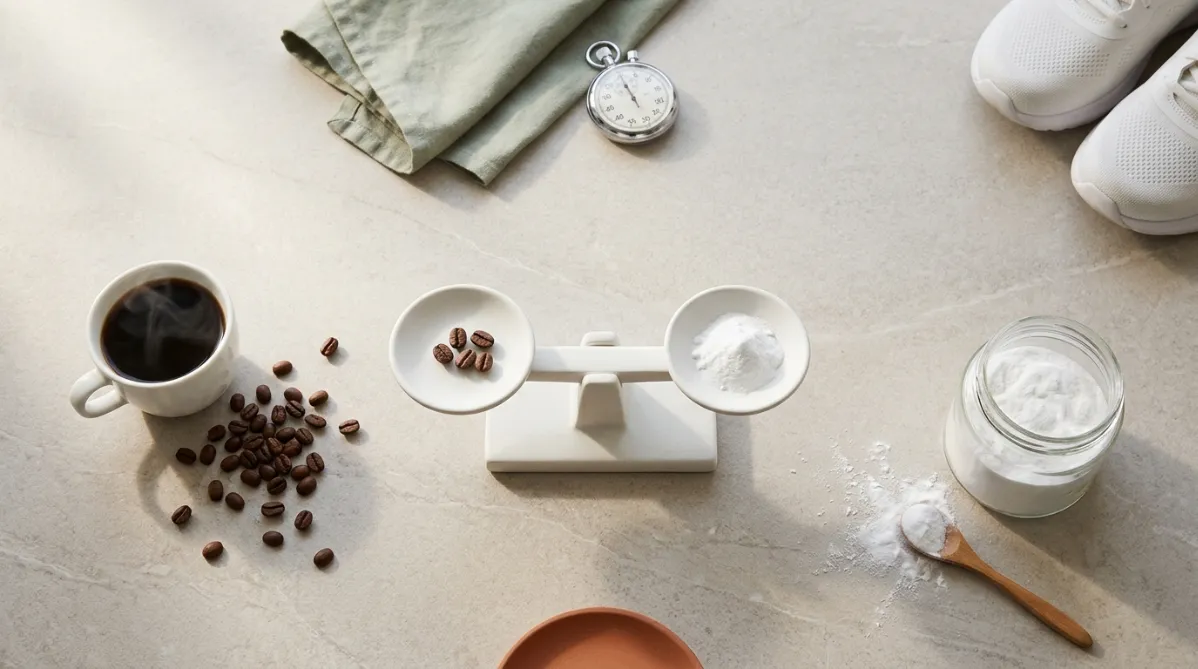
A calm, editorial-style flat lay photographed from above on a pale, warm-gray stone countertop in soft morning window light. On the left, a small white ceramic cup of black coffee with a delicate swirl of steam, beside a scattering of whole roasted coffee beans. On the right, a minimalist glass jar of fine white baking soda powder with a wooden spoon resting beside it, a few soft white grains dusted across the surface. In the center, a clean white scale-like balance made of matte ceramic with two small dishes: one holding a few coffee beans, the other a small mound of white powder, perfectly level to suggest the idea of equal outcomes. A folded sage-green linen napkin and a simple stainless steel stopwatch rest near the top edge, along with a pair of minimalist white running shoes partially visible in the corner. Subtle long shadows, gentle natural highlights, and a shallow depth of field give a tactile, premium feel. The color palette is muted and modern: cream, warm espresso brown, soft sage, and chalky white, with a single accent of pale terracotta in a small ceramic dish. Composition is balanced and uncluttered with generous negative space on the upper right for a title overlay. The overall mood is clean, contemporary, and quietly scientific, like a cover from a trendy health and performance journal. Wide landscape 16:9 framing, crisp detail, natural film-like grain.
nutrition

Caffeina + Bicarbonato di Sodio: batte ognuno da solo?

BY DR. GYMBRO ·

Combinare due aiuti ergogenici comprovati sembra una vittoria garantita, ma una nuova meta‑analisi su 13 studi crossover dimostra che i numeri non sono così semplici. Confrontato al placebo, caffeina più bicarbonato di sodio ha aumentato la potenza media di circa 8,4 W e ha ridotto i tempi dei test di circa l'1,6 %. Tuttavia, questi risultati crollano quando si escludono singoli studi, e la combinazione non ha superato né la caffeina né il bicarbonato da sole. Ecco cosa mostrano i dati, quali sono i dosaggi tipici e chi dovrebbe interessarsi a questa combinazione.
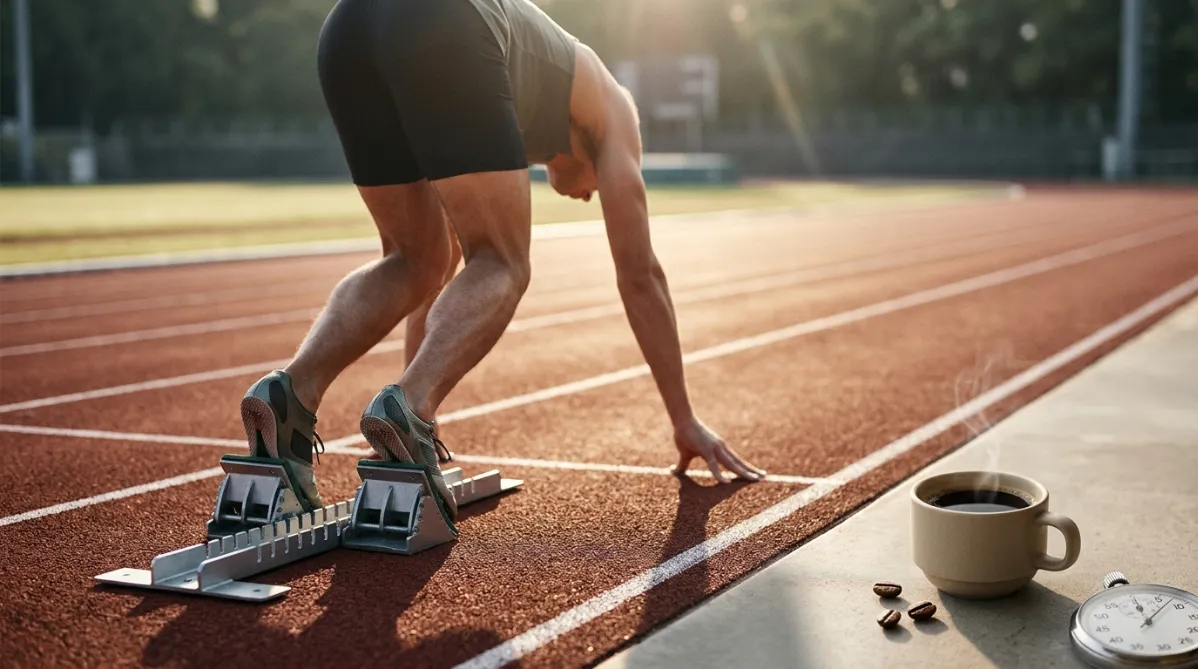
A wide, editorial-style photograph of a sprinter crouched in starting blocks on a deep terracotta-red running track, shot from a low angle at the side as the first morning light rakes across the lanes. The athlete is mid-set, hips lifted, hands poised behind crisp white lane lines, with a soft focus on their muscular calves and spiked shoes in the foreground. Warm golden sunlight creates long, elegant shadows and subtle lens flare, while the distant lanes fade into a creamy bokeh.

In the lower right foreground, slightly out of focus, sits a minimalist still life on a matte concrete ledge beside the track: a small ceramic cup of black coffee with a thin wisp of steam, two loose roasted coffee beans, and a simple stopwatch with a clean white face. The ceramic is a muted sand color, adding a refined, modern lifestyle touch.

The color palette is restrained and trendy: terracotta, warm cream, soft charcoal, and a hint of sage green from trees blurred in the far background. The composition uses generous negative space across the upper left, ideal for headline text overlay. The look is similar to a contemporary health and sports science magazine: natural film-like grain, gentle contrast, shallow depth of field, and a calm, focused mood. No text, no logos, no graphics, and no futuristic elements, just a realistic, tactile, sunlit scene that suggests precision, preparation, and explosive speed.
science research

Doppia caffeina, sprint più veloci? Cosa aggiunge davvero 6 mg/kg

BY DR. GYMBRO ·

Un nuovo studio randomizzato, in doppio cieco e crossover, ha confrontato 3 mg/kg contro 6 mg/kg di caffeina su 21 velocisti maschi allenati. Entrambe le dosi hanno superato il placebo, ma la dose più alta ha aggiunto velocità extra solo nei primi 30 e 60 m, non a 10 m. Ha inoltre migliorato l’altezza del salto e lo sviluppo della forza nei blocchi, senza ulteriori benefici su tempo di reazione o potenza di picco del test di Wingate. Ecco cosa significano le dosi in milligrammi per un atleta di 70‑80 kg, quando assumerle, a chi si applicano i risultati e cosa lo studio non rivela sugli effetti collaterali.

A landscape editorial photograph in a bright, modern gym studio with soft natural light pouring through tall windows. In the foreground, a matte ceramic cup and a small glass jar of plain white powder sit on a light oak bench, with a wooden scoop resting beside them and a few loose grains dusted across the wood. The jar has no label, which hints at mystery without being heavy-handed. Slightly out of focus behind them, a female athlete in a sage green athletic set stands at a barbell, chalked hands gripping the bar, her expression calm and focused. A male cyclist on a stationary bike is blurred in the far background. The palette is warm neutrals: cream, soft sand, pale oak, muted sage, and a touch of terracotta, with gentle golden-hour highlights and soft shadows. The composition follows the rule of thirds, with the cup and jar in the lower left, the athlete on the right, and open negative space in the upper area for headline text. The depth of field is shallow, with a creamy bokeh background. The mood is contemplative, curious, and trendy, like a contemporary health and science magazine cover. Fine film grain, subtle matte finish, clean minimalist styling, and no text or logos.
science research

La Caffeina Placebo Ha Reso gli Atleti più Forti e Veloci

BY DR. GYMBRO ·

E se parte della spinta pre‑allenamento provenisse dalla tua mente e non dalla dose? Una meta‑analisi del 2026 su 17 studi ha scoperto che, anche credendo di aver assunto caffeina, un placebo migliorava le prestazioni (d = 0,49) in bench press, test di ciclismo a cronometro e sprint ripetuti. L’effetto era più marcato quando i ricercatori erano ciechi e negli studi con una maggiore presenza di donne, sebbene la certezza delle evidenze sia bassa e il rischio di bias alto. Non è un invito a rinunciare alla vera caffeina (3‑6 mg/kg), ma ricorda che le aspettative rappresentano una variabile di performance. Ecco cosa dicono i dati e a chi conviene prestare attenzione.
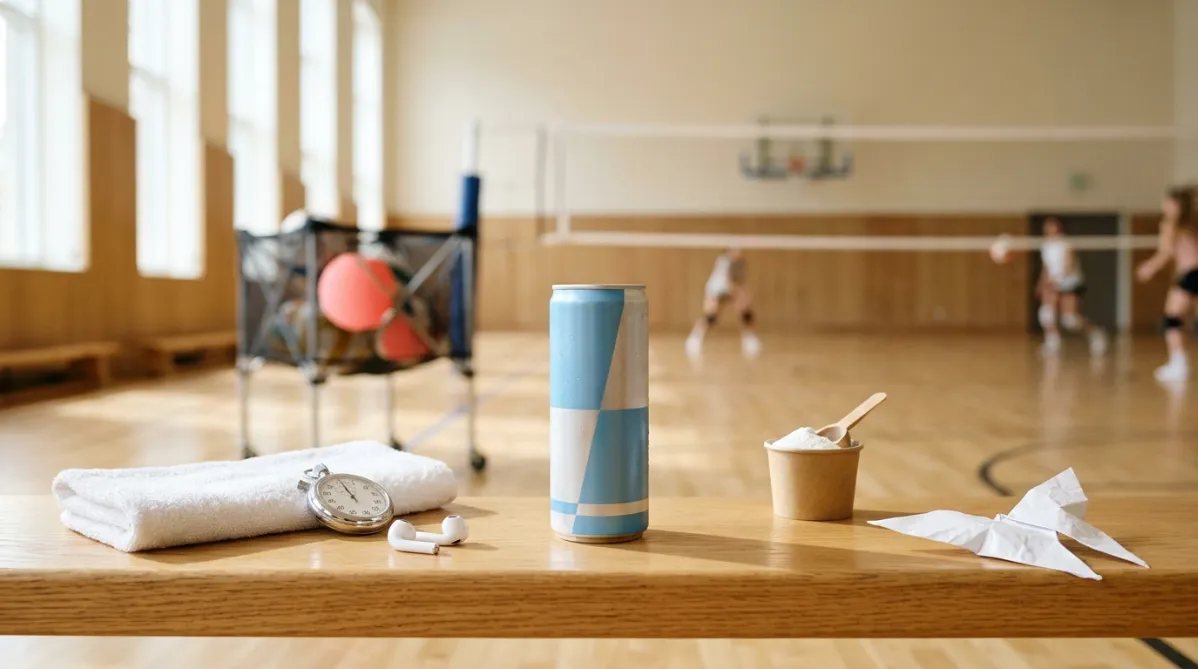
A wide, editorial-style photograph of a single slim silver and blue energy drink can standing upright at center on a polished light-oak gym bench, shot in soft natural window light. The can is unbranded, with a clean, minimal design and a few beads of condensation. Behind it, the softly blurred interior of a bright modern indoor volleyball court stretches into the background, with a pale hardwood floor, a net, and a few volleyballs resting in a mesh cart. Warm morning sunlight enters through tall windows on the left and casts long, gentle shadows across the bench. Beside the can sit a small white towel folded neatly, a simple stopwatch, and a pair of white wireless earbuds. On the right, a small paper cup of white powder and a wooden scoop hint at measured dosing. They are placed deliberately, like a styled still life.

At the very edge of the frame, a pair of delicate white paper wings, origami-like and slightly crumpled, lie flat and unused on the bench, a subtle visual joke about the "wings" slogan. The wings are understated and tactile, not magical or glowing.

The color palette is muted and fresh: warm honey wood, soft cream, pale sky blue, and touches of silver, with a single accent of coral red from a volleyball panel in the background. The depth of field is shallow, with crisp focus on the can and the paper wings and a creamy bokeh background. The composition follows the rule of thirds, with the can slightly left of center and generous negative space on the right for a headline overlay. The mood is calm, clean, and contemporary, like a lifestyle and science magazine cover, with fine film grain and natural contrast. The camera angle is slightly low, at bench level, with a 50mm lens look.
nutrition

Red Bull ti dà le ali? 13 test in palestra non hanno mostrato effetti

BY DR. GYMBRO ·

Lo slogan di Red Bull promette ali, ma un nuovo studio crossover su giocatrici di pallavolo femminile non ne ha rilevati. Una lattina standard non ha migliorato nessuna delle 13 misure nei test Wingate, salto e presa rispetto al placebo. Otto delle 15 atlete hanno segnalato lievi nausea. Probabilmente la ragione è che la lattina conteneva solo circa 1,1 mg/kg di caffeina, ben al di sotto dei 3‑6 mg/kg considerati efficaci. Ecco cosa mostra lo studio, i suoi limiti e come dosare correttamente la caffeina.
A landscape editorial still life on a pale warm-gray concrete surface, shot from a slightly elevated three-quarter angle in soft diffused morning window light. In the foreground left, a small open foil blister pack of mint-green caffeine gum sits beside two neatly arranged piles of gum pieces, one with three pieces and one with six, each on a small matte ceramic dish in oat and sage tones. The pieces are slightly glossy, rounded rectangles with crisp shadows. In the center-right, a worn leather basketball rests on the surface with deep amber-orange tones and visible pebbled texture. Next to it is a loosely chalked barbell collar and a single steel weight plate edge, partly out of focus. A minimalist analog stopwatch with a matte white face and a thin black hand lies at the lower right, and a slim notebook with a pencil rests nearby. The page shows a simple hand-drawn bar graph of two equal bars, with no legible text. In the soft-focus background, a blurred indoor basketball court with warm honey-colored hardwood and distant hoop lines fades into creamy bokeh. A narrow band of sunlight crosses the scene diagonally and picks out chalk dust particles in the air. The palette is muted and modern: sage green, warm oat, terracotta orange, charcoal, and cream. The composition leaves open negative space on the upper left for title overlay. Shallow depth of field, fine film grain, and a calm, clean magazine aesthetic like a contemporary health and science journal. No people, no text, no futuristic elements.
science research

Gomma alla caffeina e performance nello stesso giorno: perché 3 mg/kg hanno eguagliato 6 mg/kg

BY DR. GYMBRO ·

Un nuovo studio crossover su giocatori di basket ha scoperto che la gomma alla caffeina a 3 mg/kg migliorava forza, potenza, velocità di sprint e agilità reattiva nello stesso giorno quasi quanto una dose di 6 mg/kg. Entrambe le dosi hanno aumentato la velocità della barra durante il priming con squat pesanti, ma a 24‑48 ore l’effetto era scomparso. Lo studio non prevedeva un test di baseline né un gruppo “solo caffeina”, perciò i risultati vanno interpretati con cautela. Ecco cosa significa per dosaggio, tempistica e chi potrebbe trarne beneficio.
A wide, editorial-style photograph of a competition swimming pool lane seen from just above the water line at the starting end, in soft morning light. In the foreground, on the pool deck, a white ceramic espresso cup sits on the edge of a blue-gray starting block, a thin curl of steam rising from it. The cup is in crisp focus, with a few droplets of water on the textured non-slip deck around it. Behind it, the pool stretches into the distance as a series of calm lanes divided by red and white lane ropes. The turquoise water glints with gentle ripples and long, shimmering reflections. At the far end, a lone swimmer in a dark cap and goggles is mid-stroke, caught in a small burst of white splash, and slightly out of focus because of the shallow depth of field.

Large windows along the side wall let in pale golden sunlight, which throws soft diagonal light across the water and the deck. The palette is clean and modern: aqua, deep teal, warm cream and a small accent of coffee brown. The cup's warm tones stand out against the cool blues. The composition follows the rule of thirds, with the cup in the lower left third and open negative space of water and light on the right, leaving room for headline text. The look is minimal, airy and contemporary, like a high-end sports and science magazine, with subtle film grain, natural color grading, and a slightly desaturated, calm mood. Faint stopwatch-like details appear only as a thin black timing pad edge on the starting block, with no text or numbers visible. The overall feel is quiet anticipation just before a race, precise and fresh, with a sense of small margins and measured performance.
nutrition

La caffeina rende i nuotatori più veloci, ma di meno di quanto pensi

BY DR. GYMBRO ·

I nuotatori hanno sorseggiato caffè prima delle gare per anni, ma la ricerca dimostra davvero un miglioramento? Una nuova meta‑analisi multilivello su 13 studi crossover indica un guadagno di circa 1,7 %, un margine significativo in uno sport deciso al centesimo di secondo. Il beneficio più evidente appare a dosi di 6 mg/kg o più, mentre dosi più basse non mostrano un effetto convincente. La caffeina aumenta anche il lattato ematico post‑gara, e i risultati variano molto tra gli studi. Ecco cosa conferma l’evidenza e quali domande restano aperte.
A wide landscape editorial photograph shot from slightly above, showing a clean matte stone countertop in soft morning light. On the left, a single frosted glass tumbler of pale pink-orange watermelon-colored drink sits with condensation beads on its surface, a thin slice of watermelon resting beside it. In the center, a minimalist matte white scoop rests on a small pile of fine white powder, with a few grains scattered naturally across the surface. Behind it, a blurred matte sage-green supplement tub with no legible text stands slightly out of focus. On the right, a neat arrangement of gym elements: a rolled linen towel, a slim stainless steel water bottle, and a pair of worn white running shoes with soft shadows. A small brass balance scale sits at the far right edge, one pan slightly higher than the other, hinting at weighing evidence versus hype. Scattered across the counter are a few cut watermelon rind wedges in vivid green and coral pink, adding natural color accents.

The color palette is warm and restrained: cream, soft blush pink, sage green, and warm gray, with a single pop of coral. Light enters from a window on the left, casting long, gentle diagonal shadows and a subtle highlight on the glass. Shallow depth of field with creamy bokeh in the background. Composition leaves generous negative space across the upper third and right side for headline text overlay. Style resembles a modern wellness magazine or trendy health journal cover: calm, tactile, minimal, slightly muted film-like grain, natural textures such as linen, stone, and glass. No people, no text, no logos, and no futuristic elements.
supplements

Citrullina Malato: Hype o Aiuto? 30 studi dicono poco

BY DR. GYMBRO ·

La citrullina malato è un ingrediente comune nei pre‑allenamento, ma quanto funziona davvero? Una nuova meta‑analisi a tre livelli su 30 studi randomizzati, che ha coinvolto 644 partecipanti, ha rilevato solo un lieve miglioramento della performance (Hedges' g = 0.16). Gli intervalli di predizione erano ampi, la certezza secondo il sistema GRADE era bassa‑molto bassa e la percezione dello sforzo non è cambiata. Le dosi acute sembravano più costanti rispetto a quelle croniche, e sono emersi segnali su resistenza aerobica e sforzi anaerobici brevi, ma non sono robusti. Ecco cosa significa per dose, tempistica e se conviene provarlo.
A wide landscape editorial still life on a pale warm-gray linen surface, shot from a slightly elevated three-quarter angle in soft diffused morning window light. At center-left, a tall clear glass filled with deep magenta-crimson beetroot juice catches the light, its edges glowing ruby with a few condensation droplets on the surface. Beside it sits a small white ceramic espresso cup with dark, glossy coffee and a delicate swirl of crema. A few roasted coffee beans are scattered casually near the cup's saucer. To the left, two whole raw beetroots with their leafy burgundy-veined greens still attached rest on a rustic wooden board, with one beet sliced in half to reveal concentric rings of vivid fuchsia and pale pink. A folded white judo gi sleeve with a worn black belt loosely coiled on top is draped along the right side of the frame, the cotton weave texture visible, hinting at the sport without any people. In the background, a soft-focus tatami mat texture in muted straw-green creates a subtle horizontal band, blurred into creamy bokeh. A small scattering of beet juice droplets and a faint magenta stain on the linen add an organic, lived-in touch. The palette is restrained and modern: magenta, espresso brown, off-white, muted sage, and warm beige. Composition leaves generous negative space on the upper right for headline overlay. The mood is clean, calm, and contemporary, like a premium health and science magazine cover, with shallow depth of field, crisp focus on the glass and cup, fine natural shadows, and subtle film-like grain.
nutrition

Succo di barbabietola + caffeina: il trucco del judo che supera la sola caffeina

BY DR. GYMBRO ·

La caffeina è il classico stimolo pre‑gara, ma uno studio randomizzato su 35 judoka mostra che il suo vantaggio svanisce entro il quinto incontro di una giornata di competizione simulata. Il succo di barbabietola, invece, migliora le prestazioni verso la fine, mentre la combinazione copre sia la fase iniziale che quella finale. Scopri cosa ha rivelato lo studio, a chi può tornare utile, a chi fare attenzione e quali informazioni sono assenti dall'abstract.
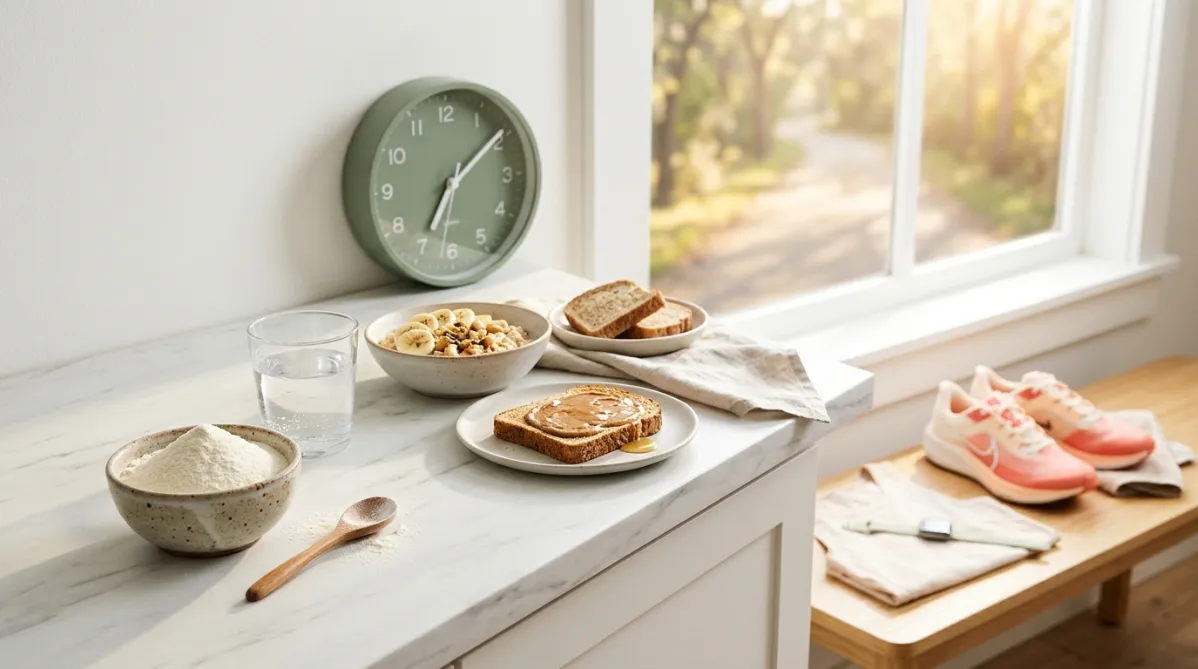
A bright, airy editorial photograph in landscape format of a clean white marble kitchen counter in soft morning light. On the left, a small rustic ceramic bowl holds a mound of fine white powder, with a wooden spoon resting beside it and a scattering of powder dusted across the marble. Next to it sits a glass of water with a faint ripple on its surface. In the middle ground, a simple breakfast spread: a bowl of oatmeal topped with sliced banana, a piece of toast with honey, and a few slices of white bread, all styled in muted, natural tones. A minimalist analog wall clock or a vintage round kitchen timer in matte sage green sits subtly in the background, hinting at the 90-minute timing.

On the right side of the frame, slightly out of focus, a pair of modern running shoes in soft coral and cream rests on a light oak floor or bench. Next to them are a folded running shirt and a slim sports watch. Through a large window behind the counter, a blurred sunlit tree-lined running path glows in warm golden light, suggesting a woman's morning run without showing a face.

The palette is soft and modern: warm whites, sage green, pale peach, light wood, and touches of coral. Shallow depth of field, gentle natural shadows, and a clean composition with generous negative space in the upper left for title overlay. The mood is fresh, trustworthy, and health-journal chic, like a high-end wellness magazine feature. Shot on a 50mm lens, crisp details, subtle film grain, and a calm, minimal, contemporary feel.
nutrition

Il Bicarbonato di Sodio Accorcia di 32 secondi le 10 km delle Donne — Ecco il Trucco

BY DR. GYMBRO ·

Un composto economico da dispensa ha appena migliorato i tempi sui 10 km delle runner amatoriali, e il fastidio allo stomaco che di solito lo rovina è quasi scomparso. In uno studio doppio cieco crossover, 21 donne hanno corso circa 32 secondi più velocemente dopo aver assunto bicarbonato di sodio. Il trucco? Abbinarlo a un pasto ricco di carboidrati 90 minuti prima della gara. Scopri dosaggio, tempistica, a chi è indicato e a chi, invece, è meglio riflettere due volte.
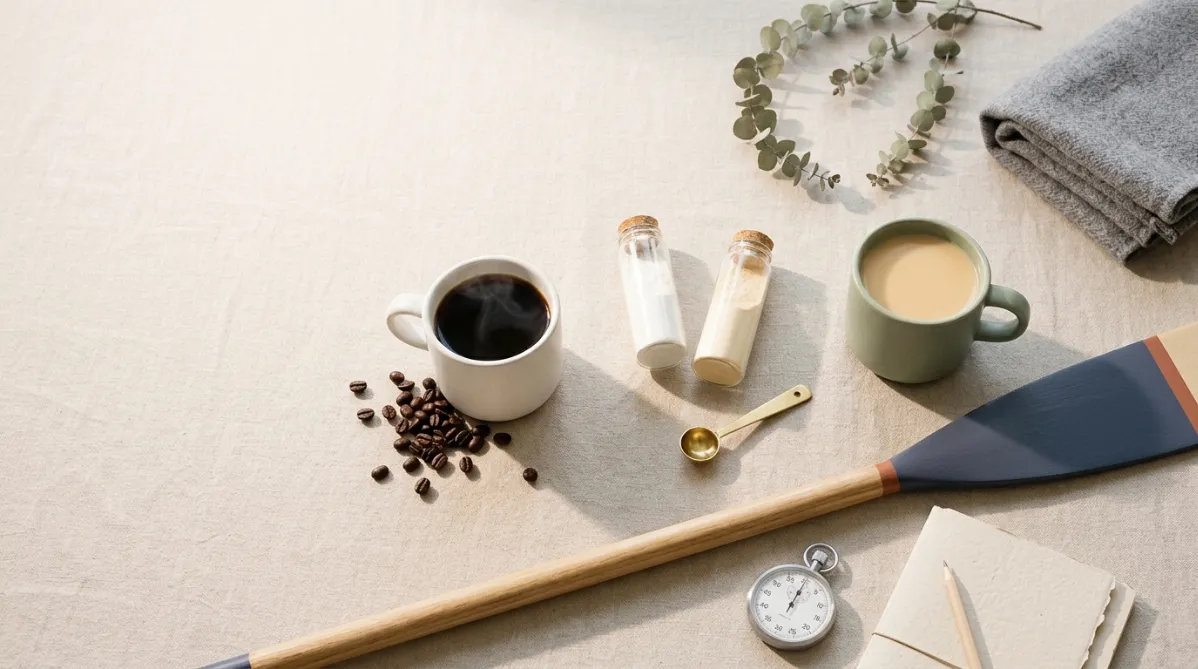
A wide, editorial-style flat lay photographed from above on a pale oat-colored linen surface in soft morning window light. On the left, a small matte white ceramic cup of black coffee with a delicate swirl of steam, beside a few scattered roasted coffee beans. On the right, a second matte sage-green ceramic cup holding a pale, creamy golden tea-like drink, mirroring the first. Between them, two small glass vials with cork stoppers sit side by side: one holding fine white powder, the other holding slightly warmer cream-colored powder, with a tiny brass measuring spoon resting nearby. In the lower foreground, a slim wooden rowing oar lies diagonally across the frame, its blade edge softly entering from the right, painted a muted navy with a thin terracotta stripe. A minimalist analog stopwatch with a brushed-steel case rests near the oar, and a folded cream notebook with a thin pencil suggests data-taking. In the upper corner, a crescent-shaped dried eucalyptus sprig and a small folded gray wool throw hint at sleep and calm without being literal. The palette is warm and restrained: oat, cream, sage, soft navy, terracotta, and espresso brown. Shadows are long and gentle, with shallow depth of field and subtle film grain, giving a refined, modern wellness-magazine feel. Generous negative space on the left third of the composition leaves room for a headline overlay. Clean, calm, tactile, and contemporary, with no text, logos, or futuristic elements.
science research

Paraxanthina vs caffeina: la combinazione vincente e il salvavita per il sonno

BY DR. GYMBRO ·

Uno studio su 14 vogatori ha confrontato paraxanthina e caffeina (200 mg ciascuna). La combinazione ha superato il placebo su una prova di 2000 m, ma l’effetto è stato piccolo (d = 0,30). Né la caffeina né la paraxanthina da sole hanno migliorato significativamente le performance, mentre la paraxanthina ha mostrato un impatto meno negativo sul sonno soggettivo. Ecco i dati, i limiti e a chi potrebbe interessare.
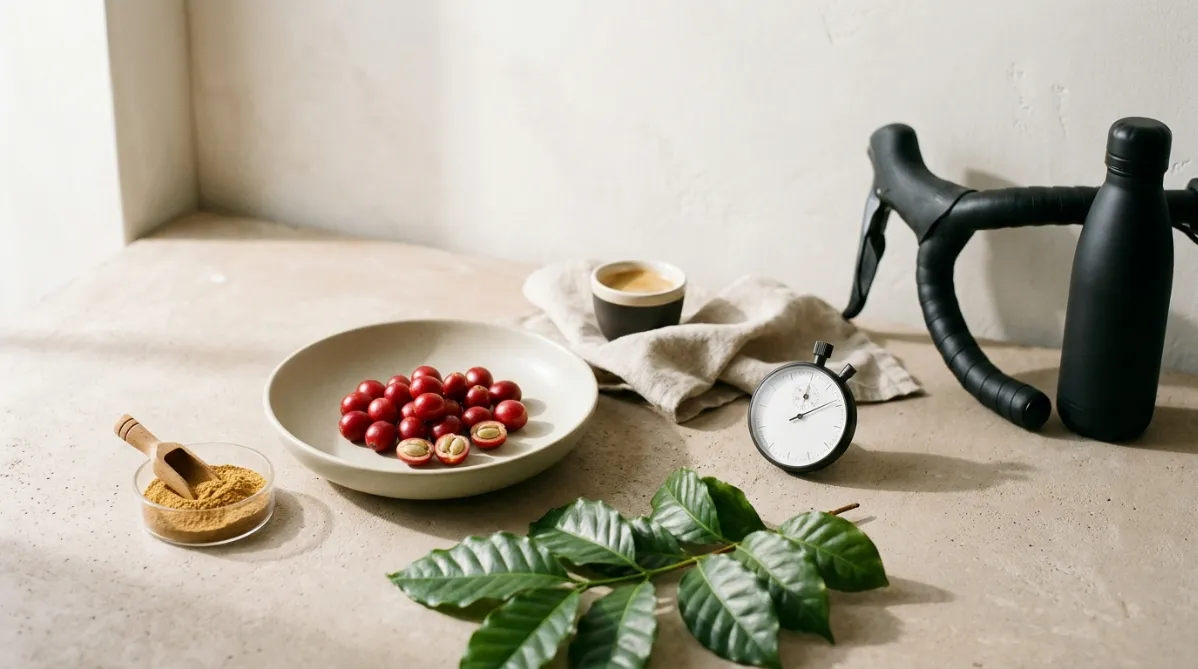
A wide editorial still life on a pale, warm-toned concrete surface in soft morning window light. In the center-left, a shallow matte ceramic bowl holds a small pile of bright red coffee cherries with glossy skins, a few sliced open to reveal pale mucilage and paired green-tan beans. Beside it, a small glass dish of fine, golden-brown powdered extract with a tiny wooden scoop resting on its edge. A sprig of coffee plant leaves, deep green and waxy, arcs across the foreground.

On the right side, slightly out of focus, a sleek road cyclist's handlebar and a matte black water bottle lean against a light plaster wall, suggesting athletic training without showing a person. A minimalist analog stopwatch with a clean white face and thin black hands sits in the mid-ground, angled toward the camera, its hands paused near the fifteen-minute mark. A folded linen cloth in oatmeal beige and a single small espresso cup with a thin crema ring add quiet texture.

The color palette is restrained and modern: cherry red, sage green, cream, soft terracotta, and charcoal accents. Light comes from the left, casting long, gentle shadows with a subtle warm glow and a hint of dust in the air. Shallow depth of field with crisp focus on the cherries and stopwatch, creamy bokeh in the background. Composition leaves open negative space in the upper right for a headline overlay. The overall feel is a clean, trendy health-and-science magazine cover: tactile, natural, minimal, and calm, shot in a 16:9 landscape frame with fine film-like grain and true-to-life tones.
nutrition

Estratto di ciliegia di caffè: 200 mg di caffeina aumentano la produzione in ciclismo del 4,6 %

BY DR. GYMBRO ·

Una dose bassa di 200 mg di caffeina proveniente da estratto di ciliegia di caffè intera ha consentito a ciclisti allenati di produrre il 4,6 % in più di lavoro in una prova di 15 minuti. Tuttavia, l’idea diffusa che favorisca una più rapida ricarica del glicogeno non è risultata valida. Lo studio, randomizzato, in doppio cieco e a crossover, ha coinvolto solo 12 ciclisti ed è stato finanziato dall’industria, senza un gruppo di confronto con caffeina pura. Ecco cosa mostrano i dati, cosa non mostrano e chi potrebbe voler provare questo integratore.
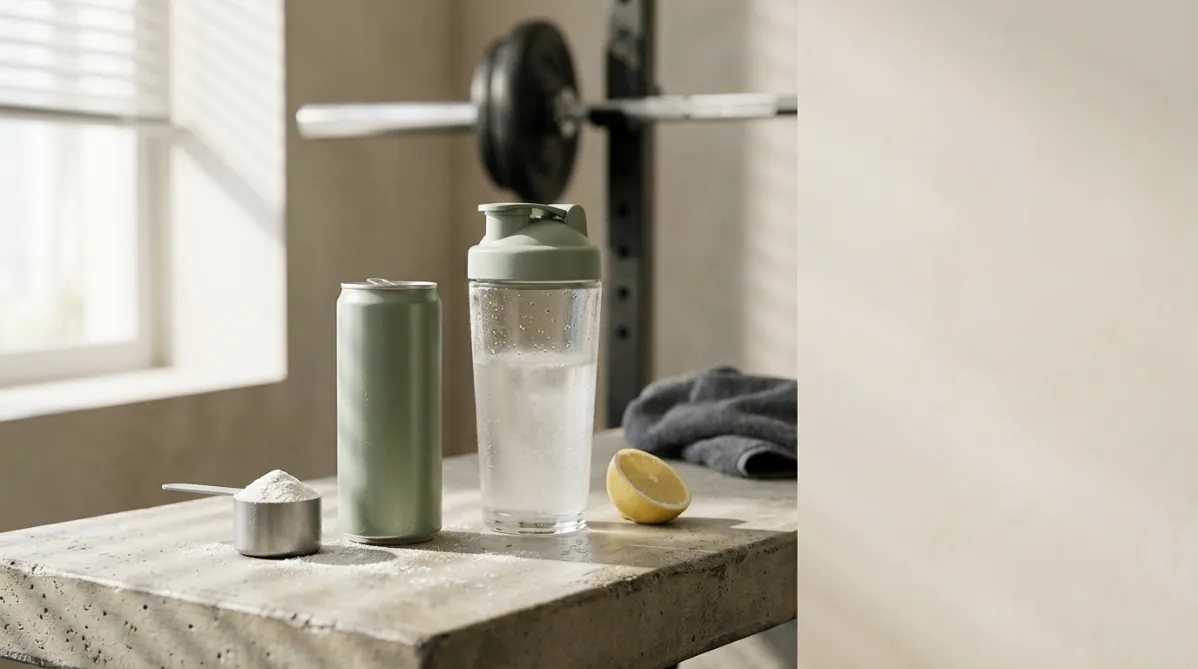
A sleek aluminum energy drink can and a matte scoop of white pre-workout powder sit side by side on a pale concrete gym bench, lit by soft morning window light. The can is slim and minimalist, with a muted sage green label and no legible text. Beside it is a clear glass shaker half full of cloudy, lightly frothy liquid with condensation beading on its surface. A few fine grains of powder are scattered across the bench, catching the light. Behind them, slightly out of focus, a stainless steel barbell rests on a rack, and a folded charcoal gym towel sits at the edge of the frame.

The color palette is warm neutral: oatmeal, soft gray, and sage, with a single accent of pale citrus yellow from a halved lemon wedge placed near the glass. A thin, elegant shadow from the window blinds falls diagonally across the scene, giving it an editorial, magazine-style rhythm. The composition leaves generous negative space on the right third of the frame, a smooth blurred wall in warm off-white, suitable for headline text overlay.

The shot is a low-angle, shallow depth-of-field product-style photograph, as if taken with an 85mm lens at f/2. The foreground objects are tack sharp and the background melts into creamy blur. The mood is calm, clean, and modern, like a wellness or science journal feature. Subtle film grain and gentle contrast add a tactile, contemporary lifestyle feel. There are no people, no logos, and no futuristic or sci-fi elements, just a quiet, considered still life that suggests the choice between a canned drink and a scooped supplement.
nutrition

La tua bevanda energetica potrebbe fungere da pre‑allenamento—con un unico inconveniente

BY DR. GYMBRO ·

Caffeina e taurina sono spesso associate nelle bevande energetiche e nei supplementi pre‑allenamento, ma la loro combinazione migliora davvero le performance? Una meta‑analisi di 11 studi randomizzati (234 partecipanti) indica un moderato incremento della potenza massima e del tempo di esaurimento, oltre a una percezione dell’esercizio più leggera. La frequenza cardiaca non cambia e il risultato sul tempo di reazione risulta troppo eterogeneo per essere affidabile. Il limite principale è la dimensione ridotta degli studi, che non permette di stabilire se la taurina aggiunga un vero beneficio rispetto alla sola caffeina.
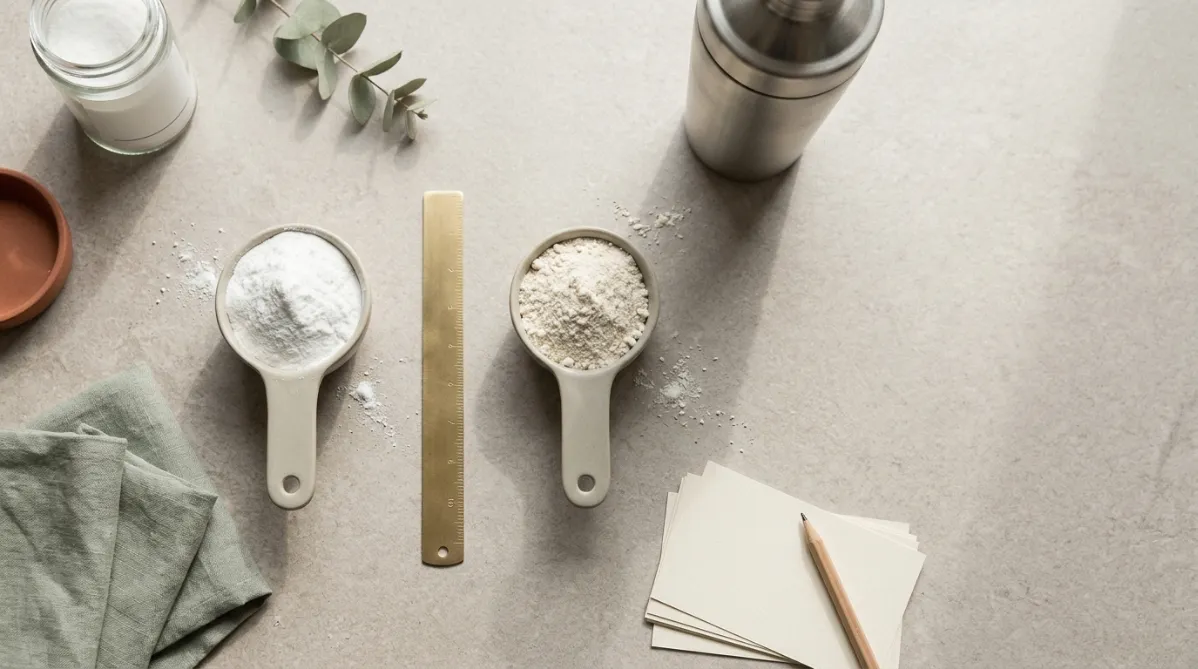
A bright, minimalist flat-lay photograph of two supplement scoops on a pale warm-gray stone surface, shot from directly above in soft natural window light. On the left, a matte ceramic scoop holds fine white creatine monohydrate powder, heaped in a clean mound. On the right, a second scoop of the same shape holds slightly coarser off-white beta-alanine powder, with a small, deliberate gap between the two. Each scoop sits in its own soft shadow, which suggests separation rather than combination. Between them, a thin brushed-brass ruler or a single slim line of fine powder runs across the surface and subtly divides the composition.

Around the scoops, a few restrained props in a muted editorial palette of sage green, cream, terracotta, and soft charcoal: a small glass jar with a minimalist label that has no readable text, a folded linen napkin, a single sprig of eucalyptus, and a stainless-steel shaker bottle softly out of focus in the upper corner. A few loose powder grains are scattered naturally across the stone. A small stack of blank cream index cards with a pencil rests in the lower right, hinting at research and note-taking without any legible writing.

The composition follows a clean rule-of-thirds layout, with generous negative space on the right third for headline overlay. The lighting is gentle and diffused, with long, soft shadows falling to the lower left. The color grading is calm and slightly desaturated, with creamy highlights and a subtle film-like grain. The overall look is a modern wellness and science journal cover, with an airy, trustworthy, contemporary editorial feel, shallow depth of field, and crisp detail on the powders.
nutrition

Creatina + beta‑alanina: il beneficio dello stack che i ricercatori non hanno riscontrato

BY DR. GYMBRO ·

Lo stack creatina + beta‑alanina è pubblicizzato come la coppia perfetta per migliorare le prestazioni, ma una nuova meta‑analisi a rete su 52 studi randomizzati non ha riscontrato alcuna sinergia tra i due. La sola creatina ha migliorato in modo significativo sprint, salto, sprint ripetuti e la resistenza della parte superiore del corpo rispetto al placebo. Gli effetti della beta‑alanina si sono rivelati non significativi o contingenti al contesto, e la combinazione non ha apportato alcun beneficio aggiuntivo rispetto alla sola creatina. Scopri come è stato condotto lo studio, quali sono i suoi limiti e cosa implica per il tuo budget di integratori.
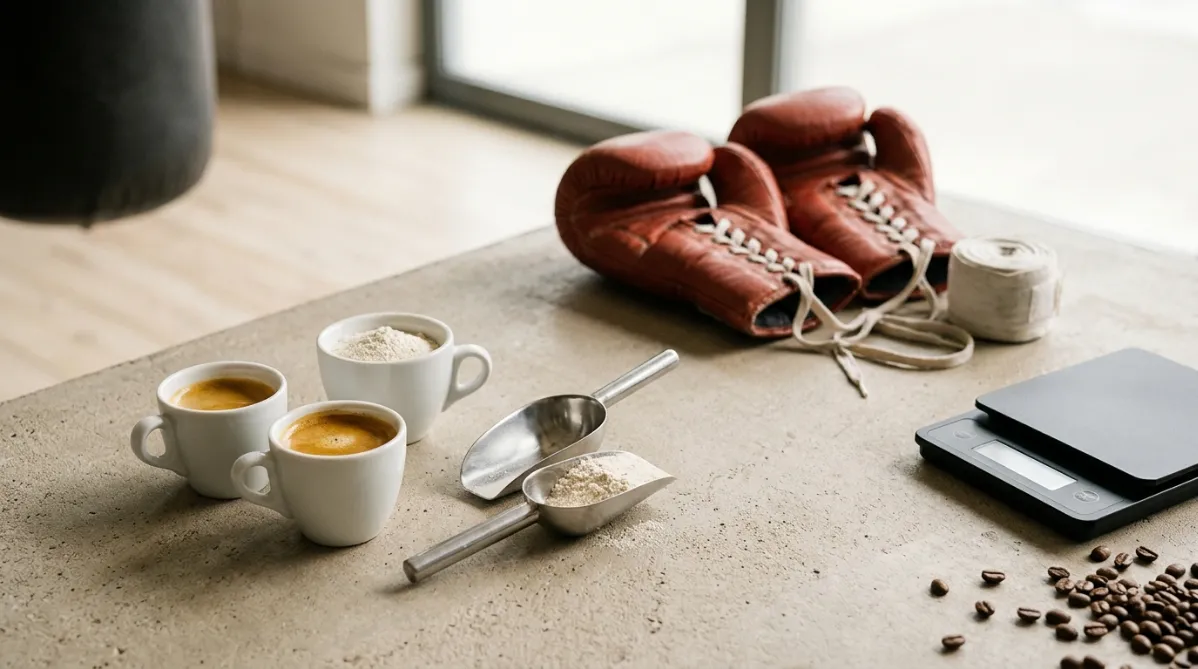
A landscape editorial photograph with a modern, clean magazine feel, shot on a pale warm-gray concrete surface in soft natural window light from the left. In the foreground, two matte white ceramic espresso cups sit side by side. The left cup holds a small amount of dark espresso with golden crema. The right cup is filled twice as high. Beside them, two small stainless steel scoops hold fine coffee-colored powder, one half full and one heaped, suggesting a dose comparison without any text or labels. A pair of worn red leather boxing gloves rests slightly out of focus behind the cups, laces loosely draped, with a white hand wrap rolled neatly beside them. A minimalist digital kitchen scale in matte black sits at the edge of the frame, with a few roasted coffee beans scattered across the surface. In the soft-focus background, a boxing gym corner appears: a hanging heavy bag in muted charcoal, pale wood plank flooring, and a tall window with diffused morning light. The palette is warm cream, espresso brown, brick red, and soft slate gray, with gentle shadows and a shallow depth of field. The composition follows the rule of thirds, with the cups and scoops in the lower left third and open negative space on the right for headline overlay. The look is tactile and refined, like a high-end health and performance journal. It has natural grain, subtle contrast, and a calm, confident mood. There are no people, no text, no logos, and no futuristic elements.
nutrition

Raddoppiare la caffeina ha aiutato a malapena i pugili – ecco cosa ha funzionato

BY DR. GYMBRO ·

Pensate che due dosi di pre‑allenamento equivalgano a doppia prestazione? Un nuovo studio crossover su 15 pugili competitivi ha confrontato 3 mg/kg e 6 mg/kg di caffeina, e la dose più alta non è risultata sistematicamente migliore. Entrambe le dosi hanno aumentato l’altezza del salto e la potenza a 60 minuti, mentre i 6 mg/kg si sono distinti solo in alcuni parametri, come la potenza del push‑up balistico e la coppia di estensione del ginocchio. Qui trovate la conversione mg‑per‑kg per i pesi corporei più comuni, il timing supportato dai dati e le avvertenze realistiche, incluso il fatto che la capacità di colpire non è mai stata testata.
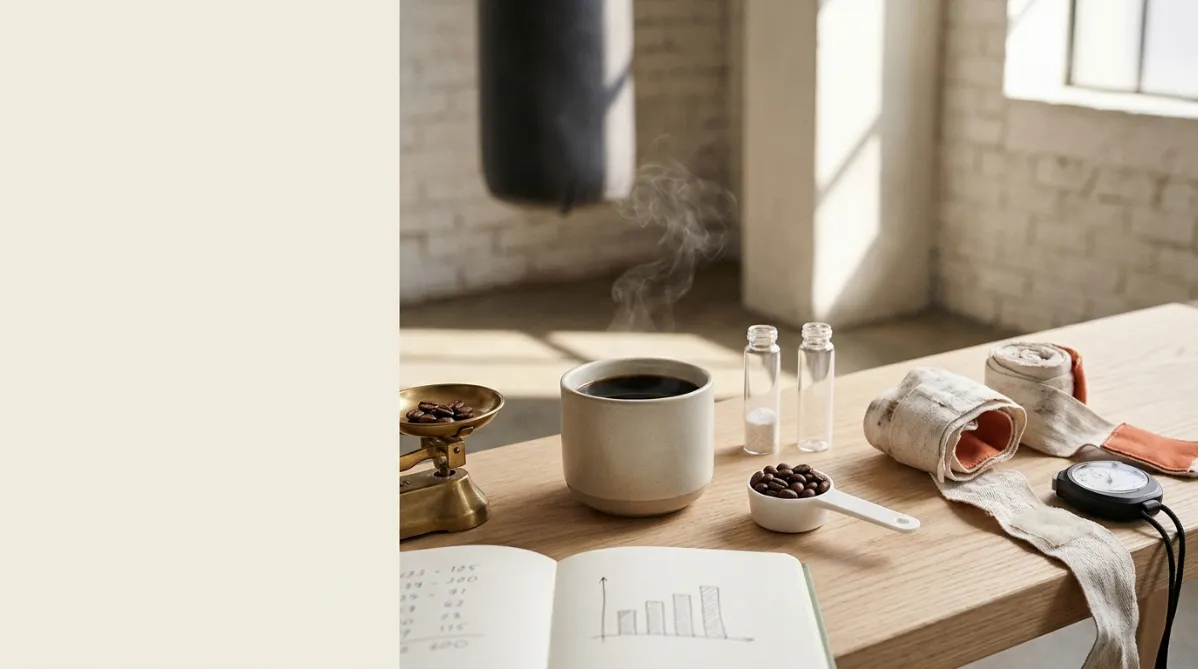
A wide, editorial-style still life shot from a slightly elevated angle on a pale oak gym bench, bathed in soft morning window light. In the center sits a matte ceramic cup of black coffee with delicate steam curling upward, flanked by a small white scoop of coffee beans and two identical glass vials, one filled with a few grains of fine powder and one empty, hinting at dose comparison. Next to the cup rests a pair of worn white boxing hand wraps, loosely coiled, and a slim black stopwatch with its face softly visible. In the foreground, a minimalist notebook lies open with blurred handwritten numbers and a simple pen sketch of a bar graph with bars of equal height, subtle and unreadable, suggesting a null result without any legible text. A small brass kitchen scale sits to the side with a few coffee beans on its tray.

In the soft-focus background, a boxing gym interior is visible: a hanging heavy bag in muted charcoal, exposed brick wall painted off-white, and tall windows casting long diagonal light across the floor. The color palette is warm and restrained: cream, sand, espresso brown, soft charcoal, with a single accent of muted terracotta orange in the hand wraps and a faint sage green in the notebook cover. Shallow depth of field with creamy bokeh, fine film grain, and gentle shadows give it a contemporary lifestyle-magazine and wellness-journal feel. The composition leaves generous negative space on the left third for headline overlay. Clean, calm, trendy, and tactile, with natural textures like wood grain, ceramic glaze, and cotton fabric. No people, no text, no futuristic elements.
science research

Il caffè a basse dosi di caffeina non ha migliorato gli sprint degli atleti di élite

BY DR. GYMBRO ·

Credi che il caffè pre‑allenamento possa darti una marcia in più negli sprint? Un nuovo studio randomizzato, doppio cieco e crossover su 15 atleti di combattimento di livello nazionale non ha riscontrato alcun beneficio di performance con dosi di caffeina di 1,5 e 3 mg/kg, cioè circa 100‑200 mg per un atleta di 68 kg. Potenza di picco, potenza media, indice di affaticamento e persino le stime dei contributi dei sistemi energetici non sono risultati differenti dal decaffeinato. Si tratta comunque di un risultato nullo su un campione ridotto, non di una prova che la caffeina non funzioni, e la maggior parte degli studi positivi utilizza capsule da 3‑6 mg/kg. Di seguito trovi i calcoli delle dosi, le limitazioni e consigli pratici per le prossime sessioni intense.
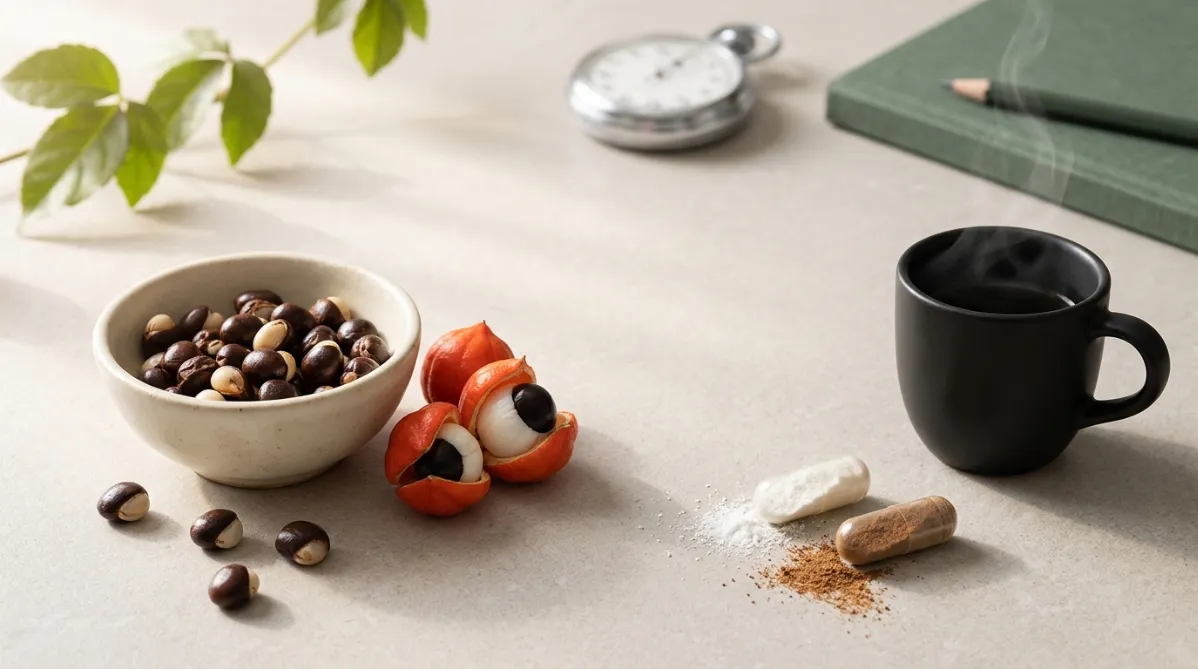
A wide, softly lit editorial flat-lay on a pale warm-gray stone countertop, shot from slightly above. On the left, a small rustic ceramic bowl in matte cream holds a handful of dried guarana seeds, dark glossy brown with pale cream arils, a few spilling onto the surface. Beside it sits a halved fresh guarana fruit in vivid red-orange, split open to show the white flesh and black seed inside, looking like a tiny eye. On the right, two open clear capsules rest side by side. One is filled with fine white caffeine powder, the other with a fine earthy brown guarana powder, and a little of each dusts the stone in delicate, deliberate lines. Between them, a minimalist matte-black espresso cup with a thin ribbon of steam rises on the right edge of the frame. A brushed-steel stopwatch and a slim dark-green linen notebook with a pencil sit in the upper background, slightly out of focus, to hint at performance testing without clutter. A few green leaves of a guarana vine curve in from the top-left corner, catching soft light.

The lighting is natural window light from the left, with gentle long shadows and a subtle warm highlight on the seeds. The palette is muted and modern: warm creams, terracotta red, deep espresso brown, sage green, and charcoal accents. The background is clean with generous negative space on the upper right for headline text. Shallow depth of field, crisp focus on the seeds and capsules, fine grain, and a calm premium magazine look like a contemporary wellness and sports-science journal. No people, no text, no logos, no futuristic elements.
science research

Guarana vs caffeina: stessa dose, solo il guarana aumenta la potenza di picco

BY DR. GYMBRO ·

In uno studio crossover randomizzato su 18 uomini attivi, una dose equivalente a 5 mg/kg di caffeina ha fatto emergere un incremento significativo della potenza di picco solo per il guarana, mentre la caffeina anidra non ha raggiunto la significatività. Il guarana non ha però superato la caffeina in modo statistico; le differenze tra i due integratori sono rimaste marginali. Ecco i risultati, i limiti dello studio e i consigli pratici per dosare il guarana in base al contenuto di caffeina.
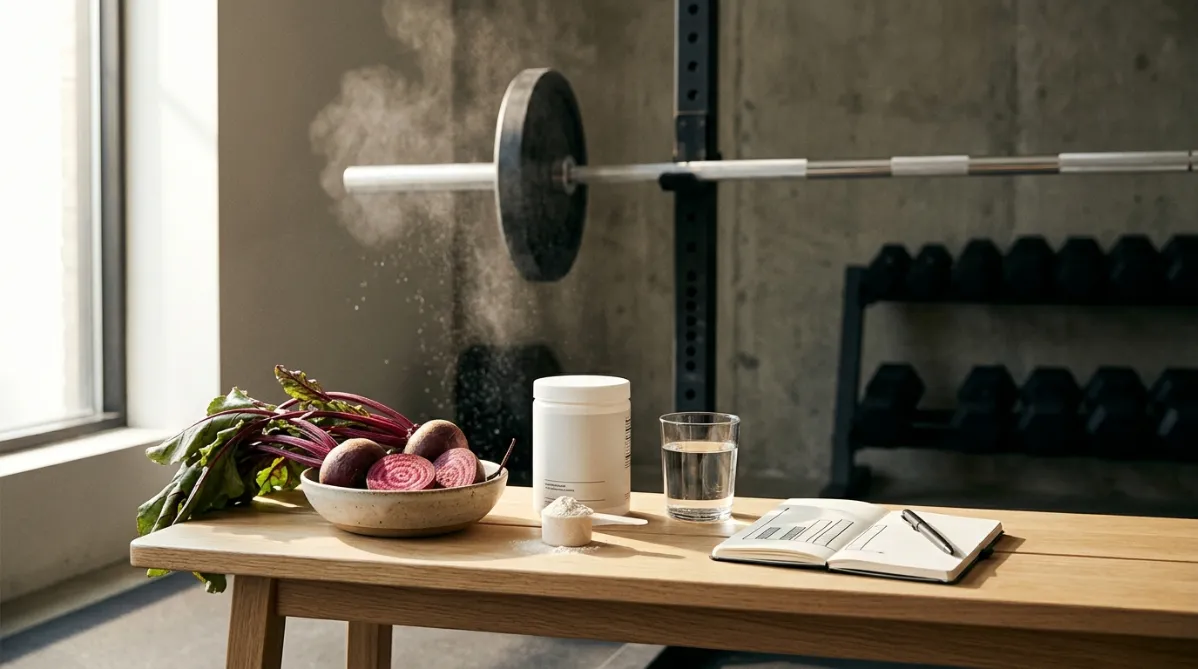
A sun-lit editorial still life on a pale oak gym bench: a loaded barbell rests on a rack just above it, chalk dust drifting in the air. In the foreground sits a small ceramic bowl of roasted beets, some sliced to show their deep magenta rings, with a few whole beets still wearing their leafy burgundy stems. Next to the bowl is a matte white supplement tub with a minimal label, a wooden scoop of fine white powder, and a clear glass of water catching soft highlights. A slim notebook lies open beside them with a simple hand-drawn bar graph and a pen, suggesting data and analysis without any readable text. Behind the bench, a softly blurred minimalist training space: raw concrete wall, tall window with warm morning light, a rack of black dumbbells fading into bokeh. The palette is earthy and modern: beet magenta, warm cream, charcoal, brushed steel, and touches of sage green from the beet leaves. Soft directional light from the left creates long gentle shadows and a slight film-grain texture. Shallow depth of field keeps the beets and powder tack sharp. The composition is wide and balanced, with negative space on the right for headline overlay. The overall feel is a clean, contemporary health and fitness journal photograph, warm and tactile, with an understated scientific tone.
nutrition

Betaine aumenta la potenza del bench‑throw di circa il 16 % in 14 giorni

BY DR. GYMBRO ·

Due settimane di integrazione con betaina – il composto naturale presente nelle barbabietole e commercializzato come TMG – sono state associate a un incremento di circa il 16 % della potenza nel bench‑throw al primo giorno di un intenso ciclo di test su uomini allenati alla resistenza. Uno studio randomizzato, in doppio cieco e crossover, ha mostrato anche un miglioramento della forza isometrica in panca, con effetti più modesti sulla potenza del salto verticale e sulla forza isometrica dello squat. Tuttavia non sono cambiati né il numero di ripetizioni né la potenza del salto squat, e lo studio ha coinvolto solo 12 partecipanti. Ecco i dati, il dosaggio utilizzato e le conclusioni che i sollevatori dovrebbero trarre.
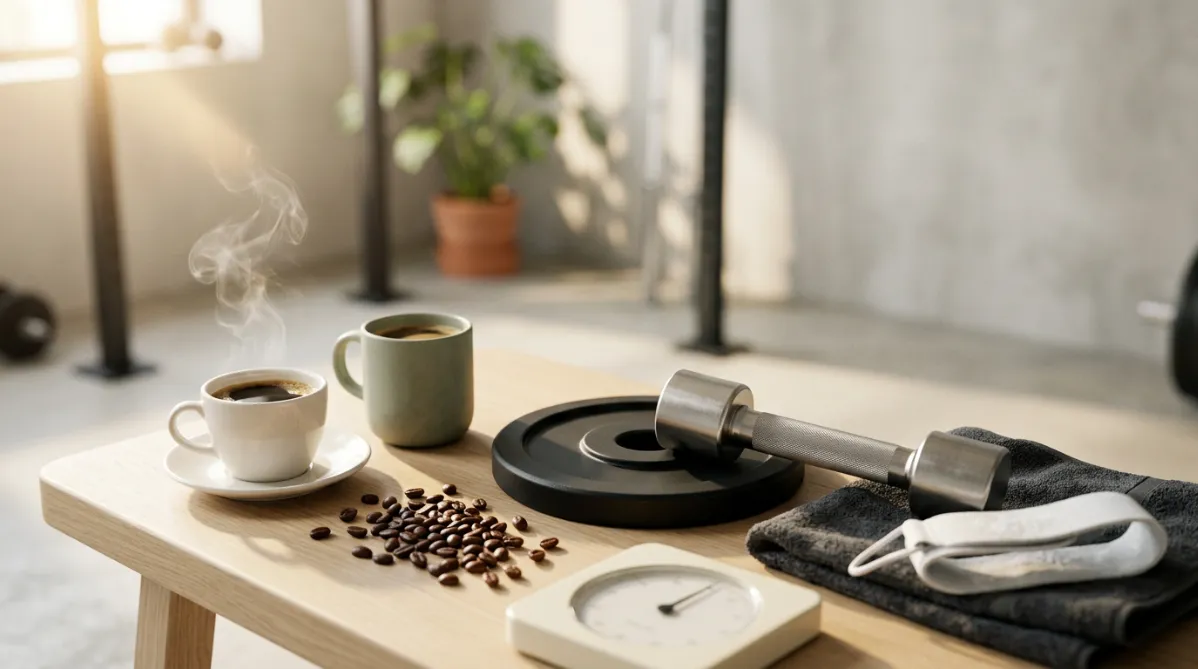
A wide, editorial-style flat lay photographed from slightly above on a pale oak gym bench with a soft matte finish. On the left, a small white ceramic cup of black coffee sits on a matching saucer, with a thin curl of steam rising and catching warm window light. Beside it is a second, slightly larger handleless stoneware mug in muted sage green, also filled with coffee, so the pair suggests one to two cups. In the center-right foreground rests a sleek matte-black steel barbell plate, partly overlapping a brushed-steel dumbbell with fine knurling. A folded charcoal gym towel and a clean white chalk-dusted wrist strap lie casually to one side. A small scatter of whole roasted coffee beans spills across the bench in front of the cups, glossy and deep brown. Near the bottom edge, a minimalist analog kitchen scale in soft cream with a thin black needle hints at precise dosing, without any readable numbers or text.

Soft morning sunlight streams in from the upper left, creating long, gentle shadows and a warm golden glow against cool neutral tones. The background is a softly blurred, airy home gym or boutique training studio with out-of-focus squat rack uprights, pale concrete walls, and a leafy green plant in a terracotta pot adding a touch of organic color. The palette is restrained and modern: warm cream, espresso brown, charcoal, sage green, and hints of brushed silver. Shallow depth of field keeps the cups and beans tack sharp while the background melts into creamy bokeh. The composition leaves generous negative space on the right third for a title overlay, with a balanced, calm, premium magazine feel, like a contemporary wellness and sports science journal. High-resolution, natural color grading, subtle film grain, realistic textures on ceramic, steel, and coffee crema.
nutrition

Quanta caffeina prima di allenarsi? Una meta‑analisi mostra che 1‑2 mg/kg sono sufficienti

BY DR. GYMBRO ·

Il consiglio più diffuso è di assumere 3–6 mg/kg di caffeina circa un’ora prima dell’allenamento, corrispondente a diverse tazzine di caffè o a una generosa dose di pre‑workout. Una meta‑analisi del 2022, basata su 12 studi, ha dimostrato che dosi comprese tra 0,9 e 2 mg/kg migliorano comunque la forza muscolare (d≈0,17), la resistenza (d≈0,21) e la velocità media della barra (d≈0,56). Per la maggior parte degli appassionati ciò equivale a una‑o‑due tazze di caffè. Gli effetti sono modesti e derivano da studi acuti a sessione singola, ma i risultati suggeriscono che un beneficio simile possa essere ottenuto con meno caffeina.
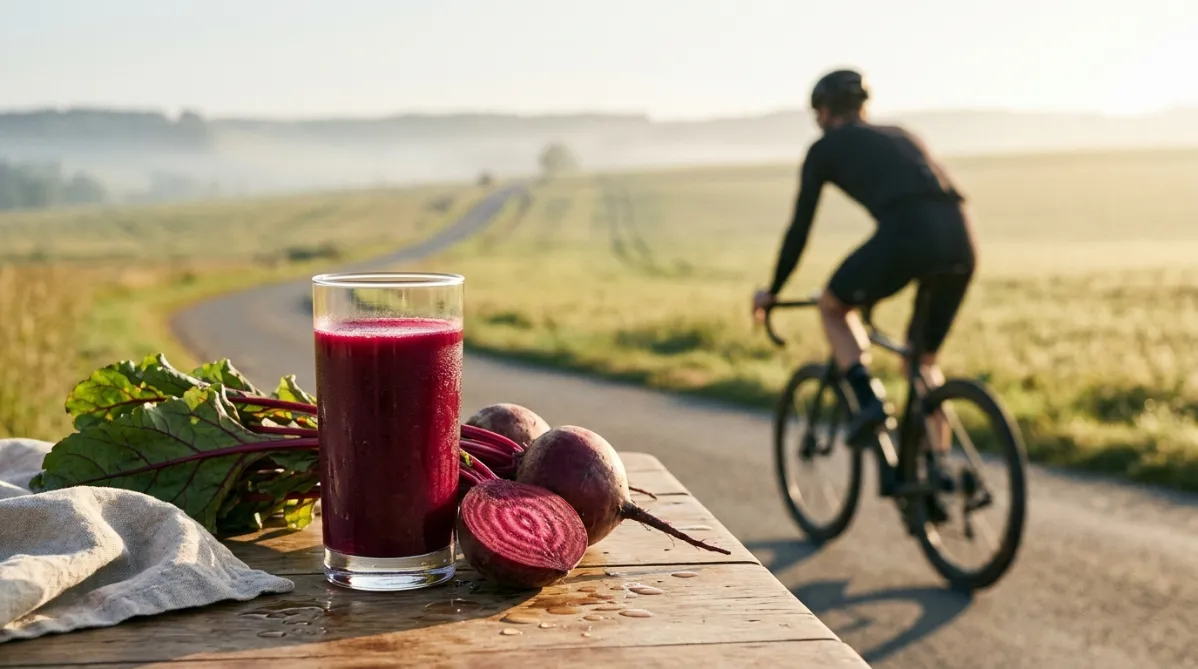
A cyclist in a fitted matte-black kit, shot from a low three-quarter angle, rides a sunlit country road at early morning, slightly out of focus with soft motion blur on the wheels. In the foreground on the left sits a rustic wooden table with a tall glass of deep magenta beetroot juice. Condensation beads on the glass, and the light catches its vivid jewel-toned color. Beside it lie two whole beetroots with their leafy red-veined greens still attached, and one halved beet shows concentric crimson-and-pink rings. A small linen napkin and a scatter of water droplets add an editorial still-life feel.

The background is a gently rolling landscape with golden-green fields and a thin ribbon of asphalt curving toward the horizon. Pale mist hangs low and warm sunlight comes from the right, creating long soft shadows and a golden rim light on the glass and the cyclist's silhouette. The shallow depth of field keeps the juice and beets crisp while the rider stays a dreamy blurred suggestion of speed.

The palette is rich magenta, burgundy, warm cream, sage green, and soft gold, with muted, slightly desaturated tones in the background so the beetroot color stands out. The composition follows the rule of thirds, with the still-life in the lower left third and open negative space in the upper right for the title. The overall look is a clean, modern lifestyle-magazine photograph with natural film-like grain, calm and athletic, and no text, logos, or futuristic elements.
nutrition

Succo di barbabietola prima di una prova a cronometro: come 0,5 L hanno ridotto i tempi su percorsi di 4 km e 16,1 km di quasi il 3 %

BY DR. GYMBRO ·

Uno studio crossover del 2011 ha valutato se una singola dose di succo di barbabietola potesse migliorare le prove a cronometro in bicicletta. Nove ciclisti maschi competitivi hanno assunto 0,5 L di succo ricco di nitrati (circa 6,2 mmol) circa 2,5 h prima della gara. Il nitrito plasmatico è più che raddoppiato, la potenza media è aumentata e i tempi sui percorsi di 4 km e 16,1 km sono migliorati rispettivamente del 2,8 % e del 2,7 %, senza variazioni significative del consumo di ossigeno.
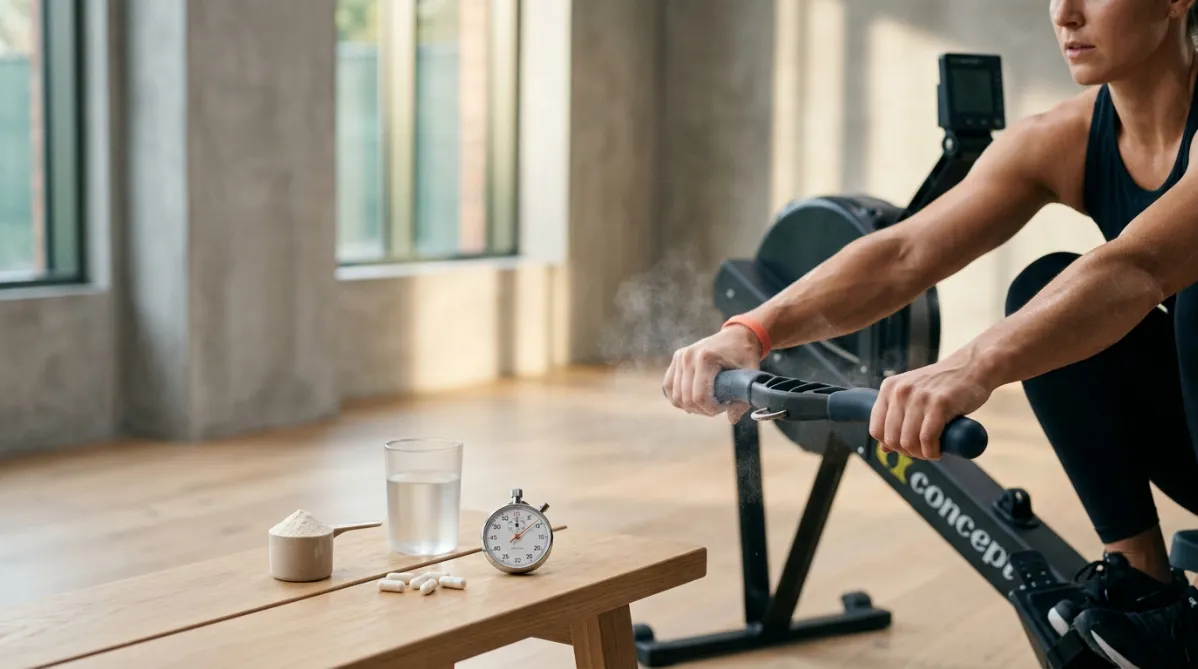
A wide, minimalist editorial scene of an athlete's hands and forearms gripping the handles of a rowing ergometer, shot in soft natural light from a large window in a clean, airy training studio. The athlete is mid-pull, forearm muscles subtly defined, a light sheen of sweat on the skin, chalk dust floating in the air. In the foreground on a pale oak bench sits a small ceramic scoop of fine white powder beside a matte glass of water, with a few loose white capsules arranged neatly in a gentle curve. A minimalist analog stopwatch with a clean white face lies next to them, its hand paused near the two-minute mark.

The color palette is calm and modern: warm off-white, soft sand, muted sage green, and a single accent of coral orange in the stopwatch hand and the rower's wristband. The background is softly blurred concrete and pale wood with long, gentle shadows stretching across the floor. Shallow depth of field keeps the hands, powder, and stopwatch crisp while the rest dissolves into creamy bokeh.

Composition follows the rule of thirds: the rowing handles and hands occupy the right third, the bench still life sits in the lower left, and open negative space in the upper left leaves room for a title overlay. The mood is focused, quiet, and intentional, like a high-end health and science journal feature. Fine film grain, subtle matte finish, editorial photography style, natural color grading, and no text or logos.
nutrition

Beta‑alanina Funziona? Una Meta‑analisi Conferma i Benefici per Sforzi di 60–240 secondi

BY DR. GYMBRO ·

La beta‑alanina è stata a lungo pubblicizzata per contrastare il bruciore dell’esercizio intenso, ma funziona davvero? Una meta‑analisi che ha raccolto 15 studi e 360 soggetti evidenzia un beneficio reale, seppur modesto, con un guadagno medio del 2,85 %. L’effetto è più marcato per sforzi durati tra 60 e 240 secondi, diminuisce oltre i quattro minuti e non si osserva negli sprint più brevi. L’articolo spiega inoltre il regime di caricamento più comune (3,2–6,4 g al giorno per almeno quattro settimane), come frazionare le dosi per limitare il formicolio e quali sportivi possono trarne il maggior vantaggio.

This page is available in