Dr. Gymbro
←

#ergogenic aids

25 articles
supplements

Água com Hidrogênio Deixou Nadadores de Elite 0,6% Mais Rápidos. Qual é a Pegadinha

BY DR. GYMBRO ·

Um copo de água enriquecida com hidrogênio deixou nadadores de nível nacional 0,6% mais rápidos nos 400 m em um ensaio duplo‑cego cruzado. Parece pouco, mas no alto nível isso pode decidir pódios. O mesmo protocolo não alterou sprints de 50 m, lactato sanguíneo, percepção de esforço ou marcadores de estresse oxidativo, deixando o mecanismo em aberto. Veja a dose exata, quem pode se beneficiar e por que este pequeno estudo com 12 atletas deve ser analisado com cautela.

science research

O impulso da cafeína nos sprints durou 3,5 h — e eles doem menos

BY DR. GYMBRO ·

Uma dose alta de cafeína pode não desaparecer após a primeira série. Em um novo estudo da Universidade de Tsukuba, 5,5 mg/kg consumidos cerca de uma hora antes do exercício mantiveram a potência nos sprints repetidos elevada por até 3,5 h. Os sprints também foram percebidos como menos dolorosos e menos cansativos. Os ganhos foram modestos (0,5‑3,7 %) e obtidos em apenas 12 participantes, acompanhados de frequência cardíaca mais alta e menor velocidade de fluxo sanguíneo cerebral. Veja como a dose se apresenta e quem pode se beneficiar.

nutrition

Cafeína Deixou Jogadores de Futebol Mais Rápidos, Mas Não Melhorou a Reação

BY DR. GYMBRO ·

Todo mundo assume que a cafeína deixa os atletas mais atentos em tudo, mas um novo estudo duplo‑cego com jogadores amadores de futebol conta uma história mais sutil. Uma dose de 300 mg (cerca de 3,7 mg/kg) melhorou a agilidade planejada com tamanho de efeito de 0,62 e ainda aumentou o desempenho no salto. Porém, quando os atletas precisaram reagir a uma luz ou a um oponente humano, os ganhos foram pequenos ou não foram estatisticamente significativos. O texto a seguir explica o que o estudo encontrou, como interpretar os resultados e quem realmente pode se beneficiar.

A lone trail runner pauses on a high alpine ridge at dawn, holding a small enamel camp mug of steaming coffee, with thin ribbons of steam curling into crisp, cold air. She wears a fitted charcoal running vest and a muted sage windbreaker, and her breath is faintly visible. Behind her, layered mountain ranges fade into soft blue and lavender haze, and a sea of low clouds fills the valley below. Warm golden sunlight skims the ridgeline and rim-lights her profile, shoulders, and the rising steam. In the foreground, a scattering of dried alpine grasses and lichen-covered stones is in sharp focus, with a worn trail snaking toward the summit. Near the mug sits a small pair of trail running shoes with dusty soles and a simple analog wristwatch resting on a flat rock.

The composition follows a wide 16:9 editorial layout. The subject sits slightly right of center on the rule of thirds, leaving generous negative space in the pale peach-and-powder-blue sky on the left, where headline text could sit. The palette is restrained and modern: warm amber, soft cream, dusty sage, slate blue, and a touch of terracotta. The look is cinematic but natural, with shallow depth of field on the foreground details, gentle film grain, and a slightly matte finish. It evokes a high-end outdoor lifestyle magazine or a contemporary wellness journal. The mood is calm, focused, and quietly determined, capturing the contrast between thin, cold altitude air and the warmth of a coffee ritual. The image has no text, logos, or futuristic elements, and no gym equipment, only natural light, texture, and atmosphere.
nutrition

Cafeína no Ar Rarefeito: O Impulso de Endurance que a Hipóxia Não Apaga

BY DR. GYMBRO ·

O ar rarefeito compromete a resistência, mas uma nova meta‑análise indica que a cafeína pode recuperar parte desse déficit. Ao agrupar nove estudos controlados por placebo em desenho cruzado (117 participantes), os pesquisadores observaram um aumento de desempenho moderado a grande em hipóxia (g = 0.76). Surpreendentemente, a saturação de oxigênio e a percepção de esforço permaneceram inalteradas, enquanto a frequência cardíaca, o lactato e a ventilação aumentaram. A evidência tem baixa certeza e apenas 19 participantes eram mulheres, portanto o achado é promissor, não definitivo. A seguir, quem pode se beneficiar, quem deve evitar e como pensar em dose e timing.
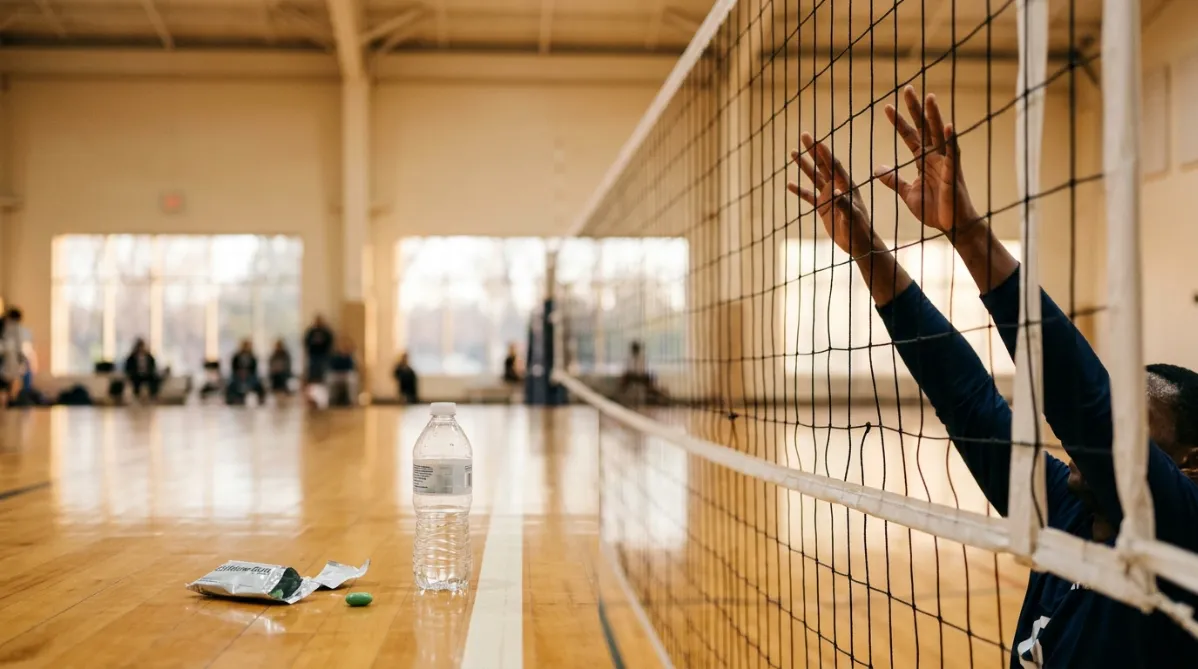
A landscape editorial photograph of a volleyball net in a softly lit indoor gym, shot from a low angle on the court. In the foreground, a pair of athletic hands in mid-block reach above the net, fingers spread, caught in crisp focus. The athlete's face is out of frame, so the attention stays on the hands and the net. In the lower left foreground, a small open foil pack of caffeine chewing gum sits on the polished maple floor, with two mint-green gum pieces beside it and a clear water bottle. The pack is unbranded and minimal.

The background is a warm blur of honey-toned hardwood, pale gym walls, and tall windows with diffused late-afternoon light streaming in. Dust motes glow in the light shafts. The palette is muted and modern: warm wood amber, soft cream, sage green, and a touch of deep navy from the athlete's jersey. Shallow depth of field and gentle film grain give the image a refined, magazine-like feel. The composition follows the rule of thirds, with the hands and net on the right and open negative space on the left, where headline text could sit.

The mood is calm, focused, and slightly cinematic, like a feature in a contemporary sports science journal. The lighting is soft and natural, with long gentle shadows across the court lines. No futuristic or digital elements, no charts, no text. The overall look is clean, tactile, and editorial.
nutrition

Fadiga reduziu reações em 18 %; goma de cafeína limitou a 3 %

BY DR. GYMBRO ·

Após um rigoroso protocolo de fadiga por bloqueio repetido, jogadoras de vôlei de elite que usaram placebo tiveram a sequência de bloqueio reativa 18,4 % mais lenta. Com goma de cafeína de 6 mg/kg, a desaceleração foi de apenas 3,0 %, e com 3 mg/kg ficou em 6,4 %. A potência do salto de bloqueio e a rigidez do salto de queda também se mantiveram melhores com cafeína. Contudo, o estudo contou apenas 15 atletas, o cegamento foi incompleto e os efeitos colaterais foram mais frequentes na dose maior, sem que nenhuma dose fosse considerada a melhor. Veja o que esses números significam em miligramas reais e quem pode realmente se beneficiar.
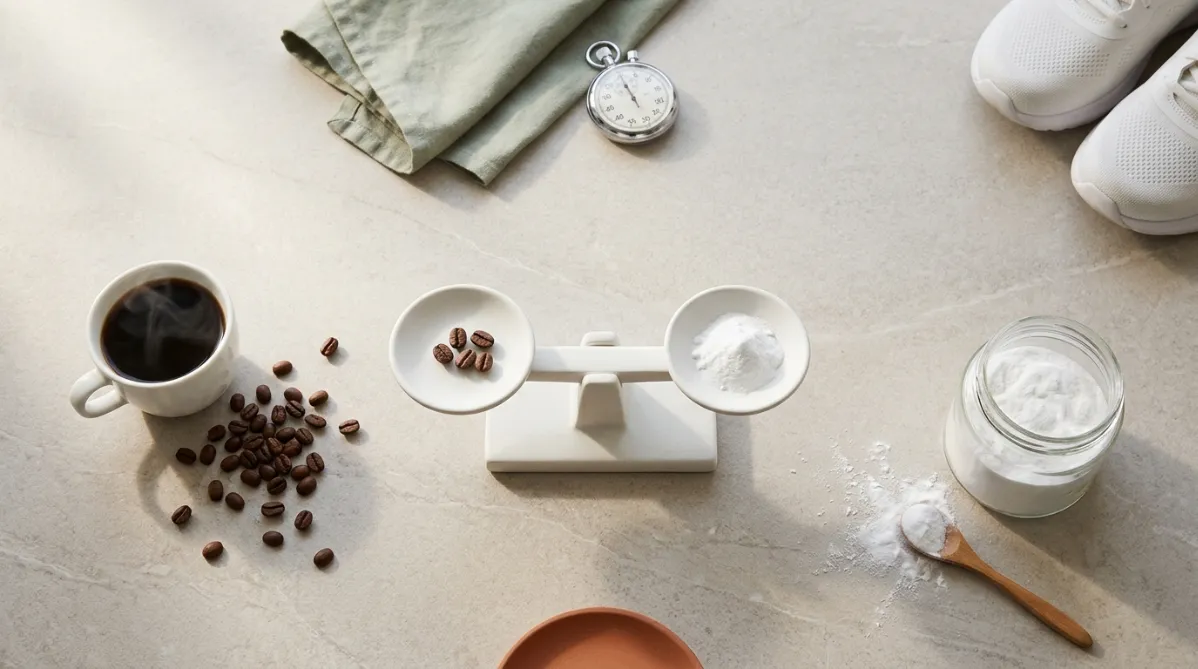
A calm, editorial-style flat lay photographed from above on a pale, warm-gray stone countertop in soft morning window light. On the left, a small white ceramic cup of black coffee with a delicate swirl of steam, beside a scattering of whole roasted coffee beans. On the right, a minimalist glass jar of fine white baking soda powder with a wooden spoon resting beside it, a few soft white grains dusted across the surface. In the center, a clean white scale-like balance made of matte ceramic with two small dishes: one holding a few coffee beans, the other a small mound of white powder, perfectly level to suggest the idea of equal outcomes. A folded sage-green linen napkin and a simple stainless steel stopwatch rest near the top edge, along with a pair of minimalist white running shoes partially visible in the corner. Subtle long shadows, gentle natural highlights, and a shallow depth of field give a tactile, premium feel. The color palette is muted and modern: cream, warm espresso brown, soft sage, and chalky white, with a single accent of pale terracotta in a small ceramic dish. Composition is balanced and uncluttered with generous negative space on the upper right for a title overlay. The overall mood is clean, contemporary, and quietly scientific, like a cover from a trendy health and performance journal. Wide landscape 16:9 framing, crisp detail, natural film-like grain.
nutrition

Cafeína + Bicarbonato de Sódio: Supera Cada Um Isoladamente?

BY DR. GYMBRO ·

Empilhar dois auxiliares ergogênicos comprovados parece garantia de vitória, mas uma nova meta‑análise de 13 ensaios cruzados mostra que a conta não é tão simples. Em comparação com o placebo, a combinação de cafeína e bicarbonato de sódio aumentou a potência média em cerca de 8,4 W e reduziu o tempo em provas cronometradas em torno de 1,6 %. Contudo, esses efeitos desapareceram quando os estudos foram analisados um a um, e a mistura não superou a cafeína ou o bicarbonato isoladamente. A seguir, veja o que os dados revelam, as doses típicas e quem deve ou não considerar essa combinação.
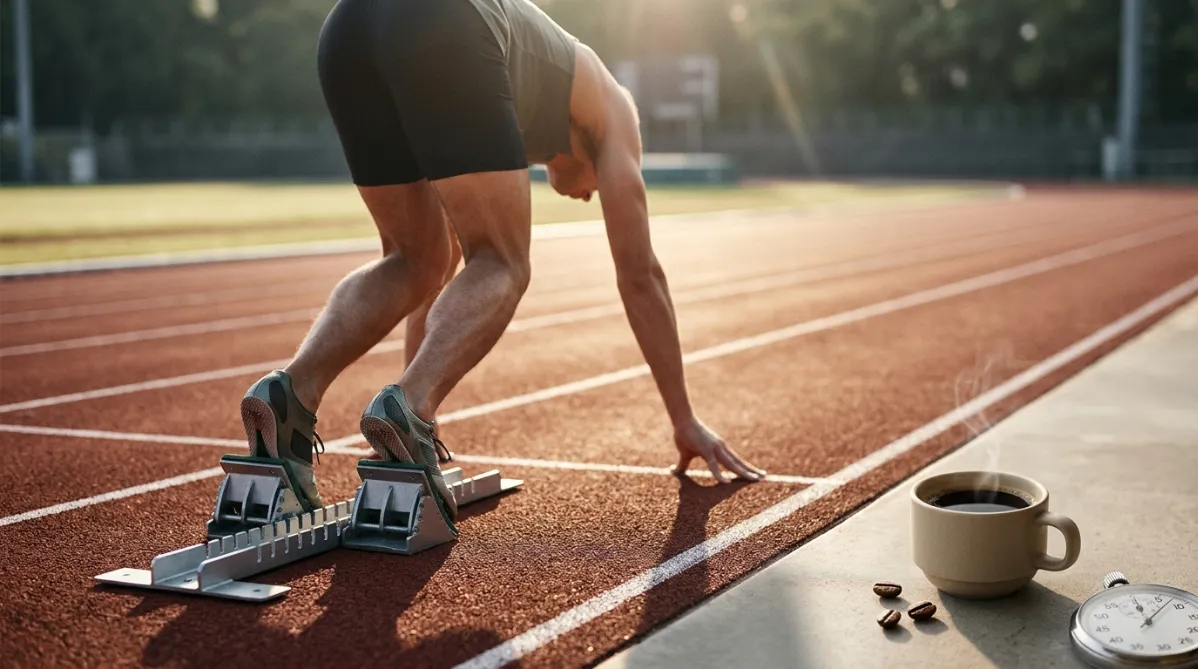
A wide, editorial-style photograph of a sprinter crouched in starting blocks on a deep terracotta-red running track, shot from a low angle at the side as the first morning light rakes across the lanes. The athlete is mid-set, hips lifted, hands poised behind crisp white lane lines, with a soft focus on their muscular calves and spiked shoes in the foreground. Warm golden sunlight creates long, elegant shadows and subtle lens flare, while the distant lanes fade into a creamy bokeh.

In the lower right foreground, slightly out of focus, sits a minimalist still life on a matte concrete ledge beside the track: a small ceramic cup of black coffee with a thin wisp of steam, two loose roasted coffee beans, and a simple stopwatch with a clean white face. The ceramic is a muted sand color, adding a refined, modern lifestyle touch.

The color palette is restrained and trendy: terracotta, warm cream, soft charcoal, and a hint of sage green from trees blurred in the far background. The composition uses generous negative space across the upper left, ideal for headline text overlay. The look is similar to a contemporary health and sports science magazine: natural film-like grain, gentle contrast, shallow depth of field, and a calm, focused mood. No text, no logos, no graphics, and no futuristic elements, just a realistic, tactile, sunlit scene that suggests precision, preparation, and explosive speed.
science research

Dobrar a Cafeína, Sprints Mais Rápidos? O Que 6 mg/kg Realmente Acrescenta

BY DR. GYMBRO ·

Um estudo randomizado, duplo‑cego e cruzado comparou 3 mg/kg e 6 mg/kg de cafeína em 21 velocistas masculinos treinados. Ambas as doses superaram o placebo; a dose maior só trouxe vantagem extra nos primeiros 30 e 60 m, não nos 10 m iniciais. Também aumentou a altura do salto e a taxa de desenvolvimento de força nos blocos, sem melhorar o tempo de reação ou a potência de pico no teste de Wingate. O texto explica o que essas doses representam em miligramas para atletas de 70‑80 kg, quando tomá‑las, a quem os resultados se aplicam e o que o estudo não esclarece sobre efeitos colaterais.

A landscape editorial photograph in a bright, modern gym studio with soft natural light pouring through tall windows. In the foreground, a matte ceramic cup and a small glass jar of plain white powder sit on a light oak bench, with a wooden scoop resting beside them and a few loose grains dusted across the wood. The jar has no label, which hints at mystery without being heavy-handed. Slightly out of focus behind them, a female athlete in a sage green athletic set stands at a barbell, chalked hands gripping the bar, her expression calm and focused. A male cyclist on a stationary bike is blurred in the far background. The palette is warm neutrals: cream, soft sand, pale oak, muted sage, and a touch of terracotta, with gentle golden-hour highlights and soft shadows. The composition follows the rule of thirds, with the cup and jar in the lower left, the athlete on the right, and open negative space in the upper area for headline text. The depth of field is shallow, with a creamy bokeh background. The mood is contemplative, curious, and trendy, like a contemporary health and science magazine cover. Fine film grain, subtle matte finish, clean minimalist styling, and no text or logos.
science research

Cafeína Falsa Ainda Deixa Atletas Mais Fortes e Mais Rápidos

BY DR. GYMBRO ·

E se parte do impulso do seu pré‑treino vier da sua cabeça e não da colher? Uma meta‑análise de 2026, com 17 estudos, descobriu que um placebo que os atletas acreditavam ser cafeína ainda melhorou o desempenho esportivo (d = 0.49) em supino, provas de ciclismo contra‑relógio e sprints repetidos. Os efeitos foram maiores quando os pesquisadores estavam cegos e em estudos com mais mulheres, embora a evidência seja de baixa certeza e alto risco de viés. Isso não é motivo para abandonar a cafeína real na dose de 3‑6 mg/kg, mas lembra que a expectativa também é uma variável de performance. Veja o que os dados mostram e quem deve ter cautela.
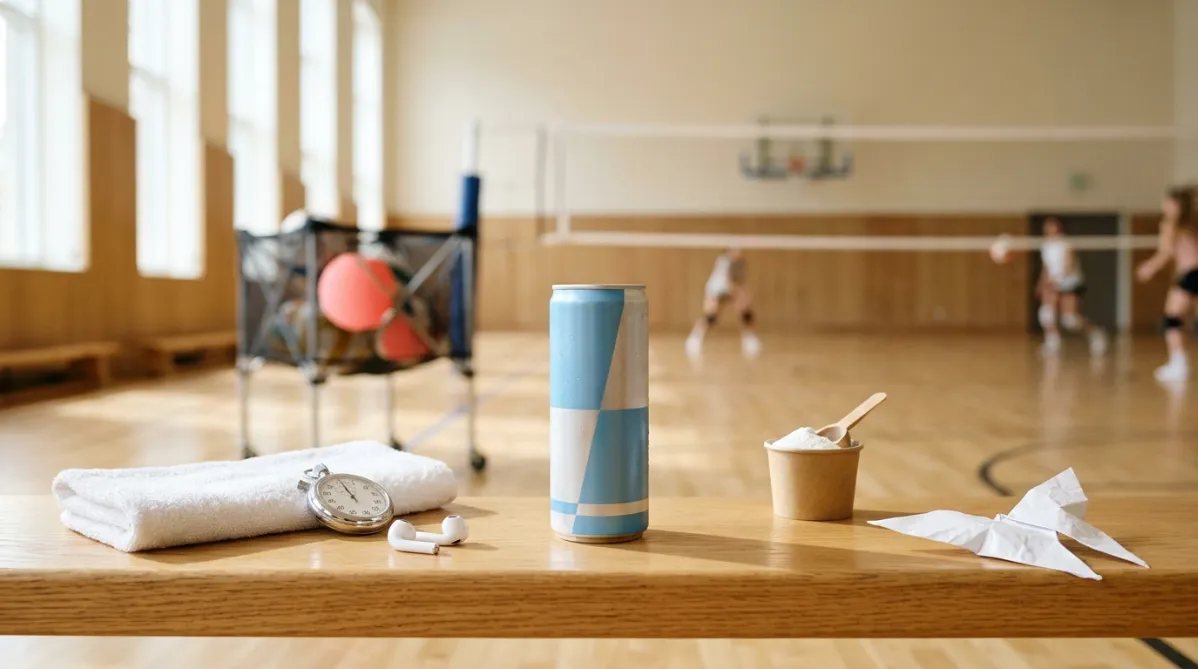
A wide, editorial-style photograph of a single slim silver and blue energy drink can standing upright at center on a polished light-oak gym bench, shot in soft natural window light. The can is unbranded, with a clean, minimal design and a few beads of condensation. Behind it, the softly blurred interior of a bright modern indoor volleyball court stretches into the background, with a pale hardwood floor, a net, and a few volleyballs resting in a mesh cart. Warm morning sunlight enters through tall windows on the left and casts long, gentle shadows across the bench. Beside the can sit a small white towel folded neatly, a simple stopwatch, and a pair of white wireless earbuds. On the right, a small paper cup of white powder and a wooden scoop hint at measured dosing. They are placed deliberately, like a styled still life.

At the very edge of the frame, a pair of delicate white paper wings, origami-like and slightly crumpled, lie flat and unused on the bench, a subtle visual joke about the "wings" slogan. The wings are understated and tactile, not magical or glowing.

The color palette is muted and fresh: warm honey wood, soft cream, pale sky blue, and touches of silver, with a single accent of coral red from a volleyball panel in the background. The depth of field is shallow, with crisp focus on the can and the paper wings and a creamy bokeh background. The composition follows the rule of thirds, with the can slightly left of center and generous negative space on the right for a headline overlay. The mood is calm, clean, and contemporary, like a lifestyle and science magazine cover, with fine film grain and natural contrast. The camera angle is slightly low, at bench level, with a 50mm lens look.
nutrition

Red Bull dá asas? 13 testes na academia não encontraram efeito

BY DR. GYMBRO ·

O slogan da Red Bull promete asas, mas um estudo com jogadoras de vôlei feminino não encontrou benefícios. Uma lata padrão não melhorou nenhum dos 13 indicadores de desempenho nos testes de Wingate, salto e força de preensão, quando comparada a um placebo. Oito das 15 atletas relataram náuseas leves. A provável causa é que a lata forneceu apenas cerca de 1,1 mg/kg de cafeína, muito abaixo dos 3 a 6 mg/kg normalmente citados como eficazes. Veja os principais achados, as limitações e como dosar a cafeína corretamente.
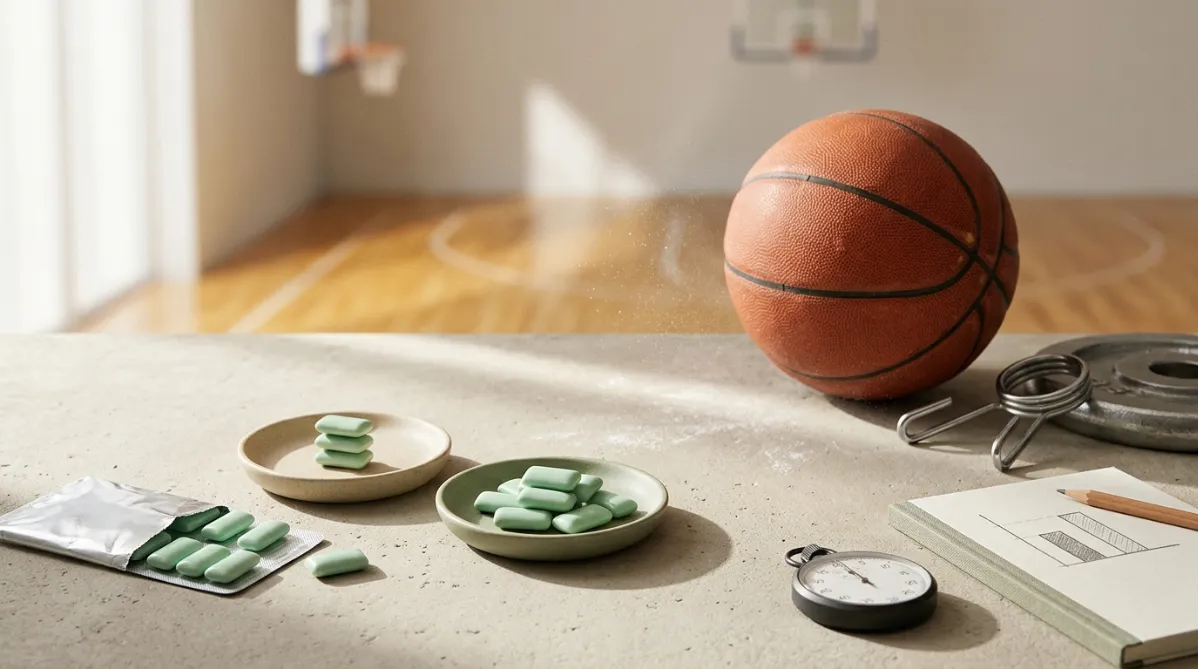
A landscape editorial still life on a pale warm-gray concrete surface, shot from a slightly elevated three-quarter angle in soft diffused morning window light. In the foreground left, a small open foil blister pack of mint-green caffeine gum sits beside two neatly arranged piles of gum pieces, one with three pieces and one with six, each on a small matte ceramic dish in oat and sage tones. The pieces are slightly glossy, rounded rectangles with crisp shadows. In the center-right, a worn leather basketball rests on the surface with deep amber-orange tones and visible pebbled texture. Next to it is a loosely chalked barbell collar and a single steel weight plate edge, partly out of focus. A minimalist analog stopwatch with a matte white face and a thin black hand lies at the lower right, and a slim notebook with a pencil rests nearby. The page shows a simple hand-drawn bar graph of two equal bars, with no legible text. In the soft-focus background, a blurred indoor basketball court with warm honey-colored hardwood and distant hoop lines fades into creamy bokeh. A narrow band of sunlight crosses the scene diagonally and picks out chalk dust particles in the air. The palette is muted and modern: sage green, warm oat, terracotta orange, charcoal, and cream. The composition leaves open negative space on the upper left for title overlay. Shallow depth of field, fine film grain, and a calm, clean magazine aesthetic like a contemporary health and science journal. No people, no text, no futuristic elements.
science research

Goma de cafeína e desempenho no mesmo dia: por que 3 mg/kg igualou 6

BY DR. GYMBRO ·

Um novo estudo crossover com jogadores de basquete descobriu que a goma de cafeína a 3 mg/kg melhorou a força, potência, velocidade de sprint e agilidade reativa no mesmo dia quase tanto quanto uma dose de 6 mg/kg. Ambas as doses também aumentaram a velocidade da barra durante o aquecimento pesado com agachamento. Contudo, aos 24 e 48 horas o benefício desapareceu. O estudo não incluiu teste de linha de base nem um grupo somente com cafeína, o que exige leitura cuidadosa dos resultados. Veja o que isso implica em termos de dose, timing e quem pode se beneficiar.
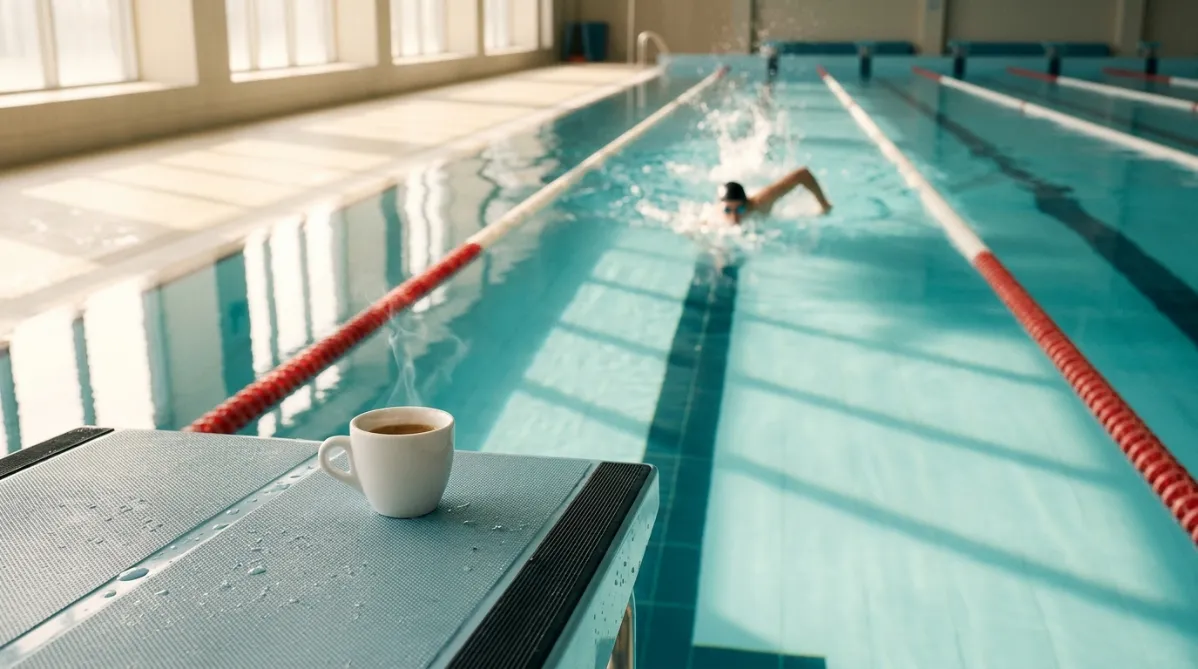
A wide, editorial-style photograph of a competition swimming pool lane seen from just above the water line at the starting end, in soft morning light. In the foreground, on the pool deck, a white ceramic espresso cup sits on the edge of a blue-gray starting block, a thin curl of steam rising from it. The cup is in crisp focus, with a few droplets of water on the textured non-slip deck around it. Behind it, the pool stretches into the distance as a series of calm lanes divided by red and white lane ropes. The turquoise water glints with gentle ripples and long, shimmering reflections. At the far end, a lone swimmer in a dark cap and goggles is mid-stroke, caught in a small burst of white splash, and slightly out of focus because of the shallow depth of field.

Large windows along the side wall let in pale golden sunlight, which throws soft diagonal light across the water and the deck. The palette is clean and modern: aqua, deep teal, warm cream and a small accent of coffee brown. The cup's warm tones stand out against the cool blues. The composition follows the rule of thirds, with the cup in the lower left third and open negative space of water and light on the right, leaving room for headline text. The look is minimal, airy and contemporary, like a high-end sports and science magazine, with subtle film grain, natural color grading, and a slightly desaturated, calm mood. Faint stopwatch-like details appear only as a thin black timing pad edge on the starting block, with no text or numbers visible. The overall feel is quiet anticipation just before a race, precise and fresh, with a sense of small margins and measured performance.
nutrition

Cafeína faz nadadores mais rápidos, mas menos do que você imagina

BY DR. GYMBRO ·

Nadadores tomam café antes das provas há décadas, mas será que isso realmente melhora o desempenho? Uma meta‑análise de 13 ensaios cruzados aponta um ganho médio de cerca de 1,7 %, o que pode ser decisivo em um esporte que se resolve em centésimos de segundo. O efeito mais evidente aparece com doses de 6 mg/kg ou mais; doses menores não mostraram benefício claro. A cafeína também elevou o lactato sanguíneo pós‑prova, e os resultados variaram bastante entre os estudos. Veja o que a evidência confirma e o que ainda está em aberto.
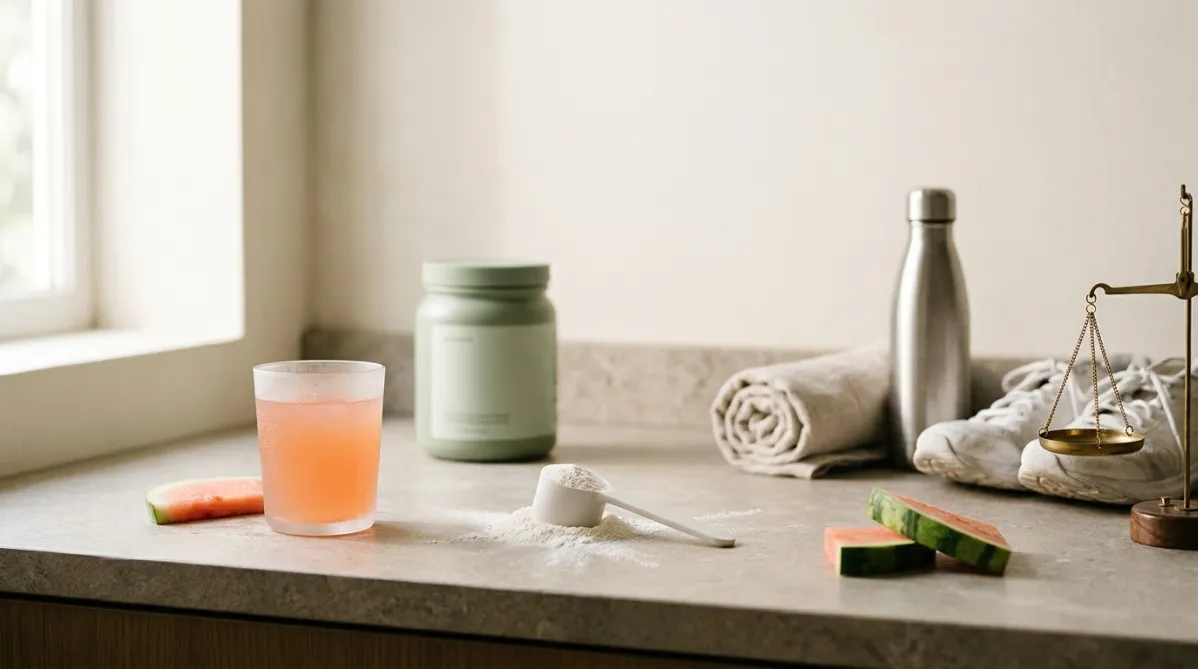
A wide landscape editorial photograph shot from slightly above, showing a clean matte stone countertop in soft morning light. On the left, a single frosted glass tumbler of pale pink-orange watermelon-colored drink sits with condensation beads on its surface, a thin slice of watermelon resting beside it. In the center, a minimalist matte white scoop rests on a small pile of fine white powder, with a few grains scattered naturally across the surface. Behind it, a blurred matte sage-green supplement tub with no legible text stands slightly out of focus. On the right, a neat arrangement of gym elements: a rolled linen towel, a slim stainless steel water bottle, and a pair of worn white running shoes with soft shadows. A small brass balance scale sits at the far right edge, one pan slightly higher than the other, hinting at weighing evidence versus hype. Scattered across the counter are a few cut watermelon rind wedges in vivid green and coral pink, adding natural color accents.

The color palette is warm and restrained: cream, soft blush pink, sage green, and warm gray, with a single pop of coral. Light enters from a window on the left, casting long, gentle diagonal shadows and a subtle highlight on the glass. Shallow depth of field with creamy bokeh in the background. Composition leaves generous negative space across the upper third and right side for headline text overlay. Style resembles a modern wellness magazine or trendy health journal cover: calm, tactile, minimal, slightly muted film-like grain, natural textures such as linen, stone, and glass. No people, no text, no logos, and no futuristic elements.
supplements

Citrulina Malato: Hype ou Ajuda? 30 Estudos Dizem Pouco

BY DR. GYMBRO ·

Citrulina malato é um dos ingredientes mais comuns em suplementos pré‑treino, mas será que ele realmente melhora o desempenho? Uma meta‑análise de três níveis, com 30 ensaios randomizados envolvendo 644 participantes, encontrou apenas um pequeno aumento geral na performance (g de Hedges = 0,16). Os intervalos de predição foram amplos, a certeza GRADE foi baixa a muito baixa, e a percepção de esforço não mudou. Doses agudas pareceram mais consistentes que as crônicas, com indícios de melhora em exercícios aeróbicos e anaeróbicos curtos, porém sem robustez. Veja o que isso significa para dose, timing e se vale a pena usar.
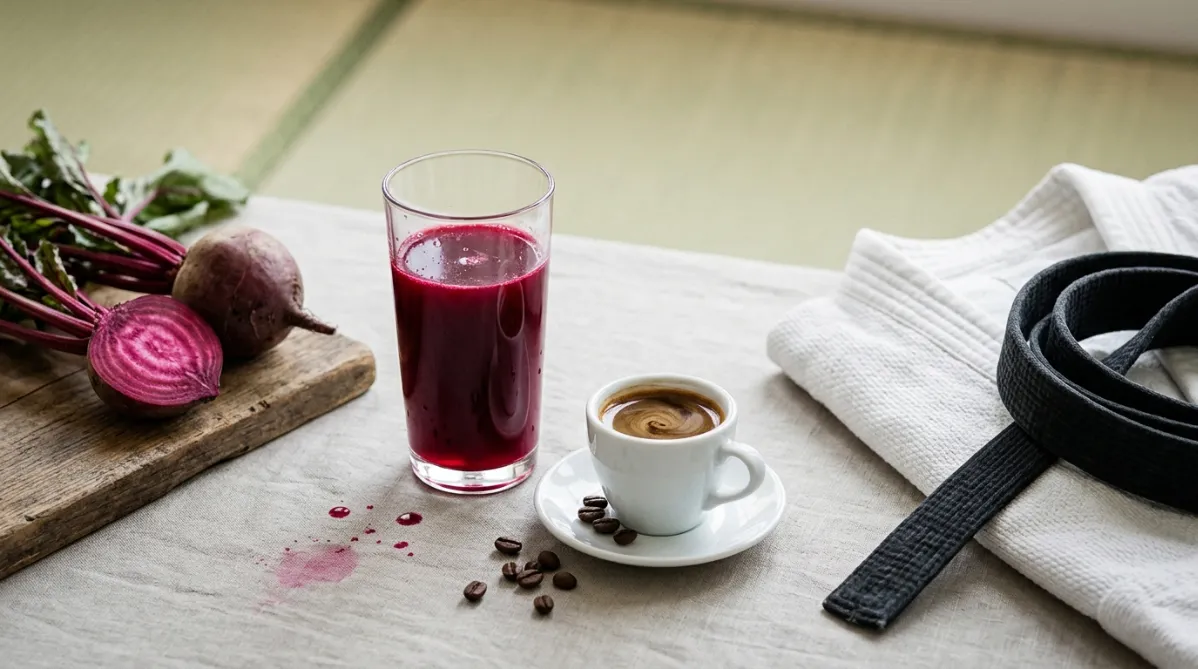
A wide landscape editorial still life on a pale warm-gray linen surface, shot from a slightly elevated three-quarter angle in soft diffused morning window light. At center-left, a tall clear glass filled with deep magenta-crimson beetroot juice catches the light, its edges glowing ruby with a few condensation droplets on the surface. Beside it sits a small white ceramic espresso cup with dark, glossy coffee and a delicate swirl of crema. A few roasted coffee beans are scattered casually near the cup's saucer. To the left, two whole raw beetroots with their leafy burgundy-veined greens still attached rest on a rustic wooden board, with one beet sliced in half to reveal concentric rings of vivid fuchsia and pale pink. A folded white judo gi sleeve with a worn black belt loosely coiled on top is draped along the right side of the frame, the cotton weave texture visible, hinting at the sport without any people. In the background, a soft-focus tatami mat texture in muted straw-green creates a subtle horizontal band, blurred into creamy bokeh. A small scattering of beet juice droplets and a faint magenta stain on the linen add an organic, lived-in touch. The palette is restrained and modern: magenta, espresso brown, off-white, muted sage, and warm beige. Composition leaves generous negative space on the upper right for headline overlay. The mood is clean, calm, and contemporary, like a premium health and science magazine cover, with shallow depth of field, crisp focus on the glass and cup, fine natural shadows, and subtle film-like grain.
nutrition

Suco de Beterraba + Cafeína: O Truque no Judô que Superou a Cafeína Sozinha

BY DR. GYMBRO ·

A cafeína é o reforço padrão antes da luta, mas um estudo randomizado com 35 judocas mostrou que seu benefício desaparece já no quinto combate de um dia de competição simulada. O suco de beterraba fez o contrário, ajudando na fase tardia, enquanto a combinação cobriu tanto o desempenho inicial quanto o final. No quinto teste, suco de beterraba e a combinação superaram a cafeína isolada em aptidão específica ao judô, função neuromuscular e cognição. A seguir, veja o que a pesquisa revelou, quem pode se beneficiar, quem deve ter cautela e o que o resumo não informa.
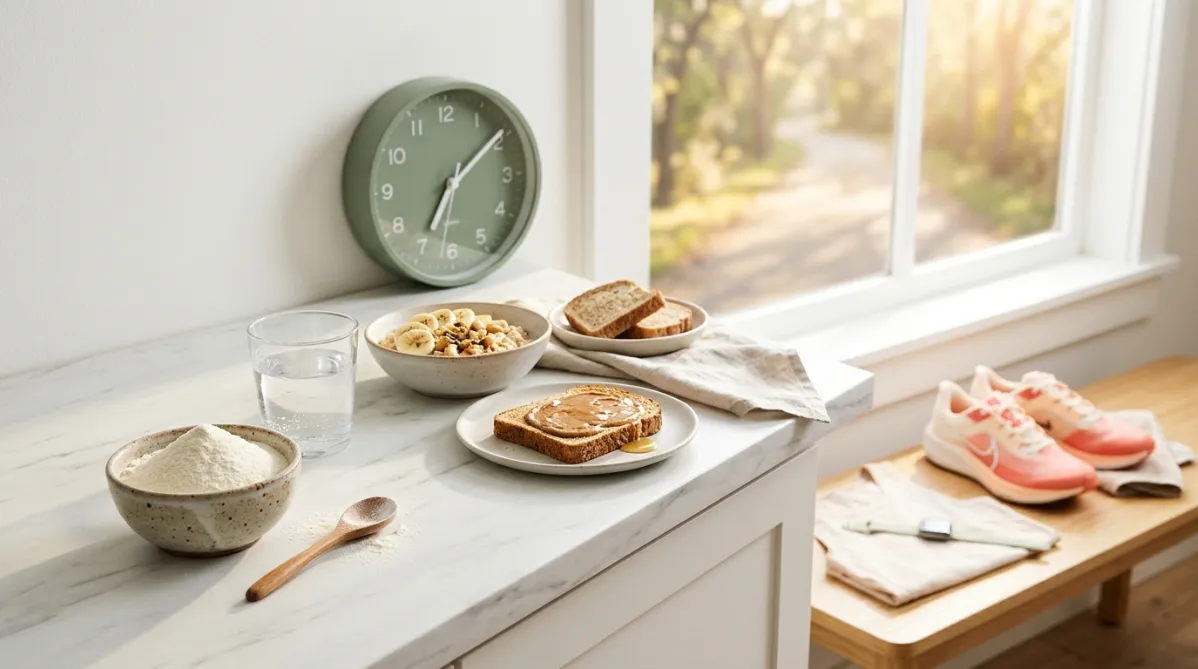
A bright, airy editorial photograph in landscape format of a clean white marble kitchen counter in soft morning light. On the left, a small rustic ceramic bowl holds a mound of fine white powder, with a wooden spoon resting beside it and a scattering of powder dusted across the marble. Next to it sits a glass of water with a faint ripple on its surface. In the middle ground, a simple breakfast spread: a bowl of oatmeal topped with sliced banana, a piece of toast with honey, and a few slices of white bread, all styled in muted, natural tones. A minimalist analog wall clock or a vintage round kitchen timer in matte sage green sits subtly in the background, hinting at the 90-minute timing.

On the right side of the frame, slightly out of focus, a pair of modern running shoes in soft coral and cream rests on a light oak floor or bench. Next to them are a folded running shirt and a slim sports watch. Through a large window behind the counter, a blurred sunlit tree-lined running path glows in warm golden light, suggesting a woman's morning run without showing a face.

The palette is soft and modern: warm whites, sage green, pale peach, light wood, and touches of coral. Shallow depth of field, gentle natural shadows, and a clean composition with generous negative space in the upper left for title overlay. The mood is fresh, trustworthy, and health-journal chic, like a high-end wellness magazine feature. Shot on a 50mm lens, crisp details, subtle film grain, and a calm, minimal, contemporary feel.
nutrition

Bicarbonato de Sódio Reduz 32 Segundos nos 10 km Femininos — Mas Qual o Truque

BY DR. GYMBRO ·

Um simples composto de despensa acabou de melhorar os tempos de 10 km de corredoras recreativas, e o desconforto estomacal que normalmente o acompanha quase não apareceu. Em um ensaio clínico duplo‑cego cruzado, 21 mulheres correram cerca de 32 segundos mais rápido após ingerirem bicarbonato de sódio. O truque foi associar a dose a uma refeição rica em carboidratos, 90 minutos antes da prova. Veja a dose, o momento da ingestão, quem pode se beneficiar e quem deve reconsiderar o uso.
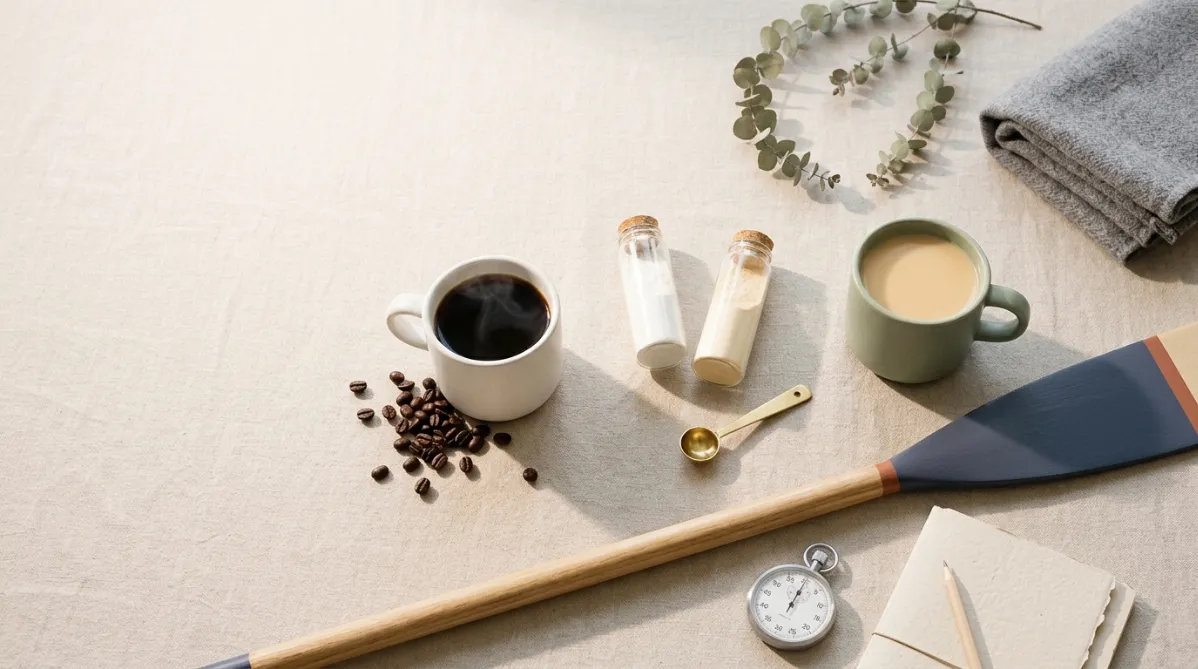
A wide, editorial-style flat lay photographed from above on a pale oat-colored linen surface in soft morning window light. On the left, a small matte white ceramic cup of black coffee with a delicate swirl of steam, beside a few scattered roasted coffee beans. On the right, a second matte sage-green ceramic cup holding a pale, creamy golden tea-like drink, mirroring the first. Between them, two small glass vials with cork stoppers sit side by side: one holding fine white powder, the other holding slightly warmer cream-colored powder, with a tiny brass measuring spoon resting nearby. In the lower foreground, a slim wooden rowing oar lies diagonally across the frame, its blade edge softly entering from the right, painted a muted navy with a thin terracotta stripe. A minimalist analog stopwatch with a brushed-steel case rests near the oar, and a folded cream notebook with a thin pencil suggests data-taking. In the upper corner, a crescent-shaped dried eucalyptus sprig and a small folded gray wool throw hint at sleep and calm without being literal. The palette is warm and restrained: oat, cream, sage, soft navy, terracotta, and espresso brown. Shadows are long and gentle, with shallow depth of field and subtle film grain, giving a refined, modern wellness-magazine feel. Generous negative space on the left third of the composition leaves room for a headline overlay. Clean, calm, tactile, and contemporary, with no text, logos, or futuristic elements.
science research

Paraxantina vs Cafeína: a combinação vencedora e a salvadora do sono

BY DR. GYMBRO ·

Paraxantina, o principal metabólito da cafeína, foi comparada cara a cara com a própria cafeína em um estudo com 14 remadores. A combinação de 200 mg de cada superou o placebo em um teste de 2000 m, embora o efeito tenha sido pequeno (d = 0,30). Nenhum dos compostos isolados melhorou de forma clara o desempenho. Porém, a paraxantina sozinha mostrou‑se mais amigável ao sono subjetivo. A seguir, apresentamos os números, as limitações e quem pode realmente se beneficiar.
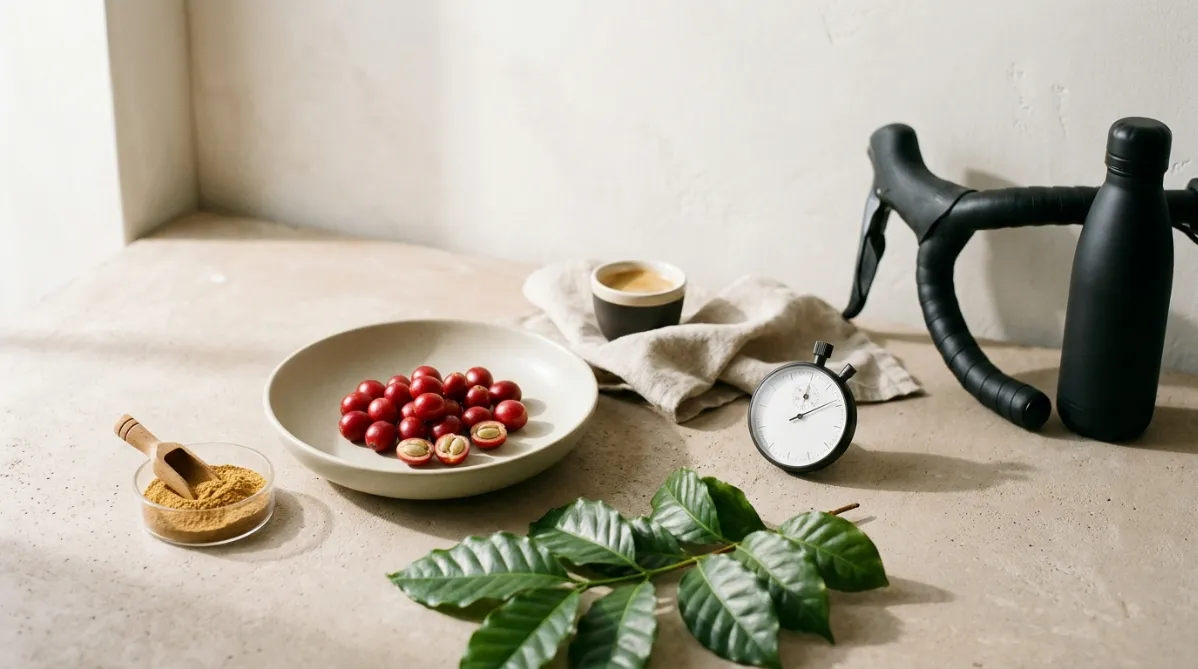
A wide editorial still life on a pale, warm-toned concrete surface in soft morning window light. In the center-left, a shallow matte ceramic bowl holds a small pile of bright red coffee cherries with glossy skins, a few sliced open to reveal pale mucilage and paired green-tan beans. Beside it, a small glass dish of fine, golden-brown powdered extract with a tiny wooden scoop resting on its edge. A sprig of coffee plant leaves, deep green and waxy, arcs across the foreground.

On the right side, slightly out of focus, a sleek road cyclist's handlebar and a matte black water bottle lean against a light plaster wall, suggesting athletic training without showing a person. A minimalist analog stopwatch with a clean white face and thin black hands sits in the mid-ground, angled toward the camera, its hands paused near the fifteen-minute mark. A folded linen cloth in oatmeal beige and a single small espresso cup with a thin crema ring add quiet texture.

The color palette is restrained and modern: cherry red, sage green, cream, soft terracotta, and charcoal accents. Light comes from the left, casting long, gentle shadows with a subtle warm glow and a hint of dust in the air. Shallow depth of field with crisp focus on the cherries and stopwatch, creamy bokeh in the background. Composition leaves open negative space in the upper right for a headline overlay. The overall feel is a clean, trendy health-and-science magazine cover: tactile, natural, minimal, and calm, shot in a 16:9 landscape frame with fine film-like grain and true-to-life tones.
nutrition

Extrato de Cereja de Café: 200 mg de cafeína aumentam o desempenho no ciclismo em 4,6 %

BY DR. GYMBRO ·

Uma dose baixa de 200 mg de cafeína proveniente de extrato de cereja de café ajudou ciclistas treinados a produzir 4,6 % a mais de trabalho em um teste de 15 minutos. No entanto, a ideia popular de que isso acelera a recarga de glicogênio não se confirmou. O estudo, randomizado, duplo‑cego e cruzado, contou com apenas 12 ciclistas e foi financiado pela indústria, sem grupo comparativo de cafeína pura. A seguir, veja o que os dados mostram, o que não mostram e quem pode se interessar em experimentar.
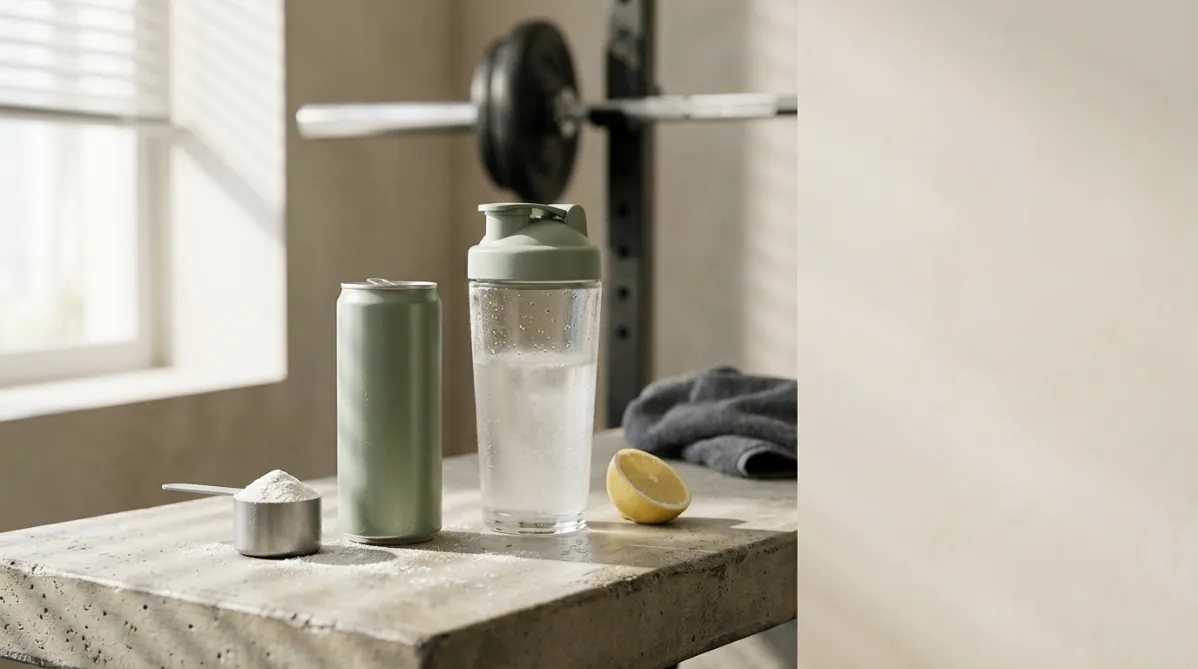
A sleek aluminum energy drink can and a matte scoop of white pre-workout powder sit side by side on a pale concrete gym bench, lit by soft morning window light. The can is slim and minimalist, with a muted sage green label and no legible text. Beside it is a clear glass shaker half full of cloudy, lightly frothy liquid with condensation beading on its surface. A few fine grains of powder are scattered across the bench, catching the light. Behind them, slightly out of focus, a stainless steel barbell rests on a rack, and a folded charcoal gym towel sits at the edge of the frame.

The color palette is warm neutral: oatmeal, soft gray, and sage, with a single accent of pale citrus yellow from a halved lemon wedge placed near the glass. A thin, elegant shadow from the window blinds falls diagonally across the scene, giving it an editorial, magazine-style rhythm. The composition leaves generous negative space on the right third of the frame, a smooth blurred wall in warm off-white, suitable for headline text overlay.

The shot is a low-angle, shallow depth-of-field product-style photograph, as if taken with an 85mm lens at f/2. The foreground objects are tack sharp and the background melts into creamy blur. The mood is calm, clean, and modern, like a wellness or science journal feature. Subtle film grain and gentle contrast add a tactile, contemporary lifestyle feel. There are no people, no logos, and no futuristic or sci-fi elements, just a quiet, considered still life that suggests the choice between a canned drink and a scooped supplement.
nutrition

Sua Bebida Energética Pode Funcionar como um Pré‑treino — Mas tem uma Pegadinha

BY DR. GYMBRO ·

Cafeína e taurina aparecem lado a lado em energéticos e suplementos pré‑treino, mas será que a combinação realmente eleva o desempenho? Uma meta‑análise de 11 ensaios randomizados (234 participantes) mostrou ganhos modestos de potência máxima e tempo até a exaustão, além de sensação de esforço reduzida. A frequência cardíaca ficou inalterada e o efeito sobre tempo de reação foi inconsistente. Como os estudos foram pequenos, ainda não se sabe se a taurina traz algum benefício além da cafeína.
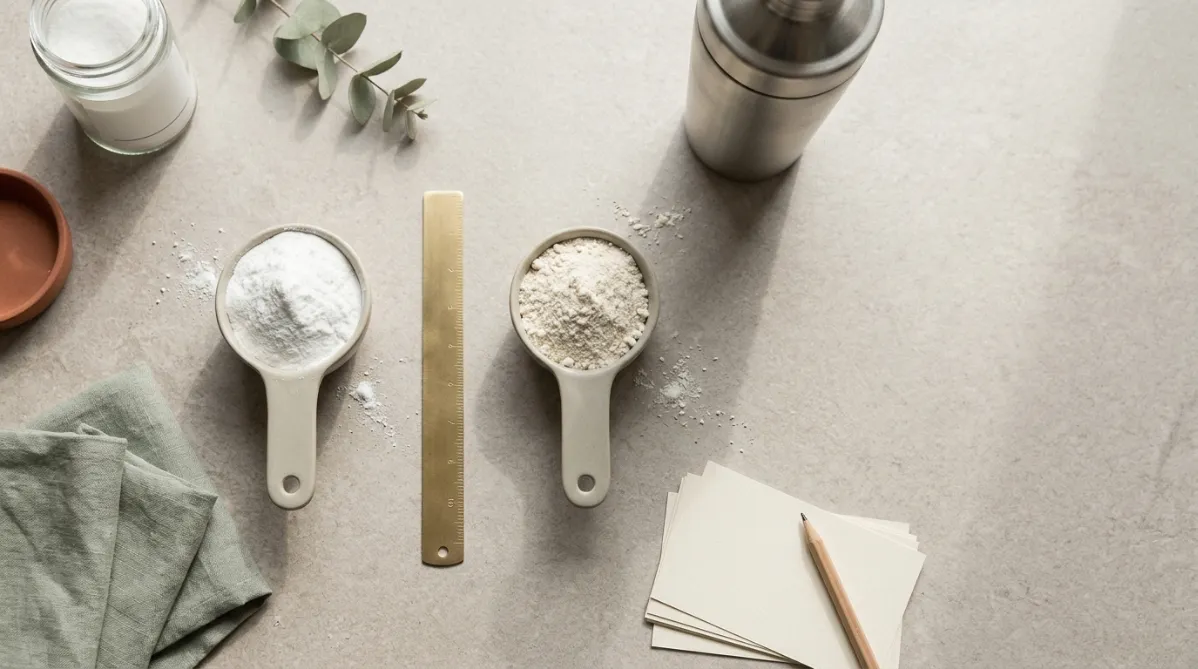
A bright, minimalist flat-lay photograph of two supplement scoops on a pale warm-gray stone surface, shot from directly above in soft natural window light. On the left, a matte ceramic scoop holds fine white creatine monohydrate powder, heaped in a clean mound. On the right, a second scoop of the same shape holds slightly coarser off-white beta-alanine powder, with a small, deliberate gap between the two. Each scoop sits in its own soft shadow, which suggests separation rather than combination. Between them, a thin brushed-brass ruler or a single slim line of fine powder runs across the surface and subtly divides the composition.

Around the scoops, a few restrained props in a muted editorial palette of sage green, cream, terracotta, and soft charcoal: a small glass jar with a minimalist label that has no readable text, a folded linen napkin, a single sprig of eucalyptus, and a stainless-steel shaker bottle softly out of focus in the upper corner. A few loose powder grains are scattered naturally across the stone. A small stack of blank cream index cards with a pencil rests in the lower right, hinting at research and note-taking without any legible writing.

The composition follows a clean rule-of-thirds layout, with generous negative space on the right third for headline overlay. The lighting is gentle and diffused, with long, soft shadows falling to the lower left. The color grading is calm and slightly desaturated, with creamy highlights and a subtle film-like grain. The overall look is a modern wellness and science journal cover, with an airy, trustworthy, contemporary editorial feel, shallow depth of field, and crisp detail on the powders.
nutrition

Creatina + Beta‑Alanina: O Bônus de Combinação que os Pesquisadores Não Encontraram

BY DR. GYMBRO ·

A combinação de creatina e beta‑alanina é divulgada como o casal‑potência para a performance, mas uma nova meta‑análise de rede com 52 ensaios randomizados não encontrou sinergia entre elas. A creatina, isolada, melhorou significativamente sprint, salto, sprints repetidos e resistência muscular da parte superior em comparação ao placebo. Os efeitos da beta‑alanina foram não significativos ou dependentes do contexto, e a combinação não acrescentou nada além da criatina. Veja o que o estudo fez, suas limitações e o que isso significa para o seu orçamento de suplementos.
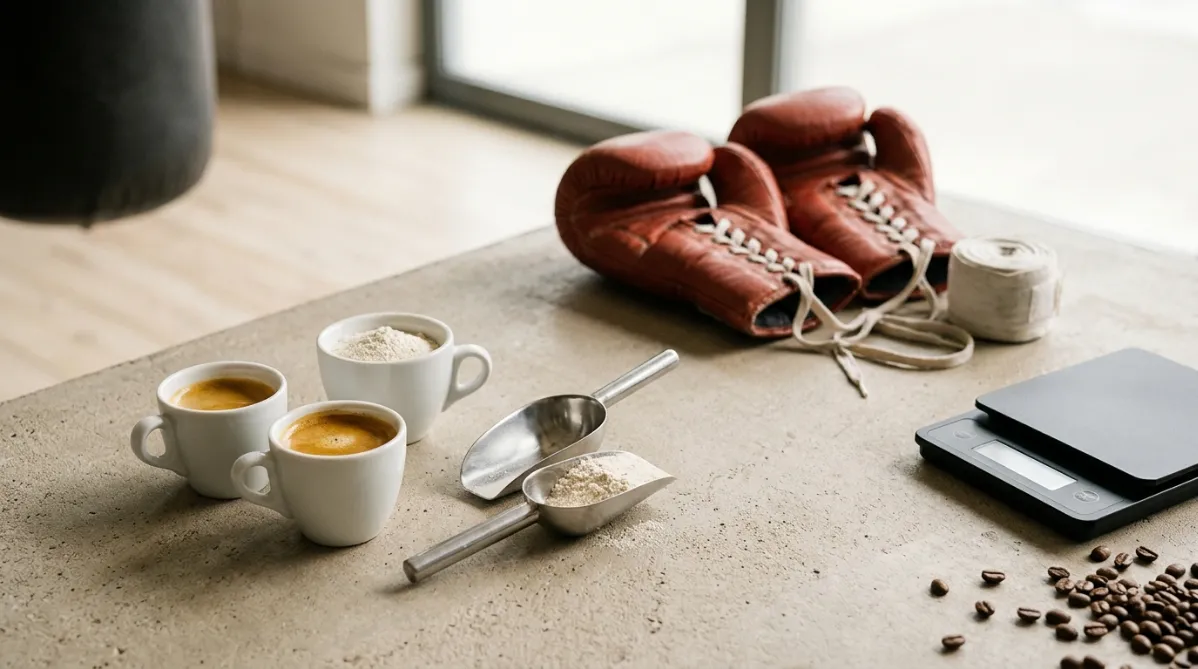
A landscape editorial photograph with a modern, clean magazine feel, shot on a pale warm-gray concrete surface in soft natural window light from the left. In the foreground, two matte white ceramic espresso cups sit side by side. The left cup holds a small amount of dark espresso with golden crema. The right cup is filled twice as high. Beside them, two small stainless steel scoops hold fine coffee-colored powder, one half full and one heaped, suggesting a dose comparison without any text or labels. A pair of worn red leather boxing gloves rests slightly out of focus behind the cups, laces loosely draped, with a white hand wrap rolled neatly beside them. A minimalist digital kitchen scale in matte black sits at the edge of the frame, with a few roasted coffee beans scattered across the surface. In the soft-focus background, a boxing gym corner appears: a hanging heavy bag in muted charcoal, pale wood plank flooring, and a tall window with diffused morning light. The palette is warm cream, espresso brown, brick red, and soft slate gray, with gentle shadows and a shallow depth of field. The composition follows the rule of thirds, with the cups and scoops in the lower left third and open negative space on the right for headline overlay. The look is tactile and refined, like a high-end health and performance journal. It has natural grain, subtle contrast, and a calm, confident mood. There are no people, no text, no logos, and no futuristic elements.
nutrition

Dobrar a Dose de Cafeína Quase Não Ajudou os Boxeadores — Veja o Que Funcionou

BY DR. GYMBRO ·

Acha que dobrar a dose de pré‑treino significa dobrar o desempenho? Um novo ensaio cruzado com 15 boxeadores competitivos comparou 3 mg/kg e 6 mg/kg de cafeína, e a dose maior não foi consistentemente superior. Ambas as doses aumentaram a altura e a potência do salto aos 60 minutos, enquanto 6 mg/kg só se destacou em alguns resultados, como a potência da flexão balística e o torque do joelho. A seguir, a conversão de mg por kg para pesos corporais comuns, o timing suportado pelos dados e as ressalvas, incluindo o fato de que a própria pancada nunca foi testada.
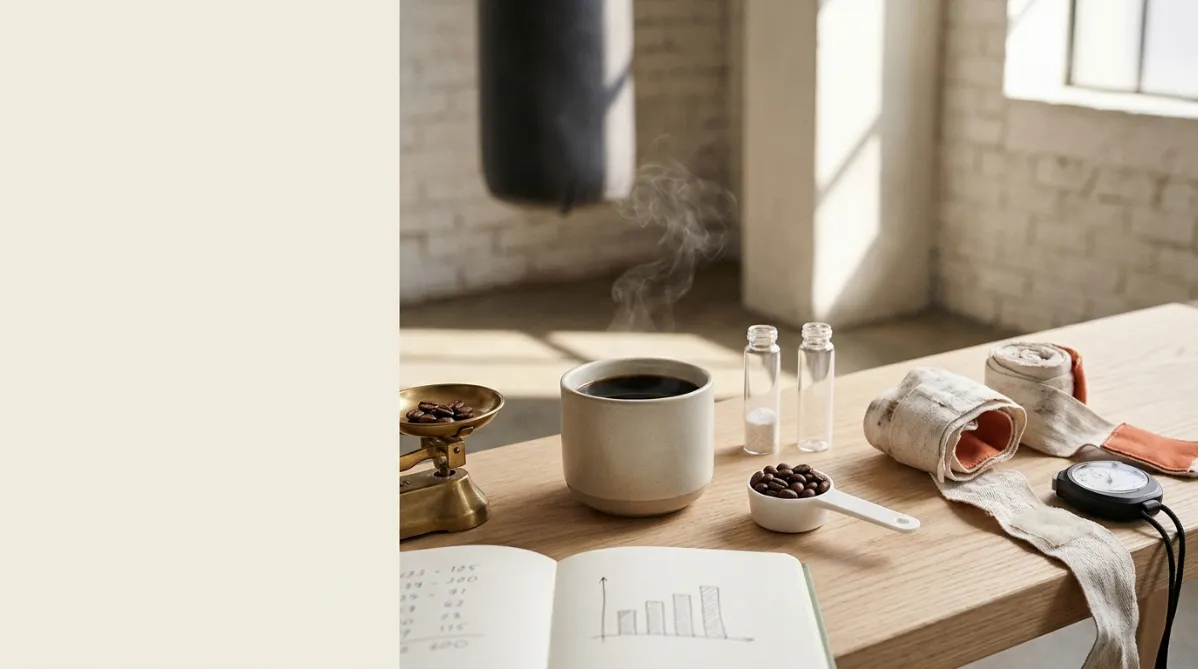
A wide, editorial-style still life shot from a slightly elevated angle on a pale oak gym bench, bathed in soft morning window light. In the center sits a matte ceramic cup of black coffee with delicate steam curling upward, flanked by a small white scoop of coffee beans and two identical glass vials, one filled with a few grains of fine powder and one empty, hinting at dose comparison. Next to the cup rests a pair of worn white boxing hand wraps, loosely coiled, and a slim black stopwatch with its face softly visible. In the foreground, a minimalist notebook lies open with blurred handwritten numbers and a simple pen sketch of a bar graph with bars of equal height, subtle and unreadable, suggesting a null result without any legible text. A small brass kitchen scale sits to the side with a few coffee beans on its tray.

In the soft-focus background, a boxing gym interior is visible: a hanging heavy bag in muted charcoal, exposed brick wall painted off-white, and tall windows casting long diagonal light across the floor. The color palette is warm and restrained: cream, sand, espresso brown, soft charcoal, with a single accent of muted terracotta orange in the hand wraps and a faint sage green in the notebook cover. Shallow depth of field with creamy bokeh, fine film grain, and gentle shadows give it a contemporary lifestyle-magazine and wellness-journal feel. The composition leaves generous negative space on the left third for headline overlay. Clean, calm, trendy, and tactile, with natural textures like wood grain, ceramic glaze, and cotton fabric. No people, no text, no futuristic elements.
science research

Café com Baixa Dose de Cafeína Não Proporcionou Nenhum Impulso nos Sprints de Lutadores de Elite

BY DR. GYMBRO ·

Pensou que seu café pré‑treino turbinaría os sprints? Um estudo randomizado, duplo‑cego e crossover com 15 atletas de combate de nível nacional não encontrou benefício de desempenho com doses de cafeína de 1,5 e 3 mg/kg (cerca de 100 e 200 mg para um atleta de 68 kg). Potência máxima, potência média, índice de fadiga e até as estimativas de contribuição dos sistemas energéticos foram semelhantes ao café descafeinado. Contudo, trata‑se de um resultado nulo em um estudo pequeno, não de prova de que a cafeína não funciona, e a maioria dos trabalhos positivos usa cápsulas de 3–6 mg/kg. A seguir explicamos a matemática das doses, as limitações do estudo e o que realmente fazer antes da sua próxima sessão intensa.
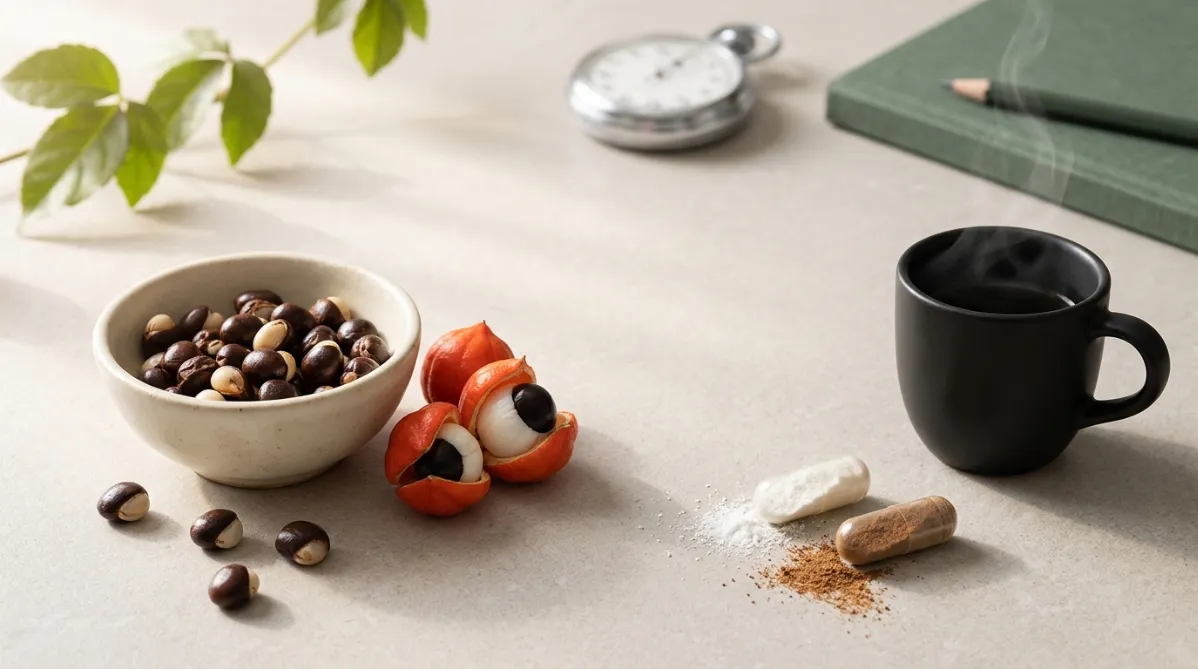
A wide, softly lit editorial flat-lay on a pale warm-gray stone countertop, shot from slightly above. On the left, a small rustic ceramic bowl in matte cream holds a handful of dried guarana seeds, dark glossy brown with pale cream arils, a few spilling onto the surface. Beside it sits a halved fresh guarana fruit in vivid red-orange, split open to show the white flesh and black seed inside, looking like a tiny eye. On the right, two open clear capsules rest side by side. One is filled with fine white caffeine powder, the other with a fine earthy brown guarana powder, and a little of each dusts the stone in delicate, deliberate lines. Between them, a minimalist matte-black espresso cup with a thin ribbon of steam rises on the right edge of the frame. A brushed-steel stopwatch and a slim dark-green linen notebook with a pencil sit in the upper background, slightly out of focus, to hint at performance testing without clutter. A few green leaves of a guarana vine curve in from the top-left corner, catching soft light.

The lighting is natural window light from the left, with gentle long shadows and a subtle warm highlight on the seeds. The palette is muted and modern: warm creams, terracotta red, deep espresso brown, sage green, and charcoal accents. The background is clean with generous negative space on the upper right for headline text. Shallow depth of field, crisp focus on the seeds and capsules, fine grain, and a calm premium magazine look like a contemporary wellness and sports-science journal. No people, no text, no logos, no futuristic elements.
science research

Guaraná vs Cafeína: Mesma Dose, Apenas o Guaraná Elevou a Potência Máxima

BY DR. GYMBRO ·

A mesma dose de cafeína, mas em cápsulas diferentes, fez com que apenas o guaraná gerasse um aumento estatisticamente significativo na potência máxima. Em um ensaio cruzado randomizado com 18 homens ativos, o guaraná elevou a potência em 4 % em relação ao placebo, enquanto a cafeína anidra não atingiu significância. Contudo, o guaraná não superou a cafeína em comparação direta, e as diferenças entre eles foram apenas descritivas. Veja o que os números realmente mostram, as limitações do estudo e como dosar o guaraná pelo teor de cafeína se quiser experimentar.
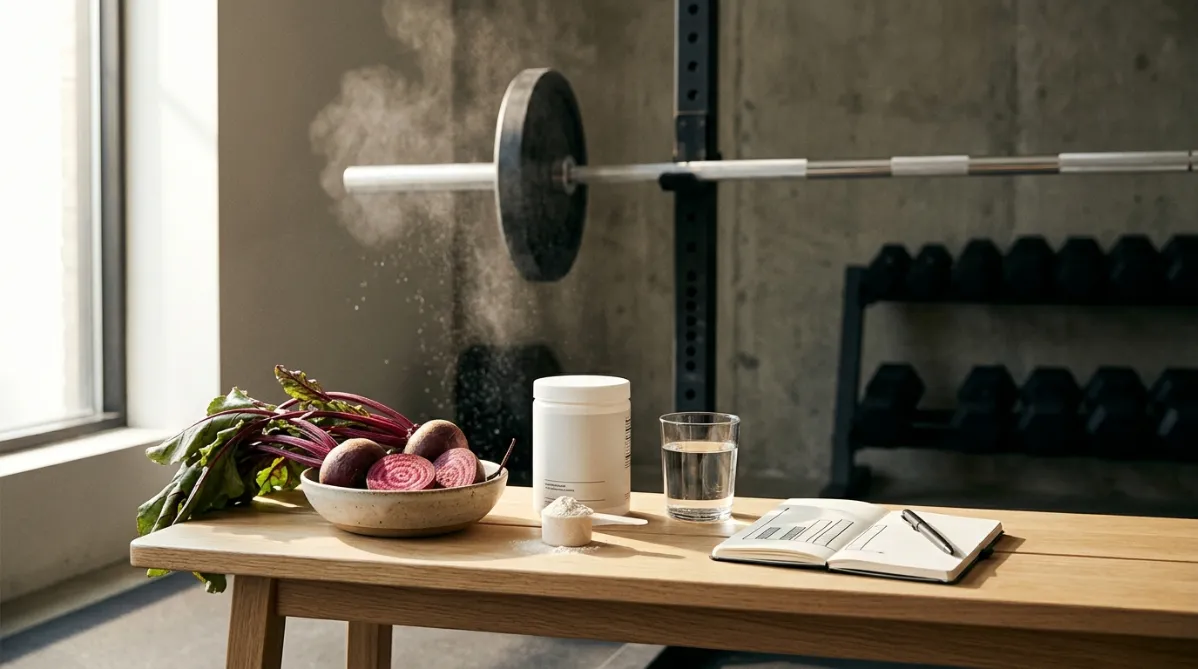
A sun-lit editorial still life on a pale oak gym bench: a loaded barbell rests on a rack just above it, chalk dust drifting in the air. In the foreground sits a small ceramic bowl of roasted beets, some sliced to show their deep magenta rings, with a few whole beets still wearing their leafy burgundy stems. Next to the bowl is a matte white supplement tub with a minimal label, a wooden scoop of fine white powder, and a clear glass of water catching soft highlights. A slim notebook lies open beside them with a simple hand-drawn bar graph and a pen, suggesting data and analysis without any readable text. Behind the bench, a softly blurred minimalist training space: raw concrete wall, tall window with warm morning light, a rack of black dumbbells fading into bokeh. The palette is earthy and modern: beet magenta, warm cream, charcoal, brushed steel, and touches of sage green from the beet leaves. Soft directional light from the left creates long gentle shadows and a slight film-grain texture. Shallow depth of field keeps the beets and powder tack sharp. The composition is wide and balanced, with negative space on the right for headline overlay. The overall feel is a clean, contemporary health and fitness journal photograph, warm and tactile, with an understated scientific tone.
nutrition

Betaína aumentou a potência do bench throw em cerca de 16 % em 14 dias

BY DR. GYMBRO ·

Duas semanas de suplementação com betaína – um composto encontrado na beterraba e vendido como TMG – foram associadas a um aumento de aproximadamente 16 % na potência do bench throw no primeiro dia de um bloco intenso de testes em homens treinados em resistência. Um ensaio randomizado, duplo‑cego e cruzado também mostrou maior força isométrica no supino, com ganhos menores na potência do salto vertical e na força isométrica do agachamento. Contudo, o número de repetições e a potência do salto em agachamento permaneceram inalterados, e o estudo contou apenas com 12 participantes. Veja os detalhes, a dose utilizada e o que os praticantes devem concluir a partir desses dados.
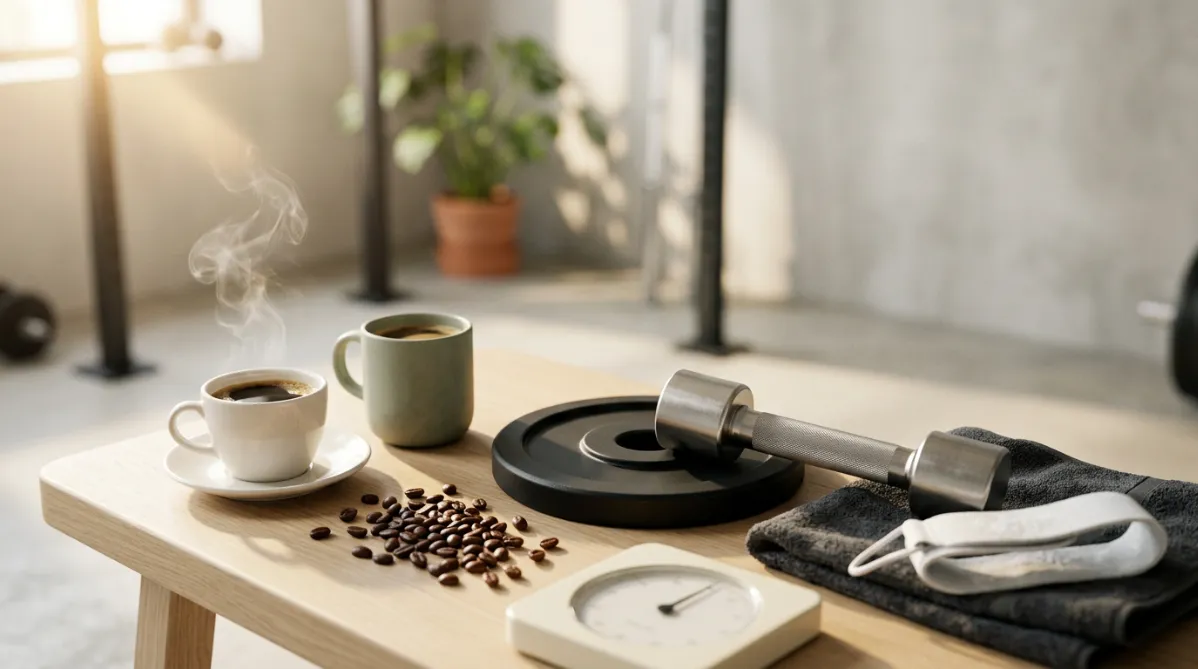
A wide, editorial-style flat lay photographed from slightly above on a pale oak gym bench with a soft matte finish. On the left, a small white ceramic cup of black coffee sits on a matching saucer, with a thin curl of steam rising and catching warm window light. Beside it is a second, slightly larger handleless stoneware mug in muted sage green, also filled with coffee, so the pair suggests one to two cups. In the center-right foreground rests a sleek matte-black steel barbell plate, partly overlapping a brushed-steel dumbbell with fine knurling. A folded charcoal gym towel and a clean white chalk-dusted wrist strap lie casually to one side. A small scatter of whole roasted coffee beans spills across the bench in front of the cups, glossy and deep brown. Near the bottom edge, a minimalist analog kitchen scale in soft cream with a thin black needle hints at precise dosing, without any readable numbers or text.

Soft morning sunlight streams in from the upper left, creating long, gentle shadows and a warm golden glow against cool neutral tones. The background is a softly blurred, airy home gym or boutique training studio with out-of-focus squat rack uprights, pale concrete walls, and a leafy green plant in a terracotta pot adding a touch of organic color. The palette is restrained and modern: warm cream, espresso brown, charcoal, sage green, and hints of brushed silver. Shallow depth of field keeps the cups and beans tack sharp while the background melts into creamy bokeh. The composition leaves generous negative space on the right third for a title overlay, with a balanced, calm, premium magazine feel, like a contemporary wellness and sports science journal. High-resolution, natural color grading, subtle film grain, realistic textures on ceramic, steel, and coffee crema.
nutrition

Quanto de Cafeína Antes de Levantar? Uma Meta‑análise Mostra que 1–2 mg/kg Ainda Funcionam

BY DR. GYMBRO ·

A recomendação típica de cafeína antes do treino é de 3–6 mg/kg, o que pode equivaler a várias xícaras de café ou a uma dose forte de pré‑treino. Uma meta‑análise de 2022, que reuniu 12 ensaios, mostrou que doses de apenas 0,9–2 mg/kg ainda aumentam a força muscular (d ≈ 0,17), a resistência muscular (d ≈ 0,21) e a velocidade média da barra (d ≈ 0,56). Para a maioria dos praticantes, isso corresponde a uma ou duas xícaras de café. Os efeitos são modestos e os estudos são agudos, de sessão única, mas sugerem que você pode obter benefício semelhante com menos cafeína.
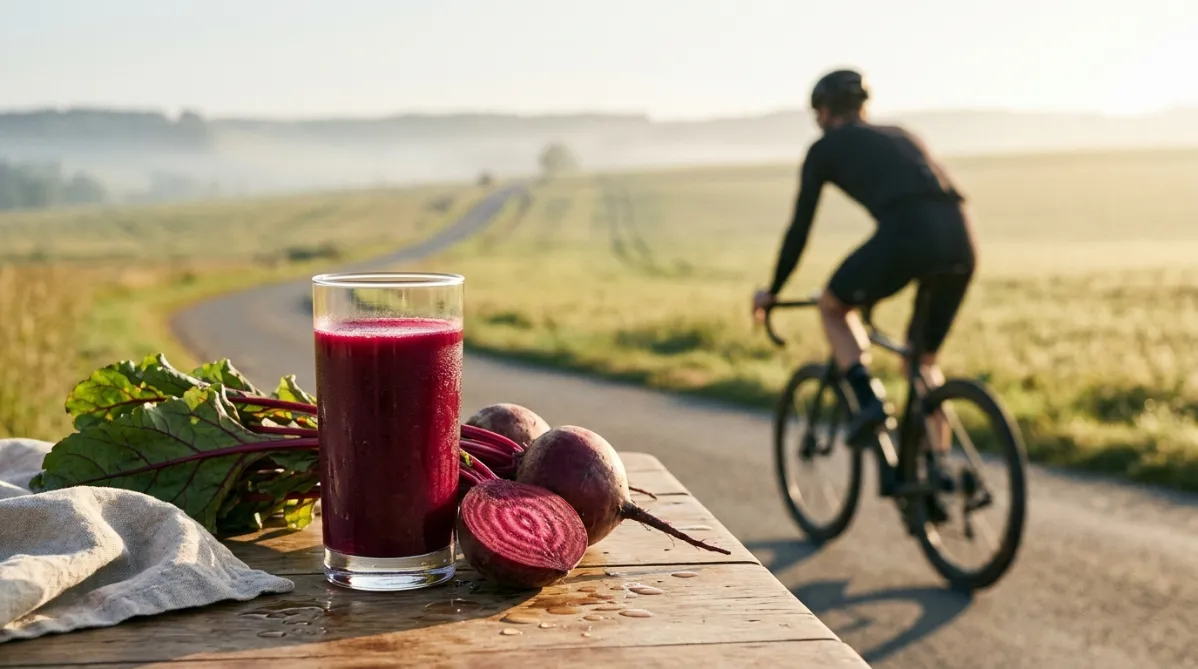
A cyclist in a fitted matte-black kit, shot from a low three-quarter angle, rides a sunlit country road at early morning, slightly out of focus with soft motion blur on the wheels. In the foreground on the left sits a rustic wooden table with a tall glass of deep magenta beetroot juice. Condensation beads on the glass, and the light catches its vivid jewel-toned color. Beside it lie two whole beetroots with their leafy red-veined greens still attached, and one halved beet shows concentric crimson-and-pink rings. A small linen napkin and a scatter of water droplets add an editorial still-life feel.

The background is a gently rolling landscape with golden-green fields and a thin ribbon of asphalt curving toward the horizon. Pale mist hangs low and warm sunlight comes from the right, creating long soft shadows and a golden rim light on the glass and the cyclist's silhouette. The shallow depth of field keeps the juice and beets crisp while the rider stays a dreamy blurred suggestion of speed.

The palette is rich magenta, burgundy, warm cream, sage green, and soft gold, with muted, slightly desaturated tones in the background so the beetroot color stands out. The composition follows the rule of thirds, with the still-life in the lower left third and open negative space in the upper right for the title. The overall look is a clean, modern lifestyle-magazine photograph with natural film-like grain, calm and athletic, and no text, logos, or futuristic elements.
nutrition

Suco de Beterraba Antes de um Teste de Contrarrelógio: Como 0,5 L Reduziu os Tempos de 4 km e 16,1 km em Cerca de 3 %

BY DR. GYMBRO ·

Um pequeno, porém influente, ensaio cruzado de 2011 investigou se um único gole de suco de beterraba poderia melhorar testes reais de ciclismo. Nove ciclistas competitivos consumiram 0,5 L de suco rico em nitrato (cerca de 6,2 mmol) aproximadamente 2,5 h antes da corrida. O nitrito plasmático mais que dobrou, a potência média subiu e os tempos de 4 km e 16,1 km melhoraram em 2,8 % e 2,7 %, respectivamente. O consumo de oxigênio permaneceu inalterado, sugerindo uma economia de pedalada ao invés de um aumento da capacidade aeróbica. A seguir, o protocolo, os números e as limitações dos dados.
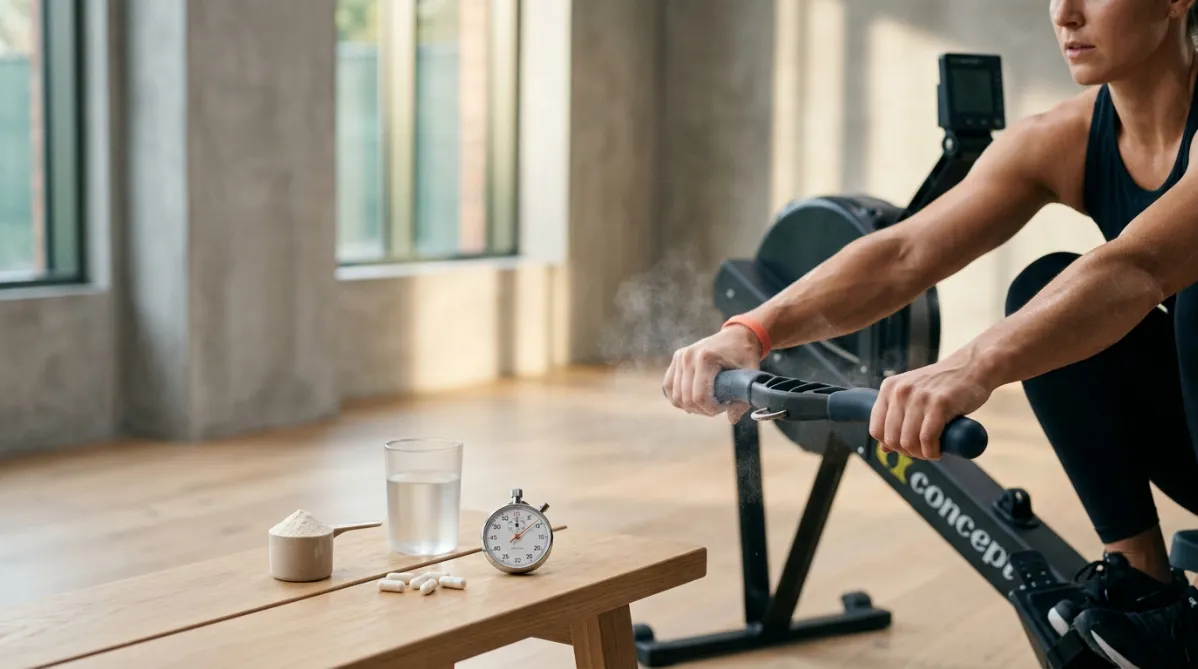
A wide, minimalist editorial scene of an athlete's hands and forearms gripping the handles of a rowing ergometer, shot in soft natural light from a large window in a clean, airy training studio. The athlete is mid-pull, forearm muscles subtly defined, a light sheen of sweat on the skin, chalk dust floating in the air. In the foreground on a pale oak bench sits a small ceramic scoop of fine white powder beside a matte glass of water, with a few loose white capsules arranged neatly in a gentle curve. A minimalist analog stopwatch with a clean white face lies next to them, its hand paused near the two-minute mark.

The color palette is calm and modern: warm off-white, soft sand, muted sage green, and a single accent of coral orange in the stopwatch hand and the rower's wristband. The background is softly blurred concrete and pale wood with long, gentle shadows stretching across the floor. Shallow depth of field keeps the hands, powder, and stopwatch crisp while the rest dissolves into creamy bokeh.

Composition follows the rule of thirds: the rowing handles and hands occupy the right third, the bench still life sits in the lower left, and open negative space in the upper left leaves room for a title overlay. The mood is focused, quiet, and intentional, like a high-end health and science journal feature. Fine film grain, subtle matte finish, editorial photography style, natural color grading, and no text or logos.
nutrition

Beta‑alanina funciona? Uma meta‑análise diz que sim para esforços de 60–240 segundos

BY DR. GYMBRO ·

A beta‑alanina tem sido divulgada como forma de reduzir a fadiga muscular em exercícios intensos, mas será que realmente funciona? Uma meta‑análise com 15 estudos e 360 participantes mostrou um benefício real, embora modesto, com um ganho mediano de 2,85 %. O efeito foi mais evidente em esforços entre 60 e 240 segundos, menor em atividades acima de quatro minutos e inexistente em sprints de menos de um minuto. O artigo também aborda a estratégia de carregamento mais comum – de 3,2 a 6,4 g por dia durante quatro ou mais semanas –, como dividir as doses pode diminuir o formigamento e quais atletas têm mais a ganhar.

This page is available in