Dr. Gymbro
←

#uc-ii

1 article
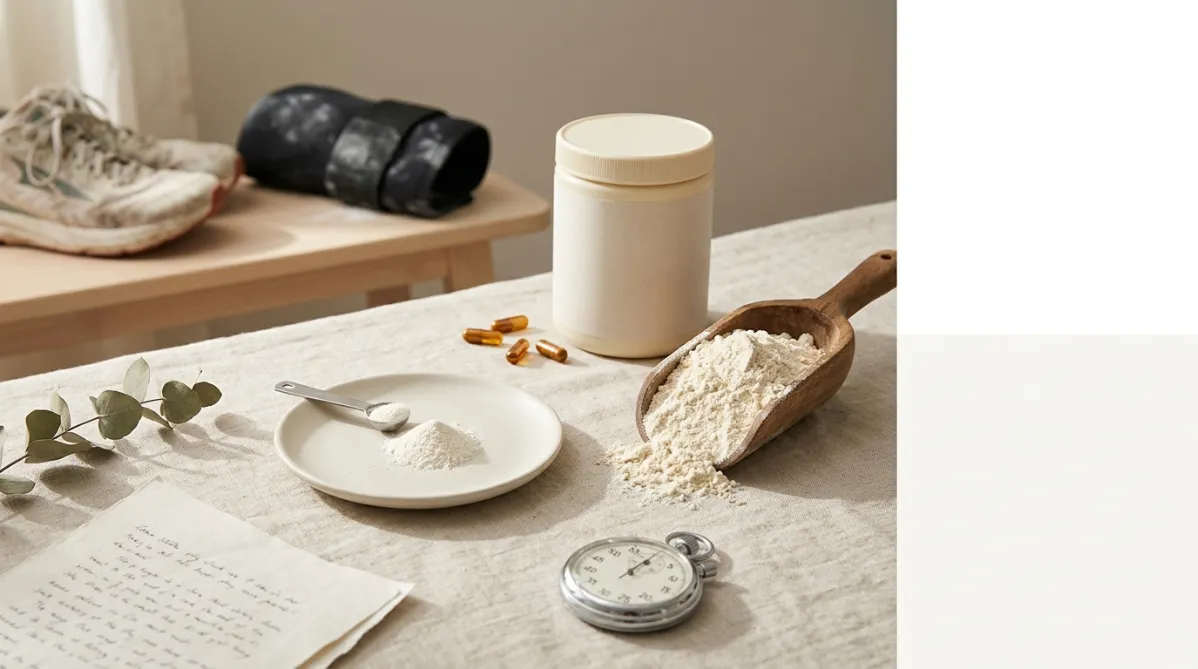
A wide, softly lit editorial still life on a pale oatmeal-colored linen surface, shot from a slightly elevated three-quarter angle. In the center-left, a small matte ceramic dish holds a tiny pile of fine white powder, with a single minuscule measuring spoon resting beside it. To the right, a much larger wooden scoop is heaped high with the same pale powder, spilling gently onto the linen, creating a striking visual contrast of tiny versus large quantity. Behind them, a cream-colored supplement tub with a blank, minimalist label sits slightly out of focus, along with a few amber glass capsules scattered casually.

In the soft-focus background, a runner's well-worn sneaker and a chalk-dusted, wrapped knee sleeve rest on a light ash-wood bench, hinting at gym and road without showing a person. A thin brushed-steel stopwatch lies in the foreground, its hands paused, subtly suggesting timing and endurance. A sprig of dried eucalyptus and a folded sheet of paper with out-of-focus handwritten notes add a quiet, editorial research feel.

Natural morning light streams in from the left through a sheer curtain, casting long, gentle shadows and a warm, creamy glow. The palette is restrained and modern: warm ivory, sand, soft sage green, muted terracotta, and touches of brushed silver. Shallow depth of field with crisp detail on the powders and stopwatch, creamy bokeh in the background. The composition leaves open negative space on the right third for headline text. The overall mood is calm, trustworthy, and contemporary, like a premium health and wellness journal cover, with fine film-like grain and clean, minimalist styling.
recovery

Uma dose de 40 mg de colágeno dobra o tempo até a dor no joelho: o que isso significa

BY DR. GYMBRO ·

Os joelhos doem na barra ou na pista? Um ensaio randomizado mostrou que apenas 40 mg diários de colágeno tipo II não desnaturado (UC‑II) atrasaram o início da dor, de 1,4 para 2,8 minutos, e melhoraram a extensão do joelho. Isso equivale a cerca de 250 vezes menos que o típico scoop de 10 g de colágeno hidrolisado, e trata‑se de um produto completamente diferente. Porém o estudo foi pequeno, financiado pela indústria e realizado em pessoas saudáveis, não em pacientes com artrite. Veja o que os dados realmente indicam, o contexto por trás da manchete e como interpretar rótulos.

This page is available in