Dr. Gymbro
←

#uc-ii

1 article
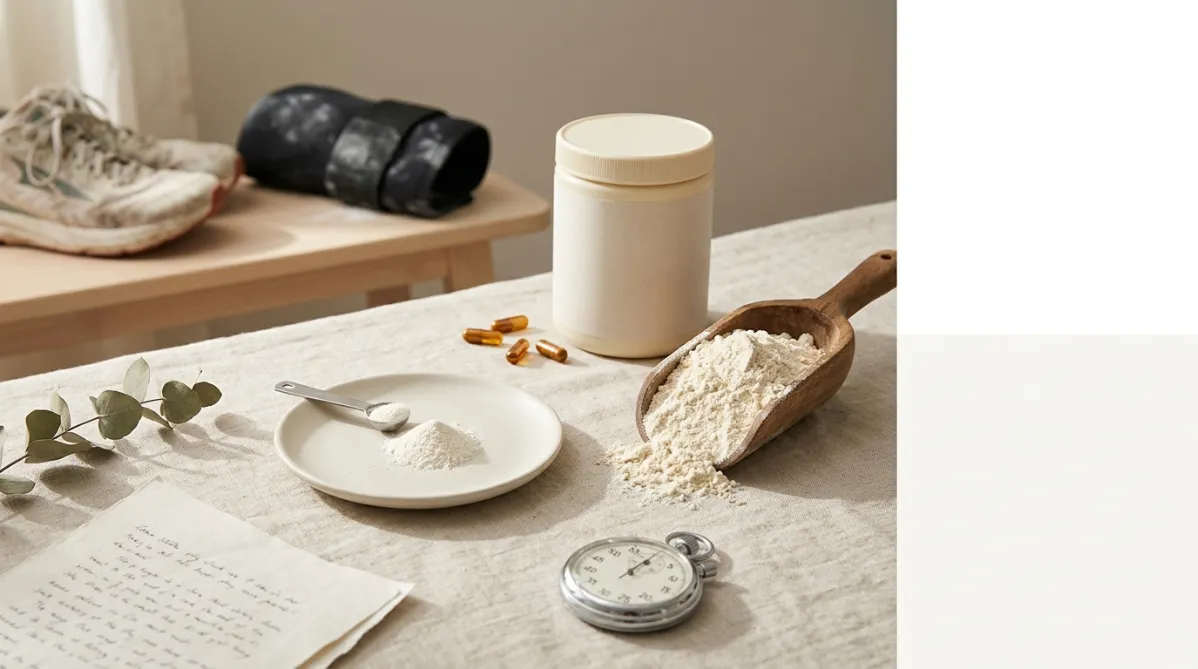
A wide, softly lit editorial still life on a pale oatmeal-colored linen surface, shot from a slightly elevated three-quarter angle. In the center-left, a small matte ceramic dish holds a tiny pile of fine white powder, with a single minuscule measuring spoon resting beside it. To the right, a much larger wooden scoop is heaped high with the same pale powder, spilling gently onto the linen, creating a striking visual contrast of tiny versus large quantity. Behind them, a cream-colored supplement tub with a blank, minimalist label sits slightly out of focus, along with a few amber glass capsules scattered casually.

In the soft-focus background, a runner's well-worn sneaker and a chalk-dusted, wrapped knee sleeve rest on a light ash-wood bench, hinting at gym and road without showing a person. A thin brushed-steel stopwatch lies in the foreground, its hands paused, subtly suggesting timing and endurance. A sprig of dried eucalyptus and a folded sheet of paper with out-of-focus handwritten notes add a quiet, editorial research feel.

Natural morning light streams in from the left through a sheer curtain, casting long, gentle shadows and a warm, creamy glow. The palette is restrained and modern: warm ivory, sand, soft sage green, muted terracotta, and touches of brushed silver. Shallow depth of field with crisp detail on the powders and stopwatch, creamy bokeh in the background. The composition leaves open negative space on the right third for headline text. The overall mood is calm, trustworthy, and contemporary, like a premium health and wellness journal cover, with fine film-like grain and clean, minimalist styling.
recovery

Une dose de 40 mg de collagène double le temps avant la douleur au genou : le hic

BY DR. GYMBRO ·

Les genoux vous font souffrir sous la barre ou sur la route ? Un essai randomisé a montré que seulement 40 mg/j de collagène de type II non dénaturé (UC‑II) retardait l’apparition de la douleur de 1,4 à 2,8 minutes et améliorait l’extension du genou. C’est environ 250 fois moins que la cuillère typique de 10 g de collagène hydrolysé, et il s’agit d’un produit totalement différent. Mais l’étude était petite, financée par l’industrie et réalisée chez des personnes saines, pas chez des patients arthritiques. Voici ce que montrent les données, le contexte nécessaire au titre, et comment lire une étiquette.

This page is available in