Dr. Gymbro
←

#cognitive performance

2 articles
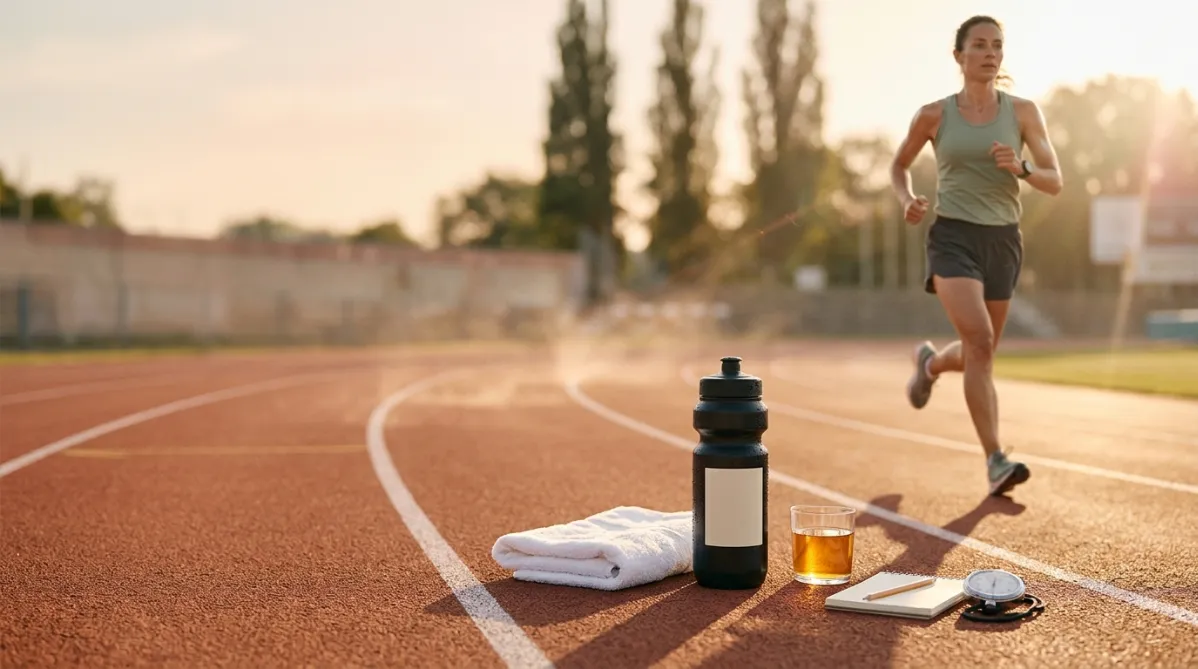
A sunlit outdoor running track in late afternoon, shot from a low angle with shallow depth of field. In the foreground, a matte black bottle with a minimal off-white label sits on the edge of a warm terracotta-colored track lane, beside a folded white towel and a small glass of amber liquid catching golden light. Condensation beads on the bottle. A faint heat shimmer rises from the track surface and softens the background.

In the midground, slightly out of focus, a lean athlete in a sage-green tank top and charcoal shorts runs on a treadmill-like stretch of track, a thin sheen of sweat on their shoulders, their expression focused and calm. Their motion is gently blurred, suggesting endurance and rhythm. Long soft shadows stretch across the lane lines.

The background fades into hazy peach, apricot, and pale yellow tones, with the suggestion of tall trees and a distant stadium wall. Warm sun flare enters from the upper right, creating a subtle glow and a few soft light streaks across the frame.

Subtle editorial touches: a small notebook with a pencil and a stopwatch rest beside the bottle, hinting at data and timing without any text legible. The color palette is warm and muted, with terracotta, cream, sage, and charcoal accents, and a fine film-like grain. The composition leaves open negative space on the left third for a headline overlay. The overall mood is clean, modern, and health-journal inspired, natural and aspirational, with a calm scientific curiosity rather than hype.
nutrition

Ketone Drinks in the Heat: Longer Endurance and Sharper Memory?

BY DR. GYMBRO ·

Ketone drinks are supposed to be for fat-burning biohackers, but a new heat-stress trial suggests they might also help you finish stronger. In 17 trained men, ketone monoester plus caffeine extended time to exhaustion to 8.9 minutes versus 7.0 with carbs plus caffeine, after 90 minutes of loaded treadmill work at 34 °C. Working-memory accuracy on the 1-back task improved too, while heart rate and core temperature didn't differ meaningfully. But 2-back, reaction time and the hit-and-avoid task showed no benefit, and the study was small, male-only and single-session. Here's what the data show, and what they don't.
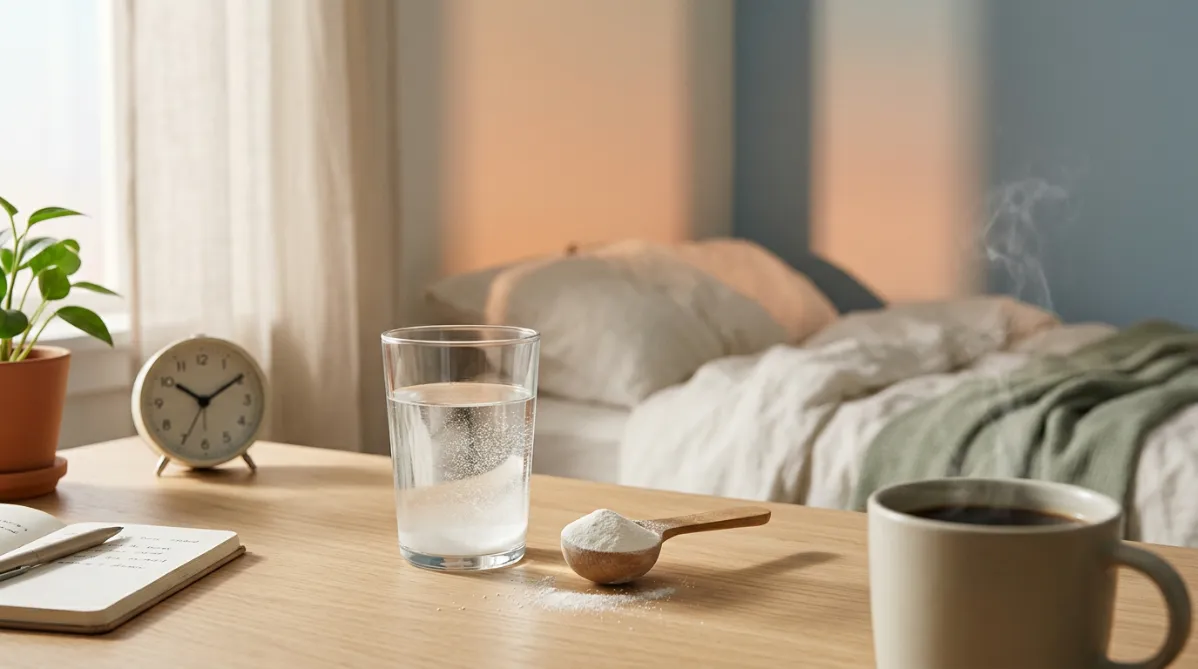
A wide, softly lit morning scene on a pale oak desk beside a window, shot from a slightly elevated three-quarter angle. In the foreground, a clear glass of water is half-filled with dissolved white creatine powder, tiny suspended particles catching the light. A wooden scoop heaped with fine white powder rests beside it, with a few grains scattered across the wood. A matte ceramic mug of black coffee sits slightly out of focus to the right, with a thin curl of steam. Behind them, a rumpled linen-white bed with a muted sage-green throw blanket suggests a sleepless night. Early dawn light spills through sheer curtains and creates long, gentle shadows and a warm peach-and-pale-blue gradient on the wall. On the desk, a minimalist analog alarm clock reads close to 6 a.m., and a small open notebook with a pen lies beside it, its handwriting blurred. A single green plant in a terracotta pot adds a fresh organic touch at the left edge. The color palette is calm and editorial: cream, soft sage, warm oak, dusty peach and muted slate blue. The depth of field is shallow, with crisp focus on the glass and scoop and a creamy bokeh background. The mood is quiet, restorative and contemplative, like a modern wellness magazine or a trendy health journal cover. The composition leaves open negative space in the upper left for title overlay. The image has a natural film-like texture, soft contrast and a clean, minimalist, lifestyle-photography look, with no text, logos or futuristic elements.
nutrition

One 0.35 g/kg Creatine Dose Fought Sleep-Loss Brain Fog in Hours

BY DR. GYMBRO ·

Creatine is the most trusted supplement in the gym, but a 2024 study suggests it may also fight sleep-deprivation brain fog within hours. In the study, a single 0.35 g/kg dose, roughly 25-28 g for most adults, changed brain energy markers, prevented a drop in brain pH and improved cognitive performance and processing speed during 21 hours without sleep. That's about five times a normal 3-5 g daily dose, and the study was small and lab-based. GI upset is a real possibility, and nobody tested repeated mega-dosing. Here's what the research really shows, and why you shouldn't change your daily routine yet.

This page is available in