Dr. Gymbro
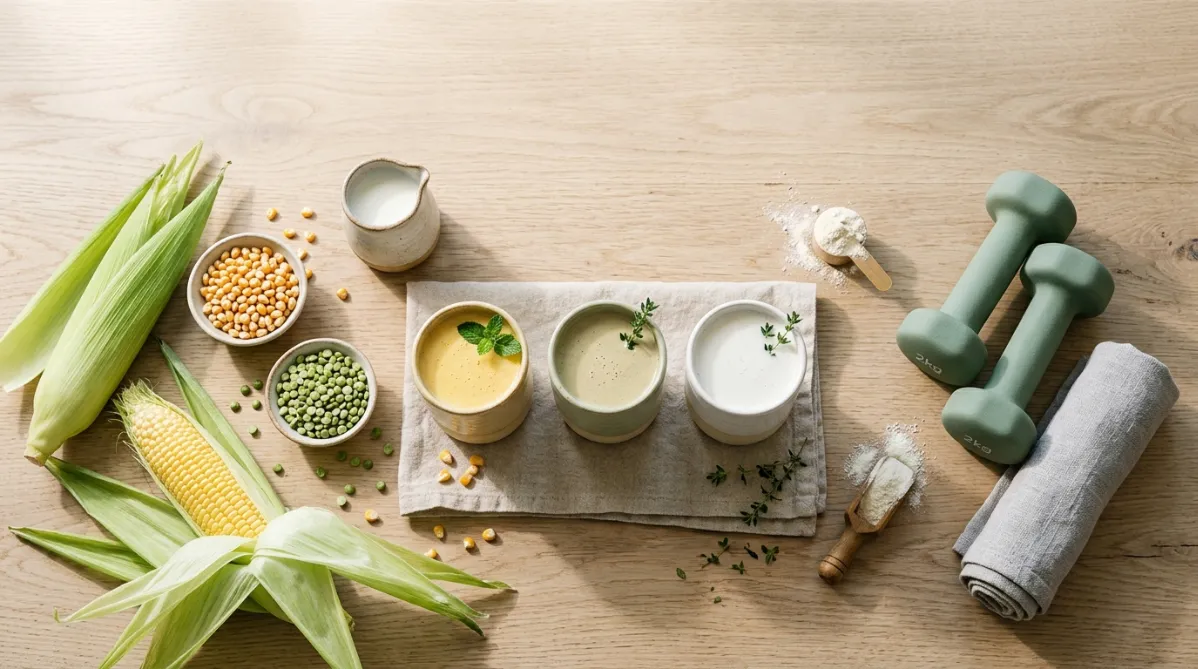
A bright, airy overhead flat-lay on a pale oak wooden table in soft morning daylight. At the center, three matching ceramic glasses in a neat row, each holding a creamy shake in a slightly different tone: one warm golden-yellow, one soft sage green-beige, one pure milky white. Beside the glasses, small shallow ceramic bowls hold the raw sources: dried yellow corn kernels, split green peas, and a small pitcher of fresh milk. A few fresh corn husks and a single ear of corn with pale green leaves are arranged diagonally across the left side of the frame, while a sprig of fresh herbs adds a touch of green. On the right, a pair of matte sage-green dumbbells and a rolled linen towel suggest light resistance exercise, placed with calm, editorial restraint. A linen napkin, a wooden scoop dusted with fine powder, and a few scattered kernels add natural texture. The color palette is warm cream, butter yellow, muted sage, and soft white, with gentle natural shadows falling to the lower right. Shallow depth of field, clean negative space at the top for headline overlay, minimalist modern magazine styling, crisp food-photography look, subtle film-like grain, wide landscape composition.
Nutrition

Protein thực vật mới sánh bằng sữa trong việc tổng hợp cơ bắp

Dr. Gymbro · · 5 min read

Protein thực vật mới sánh bằng sữa trong việc tổng hợp cơ bắp

Protein thực vật từ lâu được xem là lựa chọn yếu hơn cho việc xây dựng cơ bắp. Tuy nhiên, một thử nghiệm ngẫu nhiên gần đây cho thấy protein ngô có thể là một ngoại lệ. Ở người cao tuổi, 20 g protein ngô kích thích tổng hợp protein cơ (MPS) gần như bằng 20 g protein sữa. Dưới đây là những gì nghiên cứu phát hiện và những gì vẫn chưa được khẳng định.

Nghiên cứu: Protein ngô so với sữa

Bài báo, được công bố trên The Journal of Nutrition bởi Lim và cộng sự (DOI: 10.1016/j.tjnut.2026.101895; PubMed: 42933646), đặt câu hỏi chưa từng được khám phá ở người cao tuổi. Protein thực vật thường chứa ít axit amin thiết yếu – đặc biệt là leucine – hơn protein động vật, vì vậy chúng thường được coi là kém anabolic. Các tác giả chỉ ra rằng protein ngô có hàm lượng leucine tương đối cao, nên có khả năng hoạt động tốt hơn.

Nghiên cứu tiến hành một thí nghiệm ngẫu nhiên, mù đôi, có nhóm kiểm soát giả dược, bao gồm 48 người lớn tuổi khỏe mạnh (tuổi trung bình 68 ± 5 năm; 24 nam và 24 nữ) và chia họ thành bốn nhóm. Mỗi người nhận 20 g một trong bốn sản phẩm:

  • CORN: protein ngô cô đặc
  • PEA+CORN: hỗn hợp protein đậu Hà Lan và ngô
  • MILK: protein sữa cô đặc
  • PLA: giả dược không protein, ít năng lượng

Sau khi uống sản phẩm, tất cả người tham gia thực hiện bài tập duỗi gối một bên (3 hiệp, 10 lần lặp, 75% 1RM). MPS được đo bằng cách truyền liên tục L-[ring-13C6] phenylalanine có đánh dấu, đồng thời lấy mẫu máu và mô cơ trong suốt quá trình.

Các con số nổi bật

Mức tăng MPS so với giá trị cơ sở:

Nhóm Tăng MPS so với cơ sở
Protein ngô 216 ± 170% (P < 0.001)
Hỗn hợp đậu‑ngô 217 ± 167% (P = 0.001)
Protein sữa 138 ± 78% (P = 0.033)
Giả dược 77 ± 46%

Ba nhóm protein đều vượt qua giả dược và không có sự khác biệt có ý nghĩa thống kê giữa chúng. Trung bình, protein ngô và hỗn hợp đậu‑ngô cho mức tăng hơi cao hơn so với sữa, nhưng độ biến thiên lớn khiến chúng được xem là "tương đương", không phải "tốt hơn". Đừng hiểu rằng ngô thắng sữa.

Vận động vẫn quan trọng

Tập luyện kháng lực làm tăng MPS thêm so với chỉ dùng thực phẩm bổ sung ở mọi nhóm (tất cả P < 0.001). Protein có tác dụng, nhưng việc nâng tạ làm phản ứng mạnh hơn bất kể nguồn protein. Đối với người cao tuổi đang tập luyện, nghiên cứu ủng hộ việc kết hợp protein với luyện tập hơn là dựa vào một trong hai.

Tại sao leucine lại được chú ý

Leucine là axit amin có liên quan chặt chẽ nhất đến việc bật cơ chế xây dựng cơ bắp. Các protein thực vật thường thiếu leucine, vì vậy chúng thường được cho là kém hiệu quả mỗi gram. Các tác giả cho rằng hàm lượng leucine cao trong protein ngô có thể là lý do khiến nó hoạt động tốt hơn. Tuy nhiên, bản tóm tắt không cung cấp số liệu leucine cụ thể và cũng không thực hiện thí nghiệm để kiểm chứng giả thuyết này, vì vậy đây chỉ là một suy đoán chưa có bằng chứng thực nghiệm.

Bài học thực tiễn

  • Liều dùng: Nghiên cứu chỉ dùng 20 g protein mỗi liều. Đây là liều duy nhất được thử, nên có thể coi là mức tham khảo an toàn. Các liều khác chưa được so sánh.
  • Thời điểm: Người tham gia uống protein quanh một buổi tập chân duy nhất. Không có so sánh giữa các thời điểm (trước, trong, sau tập), vì vậy không thể khẳng định thời điểm nào là tối ưu.
  • Đối tượng phù hợp:
    • Người cao tuổi tập luyện (khoảng 68 tuổi, khỏe mạnh).
    • Người hạn chế sữa hay các sản phẩm động vật (protein ngô và hỗn hợp đậu‑ngô cho phản ứng MPS tương đương protein sữa).
    • Ai tự pha chế hỗn hợp protein thực vật (hỗn hợp đậu‑ngô hoạt động tốt như protein ngô đơn, gợi ý rằng pha trộn là khả thi).
  • Người nên thận trọng hoặc tránh:
    • Người dị ứng hoặc nhạy cảm với ngô.
    • Người đang tìm bằng chứng về tăng cơ dài hạn (thử nghiệm đo MPS, một chỉ số ngắn hạn, không phải tăng khối cơ hay sức mạnh).
    • Người có bệnh lý (các bệnh về thận, suy giảm sức khỏe…) vì nghiên cứu chỉ bao gồm người khỏe mạnh.

Những lưu ý quan trọng

  1. Mẫu nghiên cứu nhỏ: Chỉ 48 người chia thành bốn nhóm, nên kết quả có thể chưa phản ánh đầy đủ đa dạng phản ứng cá nhân.
  2. MPS ≠ tăng cơ dài hạn: Mức tăng MPS trong vài giờ không đồng nghĩa với việc tăng khối cơ hoặc sức mạnh trong thời gian dài.
  3. Giả dược cũng kích thích MPS: Nhóm giả dược cho thấy MPS tăng 77% so với nền, nhắc nhở rằng bài tập và môi trường đo lường cũng ảnh hưởng đến con số. Vì vậy, cần diễn giải phần trăm trong ngữ cảnh nghiên cứu.

Kết luận

Kết luận của bài báo rất đơn giản: 20 g protein ngô, hỗn hợp đậu‑ngô, hoặc protein sữa đều làm tăng MPS ở người cao tuổi khỏe mạnh, và tập luyện kháng lực còn tăng phản ứng hơn nữa. Đối với những ai muốn một lựa chọn thực vật mà không lo giảm phản ứng anabolic, protein ngô giờ đã trở thành một ứng cử viên đáng tin cậy. Các thử nghiệm dài hạn sẽ cho biết liệu lợi thế ngắn hạn này có chuyển thành tăng cơ và sức mạnh thực sự hay không.

Nguồn: Lim et al., The Journal of Nutrition. Đăng ký thử nghiệm NCT05917223. PubMed: https://pubmed.ncbi.nlm.nih.gov/42933646/
Original study

Read the original research on pubmed.ncbi.nlm.nih.gov →

This article summarizes published research for general information. It is not medical advice.

DG

Written by

Dr. Gymbro

Dr. Gymbro writes for Dr. Gymbro: science-backed fitness, nutrition & performance.

Related Articles

A landscape editorial photograph of a sunlit kitchen table in soft morning light, styled like a modern wellness journal cover. In the center sits a simple white ceramic bowl of plain Greek yogurt topped with walnuts and blueberries. Beside it are a small glass of water and a matte stone scoop holding a pale powder, with a few loose grains scattered on a light oak surface. To the left, a pair of weathered hands, clearly an older man's with silver hair on the wrist, rests near a neatly folded linen napkin and a slim stainless steel wristwatch. To the right, a pair of modest hex dumbbells in muted sage green sits on a woven rug at the edge of the frame, slightly out of focus, hinting at strength training. In the background, a tall window with sheer curtains lets in warm golden light, and a small potted olive plant stands on the sill. A minimalist analog clock on the wall is softly blurred, suggesting fasting windows without being literal. The palette is calm and earthy: warm cream, oatmeal, sage green, soft terracotta, and pale wood tones. The composition uses generous negative space on the upper left for headline overlay, shallow depth of field, and gentle natural shadows. The style is clean, contemporary, and slightly muted, like a lifestyle magazine or health journal feature, shot on a 50mm lens with soft film-like grain. Calm, thoughtful, and quietly authoritative, with no text, logos, or futuristic elements.
nutrition

Leucine và Protein trong Chế Độ Nhịn Ăn: Kết Quả Bất Ngờ ở Nam Giới Cao Tuổi

BY DR. GYMBRO ·

Leucine thường được gọi là “công tắc chính” của quá trình tổng hợp protein cơ bắp, vì vậy bạn có thể nghĩ rằng nó sẽ bảo vệ người cao tuổi tập luyện khi thực hiện chế độ nhịn ăn. Một thử nghiệm ngẫu nhiên kéo dài 28 ngày với 61 nam giới cao tuổi thực hiện chế độ nhịn ăn ngày cách ngày đã so sánh việc bổ sung leucine và protein với nhóm kiểm soát. Sức mạnh, chức năng, huyết áp và các chỉ số cholesterol đều cải thiện ở mọi nhóm, và các bổ sung không mang lại lợi thế đo được nào. Dưới đây là liều lượng đã thử, ai có thể vẫn hưởng lợi, ai nên bỏ qua, và những hạn chế của nghiên cứu.

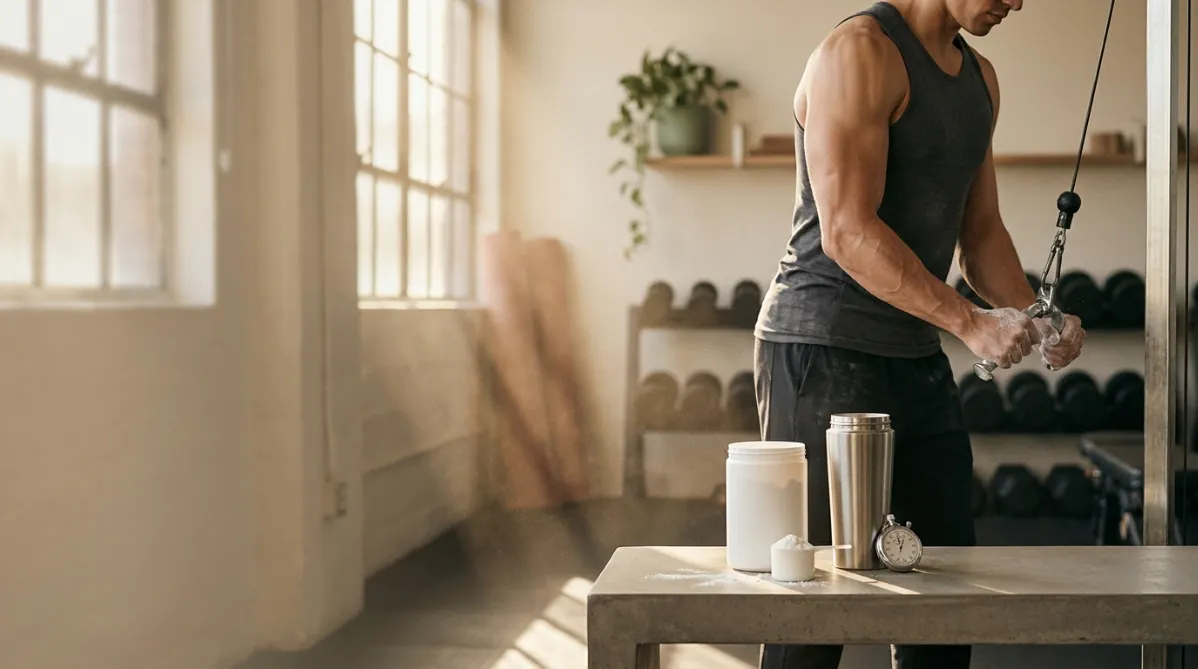
A softly lit, minimalist gym interior photographed in a modern editorial style. In the foreground, a muscular lifter in a fitted charcoal tank top is mid-set at a cable station, forearm and shoulder muscles defined, a light dusting of chalk on their hands. The frame is shot at a slight low angle with shallow depth of field, so the background gym equipment melts into creamy blur. On a matte concrete-textured bench beside them sits a clean, unbranded matte-white scoop container of white powder, a stainless steel shaker bottle, and a small analog stopwatch, arranged with careful, magazine-style composure. A few loose grains of white powder catch the light on the bench surface.

Warm golden late-afternoon sunlight pours through tall industrial windows on the left, creating long diagonal light streaks, gentle lens flare, and a subtle haze of floating chalk dust that glows in the beams. The palette is restrained and sophisticated: warm sand, soft cream, muted terracotta, deep charcoal, and a single accent of sage green from a potted plant on a shelf. Rows of neatly racked dumbbells in dark metal repeat in the mid-ground, adding rhythm and depth.

The composition follows the rule of thirds: the lifter and supplement still life occupy the right two-thirds, while the left third remains calm, with a smooth, softly blurred wall and window light, leaving generous negative space for headline text. Subtle film grain, natural color grading, and a slightly desaturated, high-end lifestyle photography look evoke a contemporary health and science journal. No text, logos, or graphics. Clean, aspirational, grounded, and tactile, with a sense of focused effort and quiet intensity.
nutrition

Beta‑Alanine Cuối Cùng Hiệu Quả Cho Người Tập Cân — Nếu Bạn Tập Như Thế Này

BY DR. GYMBRO ·

Beta‑alanine từ lâu có tiếng tăm mập mờ trong việc nâng tạ, nhưng một thí nghiệm ngẫu nhiên kiểm soát mới có thể giải thích lý do. Khi những người tập có kinh nghiệm uống 6,4 g mỗi ngày trong bốn tuần, tổng số lần lặp tăng 17,3 % trong drop sets và 18,2 % trong bi‑sets, trong khi nhóm dùng giả dược không có cải thiện đáng kể. Cảm nhận mức độ nỗ lực, động lực và cảm xúc không có sự khác biệt giữa các nhóm, vì vậy sự tăng cường là do thể chất chứ không phải tâm lý. Dưới đây là liều dùng, thời gian nạp, đối tượng dữ liệu áp dụng và những người nên hoài nghi.

A softly lit, minimalist strength-training studio photographed in a modern editorial style. In the foreground, a matte black barbell loaded with weight plates rests on a light oak platform, with fine chalk dust floating in warm morning light. Beside it on a pale concrete bench sits a simple ceramic scoop of white creatine powder, with a small spill of fine crystals catching the light, next to a minimal frosted glass jar with no label. A matte sage-green shaker bottle and a folded cream towel sit nearby. In the soft-focus background, tall windows let in diffused golden sunlight, casting long, gentle shadows across the floor. A rack of neatly arranged dumbbells is blurred in muted charcoal tones.

The color palette is calm and sophisticated: warm off-white, sand, sage green, soft charcoal, and touches of terracotta. A small open notebook with a pencil lies on the bench, suggesting research and data tracking, with abstract hand-drawn bar graph lines faintly visible on the page but not legible. The composition follows the rule of thirds, with the barbell and powder on the left and generous negative space on the right for headline text. Shallow depth of field, crisp textures on the metal knurling and powder grains, subtle film grain, and a contemporary wellness-magazine look. Clean, airy, and editorial, with a grounded, scientific yet approachable mood. Landscape 16:9 composition.
science research

Creatine Kết Hợp Tập Luyện: Tăng Sức Mạnh Nhanh Hơn, Không Cần Chiến Thuật Liều Lượng Phức Tạp

BY DR. GYMBRO ·

Một meta‑phân tích bao gồm 63 nghiên cứu và 1.489 người tham gia đã hỏi: creatine có tăng bao nhiêu sức mạnh khi kết hợp với tập tạ? Kết quả cho thấy cải thiện sức mạnh vừa phải và đồng đều ở phần trên và dưới cơ thể, trong khi tăng khối cơ là nhẹ và khối mỡ không thay đổi đáng kể. Điều bất ngờ là chiến lược liều dùng, liều hàng ngày và giao thức không ảnh hưởng đáng kể tới kết quả. Tuổi tác là yếu tố duy nhất được xác định, với hiệu quả sức mạnh lớn hơn ở người trẻ. Dưới đây là những gì bài báo thực sự phát hiện và những gì nó không thể khẳng định.

A warm, sunlit boutique fitness studio in soft morning light, shot in wide landscape composition. In the foreground, a woman in her late 60s with silver-white hair in a loose bun and a relaxed, confident smile holds a light dumbbell mid-curl. She wears a sage green athletic top and charcoal leggings. Her posture is strong and graceful. Beside her, slightly out of focus, a second older woman with short gray hair performs a bodyweight squat. Both are part of a small circuit training class.

On a pale oak wooden bench in the sharp foreground, a minimalist glass tumbler holds a cloudy, pale lemon-colored drink. Next to it is a small ceramic dish of white powder with a tiny wooden scoop, a folded linen towel, and a matte white water bottle. Scattered nearby are a few fresh lemon slices and a sprig of mint for a clean, editorial still-life touch.

The studio has tall arched windows with sheer white curtains, letting in golden diffused light that creates long soft shadows on a light blonde wood floor. Background details include neatly arranged pastel-colored kettlebells and rubber resistance bands in muted terracotta, sand, and sage hanging on a minimalist wall rack. A leafy fiddle-leaf fig plant sits in a terracotta pot in the corner.

The color palette is calm and modern: warm creams, soft sage green, terracotta, muted peach, and gentle gold highlights. Shallow depth of field with a creamy bokeh background, shot as if on a 50mm lens at f/2. Natural film-like grain, subtle warmth, high-end wellness magazine aesthetic, clean negative space on the right side of the frame for title overlay. The mood is optimistic, vital, and grounded, celebrating healthy aging, strength, and community. Photorealistic, editorial lifestyle photography.
nutrition

Axit Amino + Lifting Đẩy Lùi Myostatin ở Phụ Nữ 65+

BY DR. GYMBRO ·

Liệu hormone ngăn cơ tăng có thể "điều chỉnh" sau tuổi 65? Trong một thử nghiệm ngẫu nhiên 12 tuần với 96 phụ nữ cao tuổi khỏe mạnh, việc kết hợp tập luyện dạng vòng với 5,5 g axit amin thiết yếu (EAA) hai lần mỗi ngày đã làm tăng tỉ lệ follistatin/myostatin mạnh nhất, đồng thời tăng khối lượng cơ và giảm các chỉ số viêm. Bài viết sẽ nêu chi tiết liều dùng, giao thức, đối tượng phù hợp, ai nên tránh và những giới hạn của nghiên cứu.

This page is available in