Dr. Gymbro
←

#antioxidants

5 articles
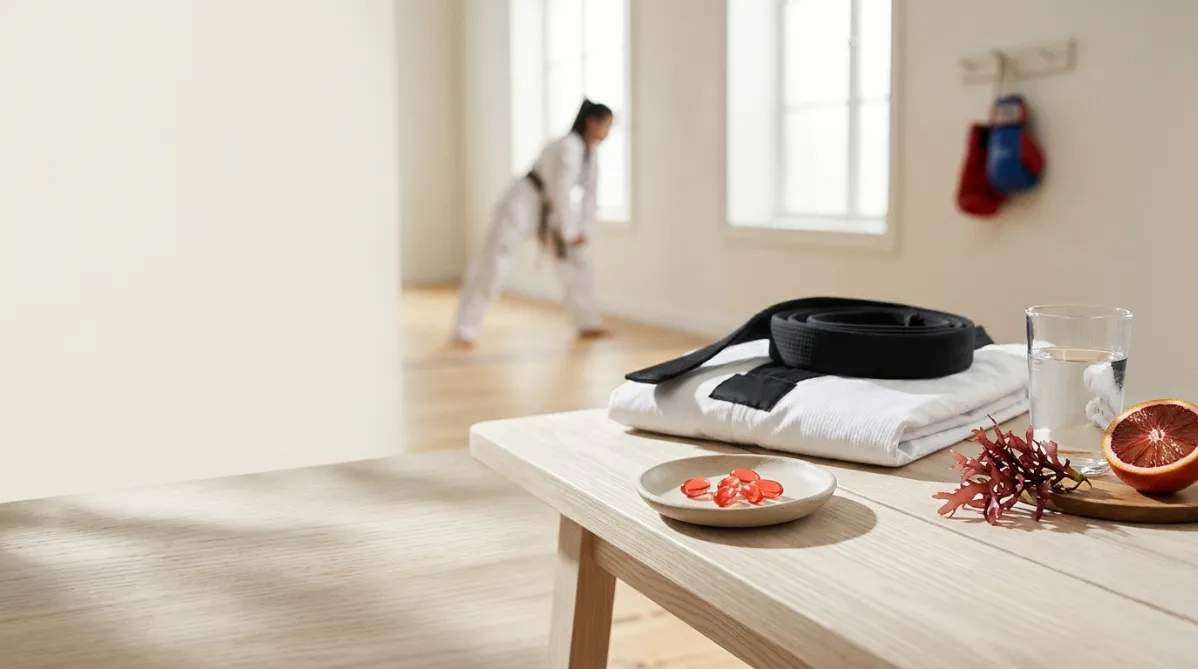
A wide editorial still life shot from a slightly elevated angle on a pale ash-wood bench in a bright, airy training hall. In the center sits a small matte ceramic dish holding a few translucent coral-red softgel capsules, their glossy surfaces catching soft window light. Beside the dish rests a folded white taekwondo dobok with a black belt loosely coiled on top. A sprig of fresh red microalgae-toned seaweed and a halved blood orange add natural color accents. A clean glass of water with subtle condensation stands to one side.

In the softly blurred background, the silhouette of a martial artist in a white uniform stretches near tall windows, with diffused morning light streaming across a sprung wooden floor. A pair of red and blue sparring gloves hangs on a minimal wall hook. Thin, elegant shadows stretch across the bench.

The palette is restrained and modern: warm off-white, soft sand, muted charcoal, with a vivid coral-red accent pulled from the capsules. Shallow depth of field, crisp focus on the capsules and dish, creamy bokeh behind. Natural, gentle lighting with a subtle film-like grain, reminiscent of a contemporary wellness and science magazine cover. Generous negative space on the left third of the frame for headline text. Calm, precise, and quietly athletic in mood, with no text, logos, or futuristic elements.
science research

12 mg de astaxantina durante 28 días: daño muscular y agotamiento en atletas de combate

BY DR. GYMBRO ·

Un ensayo aleatorizado evaluó 12 mg diarios de astaxantina en jóvenes atletas masculinos de taekwondo. Tras 28 días, el grupo que recibió el suplemento presentó una evolución de la creatina quinasa muy distinta a la del placebo, así como mayor actividad de SOD y tendencias a menores niveles de MDA y a menor agotamiento emocional y físico. No obstante, los hallazgos sobre burnout fueron solo exploratorios y no mostraron interacción grupo × tiempo en ninguna subescala. El estudio, pequeño y centrado en biomarcadores, no evaluó el rendimiento. Aquí se explica qué demuestran los datos, qué no, y a quién le puede interesar.
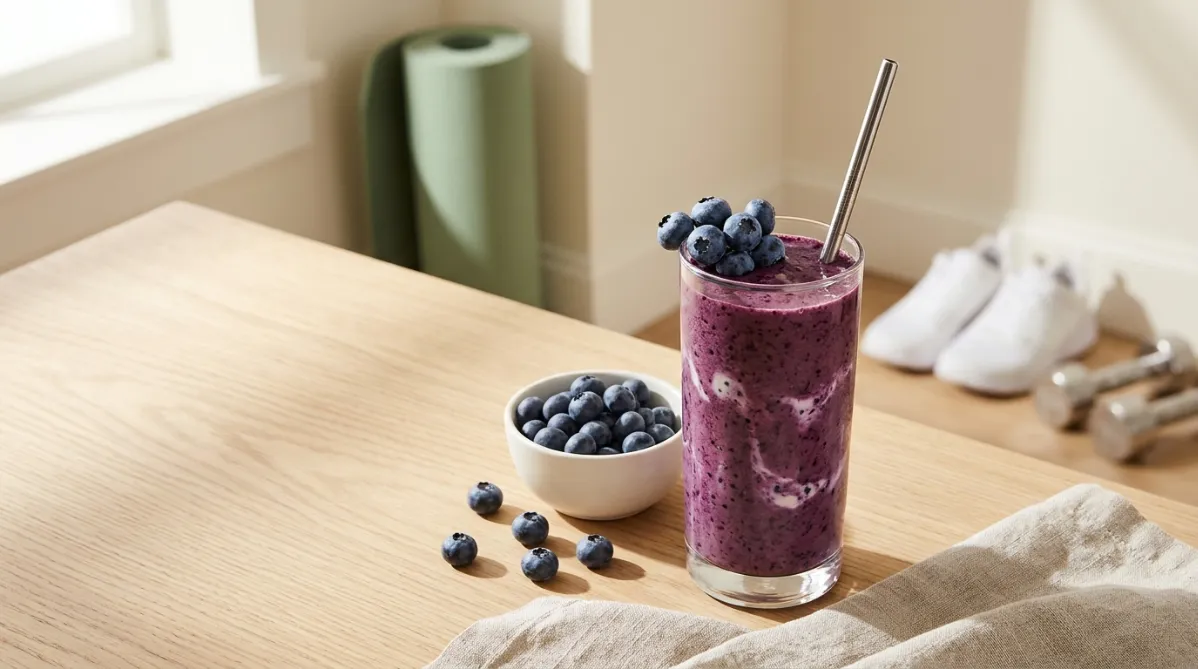
A bright, airy editorial photograph shot from above at a slight angle, showing a tall clear glass of deep violet blueberry smoothie on a pale oak wooden table. The smoothie has a creamy, velvety texture with a few lighter swirls, and a small cluster of fresh blueberries with dusty blue skins rests on the rim of the glass. A matte white ceramic bowl of whole blueberries sits to the left, with a few berries scattered naturally across the tabletop. A folded linen napkin in soft oatmeal tones and a stainless steel straw add subtle texture.

In the softly blurred background, a rolled-up sage green yoga mat leans against a light wall next to a pair of clean white running shoes and a small pair of brushed-metal dumbbells. A sliver of warm morning sunlight enters from the left window, casting gentle diagonal shadows and a golden glow across the table, with soft highlights on the glass and the berries' surface bloom.

The color palette is fresh and modern: deep indigo and violet from the smoothie, balanced by cream, warm beige, soft sage green, and touches of white. The composition follows the rule of thirds, with the glass placed on the right third and generous negative space on the left, suitable for headline overlay. Shallow depth of field, crisp focus on the glass and berries, creamy bokeh in the background. The mood is calm, healthy, and aspirational, like a contemporary wellness magazine or a trendy health journal website. Natural, realistic, high-end food and lifestyle photography style, 16:9 landscape format, clean and uncluttered.
nutrition

El batido de arándanos ayudó a piernas adoloridas a recuperar la fuerza más rápido

BY DR. GYMBRO ·

Diez mujeres, 300 contracciones excéntricas del cuádriceps y un batido de arándanos. En este ensayo cruzado aleatorizado la bebida de frutos rojos aceleró la recuperación de la fuerza isométrica máxima en 60 horas (p = 0,047), mientras que un placebo con la misma capacidad antioxidante no lo hizo. El hallazgo sugiere que el beneficio no se debe solo a los antioxidantes. Sólo una variable alcanzó significación y la muestra fue muy pequeña, por lo que la evidencia es prometedora pero no concluyente. A continuación, se describe cómo se diseñó el estudio, qué resultados se obtuvieron y cómo puedes aplicarlo en tus entrenamientos de piernas.
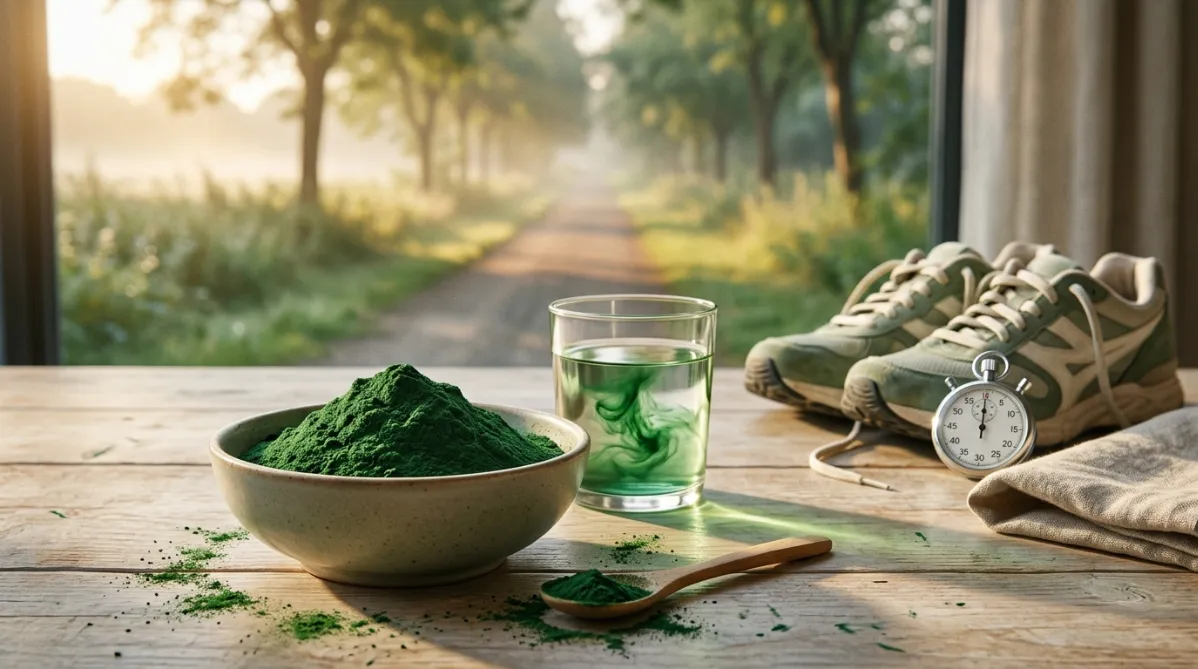
A wide, landscape editorial photograph with soft natural morning light. In the foreground, a rustic matte ceramic bowl rests on a pale oak wooden table, filled with vivid deep-green spirulina powder heaped in a gentle mound. A small wooden spoon dusted with the powder lies beside it, and a few scattered green flecks dust the surface. Next to the bowl sits a clear glass of water with a swirl of emerald green just blending in, catching sunlight and casting soft green-tinted shadows.

In the middle ground, slightly out of focus, a pair of worn running shoes in muted sage and cream tones sits on the edge of the table, laces loosely undone. A simple analog stopwatch with a clean white face lies beside them, its hands frozen at a moment suggesting a close finish. A folded linen towel in warm oatmeal tone drapes casually nearby.

The background is a softly blurred outdoor setting seen through a large window: a quiet tree-lined running path at dawn, with golden-hazy light, dewy greenery, and a faint mist. The color palette is calm and modern: deep emerald, sage, cream, warm wood, and touches of soft gold. The composition leaves generous negative space on the right side for headline text, with a shallow depth of field, crisp detail on the powder texture, and a clean, minimalist, lifestyle-magazine aesthetic. Subtle film-like grain, natural shadows, and a fresh, healthy, energetic mood. No people, no text, no logos.
nutrition

La espirulina ayudó a los corredores a durar un 32 % más, pero hay una trampa

BY DR. GYMBRO ·

Los corredores que tomaron espirulina durante cuatro semanas fueron capaces de mantener un esfuerzo máximo aproximadamente un 32 % más tiempo tras una agotadora carrera de dos horas. El mismo estudio detectó un aumento del 10,9 % en la oxidación de grasas y niveles más altos del antioxidante glutatión. Pero, antes de comprarla, hay una trampa: sólo nueve hombres participaron y la ganancia real fue de unos 39 segundos. A continuación, te contamos qué muestra la investigación, por qué podría funcionar y cómo probarla de forma segura.
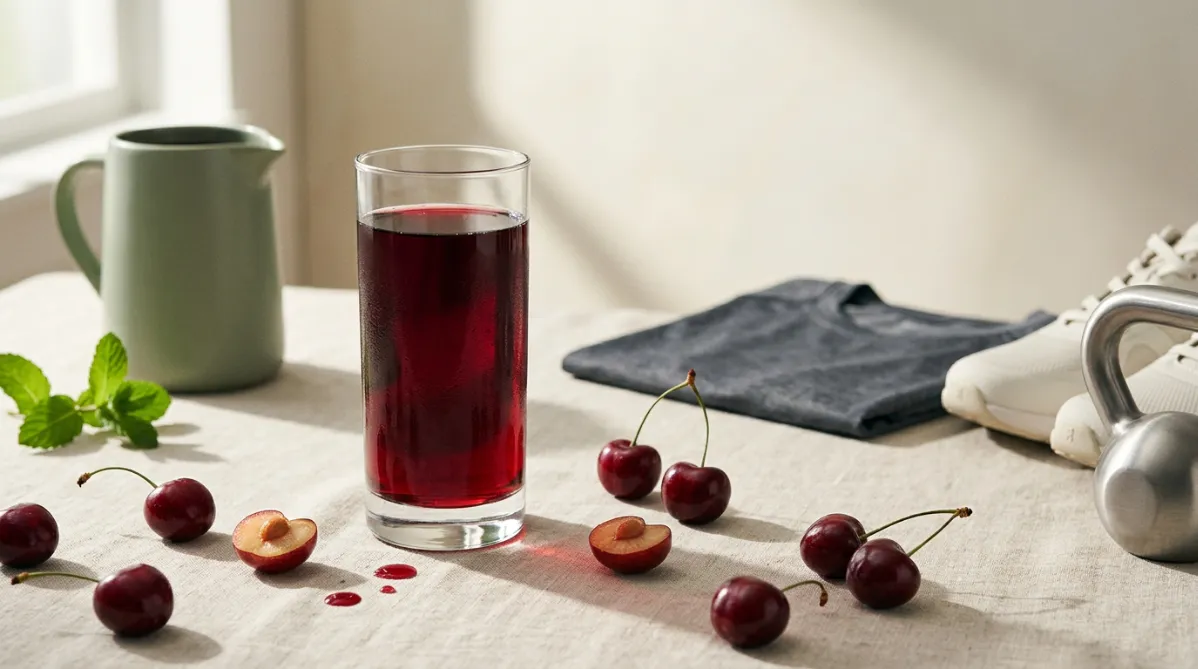
A wide, softly lit editorial still life on a pale oatmeal linen surface. In the center sits a tall, clear glass filled with deep garnet-red tart cherry juice, with condensation beading on the outside and a faint ruby glow where light passes through it. Around it are a scattering of fresh Montmorency cherries, some with stems and some halved to show pale amber flesh and a single pit. A few drops of juice have splashed onto the linen, leaving small crimson stains. To the right, slightly out of focus, lies a folded charcoal-gray running shirt, a pair of minimalist off-white running shoes, and a small brushed-steel kettlebell, suggesting both endurance and strength training without a gym in view. On the left, a ceramic pitcher in matte sage green holds more juice, and a sprig of fresh mint adds a small contrast.

Window light comes from the upper left, casting long, gentle shadows and creating a warm morning feel. The palette is restrained and modern: deep burgundy, cream, sage, and soft slate, with plenty of negative space in the upper right for headline text. The camera angle is a shallow three-quarter view from slightly above, with a shallow depth of field. The foreground cherries are razor sharp and the background melts into a creamy blur. Subtle film grain, natural color grading, and a clean, minimalist composition give it the polished feel of a contemporary health and science magazine. No text, no logos, no people, and no futuristic elements. The overall mood is calm, fresh, and restorative, hinting at recovery and balance.
recovery

Truco del jugo de cereza ácida: recuperación de fuerza más rápida y niveles de IL‑6 más bajos

BY DR. GYMBRO ·

Maratonistas y levantadores juran por el jugo de cereza ácida para recuperarse, y un estudio controlado con placebo lo puso a prueba. En 20 corredores, la fuerza isométrica se recuperó significativamente más rápido (P = 0.024), mientras que los niveles de IL‑6, CRP y ácido úrico descendieron y el estado antioxidante aumentó alrededor de un 10 %. Sin embargo, la creatina quinasa, LDH y el dolor muscular no cambiaron de forma significativa, lo que matiza las promesas publicitarias. Aquí explicamos qué hicieron, qué descubrieron y quién podría beneficiarse realmente.
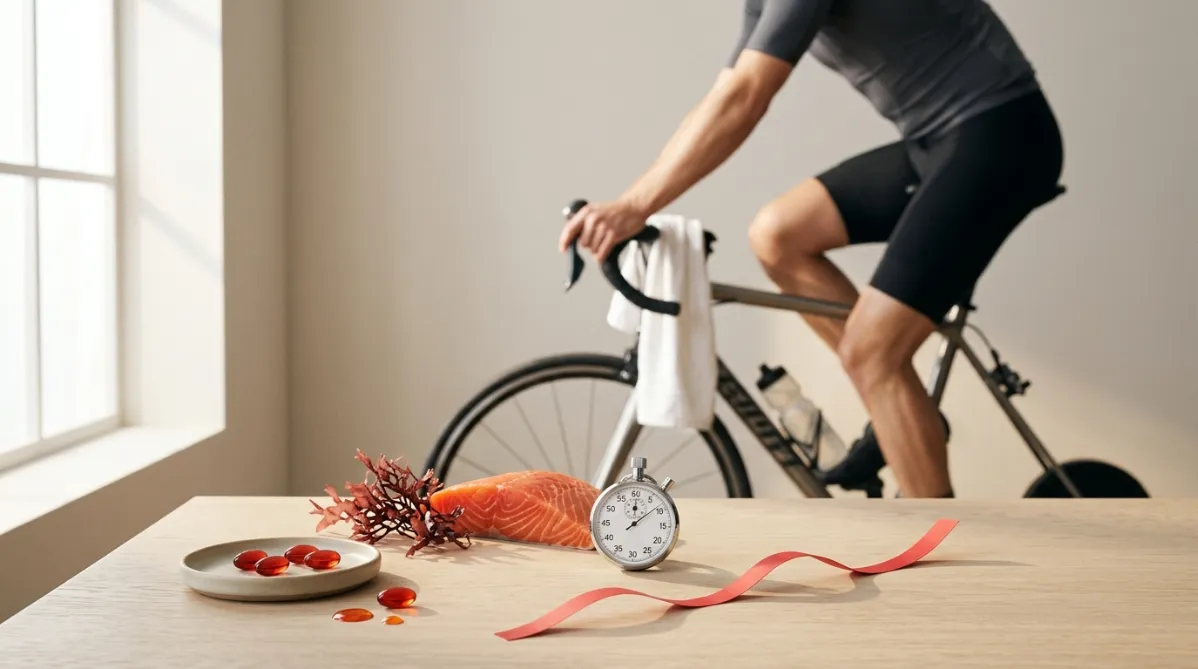
A cyclist's legs mid-pedal on a stationary road bike, shot in a bright, airy, minimalist studio with a soft warm-grey backdrop. In the foreground on a pale oak table sits a small ceramic dish holding four deep coral-red softgel capsules, with a few translucent droplets of red-orange oil glistening beside them. Beside the dish is a sprig of dried red microalgae-toned seaweed and a halved wild salmon fillet, its coral flesh echoing the capsule color. Behind the table, slightly out of focus, a cyclist in a fitted charcoal jersey and matte black shorts rides a bike on an indoor trainer. Only the torso and legs are visible, with no face. A white towel hangs over the handlebars and a clear water bottle catches the light.

Soft diffused morning light streams from a large window on the left, creating long gentle shadows and a subtle golden-hour glow on the skin and the glossy capsules. The palette is restrained and editorial: warm cream, sand, soft grey and charcoal, with vivid coral-red as the single accent color. A minimalist analog stopwatch with a clean white face sits on the table, its hands near the 85-minute mark. A thin, elegant line-graph shape is subtly suggested by a curved strip of red ribbon lying on the table, rising from left to right to hint at the performance gain without any text.

The composition follows the rule of thirds, with the capsules and stopwatch in the lower left and the cyclist's motion-blurred legs sweeping across the right. Shallow depth of field, crisp macro detail on the capsules, and a fine film-like grain. The overall feel is a modern health and science magazine cover: clean, calm, sophisticated, and natural, with negative space in the upper area for a headline. There are no futuristic elements, no glowing effects, no laboratory equipment, and no text or logos. Landscape 16:9 format.
nutrition

La astaxantina, tras 4 días, incrementó el tiempo hasta el agotamiento en ciclismo de 72 a 85 minutos en un pequeño ensayo

BY DR. GYMBRO ·

Cuatro días de astaxantina (28 mg/día) prolongaron el tiempo hasta el agotamiento en ciclismo de unos 72 a 85 minutos, lo que representa un aumento de alrededor del 18 %. El mismo protocolo atenuó la elevación de los marcadores de daño muscular (CK y LDH) y de peroxidación lipídica (MDA) tras un esfuerzo intenso al 75 % del VO2 máx. Los indicadores inflamatorios y el consumo de combustible no variaron, de modo que el mecanismo sigue sin quedar claro. La dosis supera con creces la que contienen la mayoría de las cápsulas blandas, y el estudio contó solo con diez hombres jóvenes. A continuación se presentan los números y los límites de la evidencia.

This page is available in